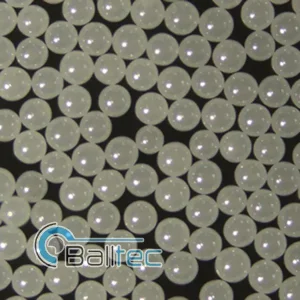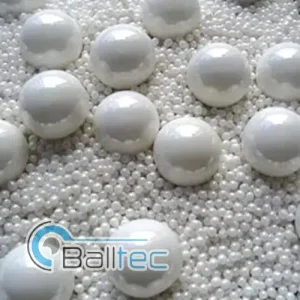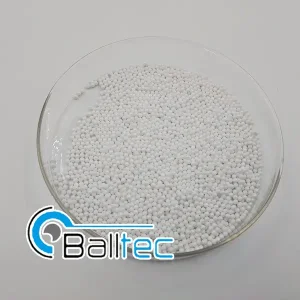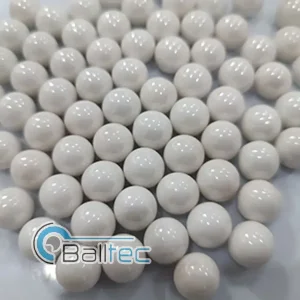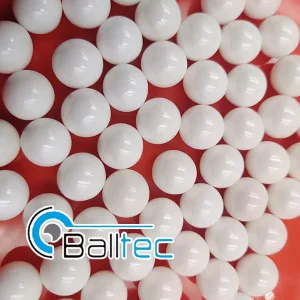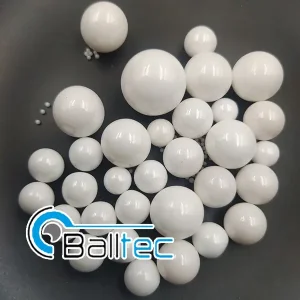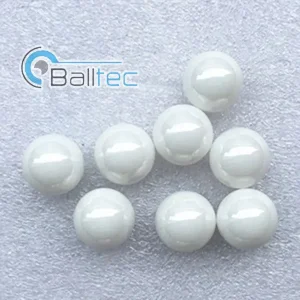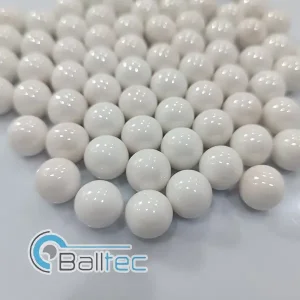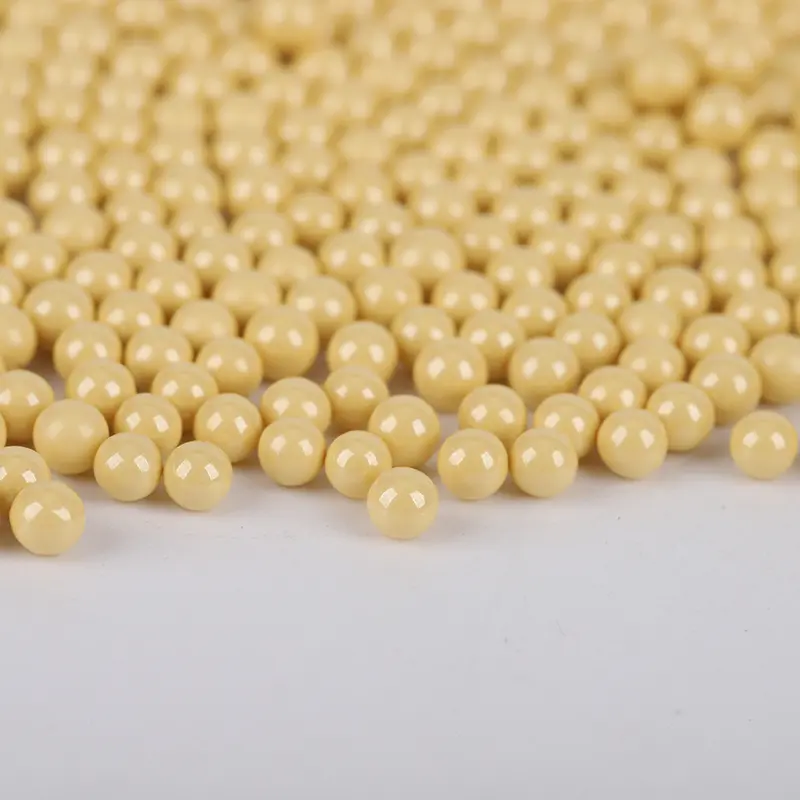
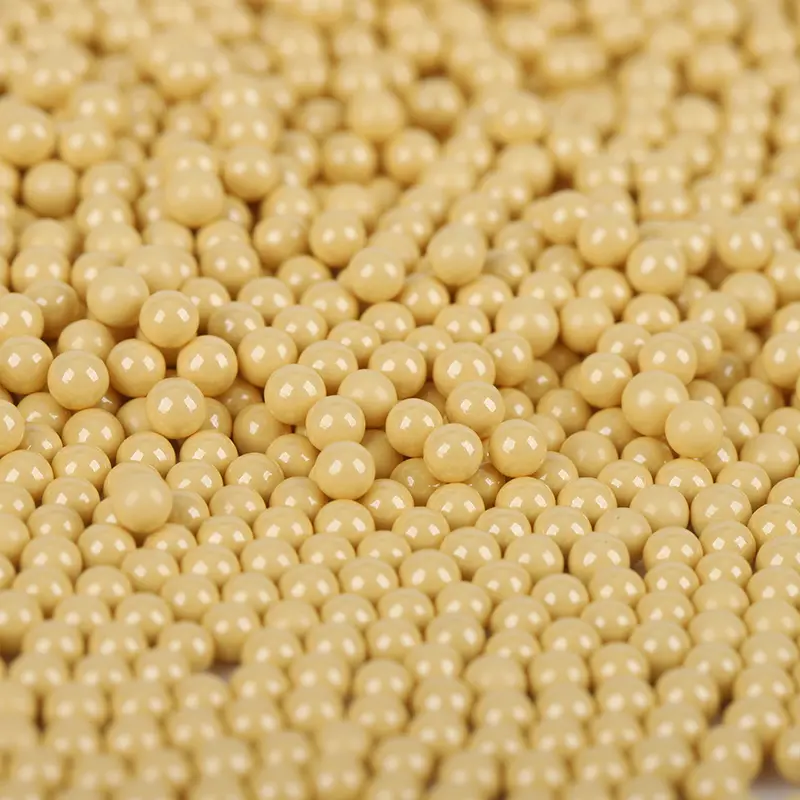
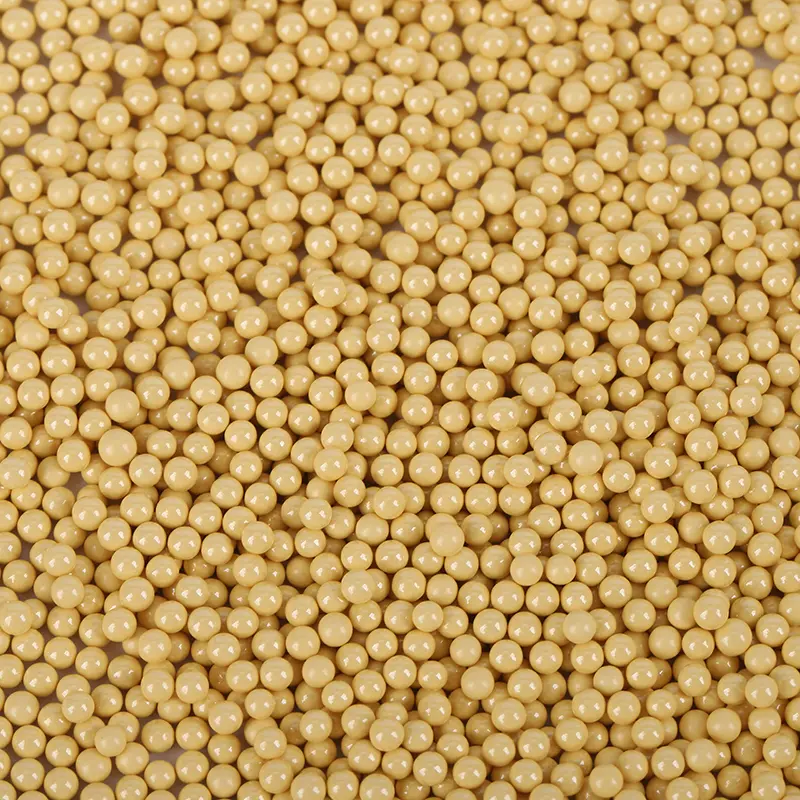
With special process, the internal structure of the beads is uniform and compact.
Good stability, strong acid & alkali resistance.
Highest density, significantly improving grinding efficiency than other ceramic beads.
Application Range
It is mainly applied to ultra fine grinding and dispersion of materials that require high viscosity and high hardness, such as paint, ink, paint, paper, metal, non-metal and rare earth materials.
Chemical Composition
ZrO2
CeO2
Al2O3
Fe2O3
SiO2
TiO2
MgO
Na2O3
%
≥85
≤15
0.3±0.1
≤0.01
≤0.01
≤0.01
≤0.01
≤0.01
Physical Properties
Density
6.2 g/cm³
Bulk Density
3.8 g/cm³
Hardness
1000 Hv
Sphericity
98%
Standard Size
0.50 - 10mm
Packing
25kg Plastic Drum
Ceria Content
20%
Application: Can be used in horizontal sand mill, vertical sand mill, basket sand mill, ball mill, vibration mill material grinding.
Materials: Paint, textile, pigment, printing and dyeing, magnetic materials, ceramics, medicine, food, cosmetics, etc.
Product Description: Ceria stabilized zirconia beads are refined using a patented titration rolling molding process, and the formulation of about 20% of rare earth ceria gives the beads a greater proportion of zirconium series grinding media. The bead always maintains a smooth spherical surface during use due to the internal consistent and fine zirconia microcrystals, which is also a guarantee of low bead wear and low energy consumption of the equipment. It is recommended to be widely used for grinding high solid content and high viscosity slurry.

Key Product Advantages
High Specific Gravity
Increased grinding efficiency and reduced bead delamination and toppling in the sander.
Smooth Working Surface
Reduce energy consumption; Avoid wear of beads and equipment contact parts.
Matching Equipment
Horizontal sand mill with high energy density and vertical sand mill with large aspect ratio.
Frequently Asked Questions (FAQ)
1. What are the primary applications for Ceria Stabilized Zirconia Beads?
They are mainly used for ultra-fine grinding and dispersion of materials requiring high viscosity and high hardness, such as paints, inks, paper, metals, non-metals, and rare earth materials.
2. What type of grinding equipment is compatible with these beads?
These beads are highly compatible with horizontal sand mills, vertical sand mills, basket sand mills, ball mills, and vibration mills, particularly horizontal mills with high energy density.
3. What is the chemical composition of these grinding media?
The beads consist of ≥85% ZrO2, ≤15% CeO2, 0.3±0.1% Al2O3, and trace amounts (≤0.01%) of Fe2O3, SiO2, TiO2, MgO, and Na2O3.
4. How do these beads improve energy consumption and reduce wear?
Due to the fine internal zirconia microcrystals and a consistently smooth spherical surface during operation, the beads maintain low wear rates and significantly reduce energy consumption of the equipment.
5. What sizes and packaging options are available?
Standard sizes range from 0.50mm up to 10mm (including 0.60, 0.80, 1.00, 1.20, 1.50, 1.70, and 2.00mm), standardly packed in 25kg plastic drums.