Follow 


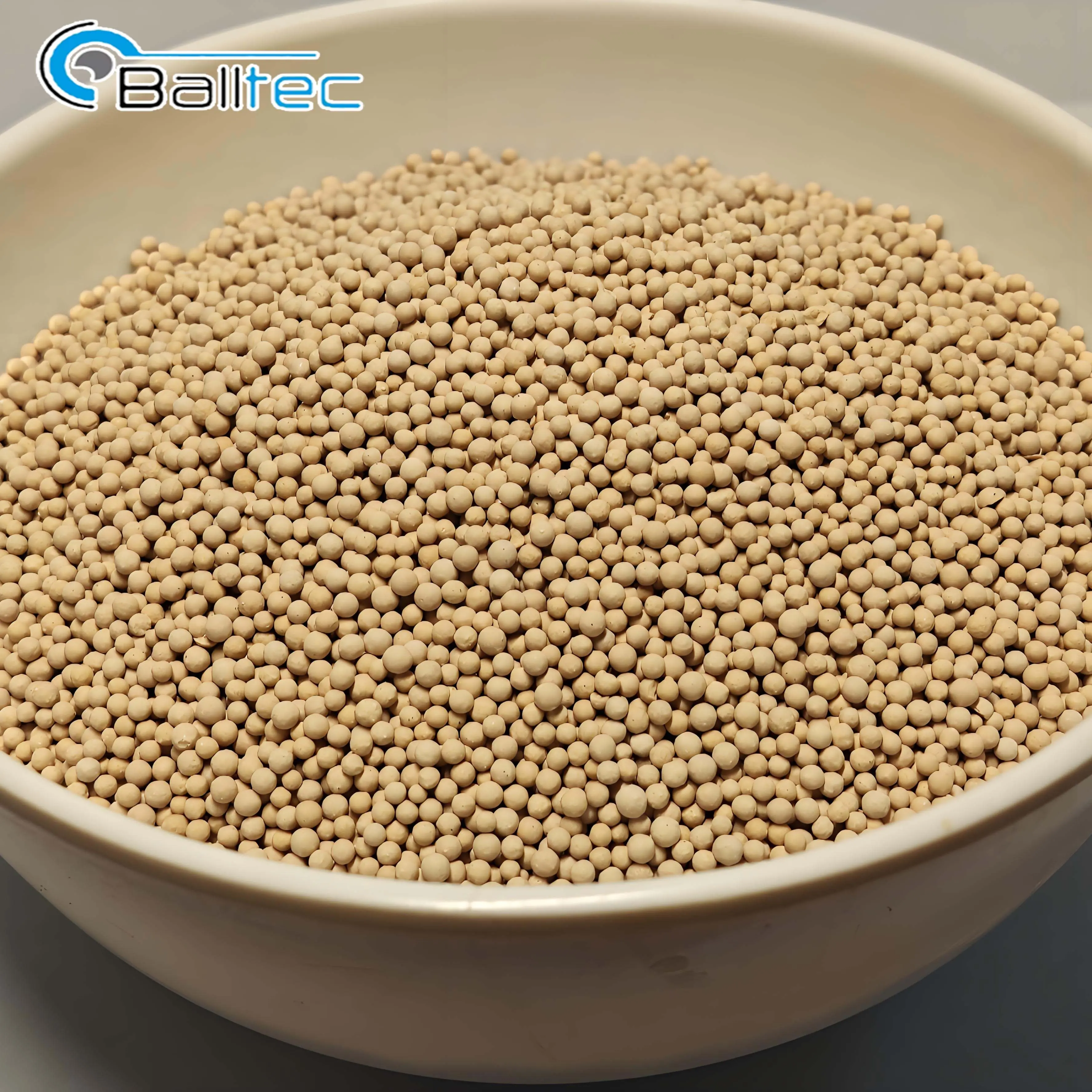
The adsorption principle of molecular sieves is different from that of silica gel and anhydrous calcium chloride. The latter undergoes physical surface adsorption and simple chemical combination, while the former traps water through its own lattice structure.
Generally speaking, after adsorption, molecular sieves will not release adsorbed moisture or other molecules at room temperature; the adsorbed moisture or other molecules can only be released when the temperature reaches about 650℃. It is worth noting that different types of molecular sieves will have different gas emissions at different temperatures, and this temperature is approximately 100℃.
Isopropanol is an important chemical raw material and organic solvent, widely used in the chemical and pharmaceutical industries. A large amount of mixed waste liquid of isopropanol and water is generated during industrial production, so it is of great significance to achieve complete separation of isopropanol and water.
3A molecular sieves have a strong adsorption effect on moisture in isopropanol, with good regeneration effect, and can directly obtain high-concentration isopropanol. The adsorption and dehydration of isopropanol by 3A molecular sieves can directly yield high-concentration isopropanol, and the water absorption capacity of 3A molecular sieves has little relationship with the state of isopropanol (gaseous or liquid). However, the adsorption capacity of 3A molecular sieves for pure isopropanol is closely related to the adsorption state, which is smaller in gaseous adsorption.
Nearly a hundred experiments have confirmed that molecular sieves have good regeneration effect, long service life, and simple operation. Since 3A molecular sieves can realize the dehydration of isopropanol vapor, they can be operated in combination with ordinary distillation towers to achieve the purpose of energy saving.
Ethyl acetate often contains moisture, which forms an azeotrope with ethyl acetate. At atmospheric pressure, the azeotrope contains 8.5% water by mass. To obtain high-purity ethyl acetate, it is necessary to refine ethyl acetate. Common refining methods mainly include extraction refining process, azeotropic distillation with entrainer, and acetic acid extraction reactive distillation process, etc. The above refining processes have high energy consumption.
3A molecular sieves have a strong adsorption effect on moisture, with simple operation and easy regeneration. Using 3A molecular sieves to adsorb moisture in ethyl acetate solution can directly obtain high-purity ethyl acetate, with simple production process and low energy consumption.
The regeneration conditions during the cyclic adsorption process of 3A molecular sieves, the adsorption effect after regeneration, as well as the structural changes inside the molecular sieves after cyclic adsorption and their causes need further research, so as to reduce the deactivation rate of molecular sieves as much as possible while maintaining the adsorption effect.
| Item | Specification (1.6-2.5mm) | Specification (3-5mm) | Remarks (Adapted for Natural Gas Drying) |
|---|---|---|---|
| Product Name | 3A Zeolite Molecular Sieve Adsorbent | 3A Zeolite Molecular Sieve Adsorbent | High separation efficiency, for natural gas deep drying |
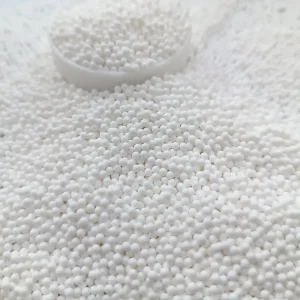
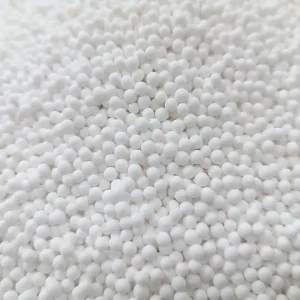
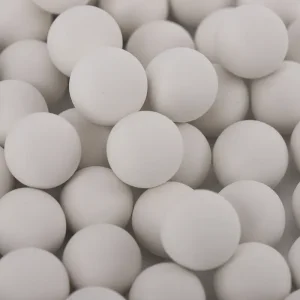
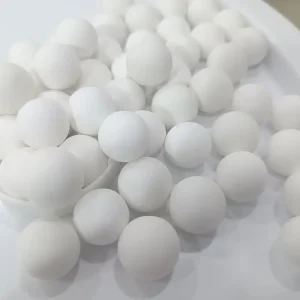
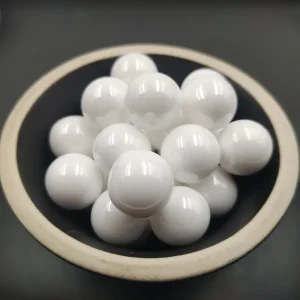
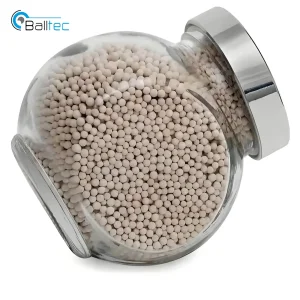
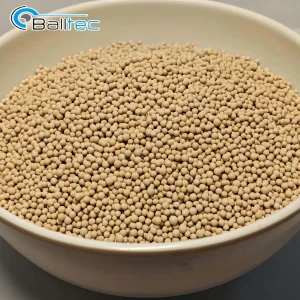
| Shape | Sphere / Pellet (Cylindrical) | Sphere / Pellet (Cylindrical) | Sphere: good fluidity; Pellet: high compressive strength |
| Particle Size | 1.6-2.5mm (tolerance ±0.1mm) | 3-5mm (tolerance ±0.2mm) | Customizable; 1.6-2.5mm for small adsorption towers; 3-5mm for large-scale pipelines |
| Main Composition | High-purity zeolite, Al₂O₃, SiO₂, K₂O, Na₂O | High-purity zeolite, Al₂O₃, SiO₂, K₂O, Na₂O | Silicon-aluminum ratio (SiO₂/Al₂O₃) ≈ 2.0; Molecular formula: 2/3K₂O·1/3Na₂O·Al₂O₃·2SiO₂·9/2H₂O |
| Pore Size | 3Å (3 angstroms, ±0.1Å) | 3Å (3 angstroms, ±0.1Å) | Uniform pore size, only adsorbs water (2.8Å), excludes hydrocarbon molecules (>3Å) |
| Crystal Structure | Crystalline aluminosilicate (potassium-sodium type A zeolite) | Crystalline aluminosilicate (potassium-sodium type A zeolite) | Regular three-dimensional lattice, high separation efficiency |
| Static Water Adsorption Capacity | ≥ 20-21% (25℃, RH=90%) | ≥ 20-21% (25℃, RH=90%) | High water absorption, meets natural gas deep drying requirements |
| Dynamic Water Adsorption Capacity | ≥ 18% (natural gas flow rate 10m/s) | ≥ 18% (natural gas flow rate 10m/s) | Stable adsorption under actual working conditions of natural gas transmission |
| Compressive Strength | ≥ 35 N/p (Sphere); ≥ 20 N/cm (Pellet) | ≥ 45 N/p (Sphere); ≥ 25 N/cm (Pellet) | High mechanical strength, resistant to wear and crushing during gas flow |
| Wear Rate | ≤ 0.25% | ≤ 0.20% | Low wear, suitable for long-term cyclic use |
| Bulk Density | 0.63-0.66 g/cm³ | 0.65-0.68 g/cm³ | Stable bulk density, uniform filling, low gas resistance |
| Regeneration Temperature | 200-350℃ | 200-350℃ | Regenerated with dry nitrogen or dry air, reusable |
| Regeneration Time | 3-4 hours | 3-4 hours | Depends on regeneration gas pressure (0.3-0.5 kg/cm²) and temperature |
3A molecular sieves are mainly used for drying petroleum cracking gas, refinery gas, oilfield gas, and olefins (such as ethylene, propylene, acetylene, and butadiene). They are also widely applied in the dehydration of ethanol, solvents, and natural gas.
Unlike silica gel which relies on physical surface adsorption, 3A molecular sieves trap water molecules within their precise crystal lattice structure. They retain moisture strongly at room temperature and only release it under high-temperature regeneration.
The pore size is approximately 3Å (3 angstroms). This uniform structure allows it to adsorb water molecules (approx. 2.8Å) while excluding larger hydrocarbon molecules (>3Å), preventing co-adsorption of valuable hydrocarbons like ethane and ethylene.
3A molecular sieves typically regenerate at temperatures between 200°C and 350°C using dry nitrogen or dry air. The process takes approximately 3 to 4 hours depending on gas pressure and operational temperature.
Molecular sieves offer a fast adsorption rate. Adsorption is generally completed after about 5 hours of contact, though exact times depend on flow rate, contact area, and operational setup.
They provide high water selectivity and simple regeneration, allowing direct recovery of high-purity solvents like isopropanol or ethyl acetate with significantly lower energy consumption compared to traditional distillation or extraction methods.