China Inert Ceramic Ball /Alumina Ball /Catalyst Support Ball Suppliers, Exporter
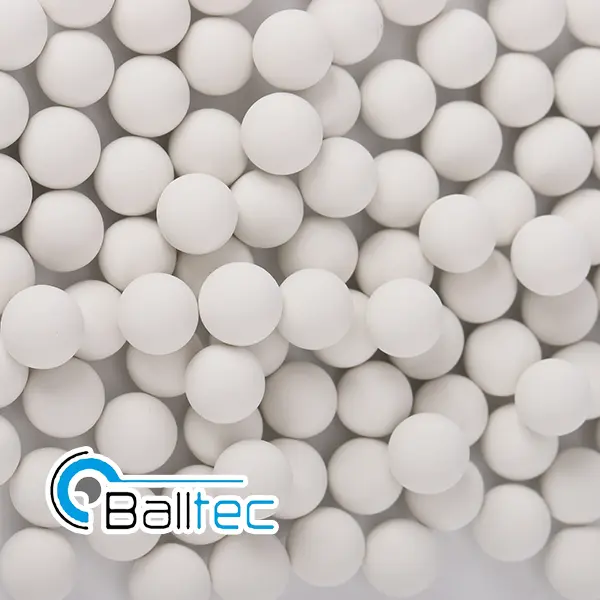
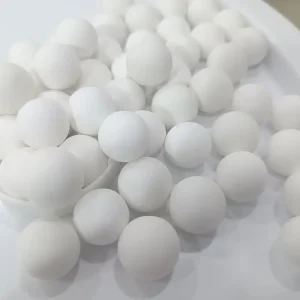
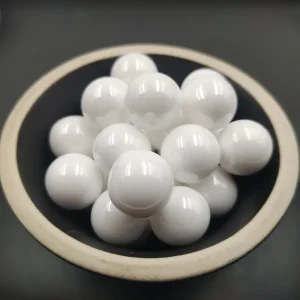
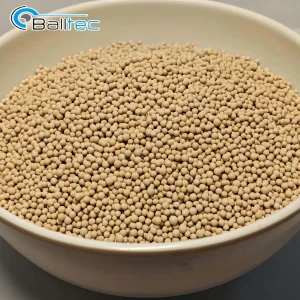
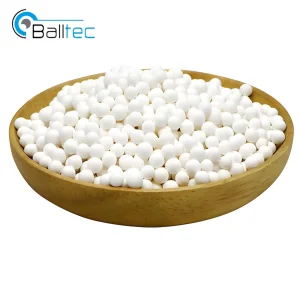
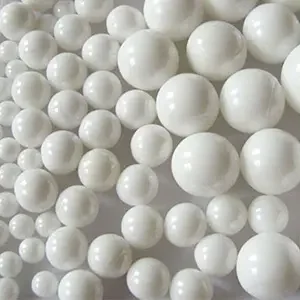
Inert alumina balls possess the characteristics of high strength, high chemical stability, low water absorption, and thermal stability. They can resist high temperatures, high pressures, corrosion from acids, alkalis, salts, and various organic solvents, and can withstand temperature changes occurring during the production process. Widely used in petroleum, chemical, chemical fertilizer, natural gas, environmental protection and other industries, they serve as supporting and covering materials for catalysts in reactors. They can buffer the impact of liquids and gases entering the reactor on the catalyst, support and protect active catalysts with low strength, and improve the distribution of liquids and gases in the reactor.
Inert alumina balls possess the characteristics of high strength, high chemical stability, low water absorption, and thermal stability. They can resist high temperatures, high pressures, corrosion from acids, alkalis, salts, and various organic solvents, and can withstand temperature changes occurring during the production process. Widely used in petroleum, chemical, chemical fertilizer, natural gas, environmental protection and other industries, they serve as supporting and covering materials for catalysts in reactors. They can buffer the impact of liquids and gases entering the reactor on the catalyst, support and protect active catalysts with low strength, and improve the distribution of liquids and gases in the reactor.
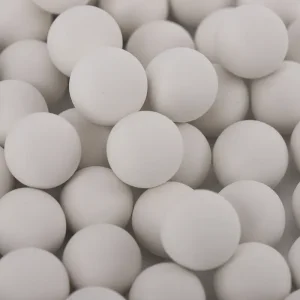
Inert alumina balls have many names. According to their application functions, they can be called packing balls or supporting balls; according to their chemical properties, they can be called inert ceramic balls; according to their chemical composition, they can be called alumina ceramic balls. Regardless of the name, they all utilize the characteristics of inert alumina balls, such as good strength, high hardness, excellent wear resistance, good heat resistance, and low reactivity. Inert alumina balls are made from alumina powder as the main raw material, formed by high-temperature sintering.
According to alumina content, alumina balls are divided into different materials such as feldspathic, feldspar-mullite, mullite, mullite-corundum, and corundum. The ratio is adjusted according to different design requirements of customers. Generally, industrial alumina is used for high-alumina balls, while chemical clay is usually used as the raw material for low-alumina balls.
Q:
What are the primary applications of inert alumina balls?
Inert alumina balls are widely used in petroleum, chemical, fertilizer, natural gas, and environmental protection industries. They primarily serve as supporting and covering materials for catalysts inside reactors.
Q:
What specific functions do inert alumina balls serve in reactors?
They buffer the physical impact of liquids and gases entering the reactor, support and protect active catalysts with lower strength, and optimize the distribution of gases and liquids across the reactor bed.
Q:
What chemical and thermal resistance properties do these balls offer?
They feature high thermal stability (operating temperatures up to 1600℃ depending on material grade) and resist high pressure, as well as corrosion from acids, alkalis, salts, and organic solvents.
Q:
How are inert alumina balls categorized by material composition?
Based on alumina content, they are categorized into feldspathic, feldspar-mullite, mullite, mullite-corundum, and corundum. High-alumina balls use industrial alumina, while low-alumina balls utilize chemical clay.
Q:
What particle sizes and packaging options are available?
Particle sizes range from 1mm to 100mm (customizable). Packaging options include 20kg/50kg sealed plastic bags, 100kg/200kg fiber drums with moisture-proof linings, and customized packaging options.