Follow 


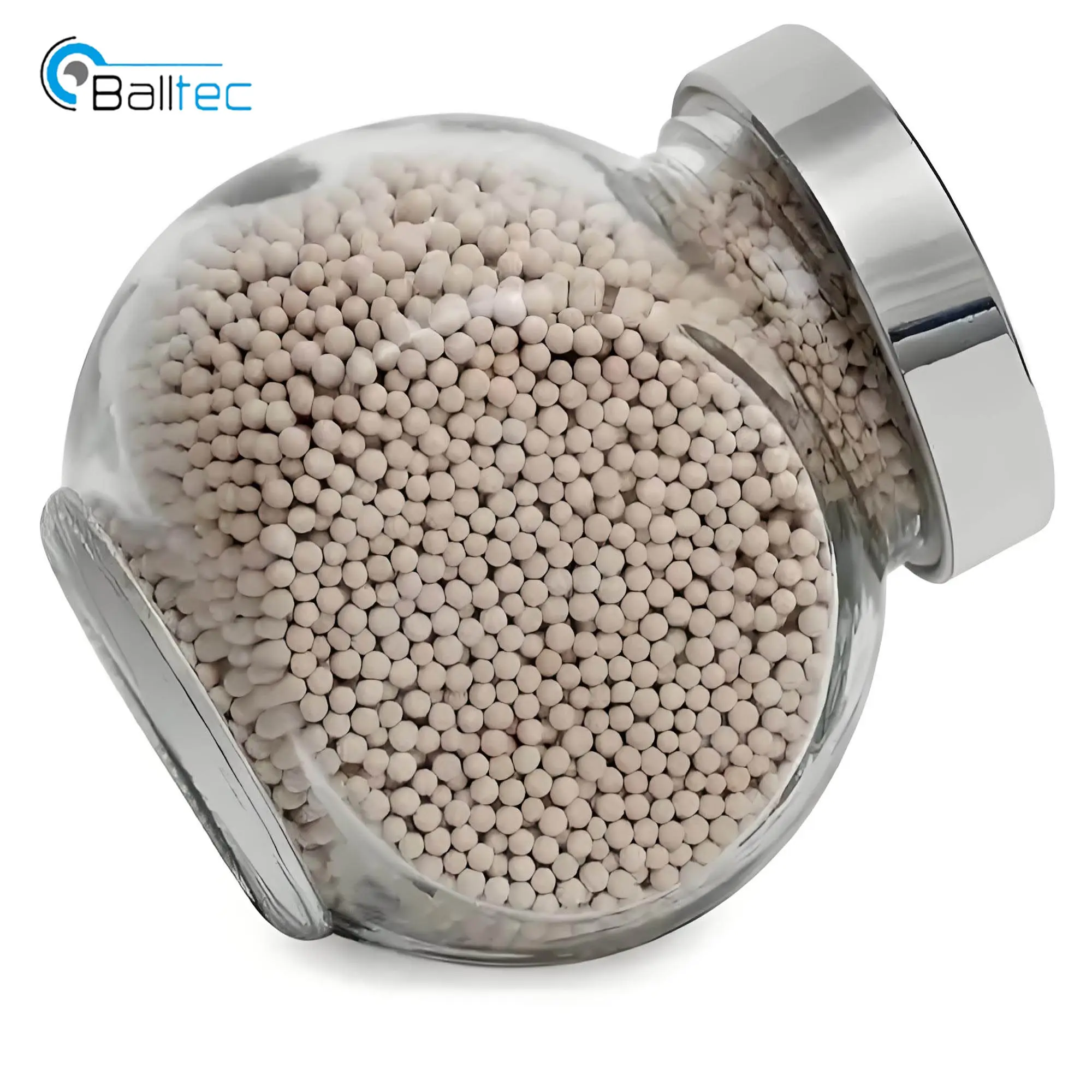
5A molecular sieve has a selective adsorption capacity, which can remove moisture from organic solvents and gases without adsorbing the solvents and gases themselves (e.g., tetrahydrofuran). The traditional dehydration method uses caustic soda; however, caustic soda is highly soluble in water, making it difficult to separate from tetrahydrofuran after dehydration. Additionally, caustic soda is not easily recyclable after use, which effectively increases production costs.
The dehydration operation with 5A molecular sieve is relatively simple. The molecular sieve can be directly added to the solvent, or the solution/gas can be directly passed through a molecular sieve adsorption tower.
5A molecular sieve features a high adsorption capacity, with a typical capacity of 22%.
5A molecular sieve has a high affinity for water molecules. Since the diameter of water molecules is smaller than the pore size of the molecular sieve, electrostatic equilibrium is achieved between water molecules and the molecular sieve upon adsorption. (The molecular sieve does not adsorb particles with a diameter larger than its pore size.)
5A molecular sieve will not release the adsorbed water at room temperature.
The regeneration of 5A molecular sieve is relatively simple. It can be reused after being treated with nitrogen at a temperature above 300℃ for one hour (for non-combustible materials, compressed air can be directly used for regeneration instead of nitrogen).
5A molecular sieve can be regenerated and reused for 3 to 5 years.
| Item | Specification | Remarks (Adapted for Polyurethane Catalysis) |
|---|---|---|
| Product Name | Molecular Sieve 5A (Catalyst/Co-Catalyst for Polyurethane Reaction) | Modified for accelerating polyurethane synthesis reaction |
| Main Composition | High-purity SiO₂, Al₂O₃, CaO, Na₂O | Silicon-aluminum ratio (SiO₂/Al₂O₃) ≈ 2; Molecular formula: 3/4CaO·1/4Na₂O·Al₂O₃·2SiO₂·9/2H₂O |
| Pore Size | 5Å (5 angstroms) | Uniform pore size, suitable for adsorbing small-molecule reactive substances in PU reaction |
| Crystal Structure | Crystalline aluminosilicate (calcium-type molecular sieve) | Regular three-dimensional pore structure, ensuring catalytic activity and adsorption performance |
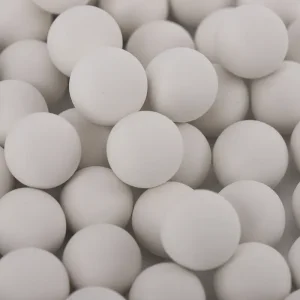
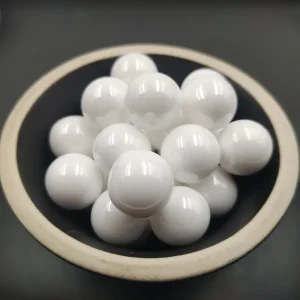
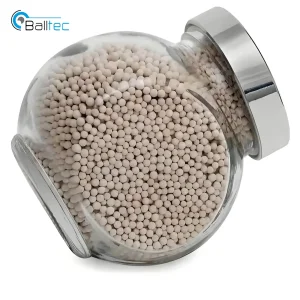
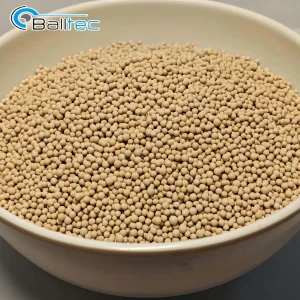
| Particle Size | 1mm-5mm (spherical); 1.5-1.7mm (cylindrical) | Customizable; spherical type is recommended for PU reaction (easy to fill and recycle) |
| Bulk Density | 0.65-0.68 g/cm³ | Stable bulk density, ensuring uniform filling in reaction equipment |
| Static Water Adsorption Capacity | ≥ 20-21% | Adsorbs trace moisture in PU reaction system to avoid isocyanate hydrolysis |
| Catalytic Temperature Range | 25℃-150℃ | Covers the temperature range of most polyurethane synthesis reactions (optimal: 50℃-100℃) |
| Acid Site Density | 0.8-1.2 mmol/g | Mild Lewis acid sites, promotes PU reaction without side reactions |
| Compressive Strength | ≥ 40 N/p (spherical); ≥ 23 N/cm (cylindrical) | High mechanical strength, resistant to wear and crushing during reaction and regeneration |
| Wear Rate | ≤ 0.20-0.30% | Low wear, long service life in cyclic use |
| Regeneration Temperature | 200℃-350℃ | Regenerated with dry nitrogen or air (for non-combustible systems), reusable |
| Regeneration Time | 3-4 hours | Depends on regeneration gas pressure (0.3-0.5 kg/cm²) and temperature |
| Service Life | 3-5 years (after multiple regenerations) | Depends on reaction conditions and regeneration frequency |
| Packaging Water Content | ≤ 1.5% | Prevents moisture absorption before use, ensuring initial catalytic activity |
| Packaging | 20kg/50kg sealed plastic bags; 100kg/200kg fiber drums (moisture-proof lining) | Custom packaging available; avoid moisture during storage and transportation |
| Toxicity | Non-toxic, non-irritating | Green and environmentally friendly, compliant with industrial environmental protection standards |