China Zirconium Oxide Grinding Media Supplier & Exporter

Engineering-Grade Y-TZP, Ce-TZP & ZTA Ceramic Beads for Sub-Micron & Nano Particle Dispersions | White Paper & Industry Procurement Guide

High-Density Zirconia Grinding Media Series

Precision-manufactured ceramic spheres designed for extreme impact resistance, minimal wear rates, and zero metallic contamination in ultra-fine milling circuits.
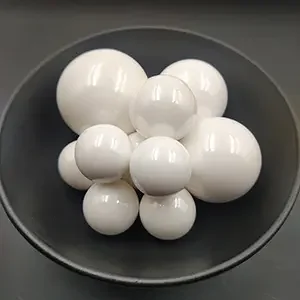
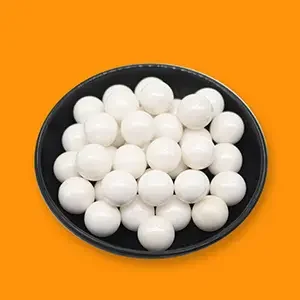
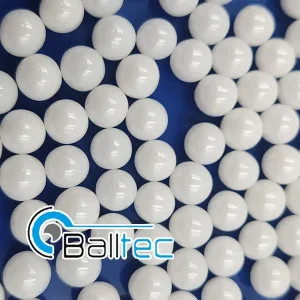
High-Quality Zirconia Ball for Grinding

High-Quality Zirconia Ball for Grinding Stable Dispersion and Particle Size Reduction Suppliers, Exporter

View Technical Specs →
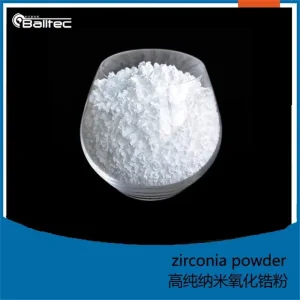
Yttria Stabilizer Zirconia Powder

High-Quality 3mol%-8mol% Yttria Stabilizer Zirconia Powder/Zirconium Oxide Powder/Y-TZP Supplier, Suppliers

View Technical Specs →
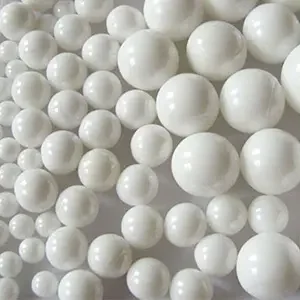
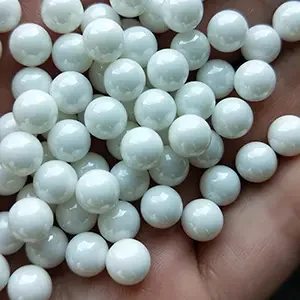
China Zirconium Oxide Grinding Bead

China Zirconium Oxide Grinding Bead for Uniform Dispersion and Material Refinement Suppliers, Exporters

View Technical Specs →
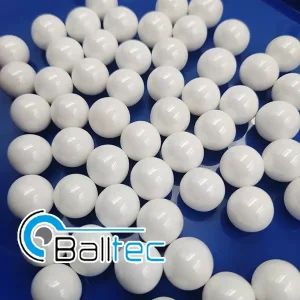
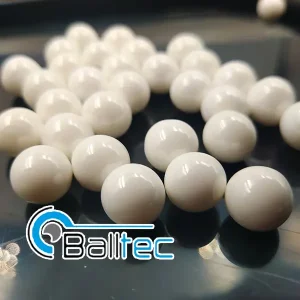
Wholesale Zirconium Oxide Ball for Grinding

Wholesale Zirconium Oxide Ball for Grinding High Density Stable Grinding Applications Supplier, Factories

View Technical Specs →
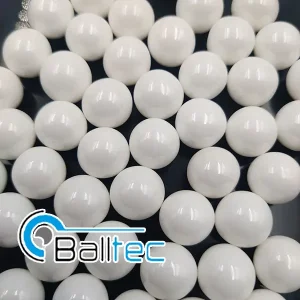
High-Quality Zirconia Grinding Ball

High-Quality Zirconia Grinding Ball for Durable Long Lasting Grinding Media Use Manufacturers, Suppliers

View Technical Specs →
High-Quality ZrO2 Ball for Grinding

High-Quality ZrO2 Ball for Grinding Reliable Long Service Life Grinding Media Manufacturer, Manufacturers

View Technical Specs →
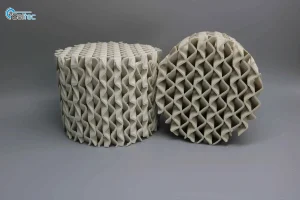
Ceramic Corrugated Plate Packing

Wholesale High Performance and Low Pressure Drop Ceramic Corrugated Plate Packing Supplier, Factories

View Technical Specs →
China ZrO2 Ball for Grinding

China ZrO2 Ball for Grinding Long Service Life Wear Resistant Applications Suppliers, Factory

View Technical Specs →

1. Crystallographic Physics & Engineering Dynamics of Zirconium Oxide Media

In modern industrial particle technology, the transition from micro-scale milling to sub-micron and nanoscale dispersion demands grinding media capable of enduring intense mechanical shear forces while eliminating process contamination. Zirconium oxide grinding media (specifically Yttria-Stabilized Tetragonal Zirconia Polycrystals, or Y-TZP) represent the pinnacle of ceramic milling engineering, outperforming traditional media like silica sand, glass beads, and alumina spheres by orders of magnitude in wear life, density, and fracture toughness.

The high performance of yttria-stabilized zirconia stems from its unique Stress-Induced Phase Transformation Toughening Mechanism. At ambient temperatures, pure zirconia adopts a monoclinic crystal phase ($m\text{-ZrO}_2$), which exhibits low mechanical stability. By doping pure zirconia with approximately 3 mol% Yttria ($\text{Y}_2\text{O}_3$), the high-temperature tetragonal phase ($t\text{-ZrO}_2$) is metastably retained at room temperature.

Phase Transformation Dynamics: When a micro-crack propagates within a Y-TZP bead under high-energy impact in an agitation mill, the localized stress concentration triggers a transformation from the metastable tetragonal phase to the monoclinic phase. This transformation is accompanied by a ~3% to 5% volumetric expansion. The expansion creates a localized compressive stress field around the crack tip, effectively clamping the crack shut and absorbing kinetic energy. This phenomenon grants Y-TZP a fracture toughness ($K_{IC}$) exceeding $7.0 \text{ to } 10.0 \text{ MPa}\cdot\text{m}^{1/2}$.

Comparative Ceramic Engineering Parameters

To assist chemical process designers, process control managers, and procurement leaders in material selection, the core physical metrics of modern industrial grinding media are benchmarked below:

Property Metric Y-TZP (3mol% Y₂O₃) Ce-TZP (Ceria-Stabilized) ZTA (Zirconia Toughened Alumina) 95% High Purity Alumina
Specific Density (g/cm³) ≥ 6.00 - 6.05 ≥ 6.20 - 6.25 3.70 - 4.50 3.60 - 3.70
Bulk Density (g/cm³) 3.70 - 3.85 3.85 - 3.95 2.40 - 2.80 2.20 - 2.35
Vickers Hardness (HV10) 1,200 - 1,350 kg/mm² 1,150 - 1,250 kg/mm² 1,350 - 1,450 kg/mm² 1,100 - 1,200 kg/mm²
Young's Modulus (GPa) 210 200 300 280
Crushing Strength (Ø 2.0mm) ≥ 2,200 N ≥ 2,000 N ≥ 1,200 N ≥ 800 N
Self-Wear Rate (ppm/hr) < 5 ppm / hr < 8 ppm / hr < 25 ppm / hr < 80 ppm / hr
6.05 g/cm³
Ultra-High Density
>99.9%
Micro-Sphericity
0.05 mm
Minimum Micro-Bead Size
<0.01%
Annual Wear Contamination

2. Global Industrial Trends Reshaping Zirconia Media Demand

As advanced manufacturing transitions to sub-micron and nanometer scales, industrial processing units face dynamic technical shifts.

1. Lithium Battery Cathode & Anode Ultrafine Grinding

The global EV expansion demands sub-micron particles for Lithium Iron Phosphate ($LiFePO_4$), Nickel Manganese Cobalt (NMC), and Silicon-Carbon anodes. Ultrafine Y-TZP beads down to 0.1mm–0.3mm enable agitator mills to achieve high power intensity without crushing the grinding media, accelerating battery capacity density.

2. Zero-Contamination ESG Standards

Modern regulatory environments (REACH, FDA, EU Directive 2011/65/EU) enforce stringent limits on heavy metal contamination in pharmaceuticals, food-grade pigments, inks, and electronic grade slurries. High-purity Y-TZP offers near-zero chemical wear, eliminating iron, silica, and heavy metal leaching.

3. Transition to High-Energy Bead Milling

Legacy ball milling systems are being rapidly replaced by high-throughput horizontal pin agitator mills and disc-type bead mills operating at tip speeds exceeding 14 m/s. Grinding media must possess supreme compressive strength and fracture resistance to endure high frequency kinetic collisions without fracturing.

3. China's Industry 4.0: Supply Chain Resilience & Manufacturing Excellence

China has consolidated its position as the premier international hub for advanced structural ceramics manufacturing. Centered in industrial innovation hubs such as Pingxiang, Jiangxi Province, Chinese manufacturers have implemented full-chain digital controls spanning raw zircon sand refining, chemical synthesis of yttrium-doped powders, automated micro-droplet forming, high-temperature continuous sintering, and dynamic laser-sphericity sorting.

Vertical Integration: From Zircon Ore to Nanometer Beads

Unlike regional processing plants that source third-party pre-sintered powders, premier Chinese exporters control the full chemical refinement pipeline. By utilizing chemical co-precipitation and hydrothermal synthesis, raw zircon ores ($\text{ZrSiO}_4$) are converted into ultra-fine sub-micron $Y\text{-TZP}$ powders with primary particle sizes below 30 nanometers. This vertical integration provides distinct commercial and technical advantages:

  • Chemical Purity Control: Ensures $\text{ZrO}_2 + \text{HfO}_2 \ge 94.8\%$ and $\text{Y}_2\text{O}_3 \approx 5.2\%$, keeping trace contaminants ($\text{Fe}_2\text{O}_3, \text{SiO}_2, \text{Na}_2\text{O}$) strictly below 0.01%.
  • Microstructural Homogeneity: Advanced titrating and dripping technology forms uniform liquid droplets, resulting in exceptionally narrow bead size distribution ($PSD$) and near-perfect sphericity ($>98.5\%$).
  • Smart Sintering Automation: Computer-controlled, 60-meter gas-fired tunnel kilns execute ultra-precise thermal profiles up to 1,550°C. This prevents abnormal grain growth, keeping the final crystal grain size constrained between 0.2 and 0.5 microns.

Supply Chain Resilience Index: With integrated domestic supply of rare-earth stabilizers ($\text{Y}_2\text{O}_3, \text{CeO}_2$), state-of-the-art port logistics in Shanghai and Ningbo, and scale-driven raw material buffering, China's export capacity guarantees stable lead times and mitigates international logistics volatility for global procurement buyers.

4. Sector-Specific Application Scenarios & Milling Parameters

Tailored operational setups for optimizing milling energy efficiency across industrial manufacturing sectors.

MLCC & Electronic Ceramics

Challenge: Dielectric formulations for Multi-Layer Ceramic Capacitors ($\text{BaTiO}_3$) require target $D_{90} < 100 \text{ nm}$ with zero metallic or silica contamination.
Solution: 0.1mm - 0.2mm Y-TZP beads with 6.0 g/cm³ density in ceramic-lined circulation mills.
Result: Rapid dispersion without dielectric breakdown caused by wear debris.

Automotive OEM Coatings & Digital Inks

Challenge: Achieving high color transparency, gloss metrics, and jetness in organic/inorganic pigment concentrates without color shifting.
Solution: 0.3mm - 0.6mm Y-TZP beads operating at shaft speeds of 10-14 m/s.
Result: Narrow particle size distribution, reduced viscosity spike, and consistent batch color stability.

Pharma Active Pharmaceutical Ingredients (APIs)

Challenge: Enhancing the bioavailability of poorly soluble Class II/IV drugs through nano-crystallization under cGMP compliance.
Solution: Ultra-pure, autoclave-sterilizable Y-TZP micro-beads (ø 0.05mm - 0.2mm).
Result: Sub-200nm particle suspensions with fully documented batch extraction and validation data.

Industrial Zirconia & Advanced Ceramic Products

High-durability zirconia spheres, powder precursors, and specialized ceramic components for global buyers.
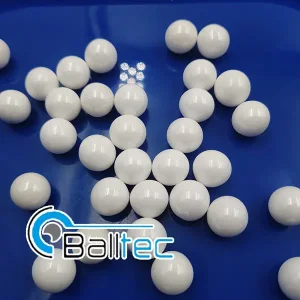
Wholesale ZrO2 Grinding Bead

Wholesale ZrO2 Grinding Bead for Uniform Material Dispersion and Refinement Factories, Exporter

View Technical Specs →
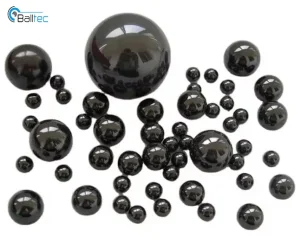
Silicon Nitride Ceramic Balls

Wholesale G3-G5 Ultra Precision Silicon Nitride Ceramic Balls High Speed Anti-Friction Bearing Balls Suppliers, Exporters

View Technical Specs →
China Zirconia Grinding Bead

China Zirconia Grinding Bead for Stable and Consistent Material Dispersion Manufacturers, Factories

View Technical Specs →
High-Quality Zirconium Oxide Ball

High-Quality Zirconium Oxide Ball for Grinding Industrial Ball Milling and Processing Manufacturers, Suppliers

View Technical Specs →
Wholesale Zirconia Ceramic Grinding Solution

Wholesale Zirconia Ceramic Grinding Solution for Industrial Battery Materials Suppliers, Factories

View Technical Specs →
Zirconia Grinding Ball for Fine Particle

High-Quality Zirconia Grinding Ball for Fine Particle Grinding and Uniform Dispersion Manufacturers, Exporters

View Technical Specs →
Yttria Stabilized Zirconia Ceramic Ball

Wholesale High Strength Yttria Stabilized Zirconia Ceramic Zirconium Oxide Ball Grinding Beads Factory, Exporter

View Technical Specs →
High-Purity Zirconia Grinding Media

China High-Purity Zirconia Grinding Media for Fine Chemicals Processing Supplier, Factories

View Technical Specs →

5. Frequently Asked Questions (FAQ) for Technical Buyers

Answers to common engineering and procurement inquiries regarding zirconium oxide grinding media selection, sizing, and mill operations.

How do I calculate the optimal grinding media bead size for my target particle size ($D_{50}$)?

As a rule of thumb in high-energy agitator bead milling, the selected grinding bead diameter ($d_b$) should be approximately 20 to 30 times the initial feed particle size ($D_{50, \text{feed}}$), and no larger than 100 times the final target particle size ($D_{50, \text{target}}$). For instance, if your feed material is $10 \mu\text{m}$ and your goal is $0.2 \mu\text{m}$ ($200 \text{ nm}$), a multi-stage process starting with $0.6\text{mm} - 0.8\text{mm}$ beads followed by a fine pass with $0.1\text{mm} - 0.2\text{mm}$ Y-TZP beads yields optimal kinetic throughput.

What is the main operational difference between Yttria-Stabilized (Y-TZP) and Ceria-Stabilized (Ce-TZP) Zirconia beads?

Y-TZP (3mol% Y₂O₃) has a density of ~6.0 g/cm³ and high flexural strength (>1,200 MPa), making it the gold standard for high-speed mills (>10 m/s tip speed) and ultrafine nano-grinding. Ce-TZP has a higher density (~6.2 g/cm³) and superior resistance to hydrothermal aging (acid/alkali aqueous phase milling at elevated temperatures), but slightly lower hardness. Ce-TZP is preferred for high-viscosity formulations and heavy mineral slurries, while Y-TZP excels in high-purity electronic and battery slurry applications.

What causes bead breakage during milling, and how can it be prevented?

Bead breakage typically stems from three causes: (1) Excessive mill rotor speed creating collision energies that exceed the crush strength threshold; (2) Incorrect chamber loading volume (recommended loading is 75%–85% of chamber volume); or (3) Mixing media of drastically different densities or sizes simultaneously. To prevent breakage, ensure agitator pin speeds match the bead supplier's guidelines, use narrow-range bead size classifications, and inspect hydraulic pressures across separation gaps.

How does Chinese zirconia media compare to European or Japanese brands in terms of Total Cost of Ownership (TCO)?

Top-tier Chinese suppliers operating modern sintering facilities deliver Y-TZP grinding media with physical properties (density ≥ 6.0 g/cm³, wear rate < 5 ppm/hr) that match leading European and Japanese manufacturers. Because China maintains integrated access to yttrium and zirconium raw materials, direct export prices are typically 30% to 50% more competitive. This lower initial purchase price, combined with identical wear longevity, significantly reduces overall Total Cost of Ownership for industrial plants.

What documentation and quality certifications should be verified prior to international export?

Industrial procurement managers should require: (1) ISO 9001:2015 Quality Management System compliance; (2) Full Chemical Composition Analysis via X-ray Fluorescence (XRF); (3) Density test reports via Archimedes principle; (4) Vickers Hardness (HV10) test records; and (5) Certificate of Analysis (CoA) matching specific batch shipments. For pharma and food applications, FDA material contact compliance certificates should also be requested.