Follow 


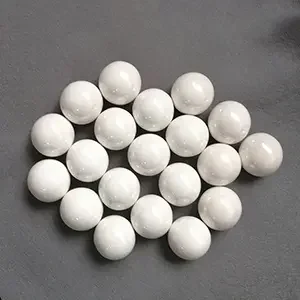
High-reliability ceramic substrates, grinding media, and engineered materials powering modern passive electronic component and high-precision chemical manufacturing.
A 2.2 K resistor (2.2kΩ, 2K2, or 2,200 Ohms) represents a fundamental passive current-limiting and voltage-dividing building block across modern electrical architecture.
The operational endurance of high-reliability 2.2K resistors relies heavily on their core alumina (96% to 99.6% Al₂O₃) or yttria-stabilized zirconia (YSZ) ceramic substrates. Ceramic cores provide high thermal conductivity (25–30 W/m·K), low dielectric loss, and structural immunity against thermal shock during high-temperature reflow soldering up to 260°C.
Premium 2.2K resistors utilize either ruthenium-oxide-based thick film screen printing or vacuum-sputtered metal film (NiCr alloy) thin-film deposition. Thin-film 2.2K resistors achieved tolerances down to ±0.01% and ultra-low Temperature Coefficients of Resistance (TCR as low as ±5 ppm/°C), crucial for medical sensing and high-frequency RF instrumentation.
To assist procurement engineers and PCB hardware designers in specifying the exact component profile, the technical baseline for modern commercial and industrial-grade 2.2K resistors is summarized below:
| Parameter Category | SMD Chip Resistors (0402 / 0603 / 0805 / 1206) | Axial Lead Resistors (Metal Film / Carbon Film) | High-Power Wirewound / Ceramic Case |
|---|---|---|---|
| Nominal Resistance Value | 2.2 kΩ (2200 Ω / EIA Code 222 or 2201) | 2.2 kΩ (Color Bands: Red-Red-Red-Gold/Silver) | 2.2 kΩ (Laser etched or stamped marking) |
| Standard Tolerances | ±0.1%, ±0.5%, ±1%, ±5% | ±0.5%, ±1%, ±5% | ±1%, ±5%, ±10% |
| Power Rating Range (70°C) | 1/16 W (0402) to 1/2 W (1206) | 1/8 W, 1/4 W, 1/2 W, 1W, 2W | 3W, 5W, 10W, 25W (Aluminium Housed) |
| Max Working Voltage | 50V (0402) to 200V (1206) | 250V to 500V RMS | 500V to 1000V DC/AC |
| TCR (PPM/°C) | ±10 ppm/°C to ±100 ppm/°C | ±25 ppm/°C to ±350 ppm/°C | ±20 ppm/°C to ±200 ppm/°C |
| Operating Temperature | -55°C to +155°C (AEC-Q200 Grade 0) | -55°C to +155°C | -55°C to +275°C |
China's passive electronic component manufacturing ecosystem combines upstream chemical purity control, ceramic substrate fabrication, automated laser trimming, and high-speed packaging into an unmatched supply model.
Unlike regional assemblers that import bare substrates, Chinese manufacturing centers (such as Pingxiang, Jiangxi for high-purity alumina/zirconia ceramic materials and Guangdong for SMT packaging) operate fully integrated production loops. Raw ceramic powder synthesis, micro-tape casting, electrode printing, and sintering occur within specialized industrial parks, reducing raw material lead times by up to 65%.
Modern Chinese resistor factories deploy high-frequency optical laser trimming systems capable of adjusting active resistive paths at rates exceeding 50,000 units per hour per line. This automation guarantees zero-defect Cpk ≥ 1.67 process capability, enabling strict adherence to ±0.1% narrow tolerances for bulk 2.2K resistor shipments.
By leveraging high-speed rotary pressing, continuous tunnel kiln sintering, and automated tape-and-reel packaging (EIA-481 compliant), Chinese OEM suppliers offer high-precision 2.2K resistors at economies of scale that significantly lower BOM (Bill of Materials) costs for Tier-1 automotive and global industrial clients.
As power density increases and board space shrinks, 2.2K resistor manufacturing is undergoing structural innovations to meet next-generation electronic requirements.
Driven by 5G mobile devices, wearable health monitors, and compact IoT sensors, 2.2K chip resistors are transitioning from traditional 0805/0603 dimensions toward ultra-compact 0201 (0603 metric) and 01005 (0402 metric) footprints. Achieving a stable 2.2kΩ value in sub-millimeter packages requires nano-particle resistive pastes and ultra-smooth ceramic surface roughness (Ra < 0.05 µm).
Industrial pollutants and high-sulfur automotive environments degrade standard silver-based inner electrodes through silver sulfide (Ag₂S) whiskers growth, leading to open-circuit failures. Next-generation 2.2K automotive resistors employ anti-sulfur gold-based (Au) or silver-palladium (Ag-Pd) conductive layers, fully compliant with ASTM-B809 sulfuration tests and AEC-Q200 Automotive Grade 0 standards.
Empowering global original equipment manufacturers (OEMs) and contract manufacturers (EMS) with guaranteed volume and quality metrics.
From noise-sensitive medical electronics to harsh automotive drive trains, the 2.2K resistor plays critical circuit protection and signal stabilization roles.
In digital circuit buses (I2C, SMBus), 2.2K Ω resistors are widely chosen as pull-up resistors on SDA and SCL lines running at 3.3V or 5V logic. A 2.2K value balances fast signal rise times (overcoming bus capacitance up to 400 pF) while maintaining low static power consumption during low-state sinking.
High-voltage electric vehicle battery packs utilize precision 2.2K thin-film resistors in multi-channel analog front-end (AFE) sensing arrays. Low TCR (±10 ppm/°C) ensures that cell voltage measurement remains accurate across battery operating temperatures from -40°C to +105°C.
In programmable logic controllers (PLCs) and variable frequency drives (VFDs), 2.2K 1/2W metal film resistors serve as gate-drive current limiters and optical isolator current setters, protecting microcontroller I/O pins from high-voltage transient spikes.
Explore how global electrical engineering teams deploy 2.2K resistors inside standard hardware design topologies for maximum system stability.
When coupled with a paired resistor (e.g., 10K or 1K), a 2.2K precision resistor forms a stable voltage divider for analog-to-digital converter (ADC) reference scaling. By using matched-pair resistor networks on a unified ceramic substrate, thermal drift tracking is optimized to within 2 ppm/°C, preventing sensor readout distortion in industrial telemetry.
In audio preamplifiers and medical ECG signal conditioning units, 2.2K metal film resistors determine gain ratios and cutoff frequencies in active low-pass and Sallen-Key bandpass filters. Low current noise (< -30 dB) and minimal voltage coefficient of resistance (VCR) are essential to maintain pure signal fidelity.
Evaluating Chinese suppliers for high-volume 2.2K resistor manufacturing requires rigorous audit benchmarks across quality management, environmental compliance, and packaging logistics.
Factories must hold verified ISO 9001:2015 and IATF 16949:2016 certifications. Production lines must feature inline 100% automated optical inspection (AOI) for laser cut symmetry, electrode plating uniformity, and resistance tolerance verification prior to reel packaging.
Sourcing partners must guarantee full compliance with RoHS Directive 2011/65/EU and REACH (EC 1907/2006). Raw materials including lead-free glass frit powders, nickel barrier plating, and halogen-free protective epoxy coatings must pass third-party SGS or TÜV chemical testing.
For seamless high-speed pick-and-place assembly, 2.2K chip resistors are delivered in standard 7-inch or 13-inch EIA-481 paper or plastic carrier tape reels with heat-sealed cover tape, guaranteeing zero component inversion and minimal feeder jam rates.
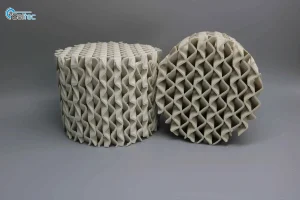
Explore our full industrial ceramic product line backing top passive electronic component substrate production and high-purity chemical processing.
Detailed technical answers provided by our component engineering team to streamline component specification and factory auditing.