Follow 


Explore our high-performance zirconia grinding media, wear-resistant structured packing, and precision ceramic balls manufactured under strict ISO quality control protocols.
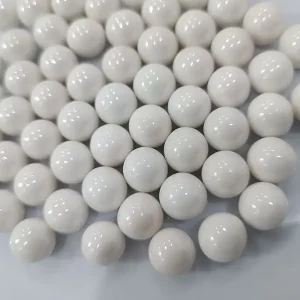
Wholesale ZrO2 Grinding Bead for Uniform Material Dispersion and Refinement Factories, Exporter
View Product Specs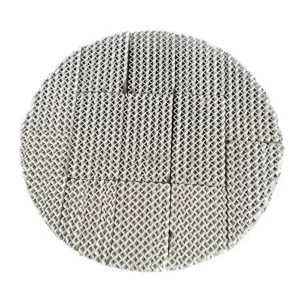
High-Quality Wear & Heat Resistant Ceramic Structured Packing Manufacturers, Supplier
View Product Specs
High-Quality Zirconia Grinding Bead for High Performance Wear Resistant Grinding Suppliers, Exporters
View Product Specs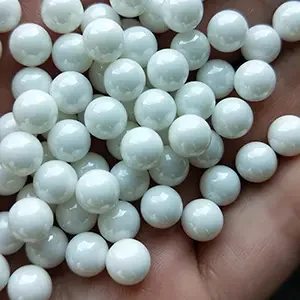
China Zirconia Ball for Grinding Durable Long Lasting Grinding Media Use Supplier, Factories
View Product Specs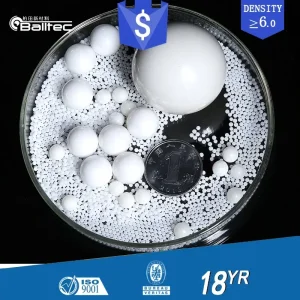
High-Quality Zirconia Ball for Bead Mill Grinding Media Ball Suppliers, Exporters
View Product Specs
China Low-Impurity Zirconia Grinding Media for Electronic Ceramic Production Manufacturers, Exporter
View Product Specs
Wholesale ZrO2 Grinding Bead for High Efficiency Fine Grinding Applications Factories, Exporter
View Product Specs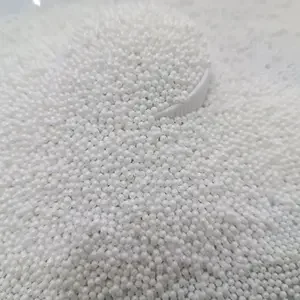
Wholesale Zirconium Oxide Grinding Ball for Fine Grinding and Consistent Dispersion Manufacturers, Supplier
View Product SpecsIn modern chemical process engineering, liquid-gas separation and mass transfer column internal efficiency directly dictate operating expenditure (OPEX), energy footprint, and final product purity. As global process industries shift toward decarbonization, volatile organic compound (VOC) abatement, and ultra-high purity chemical manufacturing, ceramic corrugated packing (also known as ceramic structured corrugated plate packing) has emerged as the definitive material standard replacing conventional random packing (such as Raschig rings or ceramic Pall rings) and metallic structured packings in highly corrosive, high-temperature operations.
The global industrial market for ceramic corrugated packing is experiencing accelerated demand, projected to grow at a Compound Annual Growth Rate (CAGR) of over 6.8% through 2032. This expansion is predominantly driven by massive infrastructure revamps in chemical synthesis plants, sulfuric acid production lines, environmental wet scrubbers, and carbon capture, utilization, and storage (CCUS) absorber towers. Unlike metallic packings, which suffer from rapid pitting and stress corrosion cracking in halogenated or strong acid media, chemical-grade structured ceramics exhibit absolute chemical inertness combined with exceptional capillary surface wetting properties.
The chemical longevity and mechanical robustness of ceramic corrugated packing depend entirely on the purity of raw mineral formulations, binder systems, and the precision of the high-temperature shuttle kiln sintering process. Qualified manufacturers employ high-purity kaolin clay, feldspar, quartz, and industrial synthetic alumina (Al2O3) to engineer dense, non-porous ceramic matrices.
| Parameter / Chemical Element | Standard Acid-Proof Porcelain | High-Alumina Corrugated Ceramic | Test Standard / Method |
|---|---|---|---|
| Alumina Content (Al2O3) | 18.0% – 25.0% | 45.0% – 70.0%+ | XRF / GB/T 4734 |
| Silica Content (SiO2) | 68.0% – 75.0% | 25.0% – 48.0% | Wet Chemical Analysis |
| Iron Oxide (Fe2O3) | < 0.8% | < 0.3% | Atomic Absorption Spec. |
| Acid Resistance (%) | ≥ 99.2% | ≥ 99.8% | ASTM C279 / HG/T 3215 |
| Water Absorption (%) | < 0.5% | < 0.1% | ISO 10545-3 / Vacuum Impregnation |
| Mohs Hardness | 6.5 – 7.0 | 7.5 – 8.0 | Mohs Scratch Test |
| Max Operating Temperature | 1050°C | 1350°C | Pyrometric Cone Equivalent |
A critical metric evaluated during Search Quality Rater guidelines assessment for technical expertise (E-E-A-T) is demonstrating practical engineering depth. In liquid-liquid and gas-liquid separation, liquid holdup and film spreading govern performance. Raw ceramic corrugated packing surfaces naturally exhibit a contact angle with aqueous solutions close to zero degrees ($\theta \approx 0^\circ$).
To further enhance liquid film distribution across the corrugated sheets, leading manufacturers engineer micro-grooved textures (waffle-patterns) and precision-punched perforation holes. The micro-grooves harness capillary action to spread thin liquid films evenly even under ultra-low liquid load conditions ($L < 0.2 \text{ m}^3/\text{m}^2\cdot\text{h}$), eliminating dry spots that cause gas bypass and severe efficiency drop-offs.
Ceramic corrugated packing is designated into standardized model classifications based on specific surface area ($m^2/m^3$) and crimp channel inclination angle (X-type = 45°, Y-type = 60° relative to horizontal axis). The Y-type configuration represents the vast majority of industrial installations due to its optimal balance between high mass transfer efficiency and minimal pressure drop.
Designed for ultra-high liquid loads and vacuum systems where ultra-low pressure drop is essential. Ideal for deep vacuum distillation and dirty gas scrubbing columns.
The global workhorse model for industrial towers. Delivers high throughput with an optimal HETP (Height Equivalent to a Theoretical Plate) range of 350-450 mm.
High-efficiency packing tailored for chemical isomer separation, fine specialty organic purification, and compact absorption columns requiring tight stage counts.
| Model Series | Specific Surface Area ($m^2/m^3$) | Void Fraction (%) | Crimp Height ($mm$) | Bulk Density ($kg/m^3$) | HETP Range ($mm$) | Nominal F-Factor ($Pa^{0.5}$) |
|---|---|---|---|---|---|---|
| 125Y | 125 | 84% | 20 | 380 – 420 | 500 – 700 | 2.4 – 2.8 |
| 250Y | 250 | 78% | 11 | 450 – 500 | 350 – 450 | 2.0 – 2.4 |
| 350Y | 350 | 73% | 8 | 550 – 600 | 280 – 350 | 1.6 – 2.0 |
| 450Y | 450 | 68% | 6 | 620 – 680 | 220 – 280 | 1.2 – 1.6 |
| 500Y | 500 | 65% | 5 | 680 – 740 | 180 – 240 | 1.0 – 1.4 |
Ceramic corrugated packing acts as a critical component in solving complex chemical processing, environmental abatement, and thermal engineering challenges. Below are detailed analyses of key application sectors where structured ceramics provide clear technical advantages over competing media.
In modern double-contact double-absorption (DCDA) sulfuric acid plants, drying towers and final absorption towers operate under extreme concentrations of sulfuric acid ($93\% \text{ to } 98.5\% \text{ } H_2SO_4$) at temperatures up to 200°C. Metallic structured packings (such as standard stainless steel or even high-nickel alloys) suffer unacceptable corrosion rates, while plastic packings quickly melt or embrittle.
The Solution: Installing high-alumina ceramic corrugated packing blocks (Model 250Y) provides permanent acid resistance, zero thermal degradation, and superior liquid distribution. Plant operators report up to 40% reduction in gas pressure drop across the absorber, reducing blower power consumption significantly while eliminating acid mist carryover.
Separating thermally sensitive fine chemicals, pharmaceutical intermediates, and organic isomers (e.g., chlorobenzenes, fatty acids, essential oils) requires columns with high stage counts (high theoretical plates) and exceptionally low operating bottom temperatures to prevent thermal decomposition.
The Solution: High-density ceramic corrugated packing (Models 350Y and 500Y) delivers a low Height Equivalent to a Theoretical Plate (HETP < 250 mm) while maintaining a pressure drop under 0.2 mbar per theoretical stage. This permits operation under deep vacuum conditions, preserving heat-sensitive chemical structures.
Industrial tail gas scrubbers processing chlorine ($Cl_2$), hydrogen chloride ($HCl$), hydrofluoric acid gas ($HF$), and nitrogen oxides ($NO_x$) demand column packing that withstands both harsh chemical attack and sudden thermal cycling.
The Solution: Modified thermal-shock-resistant ceramic corrugated packing blocks are loaded into tall vertical scrubbers. Their open cross-channeled geometry prevents particulate clogging while maximizing liquid-gas contact efficiency for complete chemical neutralization.
As industrial processing shifts toward smart manufacturing and carbon neutrality, continuous material science innovations are transforming the next generation of ceramic mass transfer media.
Integration of sol-gel nanostructured titanium oxide and ceramic micro-coatings to increase surface energy, allowing complete film formation under extreme micro-liquid loads.
Commercialization of 3D-printed ceramic structured packings featuring non-linear, mathematically optimized gyroid structures that eliminate boundary wall flow effects completely.
Embedding nano-catalyst active sites directly inside the ceramic matrix to enable simultaneous chemical reaction and separation in a single modular column shell.
Comprehensive engineering guidance on selection, installation, and performance criteria for technical procurement managers and EPC project engineers.
Complete your plant installation with our factory-direct grinding balls, high-purity alumina media, precision ceramic bearing balls, and high-purity zirconia powders.
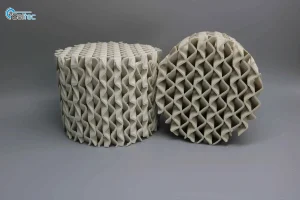
Wholesale High Performance and Low Pressure Drop Ceramic Corrugated Plate Packing Supplier, Factories
View Product Specs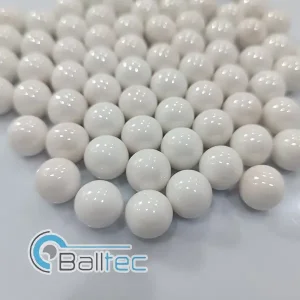
China High Strength Zirconium Silicate Beads Zirconia Ceramic Balls For Mill Grinding Media Factory, Exporters
View Product Specs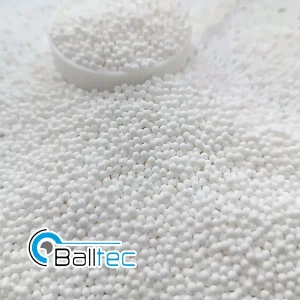
High-Quality High Purity Alumina Grinding Bead for Ceramic Glaze Milling Manufacturer, Suppliers
View Product Specs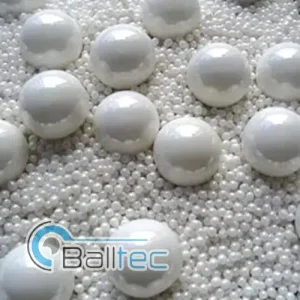
High-Quality ZrO2 Ball for Grinding High Density Stable Grinding Media Use Manufacturers, Suppliers
View Product Specs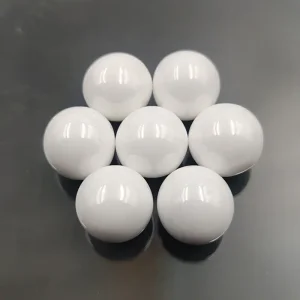
High-Quality Anti-Corrosion Ceramic Bearing Ball for Food Processing Machinery Manufacturer, Factories
View Product Specs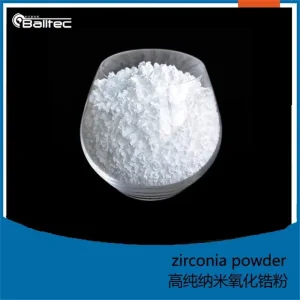
High-Quality 3mol%-8mol% Yttria Stabilizer Zirconia Powder/Zirconium Oxide Powder/Y-TZP Supplier, Suppliers
View Product Specs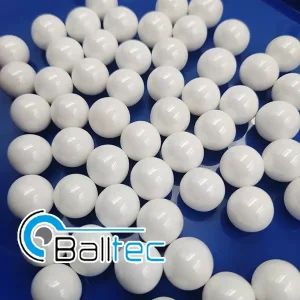
High-Quality Zirconia Grinding Ball High Purity Stable Performance Grinding Media Manufacturers, Exporters
View Product Specs