Follow 


High-precision manufactured products certified for rigorous industrial operations, advanced materials processing, and energy infrastructure.

An authoritative engineering white paper on high-reliability Power Factor Correction (PFC) Capacitors, harmonic mitigation strategies, and advanced manufacturing standards for global utilities and heavy industry.
In modern industrial power systems, reactive power management is no longer merely a regulatory compliance check—it is a critical pillar of energy infrastructure resilience, carbon footprint reduction, and operational cost mitigation. Inductive loads such as high-power asynchronous motors, arc furnaces, variable frequency drives (VFDs), transformers, and HVAC compressors consume both active power (kW) and reactive power (kVAR). When reactive power demand increases, the displacement power factor ($\cos \phi$) degrades, causing substantial line losses ($I^2R$), voltage drops, premature thermal degradation of distribution transformers, and steep financial penalties imposed by utility operators worldwide.
As a global tier-one Power Factor Correction Capacitor Supplier & Factory, our manufacturing facility leverages ultra-low-loss metallized polypropylene film (MKP/MPP) technology, automated vacuum impregnation, dry-type gas insulation ($SF_6$ alternatives or non-toxic dry resin), and integrated smart thermal/pressure protection. This white paper examines the complete lifecycle, materials science, grid dynamics, procurement frameworks, and Industry 4.0 production standards governing modern industrial capacitors.
Advanced segmented pattern metallized zinc-aluminum polypropylene film automatically isolates micro-dielectric breakdowns within microseconds, preventing catastrophic thermal runaway and maintaining capacitance over decades.
Integrated mechanical safety disconnector features an expansion wave top that physically breaks internal connection wires upon internal pressure buildup, eliminating rupture and fire hazards under extreme fault conditions.
Engineered with dielectric loss factors ($\tan \delta$) under $0.2 \text{ W/kVAR}$, minimizing active dissipation losses and maintaining cool operation even under heavy total harmonic distortion (THD) stress.
Pioneering advancements in high-temperature polymer dielectrics, IoT-integrated condition monitoring, and detuned/tuned harmonic filter topologies.
Incorporating nano-structured aluminum-zinc metal gradients with thick edge profiles increases current-carrying capacity up to 300 times rated current ($I_n$), shielding against switching inrush surges and transient overvoltages.
Embedded micro-sensors continuously measure internal pressure, temperature gradient, harmonic current spectrum, and remaining lifetime expectation ($L_{10}$), broadcasting telemetry directly to SCADA and cloud platforms.
Replacing traditional liquid or mineral oil dielectrics with semi-dry vegetable oil resin or inert nitrogen/helium gas mix completely eliminates oil leakage risks and conforms to strict environmental directives (RoHS, REACH).
Every industrial environment imposes distinct electrical stresses—ranging from heavy harmonic pollution in VFD plants to dynamic high-speed load fluctuations in steel manufacturing.
| Industry Sector | Dominant Grid Challenge | Recommended PFC Architecture | Key Operational Benefit |
|---|---|---|---|
| Heavy Steel & Metallurgy | Extreme current surges, rapid kVAR changes, heavy 5th/7th harmonic spectrum. | Dynamic Thyristor Switched PFC + 7% / 14% Detuned Reactor Banks. | Prevents voltage sag, eliminates utility penalties, increases transformer capacity. |
| Renewable Energy (Solar/Wind) | Unstable power factors, low-load phase shifts, high grid impedance. | Heavy-Duty Continuous 690V MKP Capacitors with Smart APFC Controllers. | Stabilizes point of common coupling (PCC) voltage, guarantees grid code compliance. |
| Hyperscale Data Centers | High non-linear IT load, strict demand for zero downtime and low thermal output. | Dry-Resin Ultra-Low Loss Modular PFC Units with Active Harmonic Filters (AHF). | Optimizes PUE (Power Usage Effectiveness), prevents harmonic-induced UPS trips. |
| EV Supercharging Hubs | Rapid intermittent DC fast-charging load steps, high total harmonic distortion. | Fast-Response Thyristor Capacitors with Integrated Resonance Suppression. | Eliminates transformer thermal stress, reduces peak demand charges. |
| Chemical & Offshore Plants | Corrosive atmosphere, explosive hazardous zones, extreme ambient temperatures. | Stainless Steel IP54 Ex-Proof Casing Capacitors with Nitrogen Gas Fill. | Maximum explosion-proof safety, maintenance-free 15-year operation in harsh environments. |
Connecting pure capacitors directly to a grid rich in non-linear loads creates a parallel resonant circuit between the supply transformer's inductive reactance ($L$) and the capacitor bank's capacitive reactance ($C$). If the resonant frequency aligns with a dominant harmonic (e.g., 250 Hz for 5th harmonic), catastrophic voltage amplification occurs. Our factory specializes in custom-matched Detuned PFC Capacitor & Reactor Systems (tuning frequencies at 135Hz, 189Hz, or 210Hz) to safely shift system resonance below the lowest harmonic order.
Inside our fully automated smart plant: How state-of-the-art winding technology, zero-dust cleanrooms, and 100% automated testing deliver zero-defect quality at scale.
Our facility utilizes Swiss-engineered automated winding machines operating inside Class 10,000 dust-free cleanrooms. Micro-processor controlled tension dynamics ensure zero wrinkle formation, uniform dielectric layer thickness, and optimal air exclusion during element roll assembly.
Capacitor elements undergo extended multi-stage thermal baking under deep vacuum (< 0.01 mbar) to eliminate all moisture traces. Subsequent pressure impregnation with high-viscosity polyurethane resin or gas filling seals the unit completely against moisture ingress and internal oxidation.
Every single capacitor leaving our factory line undergoes automated routine verification: 2.15x rated voltage AC withstand test between terminals, inter-terminal insulation resistance measurement, loss factor ($\tan \delta$) check, and capacitance tolerance verification ($\pm 3\%$).
By controlling raw film slitting, zinc-aluminum metal evaporation, aluminum container extrusion, and terminal block molding in-house, we eliminate component bottlenecks, maintain strict batch-to-batch consistency, and provide lead times up to 40% faster than European peers.
Engineered for seamless integration into power distribution systems across North America, Europe, Asia-Pacific, and the Middle East.
Procuring low and medium voltage power factor correction equipment requires strict alignment with localized safety standards and utility interconnection rules. Our power capacitors are independently tested and certified by recognized global laboratories (UL, TÜV, CSA, CE), meeting or exceeding all major international electrotechnical requirements.
Full compliance with international standards for shunt power capacitors of the self-healing type for A.C. systems up to 1,000 V. Tested for thermal stability, overvoltage endurance, and discharge circuit safety.
Certified under UL 810 for safety shunt capacitors, featuring integrated pressure-actuated internal interrupters capable of clearing short-circuit fault currents up to 10,000A in accordance with National Electrical Code (NEC) standards.
Designed to operate seamlessly within electrical networks configured to meet IEEE 519 voltage distortion thresholds (< 5% Voltage THD), providing long-term reliability under severe non-sinusoidal voltage waveforms.
Why initial purchase price accounts for less than 15% of a power factor capacitor’s total life-cycle cost—and how premium dielectric design yields massive ROI.
For industrial procurement directors and EPC engineering managers, evaluating a Power Factor Correction Capacitor Supplier requires evaluating overall operational expenditure (OPEX) rather than just initial capital expenditure (CAPEX). Inferior capacitors with higher internal resistance and inadequate heat dissipation suffer from accelerated capacitance degradation, increased internal power losses, and premature dielectric breakdown.
Increasing system power factor from 0.78 to 0.98 yields immediate financial return by completely eliminating reactive power surcharge penalties on utility bills, while reducing transformer current load by up to 20%. This frees up existing transformer kVA capacity, allowing industrial expansion without purchasing additional costly substation transformers.
Every $1.00 saved on unbranded, low-grade capacitors can cost up to $25.00 in unscheduled factory downtime, labor for replacement, panel maintenance, and potential damage to adjacent switchgear during catastrophic capacitor thermal events. Our products come backed by comprehensive 3-to-5 year factory warranties and guaranteed MTBF (Mean Time Between Failures) exceeding 150,000 hours.
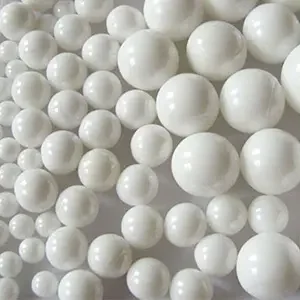
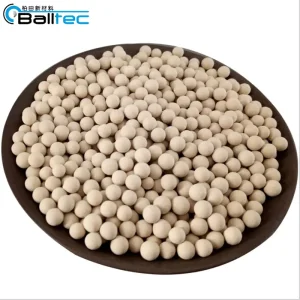
High-grade ceramic structured packing, specialized molecular sieves, and precision grinding media directly exported from our manufacturing campus.
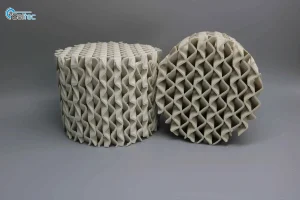
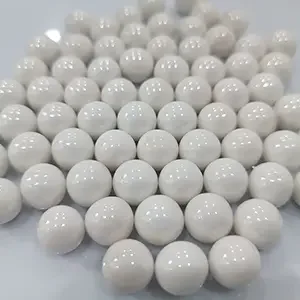
In-depth technical explanations answered by our senior electrical engineering team to assist electrical designers and procurement teams.
Dry-type capacitors utilize non-toxic, eco-friendly polyurethane resin or inert gas ($N_2$) to encapsulate the metallized polypropylene winding elements. They eliminate any risk of fluid leakage, are fire-retardant, and can be mounted in any physical orientation (vertical or horizontal). Oil-filled capacitors use biodegradable mineral or synthetic oil for heat transfer. While oil provides excellent thermal conductivity for extreme ambient heat, dry-type units are overwhelmingly preferred in modern industrial and commercial panels due to stricter fire safety rules, environmental regulations, and zero risk of chemical fluid spills.
When variable frequency drives (VFDs), UPS systems, or arc welders are present, harmonic currents (such as 5th, 7th, and 11th orders) distort the voltage waveform. Connecting pure capacitors creates a parallel resonant loop with grid transformers, amplifying harmonic currents and leading to catastrophic capacitor swelling or fuse blowing. Connecting a detuned reactor in series with the capacitor creates an $LC$ filter circuit tuned below the lowest prevailing harmonic frequency (e.g., tuned to 189 Hz for a 50Hz grid with 5th harmonic presence). This makes the branch inductive at harmonic frequencies, blocking dangerous resonance while remaining capacitive at 50Hz/60Hz fundamental frequency to perform reactive compensation.
Our heavy-duty power capacitors feature a triple redundant safety architecture: First, self-healing metallized film automatically clears localized micro-punctures. Second, an integrated 3-phase overpressure disconnector physically expands outward via an engineered top cover rupture groove, pulling and disconnecting internal electrical leads before internal gas pressure can rupture the outer aluminum canister. Third, internally fitted discharge resistors automatically drain residual voltage below 50V within 60 seconds after disconnection, preventing shock hazards to maintenance technicians.
To determine required compensation power ($Q_c$ in kVAR), calculate: $$Q_c = P \times (\tan \phi_1 - \tan \phi_2)$$ where $P$ is the total active load in kW, $\cos \phi_1$ is the current measured baseline power factor, and $\cos \phi_2$ is the target power factor (typically 0.95 to 0.98 lag). Our engineering team offers free software-assisted network analysis—simply submit your monthly utility electricity statement showing peak kW active demand, current power factor, and transformer rating.
Our heavy-duty capacitors are manufactured according to temperature category **-40/D**, meaning they are rated for minimum temperatures of -40°C and maximum ambient temperatures up to 55°C (with a 24-hour average maximum of 45°C and annual average of 35°C). Special high-temperature series equipped with aluminum heat-sink fins and ceramic terminal blocks are available for tropical deployments up to 70°C ambient temperatures.
As a direct factory supplier, we offer comprehensive OEM/ODM services for original equipment manufacturers (OEMs), panel builders, and global brand distributors. Customization choices include custom voltage ratings (220V up to 1000V AC), custom kVAR outputs (1 kVAR to 100 kVAR single units), customized aluminum canister dimensions, laser-etched private logos, custom terminal connection designs (screw-type, fast-on, or heavy-duty block terminals), and tailored export master-box packaging.