Follow 


Engineered for high-reliability electrical stability, micro-particle refinement, and advanced structural integrity across critical industrial applications.



Analyzing the evolution of micro-calibration components across smart grids, automotive electronics, aerospace telemetry, and high-frequency communication modules.
In the modern electronics manufacturing ecosystem, the trim potentiometer (commonly referred to as a "trimpot") serves as a critical passive component designed to perform fine tuning, calibration, and circuit adjustment post-assembly. Unlike standard operational potentiometers meant for frequent user interaction (such as volume knobs), trimmers are precision components designed to be adjusted infrequently during factory burn-in, maintenance calibration, or sensor zeroing processes.
As global industries transition toward ultra-dense Printed Circuit Board Assemblies (PCBAs), Artificial Intelligence (AI) edge computing hardware, electric vehicle (EV) battery management systems (BMS), and 5G/6G RF transceivers, the technical demands placed on trim potentiometer manufacturers have escalated exponentially. Modern circuit designers no longer view trimpots merely as variable resistors, but as micro-engineered tuning instruments capable of maintaining zero-drift performance under extreme mechanical shock, high thermal stress, and corrosive environments.
Key Market Insight for 2026: The global trim potentiometer market is projected to expand at a CAGR of 6.2%, driven by the electrification of global powertrains, industrial automation, and the miniaturization of IoT medical diagnostic equipment. Precision cermet elements and SMD (Surface Mount Device) sealing technologies represent over 74% of new OEM procurement specifications.
To navigate this complex component selection process, global procurement leads and principal hardware engineers must evaluate suppliers not only on unit cost, but on material purity (such as high-grade alumina ceramic substrates), Temperature Coefficient of Resistance (TCR), Contact Resistance Variation (CRV), and automated supply chain resiliency.
Quantitative performance standards guaranteed by leading global manufacturing facilities.
How advancements in material science, automated laser trimming, and micro-encapsulation are reshaping component longevity.
As board space becomes premium in wearables and high-density industrial sensors, top manufacturers are shifting production from traditional 1/4-inch through-hole trimpots to 3mm and 4mm SMD sealed configurations. These micro-trimmers support high-speed pick-and-place automation while maintaining electrical tolerances under 100Ω to 2MΩ ranges.
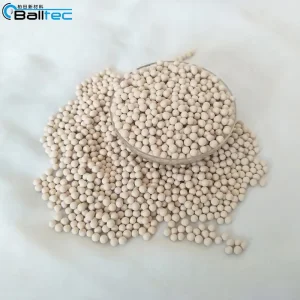
The core of a high-performance trimmer lies in its resistive element substrate. Modern factories utilize 96% to 99% high-purity alumina ceramic substrates (often synthesized using precision zirconia/alumina milling media) to ensure superior thermal conductivity, minimal dielectric loss, and ultra-smooth surface topography for uniform cermet ink deposition.
Industrial IoT deployments in marine, automotive under-hood, and desert solar farms require IP67/IP68 wash-stable sealing. Advanced silicone O-rings, ultrasonic housing welding, and thermosetting epoxy resins allow trimpots to withstand harsh solvent board washing, thermal shock cycling (-55°C to +125°C), and high-vibration stresses without wiper chatter.
What OEM procurement managers, supply chain Directors, and Component Quality Engineers must prioritize during supplier evaluation.
In an era characterized by geopolitical supply chain friction and sudden lead-time disruptions, global enterprises (from Fortune 500 industrial conglomerates to fast-scaling EV OEMs) have drastically overhauled their component sourcing strategies. Buying trim potentiometers is no longer a simple catalog selection; it requires evaluating supplier total cost of ownership (TCO), quality compliance, and manufacturing agility.
How China's advanced industrial ceramic clusters and smart factory automation deliver unparalleled cost-to-performance ratios for global buyers.
The production of world-class trim potentiometers relies heavily on a deeply integrated industrial infrastructure spanning chemical powder synthesis, precision ceramic substrate firing, thick-film laser trimming, and automated high-speed assembly. China's advanced manufacturing hubs—most notably industrial ceramic clusters in Jiangxi (such as Pingxiang) and electronic component hubs in Guangdong and Zhejiang—have set a new global benchmark for manufacturing scale and agility.
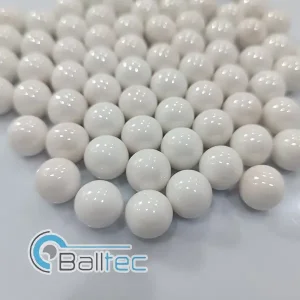
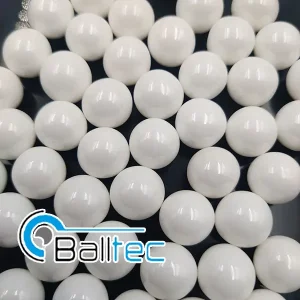
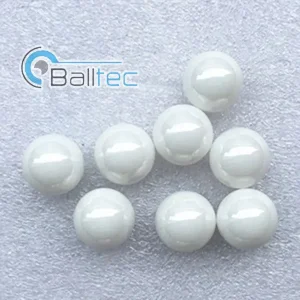
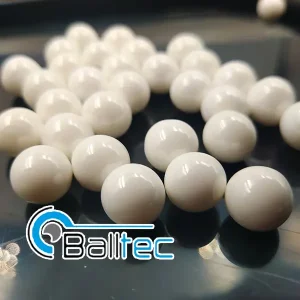
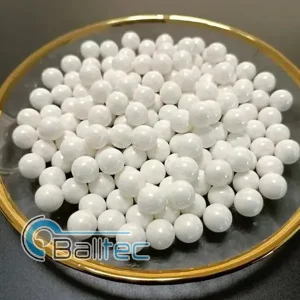
From the wet-milling of ultra-fine ceramic powders (using high-density Yttria-stabilized Zirconia beads) to in-house substrate sintering and cermet formulation, Chinese factories eliminate third-party raw material markups and lead-time delays.
Modern Chinese Industry 4.0 facilities utilize automated active laser trimming units that measure and adjust cermet resistance values in real time to within ±0.1% target tolerances at speeds exceeding 50,000 units per hour per line.
High-speed optical visual inspection (AOI) coupled with 100% automated electrical testing for total resistance (TR), contact resistance variation (CRV), and dielectric withstand voltage ensures zero-defect delivery (PPM < 10).
Evaluating trade-offs between manual cermet trimmers, digital potentiometers (DPOTs), and fixed precision resistor networks.
| Performance Parameter | Cermet Trim Potentiometer | Digital Potentiometer (DPOT) | Fixed Precision Resistor |
|---|---|---|---|
| Adjustment Method | Manual (Screw / Rotor) | Digital Interface (I2C, SPI, Up/Down) | Non-Adjustable (Fixed Value) |
| Power Consumption | Zero Static Power | Requires Continuous VCC Power | Zero Static Power |
| Non-Volatility & Drift | 100% Permanent (Mechanical Lock) | Volatile / EEPROM Dependent | 100% Permanent |
| Voltage & Surge Tolerance | High (Up to 300V Max Operating) | Low (Limited to Supply Rails, ~5.5V) | Very High (Up to 500V+) |
| Temperature Coefficient (TCR) | ±50 to ±100 ppm/°C | ±5 to ±50 ppm/°C (Internal Matched) | ±5 to ±25 ppm/°C |
| Unit Cost (OEM Volume) | Low ($0.05 – $0.35) | Moderate-High ($0.50 – $2.50) | Very Low ($0.005 – $0.02) |
Where high-reliability trim potentiometers play an indispensable role in maintaining system accuracy and preventing thermal runaway.
In high-power AC drives and servo controllers, multi-turn trimpots are utilized to calibrate current-sensing amplifier offset voltages. Sealed 3/8-inch square trimpots resist high electromagnetic interference (EMI) and vibration from nearby switching IGBT modules.
BMS slave boards require precise voltage divider adjustments to monitor individual lithium-ion cell balancing limits. AEC-Q200 compliant SMD trimpots ensure zero-drift voltage references under harsh automotive thermal cycling.
In MRI signal acquisition chains and blood chemistry analyzer sensor interface boards, low-noise multi-turn cermet potentiometers allow field engineers to fine-tune gain amplifiers with micro-volt precision during routine maintenance.
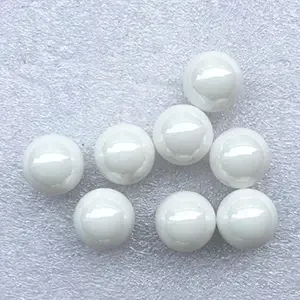
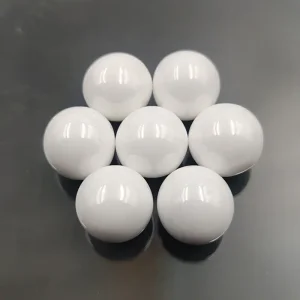
Explore our complete industrial offering of wear-resistant ceramic components, precision bearing balls, and high-performance grinding media.



In-depth technical responses to common questions raised by hardware designers and sourcing directors.