Follow 


Explore our primary industrial grinding media and high-purity ceramic powder solutions manufactured under strict ISO 9001 and ISO 14001 process standards.
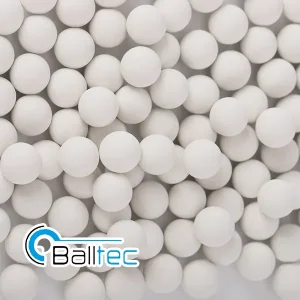
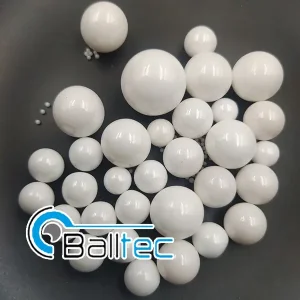
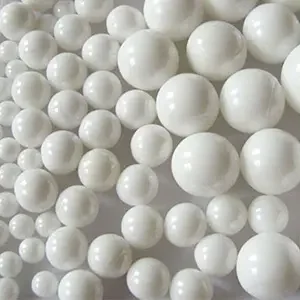
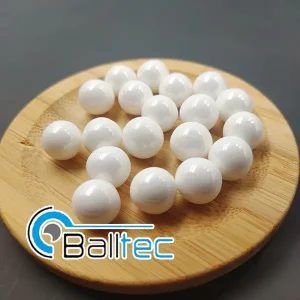
Zirconium dioxide (ZrO₂), commonly designated as zirconia, represents one of the most technologically critical inorganic non-metallic oxides utilized in modern high-performance materials engineering. Pure zirconium dioxide undergoes distinct polymorphic phase transformations during thermal cycling: monoclinic ($m$-ZrO₂) stable from ambient temperature up to 1170°C, tetragonal ($t$-ZrO₂) existing between 1170°C and 2370°C, and cubic ($c$-ZrO₂) prevailing above 2370°C up to its melting point of 2715°C.
The abrupt volume expansion (~3% to 5%) accompanying the tetragonal-to-monoclinic phase transition during cooling typically causes severe stress concentration and catastrophic structural macro-cracking in pure un-stabilized ceramics. To suppress this destructive phase transition, premier global chemical manufacturers introduce specific rare-earth oxides—most notably Yttrium Oxide (Y₂O₃, typically 3mol% to 8mol%), Magnesium Oxide (MgO), or Cerium Oxide (CeO₂)—into the crystal lattice. This process synthesizes Yttria-Stabilized Tetragonal Zirconia Polycrystals (Y-TZP), locking the metastable tetragonal phase at room temperature.
When a micro-crack propagates under external mechanical stress, the metastable tetragonal phase ($t$) near the crack tip transforms into the monoclinic phase ($m$). The resulting localized volume expansion creates compressive stresses that clamp the crack tip, absorbing kinetic energy and preventing catastrophic structural failure.
By employing advanced chemical wet synthesis—such as hydrothermal precipitation or sol-gel processing—our powders achieve sub-micron and nanometer-scale particle size distributions ($D_{50} < 0.3 \mu m$). This ultrafine grain structure increases grain boundary density, yielding bending strengths exceeding 1,200 MPa.
Precise control over yttria dopant distribution eliminates low-temperature degradation (LTD) or hydrothermal aging in moist environments. Our powders maintain long-term structural integrity in high-humidity bio-dental environments and chemical processing reactors.
The worldwide demand for technical zirconia powders is undergoing a paradigm shift driven by technological convergence across four key industries: New Energy Storage (Lithium Battery Cathode Nano-Grinding), Hydrogen Fuel Cells (SOFC), Ceramic Additive Manufacturing (3D Printing), and Bio-compatible Dental Restorations. As industrial specifications move into sub-micron and atomic-level precision, raw material suppliers must deliver unprecedented batch-to-batch chemical purity and morphological uniformity.
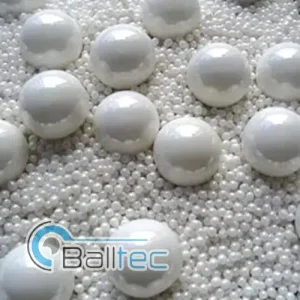
The global expansion of Lithium Iron Phosphate ($LiFePO_4$) and high-nickel NMC cathode materials requires grinding slurries down to the nanometer scale ($< 100 \text{ nm}$). To achieve ultra-fine particle sizes without introducing metallic contamination, battery chemical plants require yttria-stabilized zirconia micro-beads ($0.05 \text{ mm} - 0.3 \text{ mm}$) fabricated from ultra-pure powders. Sintered bead density must exceed $6.0 \text{ g/cm}^3$ to maximize kinetic energy transfer while reducing mill wear.
Fully stabilized cubic zirconia ($8\text{mol}\% \text{ Y₂O₃} - \text{8YSZ}$) serves as the gold-standard oxygen ion-conducting electrolyte membrane in Solid Oxide Fuel Cells (SOFC) and Solid Oxide Electrolysis Cells (SOEC). The global transition toward green hydrogen energy has created exponential growth in demand for high-surface-area 8YSZ powders with zero electronic conductivity, strict impurity limits ($\text{Fe₂O₃} < 50 \text{ ppm}$), and high ionic conductivity at operating temperatures between 600°C and 800°C.
Photopolymer-based stereolithography (SLA/DLP) and binder jetting of ceramic structural parts require spherical zirconia powders optimized for high-rheology slurry loading. Granulated, ready-to-press (RTP) and free-flowing spray-dried powders enable high solid loading ($> 50 \text{ vol}\%$) in UV-curable resins, enabling complex, net-shape geometries in aerospace, medical devices, and custom industrial tooling.
Dental CAD/CAM milling centers demand multi-layered, high-translucency zirconia blocks. By refining powder grain sizes to $< 50 \text{ nm}$ and tightly controlling alumina and rare-earth color dopants, manufacturers produce 4YSZ and 5YSZ powders that achieve optical translucency exceeding 49%, matching natural human tooth enamel while maintaining flexural strengths above 800 MPa.
Global OEM procurement teams and chemical process engineers evaluate zirconia ceramic powder suppliers using multi-dimensional technical criteria. Below is the technical specification breakdown for Pingxiang Baitian (Ball-tec) New Materials Co., Ltd. standardized zirconia powder grades.
| Grade / Specification Parameter | YSZ-3 (3mol% Y₂O₃ Structural) | YSZ-8 (8mol% Y₂O₃ SOFC) | Ultra-Pure Dental Grade | Monoclinic ZrO₂ Powder |
|---|---|---|---|---|
| ZrO₂ + HfO₂ Chemical Purity | ≥ 94.8% | ≥ 86.5% | ≥ 99.5% (4N Purity) | ≥ 99.9% (3N5-4N) |
| Y₂O₃ Stabilizer Content | 5.15 ± 0.20 wt% | 13.5 ± 0.30 wt% | 5.20 ± 0.15 wt% | 0.00% (Unstabilized) |
| Impurity: Fe₂O₃ (ppm) | ≤ 100 ppm | ≤ 50 ppm | ≤ 10 ppm | ≤ 30 ppm |
| Impurity: SiO₂ + Al₂O₃ (ppm) | ≤ 300 ppm | ≤ 150 ppm | ≤ 50 ppm | ≤ 200 ppm |
| Average Grain Size ($D_{50}$) | 0.25 - 0.45 μm | 0.15 - 0.35 μm | 0.10 - 0.25 μm | 1.0 - 2.5 μm |
| Specific Surface Area (BET) | 8.0 ± 2.0 m²/g | 12.0 ± 2.0 m²/g | 14.0 ± 3.0 m²/g | 5.0 ± 1.5 m²/g |
| Sintered Density (@1450°C) | ≥ 6.05 g/cm³ | ≥ 5.95 g/cm³ | ≥ 6.08 g/cm³ | N/A (Reactant) |
| Bending Strength (3-Point) | 1200 - 1400 MPa | 350 - 450 MPa | 1100 - 1300 MPa | N/A |
Strict drying control guarantees LOI $< 0.8\%$, preventing micro-porosity, outgassing, and volumetric shrinkage during pressureless or HIP firing cycles.
Offered in un-granulated form or ready-to-press spray-dried granules with binder/plasticizer formulations for cold isostatic pressing (CIP) and dry pressing.
Every export lot is validated via ICP-OES chemical analysis, Malvern laser diffraction particle sizing, and BET surface analysis with trace CoA documentation.
Pingxiang, Jiangxi Province, stands as China’s premier industrial ceramic production ecosystem. By integrating raw material refining, chemical precipitation, high-temperature calcination, spray drying, and precision quality testing inside our 100,000 m² smart manufacturing park, Pingxiang Baitian (Ball-tec) New Materials Co., Ltd. delivers scalable, resilient supply chains for global industrial buyers.
Our advanced continuous hydrothermal reactors enable uniform, atomic-level doping of $Y^{3+}$ ions into the $Zr^{4+}$ matrix. Compared to mechanical dry-mixing methods, co-precipitation eliminates local composition variations, lowering sintering temperatures by 100°C.
Equipped with high-tower spray drying equipment controlled by Distributed Control Systems (DCS), we produce spherical, free-flowing granulated powders with controlled bulk density and moisture content, ideal for automated dry pressing.
By sourcing high-grade zirconium oxychloride ($ZrOCl_2$) raw materials directly from domestic integrated refineries, Baitian shields international partners from geopolitically driven price spikes and lead-time delays.
Baitian high-purity zirconia ceramic powders are engineered to perform under extreme mechanical, thermal, and chemical stress across multiple mission-critical industries.
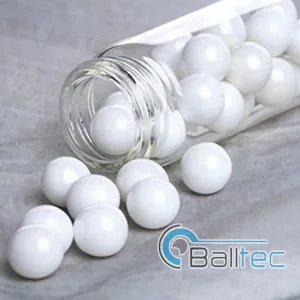
Application: Fabrication of 0.05mm - 2.0mm Y-TZP grinding beads for horizontal agitator bead mills.
Performance Impact: Achieves near-zero wear rate ($< 0.01 \text{ ppm/hour}$), enabling contamination-free wet milling of automotive coatings, inkjet inks, MLCC dielectric slurries, and titanium dioxide pigments.
Application: Ceramic valve cores, plunger pumps, wire drawing dies, and fiber optic ferrules.
Performance Impact: High hardness (HV10 ≥ 1250) and fracture toughness ($K_{IC} \ge 8.0 \text{ MPa}\cdot\text{m}^{1/2}$) deliver long component life in highly corrosive, sand-laden crude oil extraction pumps.
Application: Air Plasma Spraying (APS) and Electron Beam Physical Vapor Deposition (EB-PVD) on gas turbine blades.
Performance Impact: Yttria-stabilized zirconia (YSZ) powder creates thermally insulative coatings with low thermal conductivity ($< 2.0 \text{ W/m}\cdot\text{K}$ at 1000°C), protecting underlying superalloys.
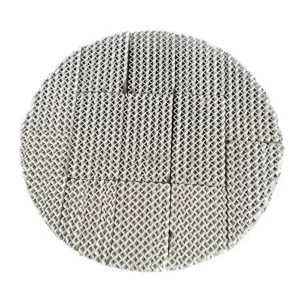
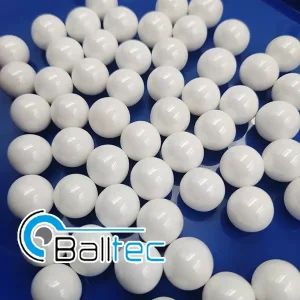
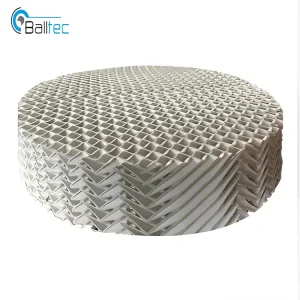
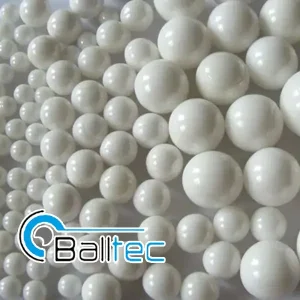
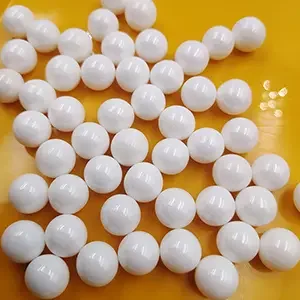
Select from our verified line of industrial zirconia beads, alumina spheres, activated media, and mass transfer structured packing.
In-depth answers addressing powder synthesis, phase stability, mill loading ratio, and custom manufacturing capability.