Industrial Ceramic Engineering & Global Supply

Wholesale Alumina Media Manufacturers & Exporter

Comprehensive Technical Whitepaper & Procurement Authority Guide for High-Purity Alpha-Al₂O₃ Grinding Spheres, Micro-Beads, and Advanced Wear-Resistant Solutions across Global Process Industries.

Featured Alumina & Advanced Ceramic Media Solutions

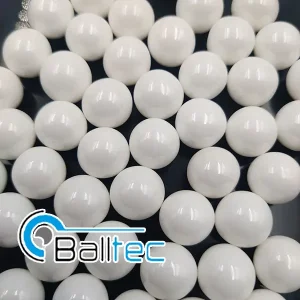
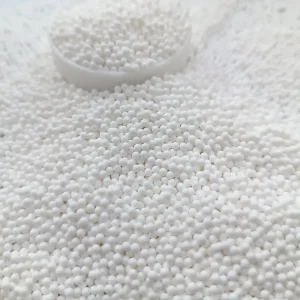
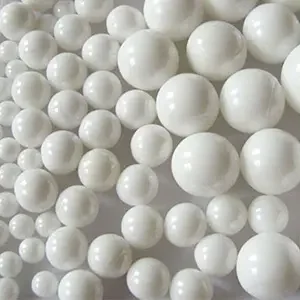
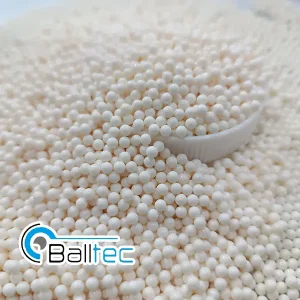
Precision-engineered ceramic balls, grinding beads, and structural media designed for extreme hardness, minimal contamination, and optimal micro-milling efficiency.
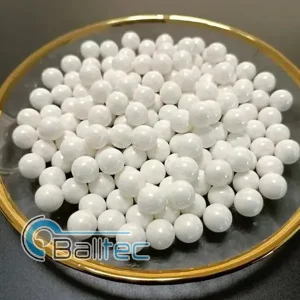
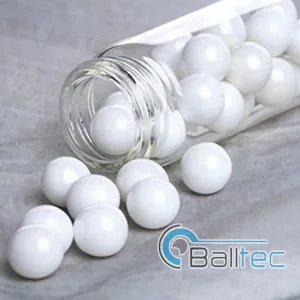
China Mini Ceramic Bearing Ball for Electronic Device Micro-Bearings Supplier, Factories
Explore Technical Specs
China ZrO2 Grinding Ball High Density Durable Ceramic Grinding Media Manufacturers, Factory
Explore Technical Specs
High-Quality Zirconia Grinding Bead for High Performance Wear Resistant Grinding Suppliers, Exporters
Explore Technical Specs
Wholesale Zirconia Ceramic Grinding Solution for Industrial Battery Materials Suppliers, Factories
Explore Technical Specs
China ZrO2 Ball for Grinding Long Service Life Wear Resistant Applications Suppliers, Factory
Explore Technical Specs
Wholesale 99.9% Al2O3 Grinding Bead Ceramic Grinding Media Supplier, Factory
Explore Technical Specs
High-Quality Zirconium Oxide Ball for Grinding High Hardness Efficient Grinding Media Suppliers, Factories
Explore Technical Specs
Wholesale Alumina Ball Alumina bead High Alumina ball Al2O3 Grinding Ball Supplier, Suppliers
Explore Technical Specs

Global Commercial Status & Material Engineering of Alumina Media

Analyzing the macro-market dynamics, tribological mechanics, and thermodynamic stability of sintered aluminum oxide (Al₂O₃) across modern industrial milling and catalyst support systems.

99.99%
Ultra-High Al₂O₃ Purity
9.0
Mohs Hardness Scale
3.95 g/cm³
Sintered Density Target
<0.001%
Self-Wear Rate Benchmark

Macro Commercial & Industrial Demand Dynamics

Alumina media—comprising high-alumina grinding balls, micro-beads, and inert catalyst support spheres—represents a critical foundational component of global industrial processing. The worldwide demand for high-performance ceramic media is experiencing accelerated expansion, driven by the explosive growth of clean energy infrastructure, advanced electronic ceramics, pharmaceutical ultra-fine dispersion, and high-purity chemical processing.

In modern industrial grinding, traditional steel balls and low-density natural pebbles have been rapidly rendered obsolete due to heavy metallic contamination, excessive energy consumption, and poor wear resistance. Wholesale buyers across North America, Europe, and Asia are increasingly migrating to high-purity alpha-phase alumina (α-Al₂O₃) media to achieve sub-micron particle size distribution (PSD) with absolute chemical inertness.

Microstructural Crystallography & Densification

The superior performance of alumina media hinges upon controlled powder metallurgy and high-temperature calcination. Raw aluminum oxide powder undergoes sub-micron wet milling, spray drying, and precision forming (isostatic pressing or rolling) before sintering in continuous tunnel kilns at temperatures ranging from 1550°C to 1700°C.

This thermal transformation forces the transition from γ-alumina to dense hexagonal α-alumina crystallites. High-grade wholesale media feature fine, uniform grain structures (<2 µm) with closed porosity, ensuring maximum fracture toughness, superior compressive strength, and extraordinary resistance to mechanical impact and chemical degradation.

Media Grade / Composition Al₂O₃ Content (%) Bulk Density (g/cm³) Vickers Hardness (HV10) Self-Wear Rate (%) Primary Industrial Application
92% Standard High-Alumina ≥ 92.0% ≥ 3.60 ≥ 1050 ≤ 0.010% Mining, Cement, Ceramic Glazes, Ball Mills Cost Efficient
95% Wear-Resistant Alumina ≥ 95.0% ≥ 3.68 ≥ 1200 ≤ 0.005% Sanitaryware, Minerals, Paints & Coatings High Durability
99% High-Purity Micro-Beads ≥ 99.0% ≥ 3.80 ≥ 1450 ≤ 0.002% Electronic Pastes, CMP Slurries, Pharma Low Contamination
99.99% 4N Ultra-Purity Spheres ≥ 99.99% ≥ 3.92 ≥ 1650 ≤ 0.0005% EV Battery Cathodes (LFP/NMC), Semiconductors Zero Contamination
Zirconia Toughened Alumina (ZTA) 70-80% Al₂O₃ / 20-30% ZrO₂ ≥ 4.20 ≥ 1350 ≤ 0.0015% Stirred Media Mills, Extreme Impact Milling Impact Resistant

Technology Roadmap & Industry Development Trends

Key technological breakthroughs transforming industrial ceramic media production over the next decade.

1. Sub-Micron Grain Size (<0.5 µm) Engineering

Traditional alumina media relied on coarse crystallite networks, which suffered from intergranular grain pull-out during severe abrasive shear. Next-generation manufacturing incorporates nano-doping (using trace MgO, Y₂O₃, or TiO₂ grain inhibitors) coupled with ultra-fast spark plasma sintering (SPS) or high-temperature atmosphere control.

This preserves sub-micron grain sizing, resulting in micro-beads with self-sharpening wear surfaces, zero micro-chipping, and exponentially longer service lives in high-energy vertical attritor mills.

2. EV Battery Cathode Milling Dominance

The global surge in Lithium Iron Phosphate (LFP) and Nickel Manganese Cobalt (NMC) battery manufacturing requires ultra-fine wet grinding down to $D_{50} < 200\text{ nm}$. Any trace iron or metallic contamination during grinding causes internal battery short circuits and thermal runaway.

High-purity 99.9% and 99.99% alumina media, along with yttria-stabilized zirconia beads, have become mandatory technical standards for battery precursor slurry preparation worldwide.

3. Low-Carbon Green Sintering & Automation

Leading Chinese exporters and global ceramic manufacturers are rapidly transitioning to clean energy oxy-fuel continuous kilns and fully automated cold-isostatic pressing (CIP) lines. This reduces thermal energy consumption per ton of alumina media by up to 35%.

Furthermore, machine-vision AI optical sorting systems inspect 100% of finished spherical media for micro-cracks, surface deformation, and sphericity deviations before packaging.

Manufacturer Quality Benchmark: The Isostatic Pressing vs. Roll-Forming Distinction

When sourcing wholesale alumina grinding balls, engineering buyers must evaluate the forming technology. Roll-formed balls (typically 0.5mm to 20mm) offer excellent production speed and cost-efficiency for wet ultra-fine bead milling. However, for large diameter balls (30mm to 75mm) used in primary tumbling ball mills, Cold Isostatic Pressing (CIP) under pressures exceeding 200 MPa is essential to eliminate internal voids, ensuring high density uniform compaction and preventing catastrophic ball fracturing under high impact kinetic loads.

Localized Application Scenarios & Regional Market Dynamics

How industrial plants and process engineers in major geographic economic zones utilize wholesale alumina media for localized operational optimization.

North America (USA, Canada, Mexico)

  • Semiconductor CMP & Optics: High-purity 99.99% micro-beads for chemical mechanical planarization slurries in silicon wafer fabrication hubs (Texas, California, Arizona).
  • Mining Extraction: Heavy-duty 92% alumina balls for copper, gold, and mineral grinding in western US and Canadian mining operations.
  • Refinery Support Spheres: Inert alumina packing balls for petrochemical hydrocracking and gas dehydration units along the US Gulf Coast.

European Union & United Kingdom

  • Automotive Coatings & Paints: Precision wear-resistant alumina grinding micro-beads ($0.4 - 1.2\text{ mm}$) for automotive OEM clear coats (Germany, France, UK).
  • Advanced Ceramics & Medical: Sub-micron grinding of bio-ceramic powders and dental zirconia precursors requiring strict ISO 13485 purity compliance.
  • Specialty Chemical Catalysts: Porous catalyst carrier spheres engineered for emission control and green hydrogen reformate reactors.

Asia-Pacific, Latin America & Middle East

  • EV Battery Gigafactories: Massive volume consumption of 95% and 99% alumina media in China, Japan, Korea, and Southeast Asia for battery slurry dispersion.
  • Ceramic Tile & Sanitaryware: High-capacity 92% ball mill grinding media for feldspar, clay, and glaze preparation in South America (Brazil) and Asia.
  • Oil & Gas Towers: High-crush-strength inert bed support spheres for natural gas purification in Middle Eastern LNG plants.

Macro Industry Process Solutions & Mill Loading Guidelines

Turnkey engineering methodologies to maximize kinetic throughput while minimizing operational wear and specific energy consumption (kWh/ton).

Solution 1: Ultra-Fine Wet Bead Milling Optimization

In high-speed horizontal pin agitator mills and basket mills, selecting the correct bead diameter is crucial. The rule of thumb for wet micro-grinding dictates that media size should be approximately 20 to 30 times larger than the initial feed particle size ($D_{90}$):

Optimal Bead Size (mm) ≈ 25 × Feed Size D90 (mm)

Utilizing high-density 99% Al₂O₃ micro-beads ($0.2\text{ mm} - 1.5\text{ mm}$) increases hydraulic shearing efficiency, allowing plant operators to achieve sub-micron particle distributions up to 40% faster than with conventional glass or silicate beads.

Solution 2: Tumbling Ball Mill Grinding Media Gradients

For industrial dry or wet tumbling ball mills (used in ceramics, silica, and mineral processing), relying on a single ball size leads to inefficient void space and uneven impact kinetic distribution. A balanced ball charge gradient ensures optimized collision dynamics:

  • Large Balls (Ø 50mm - 60mm): 25-30% Load – Breaks coarse incoming feed stock via direct impact kinetic forces.
  • Medium Balls (Ø 30mm - 40mm): 40-45% Load – Provides intermediate crushing and attrition shear.
  • Small Balls (Ø 20mm - 25mm): 25-30% Load – Maximizes surface contact area for fine micro-milling.

High-Precision Zirconia & Specialized Ceramic Media Portfolio

Complementary high-density grinding media, yttria-stabilized zirconia spheres, and micro-polishing materials for high-viscosity dispersion.
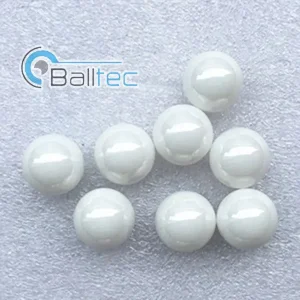
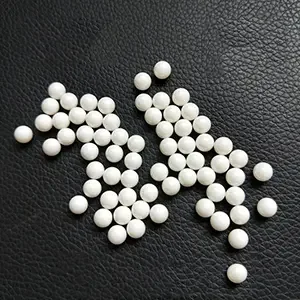
High-Quality Yttrium Stabilized Zirconia Ceramic Ball Mill Grinding Media Zirconia Polishing Beads Supplier, Suppliers
Explore Technical Specs
China Zirconium Oxide Ball for Grinding Precision Refinement and Surface Polishing Manufacturers, Factory
Explore Technical Specs
Wholesale Zirconium Oxide Grinding Ball for Precision Polishing and Particle Refinement Manufacturers, Exporter
Explore Technical Specs
High-Quality High Alumina Al2o3 Alumina Micro Beads / Ceramic Grinding Balls Factory, Exporter
Explore Technical Specs
Wholesale Magnesia Stabilizer Zirconia Powder Supplier, Suppliers
Explore Technical Specs
China Zirconia Grinding Bead for Stable and Consistent Material Dispersion Manufacturers, Factories
Explore Technical Specs
High-Quality Zirconium Oxide Grinding Bead for Reliable Ball Milling and Powder Milling Manufacturer, Manufacturers
Explore Technical Specs
Wholesale Zirconium Oxide Grinding Ball for Fine Grinding and Consistent Dispersion Manufacturers, Supplier
Explore Technical Specs

Media Wear Rate Calculation & Failure Mode Analysis

Engineering frameworks to quantify wear losses, prevent bead breakage, and optimize lifecycle operational costs.

Standard Wear Rate Calculation Formula

Procurement managers and process engineers evaluate media quality during pilot trials using the percentage mass-loss formula per unit time:

Wear Rate (%/hour) = [ (M₁ - M₂) / (M₁ × T) ] × 100%

Where M₁ is the initial dry media mass (kg), M₂ is the final dry mass after trial (kg), and T is total operational hours under standard viscosity and RPM loads. Premium 95% and 99% alumina media demonstrate wear rates below 0.005%/hour.

Common Failure Modes & Corrective Action

  • Micro-Chipping / Spalling: Caused by excessive tip speed in agitator mills or hydraulic cavitation. Fix: Reduce shaft RPM or increase slurry solid loading concentration.
  • Uneven Flattening (Ovalization): Caused by low media density or under-filled mills causing sliding rather than tumbling motion. Fix: Increase media loading charge volume ($J$) to 45-50%.
  • Thermal Shock Cracking: Caused by rapid water flushing into dry, overheated mill chambers. Fix: Maintain gradual temperature transitions during CIP cleaning cycles.

Frequently Asked Questions (FAQ) for Global Buyers

Expert insights addressing technical parameters, purity trade-offs, factory quality assurance, and international logistics for wholesale purchasers.

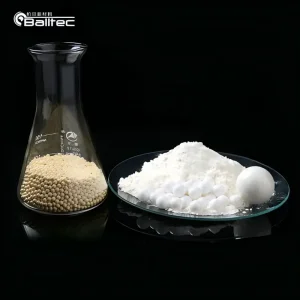
What is the primary difference between 92%, 95%, and 99.99% alumina media, and how do I select the right purity grade?
The percentage denotes the mass concentration of alpha-aluminum oxide ($\alpha\text{-Al}_2\text{O}_3$). 92% Al₂O₃ media contains roughly 8% silicate glass matrix, making it extremely cost-effective for heavy industrial ball milling (mining, white cement, ceramic glazes). 95% Al₂O₃ media offers increased density ($\ge 3.68\text{ g/cm}^3$) and superior wear resistance for paints, coatings, and sanitaryware. 99% and 99.99% high-purity media are completely binder-free, eliminating silica phase leaching. They are mandatory for semiconductor CMP slurries, pharmaceutical compounds, and EV lithium battery materials (LFP/NMC) where sub-ppm metallic or silica contamination would degrade end-product performance.
How does alumina grinding media compare with Yttria-Stabilized Zirconia (YSZ) beads in performance and total operational cost?
Yttria-Stabilized Zirconia (YSZ) has a significantly higher density ($\approx 6.0\text{ g/cm}^3$) and Vickers hardness ($\approx 12500\text{ MPa}$) compared to alumina ($\approx 3.6 - 3.95\text{ g/cm}^3$). YSZ delivers much higher kinetic energy per impact, making it superior for nano-grinding ultra-high-viscosity slurries. However, high-purity alumina media costs approximately 60% to 75% less per kilogram than YSZ. For medium-viscosity applications, large-volume mineral processing, or operations where alumina trace wear is non-detrimental, wholesale alumina media provides an vastly superior return on investment (ROI) and lower energy cost per ton processed.
What quality assurance standards and E-E-A-T credentials should buyers verify when sourcing from Chinese manufacturers?
Procurement teams should verify ISO 9001:2015 Quality Management, ISO 14001 Environmental Management, and ISO 45001 Occupational Health certifications. Furthermore, demand batch-specific Certificate of Analysis (COA) documentation detailing chemical purity via X-ray Fluorescence (XRF), crystal structure via X-ray Diffraction (XRD), particle size distribution (PSD), water absorption rate ($<0.01\%$), and self-wear rate test reports performed in accordance with GB/T 26748-2011 or ASTM C373 standards. Leading exporters provide full batch traceability from raw bauxite calcination to final box packaging.
What is the standard export packaging to prevent moisture contamination and breakage during sea freight shipment?
Wholesale orders are packed in heavy-duty double-layer moisture-proof packaging. Micro-beads ($<3\text{mm}$) are typically bagged in 25 kg woven polypropylene bags with an inner polyethylene liner, then stacked onto fumigated wooden or plastic pallets wrapped in shrink film, or packed directly into 1000 kg or 1200 kg heavy-duty Flexible Intermediate Bulk Containers (FIBC jumbo bags). For high-purity semiconductor or medical grade micro-beads, steel drums with hermetically sealed inner plastic liners are used to guarantee zero moisture ingress or environmental contamination during long-distance ocean transport.
What is the recommended mill charge volume ($J$) and slurry solids concentration for optimal micro-milling?
For horizontal agitator bead mills, the recommended bead filling volume ($J$) is typically between 70% and 85% of the internal chamber volume. For tumbling ball mills, the media charge volume should be 40% to 50% of total mill volume. Slurry solids concentration should ideally be maintained between 50% and 70% by weight, depending on liquid viscosity and dispersant efficiency. Maintaining proper slurry viscosity prevents direct media-to-media impact, which is the primary cause of premature micro-chipping and accelerated wear.