Follow 


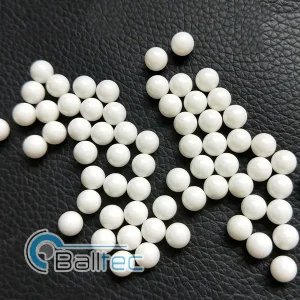
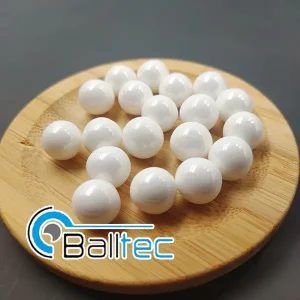
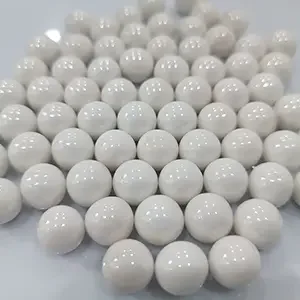
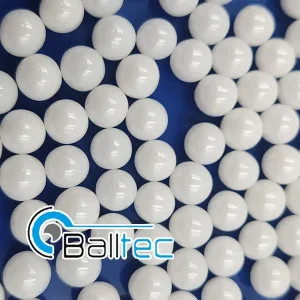
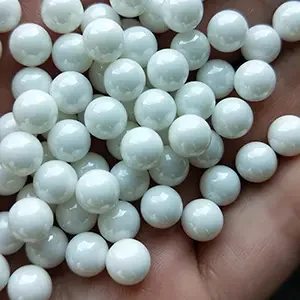
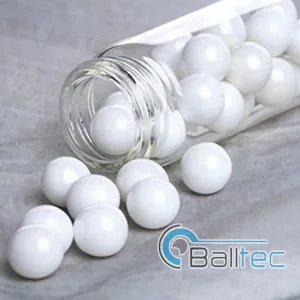
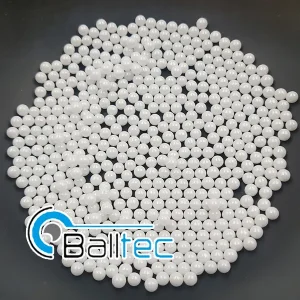
Engineered for extreme wear resistance, high bulk density, and zero chemical contamination across wet and dry ultra-fine milling environments.
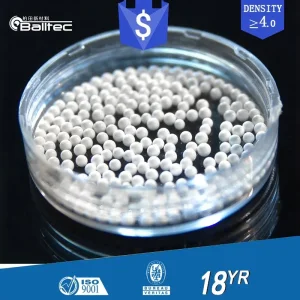
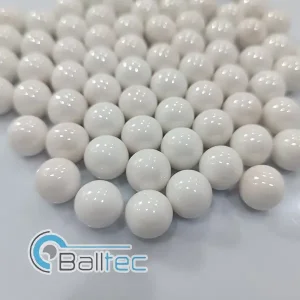
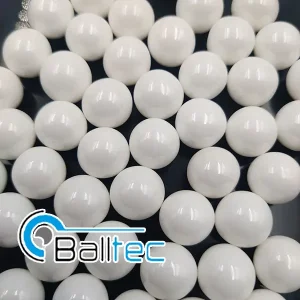
In modern high-energy ball milling, vertical stirred mills, and extreme-performance mechanical bearings, traditional metallic grinding media (such as forged steel or chrome alloy balls) are rapidly being superseded by advanced ceramic spheres. Driven by demands for sub-micron particle distributions and stringent contamination control, the global market for industrial ceramic balls is shifting toward nano-grain polycrystalline structures.
Industries such as lithium iron phosphate ($LiFePO_4$) battery cathode production require particle sizes down to $D_{50} < 200\text{ nm}$. Micro-beads ($0.05\text{ mm}$ to $0.3\text{ mm}$) with dense microstructures are essential to prevent kinetic shear loss.
In semiconductor Chemical Mechanical Planarization (CMP) slurries and pharmaceutical synthesis, trace metal contamination causes dielectric breakdown or batch rejection. Ceramic media provide complete chemical inertness.
Leading manufacturers are shifting from simple rolling disk agglomeration to Cold Isostatic Pressing (CIP) combined with high-temperature sintering, yielding internal densities exceeding 99.5% of theoretical limits.
Selecting the optimal ceramic material requires balancing density, Mohs/Vickers hardness, impact energy transfer, and operational wear rates. The matrix below outlines engineered ceramic compounds manufactured in our facilities:
| Ceramic Compound | Specific Density (g/cm³) | Vickers Hardness (GPa) | Fracture Toughness ($K_{IC} \text{ MPa}\cdot\text{m}^{1/2}$) | Bulk Crush Strength (Ø 10mm) | Primary Industrial Use-Case |
|---|---|---|---|---|---|
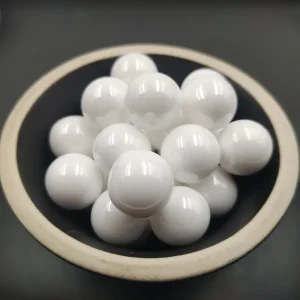
| Yttria-Stabilized Zirconia (Y-TZP) | ≥ 6.00 | 12.5 | 9.0 – 10.0 | ≥ 85 kN | Nano-Grinding, Battery Materials, Pharmaceutical Inks |
| Zirconia Toughened Alumina (ZTA) | 3.80 – 4.50 | 14.0 | 5.5 – 6.5 | ≥ 45 kN | Mining Pulps, Metallic Ores, Heavy Ball Mills |
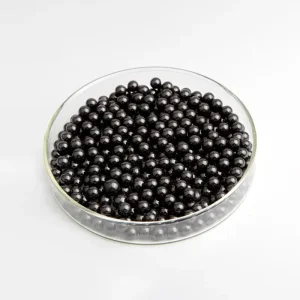
| Silicon Nitride ($Si_3N_4$) | 3.25 | 15.5 | 6.0 – 7.5 | ≥ 90 kN | High-Speed Hybrid Bearings, Aerospace Spindles |
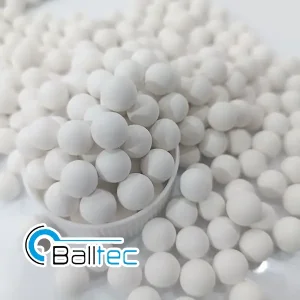
| 99.5% High Purity Alumina ($Al_2O_3$) | 3.68 | 14.5 | 4.0 – 4.5 | ≥ 35 kN | Chemical Packing, Refractory Catalyst Support |
| Zirconium Silicate ($ZrSiO_4$) | 4.00 | 10.0 | 3.0 | ≥ 25 kN | Cost-Effective Calcium Carbonate Grinding |
Enterprise-level buyers evaluate ceramic media suppliers on metrics beyond unit cost per kilogram. Total Cost of Ownership (TCO) modeling shows that media wear rates, mill energy consumption, and product yield dictate purchasing decisions.
Large-capacity stirred mills (e.g., IsaMill, Metso Vertimill) demand high impact strength ZTA and YSZ media. Our solution prevents media shattering, reducing mill liner replacement intervals by up to 35%.
Uniformity in active material dispersion ($LiCoO_2$, $NMC$, $LFP$) directly impacts battery energy density and charge cycle life. Ultra-pure YSZ micro-beads ensure no iron ($Fe$), copper ($Cu$), or zinc ($Zn$) contamination.
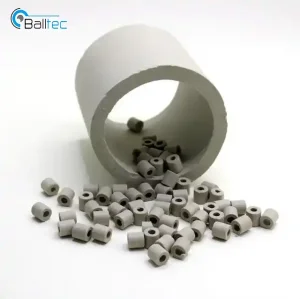
Inert alumina ceramic balls are deployed as bed support media in hydrocracking and desulfurization reactors. They withstand thermal shock up to 1500°C while resisting strong acids and alkalis.
Our manufacturing ecosystem operates under integrated quality, environmental, and occupational safety frameworks. Batch-to-batch consistency is ensured through automated laser diffraction particle analyzers, X-ray fluorescence (XRF) spectrometry, and hydrostatic crush test rigs.
All products exported from our facilities comply with international environmental and safety standards:
To safeguard enterprise operations against global logistics bottlenecks, our supply chain services include:
Our research lab collaborates with materials science institutes to develop next-generation formulations. Key developments include:
Integrating graphene nanoplatelets into the Y-TZP matrix increases electrical conductivity while enhancing fracture toughness by up to 25%, enabling electrostatic dissipation during dry powder milling.
Deploying multi-camera high-speed optical sorters driven by machine learning to inspect 100% of bearing ball production for micro-cracks, surface pits, and circularity variations below $0.1\,\mu\text{m}$.
Transitioning kilns to hydrogen-assisted electrical heating systems, aiming to reduce the carbon footprint of high-temperature sintering by 40% over the next five years.
Detailed technical guidance curated by our application engineers to address key engineering queries:
The optimal media filling ratio ($V_m$) generally ranges between 70% and 85% of the mill's internal chamber volume. For high-viscosity dispersions (e.g., thermal interface pastes or automotive paints), a filling ratio of 75-80% using YSZ beads prevents media compaction while maintaining high kinetic collision frequency. The formula is: Media Charge ($\text{kg}$) = Net Chamber Volume ($\text{L}$) × Filling Ratio (%) × Media Bulk Density ($\text{kg/L}$).
Hydrothermal aging occurs when Y-TZP ceramics are exposed to humid or aqueous environments at elevated temperatures (100°C–250°C). Water molecules penetrate the lattice, inducing a slow phase transformation from tetragonal to monoclinic ($t \to m$) at the surface, leading to micro-cracking. We mitigate this by co-stabilizing the zirconia crystal structure with trace amounts of alumina ($Al_2O_3$) and optimizing sintering grain size below $0.3\,\mu\text{m}$.
ZTA media combine a microcrystalline alumina matrix with 10–20% zirconia phase, delivering a density of ~4.1 to 4.5 g/cm³ at a lower cost than pure Y-TZP. It is ideal for high-throughput mining operations. Y-TZP offers a higher density (~6.0 g/cm³) and superior fracture toughness ($9\text{--}10 \text{ MPa}\cdot\text{m}^{1/2}$), making it the benchmark for ultra-fine nano-milling below 1 micron where zero media fragmentation is required.
Precision grades defined by ISO 3290/ABMA dictate sphericity deviation, lot diameter variation, and surface roughness ($R_a$). Grade G3 specifies a spherical deviation within $0.08\,\mu\text{m}$ and surface roughness $R_a \le 0.012\,\mu\text{m}$, designed for ultra-high-speed machine tool spindles operating above 40,000 RPM. Grade G5 ($0.13\,\mu\text{m}$ sphericity) is suited for EV electric motor bearings and high-precision robotics actuators.
Media density directly governs the kinetic impact energy transferred to slurry particles ($E = \frac{1}{2} m v^2$). Higher density media (such as YSZ at 6.0 g/cm³) generate greater shear forces per collision than glass or alumina beads, reducing overall milling dwell time. This allows mill operators to increase throughput rate or reduce rotor tip speed, leading to lower net electrical energy consumption per ton of finished product.
Specialized solutions engineered for bio-inert medical components, high-speed bearings, and heavy-duty chemical tower packing.