Follow 


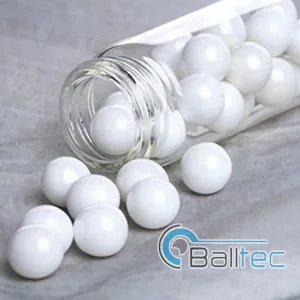
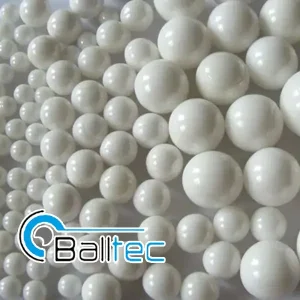
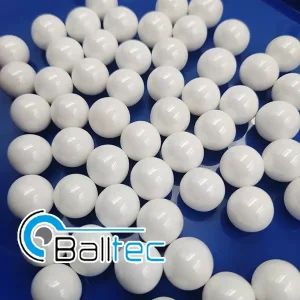
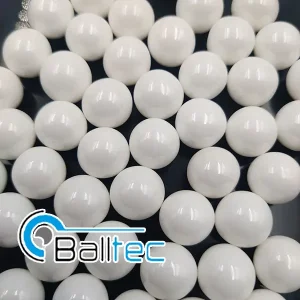
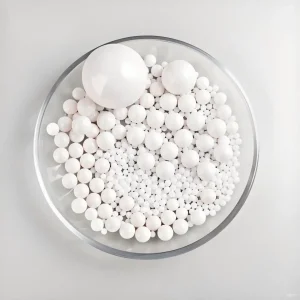
Explore our factory-direct wholesale selection of high-purity zirconia grinding beads, engineered for maximum energy transfer in high-energy vertical and horizontal agitator bead mills.
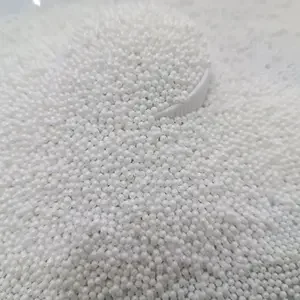
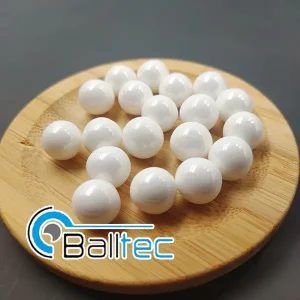
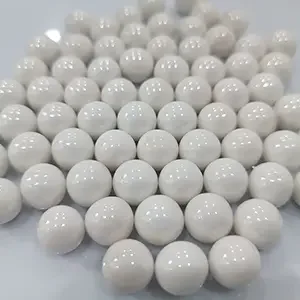
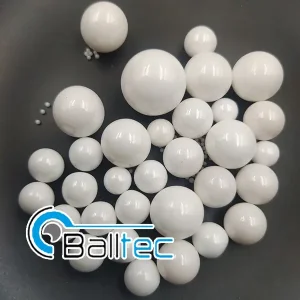
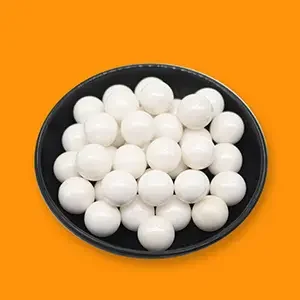
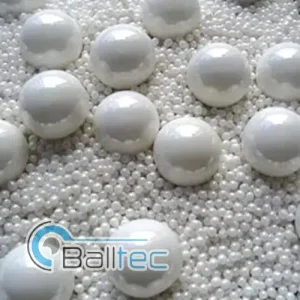
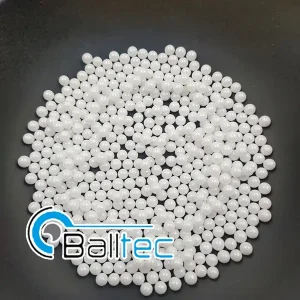
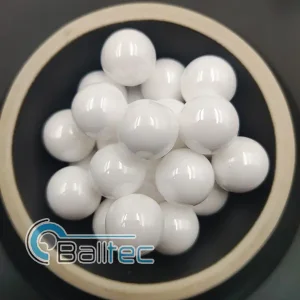
In modern wet ultra-fine comminution and nano-dispersion processes, the choice of grinding media dictates operational throughput, purity guarantees, and overall lifecycle costs. Zirconium oxide ($ZrO_2$) ceramics—specifically Yttria-Stabilized Tetragonal Zirconia Polycrystals (Y-TZP)—have emerged as the definitive benchmark media across high-tier global manufacturing industries.
The explosive global shift toward electric vehicles requires sub-micron milling of cathode materials ($LFP$, $NCM$, $LMO$) and silicon-carbon anodes. High-density zirconia balls ($>6.0g/cm^3$) deliver the kinetic impact energy needed to break down agglomerates to $D_{50} < 200nm$ without iron or heavy-metal contamination that degrades battery safety.
Multi-Layer Ceramic Capacitors (MLCC) rely on ultra-pure Barium Titanate ($BaTiO_3$) and dielectric ceramics milled to nanometer tolerances. Y-TZP media ensure zero lattice contamination, maintaining dielectric constants and preventing electrical insulation breakdown in micro-circuitry.
For active pharmaceutical ingredients (APIs), dental zirconia powders, and high-grade matcha tea milling, strict sanitary standards demand zero toxic element leaching. Zirconia micro-beads offer exceptional chemical inertness under both harsh acidic and alkaline cleaning environments.
Understanding the physical differences between media types allows procurement teams and process engineers to balance wear life against initial capital expenditure.
| Grinding Media Type | Composition | Specific Density (g/cm³) | Vickers Hardness (HV₁₀) | Fracture Toughness KIC (MPa·m1/2) | Self-Wear Rate (ppm/h) |
|---|---|---|---|---|---|
| Y-TZP Zirconia Beads (Baitian Standard) | 95% ZrO₂ / 5% Y₂O₃ | ≥ 6.00 | 1250 - 1300 | 8.0 - 10.0 | < 5 ppm/h |
| Cerium-Stabilized Zirconia (Ce-TZP) | 80% ZrO₂ / 20% CeO₂ | ≥ 6.20 | 1150 - 1200 | 9.5 - 12.0 | < 8 ppm/h |
| Zirconium Silicate Beads | 65% ZrO₂ / 33% SiO₂ | 4.00 - 4.20 | 1000 | 4.5 | < 30 ppm/h |
| 99.5% High-Purity Alumina | 99.5% Al₂O₃ | 3.68 - 3.80 | 1500 - 1600 | 3.8 - 4.2 | < 25 ppm/h |
| Chrome Steel Media | Fe-Cr Alloy | 7.80 | 700 - 850 | 25.0 | High (Metallic Leaching) |
Unlike conventional brittle ceramics, Pingxiang Baitian’s Yttria-stabilized zirconia grinding spheres possess a unique energy-absorption mechanism known as stress-induced martensitic phase transformation.
During the high-temperature sintering phase at ~1500°C, the additions of 3 mol% $Y_2O_3$ lock the zirconia crystal structure into a metastable tetragonal ($t$) phase at room temperature.
When an external impact or micro-crack propagates through the bead, the concentrated stress triggers a phase transition from the metastable tetragonal phase to the monoclinic ($m$) phase.
The $t \rightarrow m$ transformation is accompanied by a localized volume expansion of approximately 3% to 5%. This expansion exerts compressive stress directly against the crack tip, effectively arresting crack growth and preventing bead shattering in high-speed agitators.
Pingxiang Baitian (Ball-tec) New Materials Co., Ltd. utilizes advanced wet-titration and rolling-sphere technologies to yield exceptional roundness ($>98\%$) and internal homogeneity.
Ultra-pure zirconium oxychloride and yttrium salts undergo hydrothermal precipitation. This produces nanometer-scale precursor powders ($d_{50} < 50nm$) with zero coarse crystal agglomerates, laying the groundwork for dense crystal packing.
For micro-beads under 1.0mm, liquid slurry is atomized through precision nozzles into electrolyte baths. Surface tension naturally draws the falling droplets into perfect, void-free spheres prior to chemical gelation.
Larger grinding balls undergo Cold Isostatic Pressing (CIP) at pressures up to 200 MPa, eliminating micro-voids. Sintering takes place in computer-controlled tunnel kilns at 1450°C–1530°C, producing ultra-fine grain microstructures (<0.3µm).
In high-capacity manufacturing facilities, grinding efficiency is directly proportional to the kinetic impact energy imparted by the bead charge. The mechanical energy equation governs bead mill performance:
Ek = ½ · m · v² = ½ · (⁴/₃ · π · r³ · ρ) · v²
Where Ek = Kinetic Energy per Impact, r = Bead Radius, ρ = Media Density ($g/cm^3$), and v = Agitator Tip Speed ($m/s$).
Because Y-TZP media density ($6.0g/cm^3$) is nearly 67% higher than alumina ($3.68g/cm^3$), mills reach target particle size distribution ($PSD$) in significantly fewer passes, reducing total electricity consumption ($kWh/ton$) by up to 30%.
Smooth, spherical Y-TZP beads reduce abrasive gouging against inner mill liners, rotor pegs, and dynamic separator screens. Maintenance intervals for agitator components expand by up to 3x compared to irregular or high-wear media.
Ultra-low self-wear rates (<5 ppm/h) ensure that final product color, transparency, chemical purity, and electrical conductivity remain completely within strict client specifications without costly purification steps.
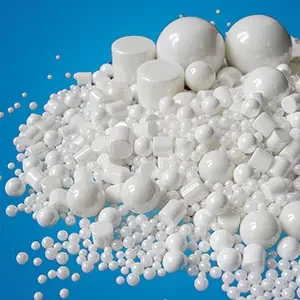
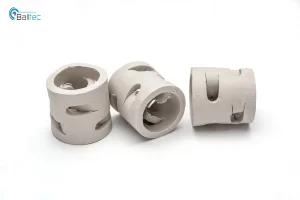
Discover additional precision ceramic media formulations, including zirconium silicate, pure ZrO2 spheres, and tower packing components direct from Pingxiang, Jiangxi.
Founded by technical experts with deep backgrounds in top-tier Japanese and U.S. ceramic research institutes alongside senior Chinese metallurgical engineers, Baitian operates a state-of-the-art 100,000 m² integrated production campus in Pingxiang, Jiangxi Province.
From raw powder purification and slurry spray-drying to cold isostatic pressing and high-temperature tunnel kiln sintering, every stage of manufacturing adheres strictly to certified quality management protocols.
Speak directly with our materials team for customized media size distributions, bulk volume discounts, and wear-rate trial evaluations.
In-depth technical answers regarding bead sizing calculations, density selection criteria, contamination control, and mill operational parameters.
As a standard rule in agitator bead milling, the average grinding bead diameter ($d$) should be approximately 10 to 20 times larger than the maximum feed particle size ($D_{95}$) entering the mill. For nano-milling targeting final particle distributions under $100nm$, engineers typically execute a multi-stage grinding strategy: utilizing $0.6 - 0.8mm$ Y-TZP beads in Stage 1 to reach sub-micron sizes ($~0.5\mu m$), followed by micro-beads of $0.05 - 0.1mm$ in Stage 2 to achieve true sub-100nm nanometer dispersions.
The core difference lies in density, chemical composition, and wear rate. Y-TZP contains 95% $ZrO_2$ stabilized with 5% $Y_2O_3$, yielding a high density of $\ge 6.0 g/cm^3$ and Vickers hardness of 1250 HV10. Zirconium Silicate contains only ~65% $ZrO_2$ bound with silica, resulting in a density of ~$4.0 g/cm^3$. Y-TZP provides significantly higher impact energy, up to 6 times lower wear rates, and zero silica contamination, making it essential for high-viscosity slurries, LFP battery materials, and electronics. Zirconium silicate remains a budget-friendly option for medium-grade mineral calcium carbonate grinding.
Bead breakage occurs primarily due to internal voids, micro-cracks from poor sintering, mismatched agitator peg clearance, or excessive tip speeds ($>14 m/s$) with low slurry viscosity. Pingxiang Baitian eliminates internal voids through 200 MPa Cold Isostatic Pressing (CIP) and controlled hydrothermal powder synthesis, raising the fracture toughness ($K_{IC}$) to $8.0 - 10.0 MPa\cdot m^{1/2}$. Furthermore, selecting the proper bead charge loading (typically 80% to 85% of mill chamber volume) prevents erratic bead-to-bead collision dynamics.
Yes. Y-TZP zirconia exhibits exceptional chemical inertness across almost the entire pH spectrum (pH 1 to 14). Unlike metal media, zirconia will not oxidize, rust, or release metallic ions into solvent-based or water-based slurries. However, for extremely hot, concentrated hydrofluoric acid ($HF$) or concentrated sulfuric acid at elevated temperatures ($>150^\circ C$), specialized corrosion assessments are recommended.
Every shipment from Pingxiang Baitian includes a comprehensive Factory Certificate of Analysis (COA) specifying bulk density, true density, sphericity percentage, chemical assay ($ZrO_2 + Y_2O_3\%$), Vickers hardness, and crushing load strength per bead diameter. Copies of our ISO 9001, ISO 14001, ISO 18001, and CE certificates are provided alongside Material Safety Data Sheets (MSDS) and export packing compliance declarations.
Zirconia ceramic spheres have an indefinite shelf life when stored in dry, unopened original packaging. They are totally immune to atmospheric oxidation, ultraviolet degradation, and ambient moisture. For micro-beads ($<0.3mm$), we recommend keeping bags sealed prior to loading to avoid airborne dust contamination.
Partner with China’s premier industrial ceramic manufacturer. Request customized bead samples, technical datasheets, or a competitive wholesale quotation today.
Contact Engineering & Sales Team