Follow 


Engineered for low friction, ultra-high RPMs, and zero thermal degradation in harsh Saudi ambient environments.
Under the umbrella of Saudi Vision 2030, the Kingdom of Saudi Arabia is undergoing an unprecedented industrial expansion. The capital city, Riyadh, stands at the epicentre of this transformation, driven by massive investments in local manufacturing, renewable energy networks, defense capabilities, chemical processing, and robotic automation across MODON (Saudi Authority for Industrial Cities and Technology Zones) Industrial Cities 1, 2, and 3. As production lines, heavy turbomachinery, high-speed CNC spindles, and automated equipment run continuously, traditional chrome steel bearing components are hitting their physical limits due to the region's harsh operational context.
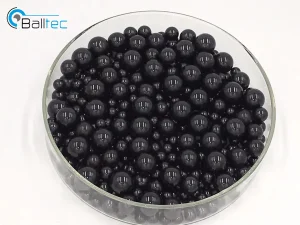
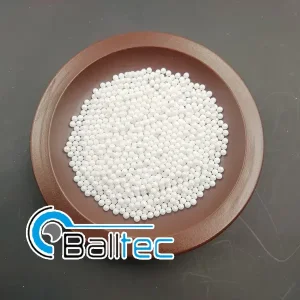
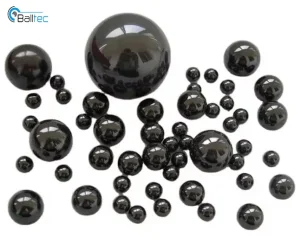
Operating machinery in the Central Province of Saudi Arabia presents a unique trifecta of mechanical engineering challenges: extreme ambient heat exceeding 50°C, continuous airborne silica particulate ingress (fine sand dust), and severe chemical exposure within hydrocarbon and water desalination infrastructure. Premium ceramic bearing balls—specifically engineered from Silicon Nitride (Si3N4), Zirconia (ZrO2), and high-purity Alumina (Al2O3)—have emerged as the definitive structural solution, eliminating premature mechanical failures and dramatically lowering the Total Cost of Ownership (TCO) for Riyadh industrial operators.
Traditional AISI 52100 chrome steel and 440C stainless steel bearings suffer from thermal expansion mismatch, micro-welding, magnetic particle contamination, and rapid lubrication degradation when subjected to dry, scorching desert conditions. Ceramic material science offers non-negotiable physical benefits:
Direct mechanical performance comparison validated under ISO 3290-2 and ASTM ceramic testing standards.
| Mechanical Property | Silicon Nitride (Si3N4) | Zirconia (ZrO2) | Alumina (Al2O3 99.9%) | Bearing Steel (AISI 52100) |
|---|---|---|---|---|
| Density (g/cm³) | 3.25 (60% lighter) | 6.05 | 3.95 | 7.85 |
| Vickers Hardness (HV 0.5) | 1600 - 1700 | 1200 - 1300 | 1500 - 1650 | 700 - 800 |
| Elastic Modulus (GPa) | 320 | 210 | 380 | 210 |
| Thermal Expansion (10⁻⁶/K) | 3.2 | 10.5 | 8.0 | 11.5 |
| Max Operating Temp (°C) | 1000°C | 500°C | 1200°C | 1500°C (softens at >180°C) |
| Electrical Resistivity (Ω·cm) | >1014 (Insulator) | >1012 (Insulator) | >1014 (Insulator) | 10-5 (Conductor) |
| Corrosion Resistance | Immune to almost all acids | Excellent acid/alkali resistance | High chemical inertness | Prone to rust/oxidation |
Combining world-class materials science with tailored supply strategies for Saudi Arabia's industrial leaders.
Sphericity tolerances within 0.08 µm and surface finish Ra < 0.003 µm, delivering vibration-free operation in micro-electronics and defense actuators.
Zero thermal seizure even during total lubrication failure in summer heat conditions exceeding ambient 50°C and internal friction temperatures over 300°C.
Non-porous, inert structures ideal for Saudi Food and Drug Authority (SFDA) cleanroom processing lines, pharmaceutical mixers, and aggressive chemical pumps.
As local metalworking, mold fabrication, and automotive parts manufacturing scale up in Riyadh’s industrial hubs, CNC milling machine spindles are operated at speeds exceeding 24,000 RPM. Traditional steel bearings generate tremendous internal friction heat, causing spindle expansion and machining inaccuracies. Installing G3 Grade Silicon Nitride hybrid bearings reduces operating temperatures by up to 30°C, allows for higher speeds (dN values > 2.0 x 10⁶), and triples spindle replacement cycles.
Refining, gas sweetening, and polymer manufacturing plants situated in the Riyadh Region rely heavily on submerged pumps, valves, and flow measurement meters handling corrosive media including hydrogen sulfide (H2S), hot brine, and acidic hydrocarbons. Full Zirconia (ZrO2) and Alumina ceramic balls do not react with aggressive chemicals, preventing surface pitting, micro-cracking, and sudden catastrophic pump failure.
Saudi Arabia’s massive solar projects around the Riyadh province rely on automated cleaning tracking systems, solar positioning gearboxes, and drone maintenance systems. Airborne sand particles quickly degrade traditional lubricated bearings. Ceramic bearing balls feature extreme abrasion resistance; combined with specialized dry lubricants or PTFE cages, they operate smoothly despite heavy dust accumulation.
Major beverage processing plants and dairy facilities in Riyadh require stringent hygienic standards enforced by SFDA. Liquid washdowns using caustic soda and steam quickly corrode steel bearings. Anti-corrosion ceramic bearing balls require minimal or zero grease lubrication, removing the risk of lubricant leaching into edible product streams while enduring routine high-pressure washdown procedures.
As an established pioneer located in China's renowned Pingxiang Industrial Ceramic Cluster, Pingxiang Baitian (Ball-tec) New Materials Co., Ltd. operates a 100,000 m² state-of-the-art manufacturing campus. Our integrated facility spans the entire production cycle: ultra-fine raw powder preparation, Cold Isostatic Pressing (CIP), Gas Pressure Sintering (GPS), Hot Isostatic Pressing (HIP), and ultra-precision sub-micron lapping.
By controlling raw material purity (up to 99.99% for Alumina and microcrystalline structural control for Yttria-stabilized Zirconia), Baitian guarantees structural homogeneity without internal void flaws. This robust manufacturing backbone translates into distinct commercial benefits for B2B buyers, distributors, and OEMs in Saudi Arabia:
Navigating cross-border procurement into the Kingdom of Saudi Arabia requires absolute adherence to local commercial import customs laws. Baitian provides end-to-end documentation and compliance support tailored specifically for Saudi buyers:
Every shipment of ceramic bearing balls dispatched to Riyadh is fully compliant with the Saudi Standards, Metrology and Quality Organization (SASO) regulations. We assist your procurement team by uploading full mill test certificates, ISO compliance records, and factory audits onto the SABER online platform to issue the Certificate of Conformity (CoC) seamlessly, guaranteeing zero customs holds at ports of entry.
We offer flexible Incoterms including FOB, CIF Jeddah Port/Dammam Port, and direct DDP delivery to industrial warehouses across Riyadh. Urgent replacement parts for critical plant outages can be dispatched via express air freight directly to King Khalid International Airport (RUH) within 5 to 7 business days, while bulk commercial supplies are routed via Riyadh Dry Port for maximum cost efficiency.
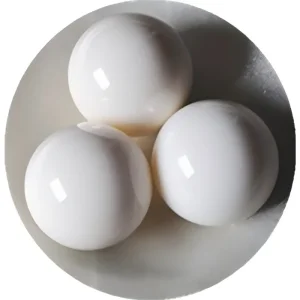
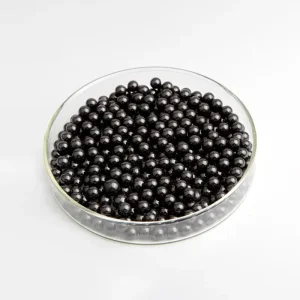
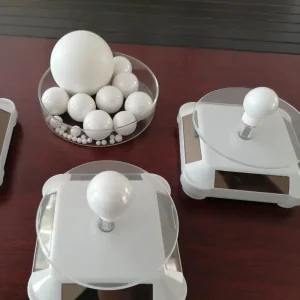
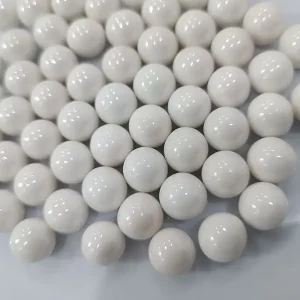
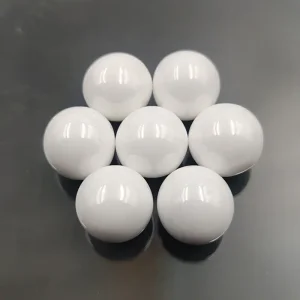
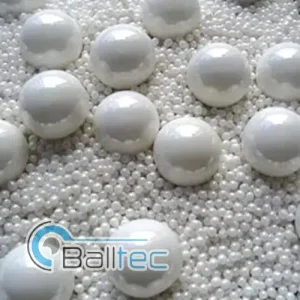
Explore our full range of structural ceramic media, precision bearing balls, and high-density grinding spheres.

Technical guidance regarding ceramic material selection, customs clearance, and local operational compatibility.
While both materials are advanced ceramics, Silicon Nitride (Si3N4) is the superior choice for high-speed, dynamic bearing applications due to its lower density (3.2 g/cm³ vs. 6.0 g/cm³ for ZrO2), higher fracture toughness, and lower thermal expansion coefficient. This makes Si3N4 ideal for electric motor bearings, CNC spindles, and high-RPM turbomachinery. Zirconia (ZrO2), however, is excellent for extreme chemical corrosion resistance, slow-rotating heavy load valves, and high-impact grinding environments.
Silica sand dust particles typically have a hardness of around 700 to 800 HV. Traditional steel bearings have a similar hardness, meaning invading sand particles embed into the steel balls, scratching raceways and causing dynamic imbalance. Baitian’s Si3N4 ceramic balls possess a hardness of 1600–1700 HV. They pulverize fine sand particles on contact without suffering surface damage, extending total bearing assembly lifespan by up to 500% in unsealed dusty environments.
We supply ceramic balls conforming to ISO 3290-2 and ABMA standards ranging from Grade G3, G5, G10, G16, up to G100. Grade G3 and G5 represent ultra-precision tolerances (sphericity < 0.08 µm, diameter variation < 0.13 µm) required for military aerospace, high-precision robotic joints, and high-speed motor spindles across Riyadh's advanced manufacturing zones.
Standard stock items can be dispatched immediately. For custom orders or large wholesale volumes:
• Air Freight (King Khalid International Airport - RUH): Delivery within 5 to 8 business days (ideal for emergency line-stop replacements).
• Sea Freight (via Dammam/Jeddah to Riyadh Dry Port): Transit time typically ranges between 18 and 25 days including customs clearance facilitation.
Yes. Every dispatch includes complete material traceability documents, including ISO 9001 quality certificates, Raw Material Chemical Analysis, Hardness and Sphericity Test Reports, and Certificate of Origin (COO). We fully support SABER platform listing for smooth Saudi customs entry.