Follow 


Direct-from-factory advanced ceramic balls engineered for extreme speeds, zero electrical fluting, and superior tribological performance in micro-motors and robotics joints.
Analyzing the shift in Central and Eastern Europe's automotive capital toward high-rpm electric vehicle drive units, battery gigafactories, and precision CNC machinery.
Hungary has rapidly emerged as Central Europe’s dominant powerhouse for Electric Vehicle (EV) and battery production. Major manufacturing clusters in Debrecen, Győr, Kecskemét, and Miskolc are driving unprecedented demand for next-generation rotational components. As global OEMs transition to 800V silicon carbide (SiC) drive architectures, traditional chrome steel bearings suffer from rapid dielectric breakdown and electrical fluting (micro-spallation caused by stray currents).
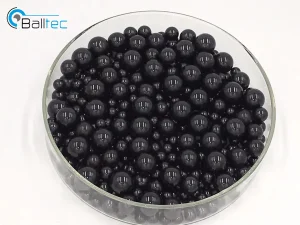
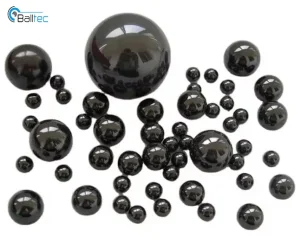
Silicon Nitride ($Si_3N_4$) ceramic bearing balls act as complete electrical insulators, eliminating galvanic pitting while supporting operational speeds exceeding 20,000 RPM. This thermal and electrical immunity makes advanced ceramic media vital for Hungarian EV traction motors, auxiliary units, and battery cooling pumps.
Hungary's dense industrial base of Tier-1 machine builders and toolmakers relies on high-speed CNC machine spindles running at high speed factors ($Nd_m > 1.5 \times 10^6$). Steel bearing elements under such centrifugal forces suffer from thermal expansion and mechanical deformation.
With a mass density only 40% that of steel (3.2 g/cm³ for $Si_3N_4$), ceramic bearing balls reduce centrifugal loading on outer rings by up to 60%. This drastically extends spindle service life, cuts power consumption, and ensures sub-micron machining precision required by European automotive tolerances.
Comprehensive tribological and physical property evaluation for engineering design selection in Hungarian industrial environments.
| Physical / Mechanical Property | Silicon Nitride ($Si_3N_4$) | Zirconia ($ZrO_2$) | Alumina ($Al_2O_3$) | Bearing Steel (100Cr6 / 52100) |
|---|---|---|---|---|
| Density ($g/cm^3$) | 3.20 - 3.25 | 6.05 | 3.95 | 7.85 |
| Hardness (HV / GPa) | 1500 - 1700 HV | 1200 HV | 1600 HV | 700 - 800 HV |
| Modulus of Elasticity (GPa) | 310 - 330 | 210 | 380 | 208 |
| Coefficient of Thermal Expansion ($10^{-6}/K$) | 3.2 | 10.5 | 8.0 | 12.5 |
| Electrical Resistivity ($\Omega\cdot cm$) | $>10^{14}$ (Insulator) | $>10^{10}$ (Insulator) | $>10^{14}$ (Insulator) | $10^{-5}$ (Conductor) |
| Maximum Operating Temp (°C) | 1000 - 1200 °C | 500 °C | 1300 °C | 150 - 200 °C |
| Corrosion Resistance | Immune to acids/alkalis | Excellent | Excellent | Prone to Oxidation |
Custom ceramic ball solutions engineered to overcome critical failure modes in Hungary's premier manufacturing sectors.
Location Focus: Debrecen & Győr EV Corridors
Problem: Inverter PWM high-frequency switching causes stray shaft currents, resulting in electric discharge machining (EDM) fluting, noise, and bearing failure within 30,000 km.
Solution: Hybrid ceramic ball bearings utilizing Baitian G3 grade $Si_3N_4$ balls isolate the rotor completely, eliminating fluting and doubling motor service life under high 800V stresses.
Location Focus: Toolmaking hubs in Kecskemét & Székesfehérvár
Problem: Steel ball thermal expansion at >24,000 RPM alters spindle preload, causing thermal runaway and dimensional inaccuracy in aluminum automotive castings.
Solution: Ceramic balls possess a fraction of steel's thermal expansion coefficient ($3.2 \times 10^{-6}/K$). Spindles maintain stable preload, zero thermal drift, and tighter tolerances.
Location Focus: Budapest & Northern Hungary Chemical Plants
Problem: Aggressive acids, organic solvents, and CIP (Clean-in-Place) steam sterilizations corrode metallic bearing elements, contaminating sterile fluid lines.
Solution: Yttria-stabilized Zirconia ($ZrO_2$) and Alumina ($Al_2O_3$) ceramic balls provide inert, zero-leach performance in fluid check valves and high-pressure chemical metering pumps.
How Pingxiang Baitian (Ball-tec) New Materials leverages integrated smart manufacturing to supply European industries with certified ceramic precision.
Located in Pingxiang's advanced industrial ceramic cluster, Baitian controls the entire production cycle under one roof. From raw sub-micron chemical synthesis to Gas Pressure Sintering (GPS) and specialized Hot Isostatic Pressing (HIP) densification, our facility ensures structural density approaching 100% theoretical limits.
By removing grain boundary voids and internal micro-cracks, our ceramic balls achieve fracture toughness values exceeding $6.0 \, MPa\cdot m^{1/2}$, guaranteeing catastrophic failure protection in high-impact robotic joints and drive units.
Quality control is powered by automated laser sphericity interferometers and ultrasonic sub-surface flaw detectors. Every lot delivered to Hungarian partners comes with traceable chemical composition reports, ISO 3290 grade certification, and batch testing data.
To ensure supply chain security, Baitian maintains dedicated logistics channels to Hungary via direct China-Europe freight rail hubs (Budapest terminal) and ocean routes through Piraeus port, providing reliable 14-to-21 day lead times for scheduled OEM assembly line replenishment.
Technical insights on ball grade selection, dynamic loads, thermal shock resistance, and export logistics.
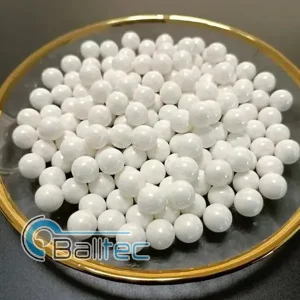
Precision-manufactured ceramic bearing balls, full ceramic bearings, alumina spheres, and zirconia media for global exporters and European industrial buyers.
Require custom dimensions, high ISO precision grades (G3/G5), or technical support for your Hungarian manufacturing assembly lines? Our engineering team provides fast quotes, sample evaluations, and full compliance documentation.
Send Inquiry Now