Follow 


Direct factory supply of high-crush-strength zeolites optimized for extreme dew points (below -70°C), low attrition rates, and maximum adsorption kinetics.
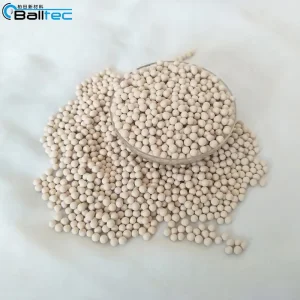
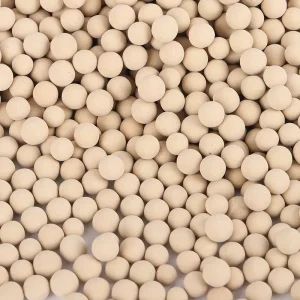
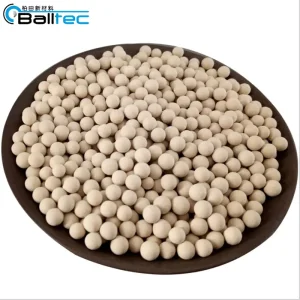
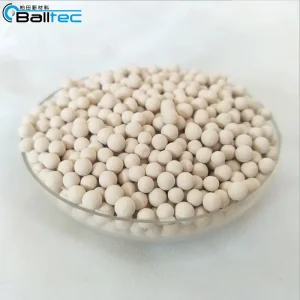
Analyzing Greece’s transition into Southeastern Europe’s primary energy gateway and the resulting demand for advanced molecular sieve adsorbents.
With the expansion of the Revithoussa LNG Terminal and the FSRU units off Alexandroupolis, Greece has emerged as a crucial LNG import hub. Deep gas dehydration using 3A and 13X zeolites is paramount to prevent hydrate blockages and cryogenic equipment freeze-ups during liquefaction and re-gasification cycles.
Major refining complexes in Corinth and Elefsina (such as Motor Oil Hellas and HELLENiQ ENERGY) require robust molecular sieves for hydrodesulfurization, catalytic reforming feed purification, and trace contaminant removal (CO2, H2S, mercaptans, and alcohols) to comply with strict EU environmental directives.
Greece’s intense Mediterranean solar radiation fuels high domestic and commercial demand for insulated glass (IG) units. Our specialized 3A insulating glass desiccant prevents internal condensation and structural distortion, while specialized 5A/13X adsorbents serve maritime oxygen generators and inert gas systems.
The strategic position of Greece at the crossroad of the Trans Adriatic Pipeline (TAP), the Interconnector Greece-Bulgaria (IGB), and expanding East Mediterranean offshore gas exploration projects demands an unprecedented level of chemical process reliability. Gas processing plants operating under variable ambient temperatures—from coastal Mediterranean humidity to freezing northern mountain pipeline corridors—require adsorbents with exceptional hydrothermal stability and predictable mass transfer zones (MTZ).
By optimizing the crystalline pore size distribution (3Å to 10Å) and binder formulation, Pingxiang Baitian’s molecular sieves achieve a sharper mass transfer front. This minimizes bed length requirements in dual-tower Temperature Swing Adsorption (TSA) units, reducing capital expenditure (CAPEX) for plant operators in Patras, Thessaloniki, and Attica.
Furthermore, decarbonization targets enforced by the European Green Deal are prompting Greek industrial operators to replace conventional silica gels and activated alumina with high-selectivity zeolites. Synthetic zeolites offer superior water adsorption capacities at ultra-low partial pressures, enabling gas processing units to routinely achieve moisture dew points below -70°C (-94°F).
Understanding the molecular-scale mechanics behind Type A and Type X synthetic zeolites.
Molecular sieves are crystalline alkali metal aluminosilicates possessing a three-dimensional interconnecting network of silica (SiO4) and alumina (AlO4) tetrahedra. The structural formula for a typical sodium-form zeolite A is expressed as Na12[(AlO2)12(SiO2)12]·xH2O. By executing precise ion-exchange processes during manufacturing, the effective pore opening is meticulously calibrated:
The following performance data reflects Pingxiang Baitian's standardized export grades engineered for demanding European industrial environments:
| Technical Parameter | Type 3A Zeolite | Type 4A Zeolite | Type 5A Zeolite | Type 13X Zeolite |
|---|---|---|---|---|
| Nominal Pore Diameter | 3 Ångströms (0.3 nm) | 4 Ångströms (0.4 nm) | 5 Ångströms (0.5 nm) | 10 Ångströms (1.0 nm) |
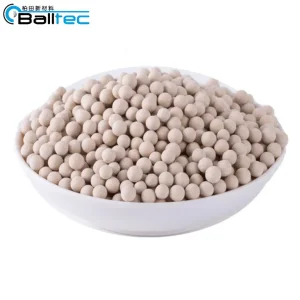
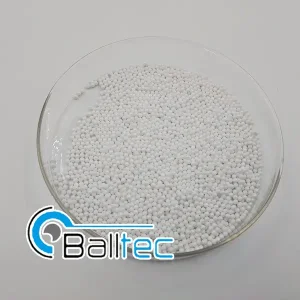
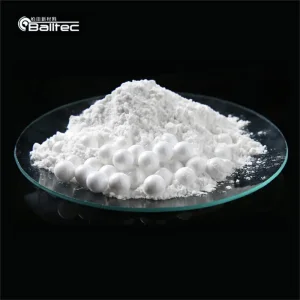
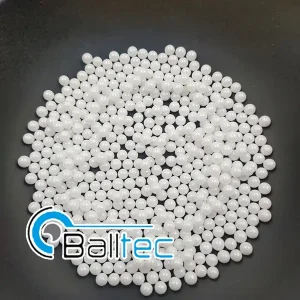
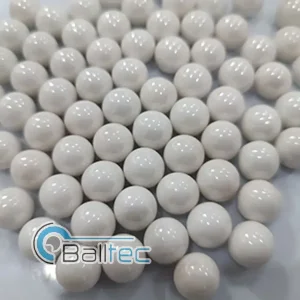
| Shape / Form | Spheres / Pellets | Spheres / Pellets | Spheres / Pellets | Spheres / Pellets |
| Bulk Density (g/ml) | 0.68 – 0.74 | 0.66 – 0.72 | 0.68 – 0.73 | 0.64 – 0.70 |
| Static Water Adsorption (25°C, RH 75%) | ≥ 21.5% | ≥ 22.0% | ≥ 21.5% | ≥ 26.5% |
| Crush Strength (N/bead, 3-5mm) | ≥ 80 N | ≥ 75 N | ≥ 85 N | ≥ 90 N |
| Attrition Rate (wt %) | ≤ 0.10% | ≤ 0.10% | ≤ 0.12% | ≤ 0.10% |
| Package Water Content (wt %) | ≤ 1.0% | ≤ 1.0% | ≤ 1.0% | ≤ 1.0% |
Combining the scale of China’s world-renowned Pingxiang industrial ceramic cluster with direct maritime corridors to Piraeus Port.
Located in Pingxiang, Jiangxi Province, our 100,000 m² manufacturing complex integrates raw kaolin and high-purity precursor clay synthesis directly with automated forming kilns. This guarantees stable binder formulation, consistent pore geometry, and zero lot-to-lot variance.
Our computer-controlled tunnel kilns execute strict calcination curves. This process generates exceptionally durable crystalline frameworks capable of resisting thermal shocks, pressure swings, and fluidization forces inside deep bed reactors without dusting.
Leveraging direct maritime trade routes connecting major Chinese ports (Shanghai/Ningbo/Shenzhen) to the Port of Piraeus, we offer streamlined FOB, CIF, and DDP shipping. Greek clients benefit from reduced transit lead times, consolidated customs clearing, and localized bulk storage options.
Explore our full engineering line including specialty water purification zeolites, yttria-stabilized zirconia media, and nanometer powders tailored for chemical processing.
In-depth responses covering molecular sieve selection, regeneration procedures, hydrodynamic packing, and international transport compliance.
Selection depends directly on the feed gas composition and target outlet dew point. For natural gas streams rich in unsaturated hydrocarbons (alkenes), Type 3A is mandatory to prevent co-adsorption and bed coking. If the stream is pure light paraffin without heavy hydrocarbons, Type 4A offers high water capacity. For simultaneous removal of CO2, H2S, and water in LNG pre-treatment units, Type 13X provides the required wide pore structure (10Å) and polar molecular selectivity.
Thermal regeneration of synthetic zeolites typically requires heating the bed to 200°C – 315°C (390°F – 600°F) using a dry purge stream (such as residue gas or nitrogen). The purge gas strips off adsorbed water vapor and carries it out of the vessel. Following the heating phase, a cooling cycle brings the bed back down to operating temperature before bed switching to prevent thermal shock and dew point spikes.
Our adsorbents undergo a proprietary dual-bind formulation process followed by high-temperature rotary calcination. Every batch is tested under ASTM D4179 (single pellet crush strength) and ASTM D4058 (attrition rate). Export packaging utilizes airtight steel drums with inner heavy-duty polyethylene liners, vacuum-sealed to prevent ambient pre-hydration and physical degradation during ocean transit.
Under standard operational parameters (clean feed gas, proper liquid knockout filtration, and controlled regeneration cycles), our industrial-grade zeolites typically deliver a service life of 3 to 5 years (approx. 2,000 to 4,000 regeneration cycles) in continuous refinery and natural gas dehydration units.
Yes. Pingxiang Baitian (Ball-tec) New Materials Co., Ltd. provides comprehensive compliance documentation including EU REACH registration data, ISO 9001:2015, ISO 14001:2015, ISO 45001 certificates, as well as lot-specific Certificates of Analysis (COA) detailing bulk density, crush strength, moisture content, and equilibrium water adsorption.
Partner with China’s premier industrial adsorbent manufacturer. Our engineering team assists Greek gas processors, refinery engineers, and procurement managers with bed loading calculations, adsorbent selection, and rapid delivery schedules.
Send Inquiry Now