Follow 


High-precision ceramic balls specifically manufactured to withstand severe thermal gradients, electrical erosion, and heavy wear across Central Asia’s industrial hubs.
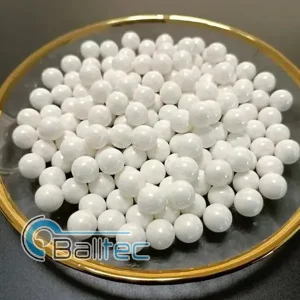
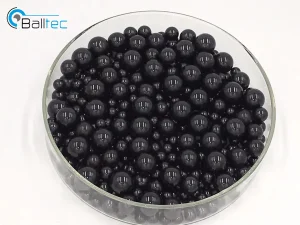
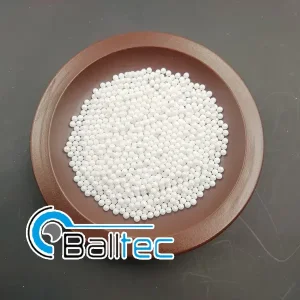
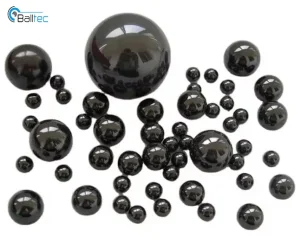
An in-depth analysis of Central Asia's primary manufacturing power and its structural transition toward high-reliability ceramic component integration.
Kazakhstan occupies a paramount geopolitical and industrial position within Central Asia. As the world's leading producer of uranium and a major hub for copper, iron ore, ferro-alloys, and oil extraction across the Caspian Basin (including the Tengiz, Kashagan, and Karachaganak fields), the country's heavy machinery relies heavily on rotational hardware capable of functioning under relentless friction and aggressive corrosion. Traditional chrome steel bearing components face rapid thermal fatigue and micro-welding failure when subjected to high-speed stress, elevated sulfur concentrations, and abrasive mine tailing slurries found in Karaganda and East Kazakhstan Oblasts.
The acceleration of the Trans-Caspian International Transport Route (TITR / Middle Corridor) has positioned regional logistics hubs like Aktau, Almaty, and Khorgos as critical arteries for high-performance equipment. Industrial operators across Pavlodar and Shymkent are systematically upgrading mechanical infrastructure from conventional steel rolling elements to hybrid ceramic bearings (utilizing Silicon Nitride $\text{Si}_3\text{N}_4$ and Yttria-Stabilized Zirconia $\text{ZrO}_2$). This transition eliminates stray electrical current damage in heavy-duty electric motors, extends service intervals in isolated pump stations by up to 500%, and minimizes maintenance downtime in remote steppe installations.
Information Gain Insight: Operating equipment in Kazakh steppe environments requires components certified for ambient temperature fluctuations ranging from -45°C during harsh winter months to +45°C during summer processing peak. Ceramic bearing balls possess a thermal expansion coefficient ($3.2 \times 10^{-6}/\text{K}$ for $\text{Si}_3\text{N}_4$) less than one-third that of bearing steel ($12.5 \times 10^{-6}/\text{K}$), preventing rotor lockup and dynamic clearance breakdown.
To understand why top-tier industrial buyers, valve manufacturers, and machinery refurbishers in Kazakhstan are replacing steel balls with advanced ceramics, engineers evaluate key mechanical parameters under Hertzian contact stress conditions.
| Physical Property / Parameter | Silicon Nitride ($\text{Si}_3\text{N}_4$) | Zirconia ($\text{ZrO}_2$) | Alumina ($\text{Al}_2\text{O}_3$) | Chrome Steel (AISI 52100) |
|---|---|---|---|---|
| Density ($\text{g/cm}^3$) | 3.25 (Lightweight) | 6.05 (High Mass) | 3.95 (Medium) | 7.85 (Heavy) |
| Hardness (HV / HRC) | 1600 - 1800 HV | 1200 - 1350 HV | 1500 - 1650 HV | 700 - 800 HV (60-64 HRC) |
| Elastic Modulus (GPa) | 320 | 210 | 380 | 208 |
| Thermal Expansion ($10^{-6}/\text{K}$) | 3.2 | 10.5 | 8.0 | 12.5 |
| Electrical Resistivity ($\Omega\cdot\text{cm}$) | $>10^{14}$ (Insulator) | $>10^{12}$ (Insulator) | $>10^{14}$ (Insulator) | $10^{-5}$ (Conductor) |
| Corrosion Resistance | Exceptional (Acids/Bases) | Superior (Oxidizing) | High Chemical Inertness | Poor (Prone to Rust) |
How our factory-direct export infrastructure bridges technical demands, custom sizing, and international logistics for Kazakh importers.
Variable Frequency Drive (VFD) electric motors used in Kazakhstan's petro-refineries suffer from stray capacitive currents that cause micro-pitting on steel bearings. Our non-conductive $\text{Si}_3\text{N}_4$ balls completely isolate the rotor, eliminating electrical discharge machining (EDM) failure.
With a density 58% lower than steel, ceramic bearing balls drastically reduce centrifugal force and spin-slip friction at high RPMs. This allows high-speed machine tool spindles in Almaty and Karaganda workshops to operate at lower temperatures with extended grease life.
In uranium in-situ leaching operations and acidic chemical processing plants across Turkestan Oblast, process pumps are exposed to aggressive sulfuric and nitric acid concentrations. Our fully dense zirconia ($\text{ZrO}_2$) and alumina ($\text{Al}_2\text{O}_3$) balls resist chemical degradation completely.
Streamlined international export compliance designed to meet Eurasian Economic Union requirements and local GOST standards.
Procurement procedures within the Eurasian Economic Union (EAEU)—encompassing Kazakhstan, Armenia, Belarus, Kyrgyzstan, and Russia—demand stringent compliance documentation. Our factory supplies full batch traceability, ISO 9001:2015 quality control certificates, material safety compliance data, and technical passports adhering to GOST-R / EAC standards. Every batch of G3 and G5 silicon nitride bearing balls undergoes 100% ultrasonic flaw testing and laser sphericity inspection prior to export packaging.
Whether supplying OEM bearing assembly factories in Astana or maintenance facilities in Atyrau, we provide origin declarations (Certificate of Origin Form A / REX) that simplify customs clearance and prevent unnecessary port delays.
Recognizing the importance of lead-time stability for continuous industrial production, our export logistics framework integrates rail freight via Lianyungang / Xi'an directly to Almaty, Dostyk, and Khorgos dry ports.
By deploying shock-resistant, moisture-barrier vacuum packaging encased in reinforced wooden export crates, we guarantee that precision-ground ceramic balls ($0.1\text{mm}$ to $50\text{mm}$) arrive free of surface micro-abrasion, humidity degradation, or static charge buildup regardless of transit duration across Central Asian rail routes.
Anticipating the requirements of future green energy transitions, hydrogen processing, and ultra-high-speed machinery.
By subjecting sintered $\text{Si}_3\text{N}_4$ preforms to 200 MPa of inert gas pressure at 1800°C, our latest HIP technology achieves 99.99% theoretical density, virtually eliminating internal pores and boosting rolling contact fatigue life by 300%.
Integrating hexagonal boron nitride (h-BN) and solid lubricant phases into zirconia matrices creates self-lubricating bearing balls tailored for unlubricated vacuum pumps and cryo-fuel transport across North Kazakhstan.
Development of intelligent ceramic rolling elements featuring thin-film piezoresistive micro-sensors to provide real-time thermal, vibration, and strain telemetry directly to plant SCADA systems.
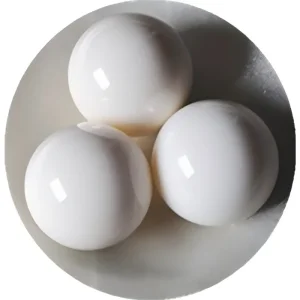
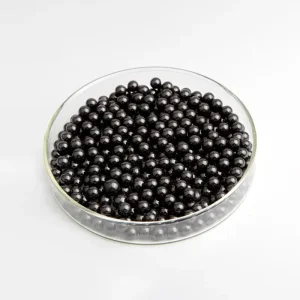
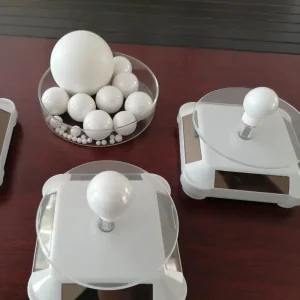
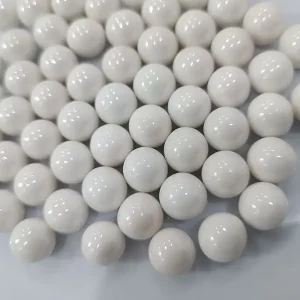
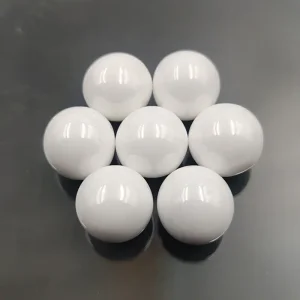
Comprehensive sizes ranging from sub-millimeter precision beads to heavy-duty structural spheres for Kazakhstan's processing sectors.
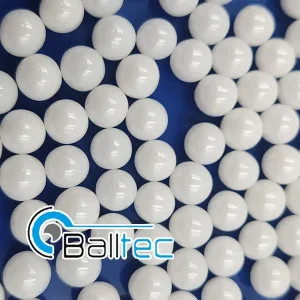
Clear technical guidance for project managers, plant directors, and component buyers sourcing ceramic balls in Kazakhstan.