Follow 


Direct factory supply engineered to meet stringent European freight transport, mining, and fine powder dispersion standards.
Transitioning European logistics from static lead counterweights to self-adjusting internal microcrystalline ceramic beads.
Traditional wheel balancing relies on fixed exterior weights attached to the wheel rim. However, as heavy-duty commercial truck tires experience irregular tread wear, rubber thermal expansion, and mechanical vibration, fixed weights quickly become obsolete. Dynamic internal tire balancing beads operate on centrifugal force and fluid dynamics within the pressurized tire cavity.
When the vehicle accelerates above 30 km/h (18 mph), the micro-spherical ceramic beads automatically migrate to the area of heavy spot imbalance caused by radial runout or tread variation. By counteracting the out-of-balance force vectors, the beads maintain continuous, real-time equilibrium across the entire life cycle of the tire assembly.
For fleet managers operating in high-density logistics corridors across Western Europe, dynamic ceramic balancing beads eliminate the need for periodic wheel rebalancing. Empirical fleet data demonstrates significant operational improvements:
Why Dutch fleet operators, freight forwarding enterprises, and municipal transit fleets are spearheading the adoption of ceramic balancing technology.
The Netherlands serves as the primary gateway for European freight and trade. Home to the Port of Rotterdam—the largest seaport in Europe—and Amsterdam Airport Schiphol, the Dutch transportation matrix is characterized by ultra-intense road transport, cross-border logistics corridors (such as the A15 highway linking Rotterdam directly to the German Ruhr area), and aggressive carbon reduction mandates.
Under EU REACH chemical regulations and European lead bans, traditional clip-on lead balance weights are heavily restricted due to toxic environmental runoff. High-density tempered glass-ceramic and zirconia balancing beads present an chemically inert, non-toxic alternative that complies with the European Green Deal objectives.
Dutch transport organizations are subject to strict VECTO (Vehicle Energy Consumption Calculation Tool) audits. By reducing rolling resistance and parasitic energy loss stemming from tire vibration, ceramic beads directly lower CO₂ grams-per-kilometer ratings for heavy commercial transport vehicles (HCVs).
With the Netherlands leading Europe in electric bus (e-bus) deployment (e.g., GVB Amsterdam, RET Rotterdam, Connexxion), instantaneous electric motor torque places immense stress on tires. Ceramic balancing beads prevent instant torque-induced tread scrubbing and protect costly EV battery ranges from vibration loss.
In high-mileage road transport networks across the Benelux region, downtime translates directly to lost profitability. Dynamic balancing beads eliminate tire dismounting for re-balancing over the entire 200,000+ kilometer life of steer, drive, and trailer tires, generating an estimated net total cost of ownership (TCO) savings of €450 to €780 per truck-trailer unit annually.
A rigorous scientific comparison highlighting friction coefficients, moisture resistance, and inner-liner safety.
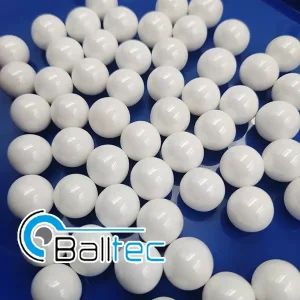
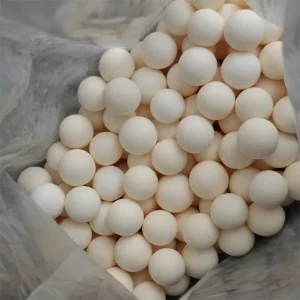
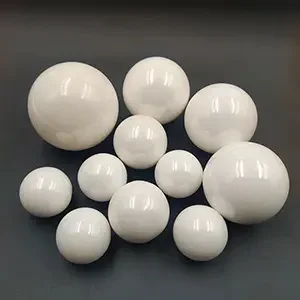
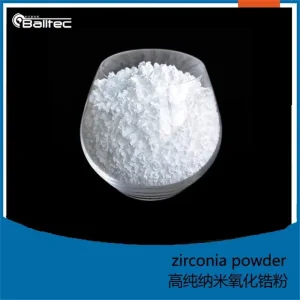
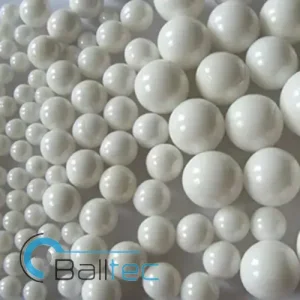
Not all internal balancing media perform equally. Low-cost alternatives such as metal shot, plastic beads, or untreated silica sand frequently clump due to moisture absorption or damage the tire's inner butyl rubber liner due to excessive friction. Our factory manufactures high-grade tempered microcrystalline glass-ceramic and yttria-stabilized zirconia beads specifically formulated for high-velocity kinetic stability inside pneumatic tires.
| Performance Metrics | High-Purity Ceramic / Glass Beads | Metallic Shot (Steel/Zinc) | Plastic / Polymer Granules |
|---|---|---|---|
| Material Hardness (Mohs Scale) | 7.0 - 7.5 (Non-scratching, wear-resistant) | 6.0 - 6.5 (Corrodes, abrasive) | 3.0 - 4.0 (Deforms under heat) |
| Density (g/cm³) | 2.50 - 6.00 g/cm³ (Optimized kinetic inertia) | 7.80 g/cm³ (Overly heavy, liner impact risk) | 1.10 - 1.40 g/cm³ (Requires massive volume) |
| Hygroscopic / Moisture Resistance | 100% Non-hygroscopic (Zero clumping) | Rust prone when exposed to compressed air water | Static charge accumulation causing wall sticking |
| Dielectric & Anti-Static Properties | High insulation, zero static cling | Conductive, induces electromagnetic noise | High triboelectric static buildup |
| Valve Core Compatibility | Optimum spherical size (>1.0mm) + filtered valve cores | Irregular fragments jam standard valves | Melts or shreds, clogging valve seats |
| Tire Inner Liner Integrity | Smooth polished surface; zero rubber abrasion | Sharp edges cause internal rubber degradation | Leaves polymer residue inside cavity |
How Tier-1 fleet suppliers evaluate tire balancing bead manufacturing batches.
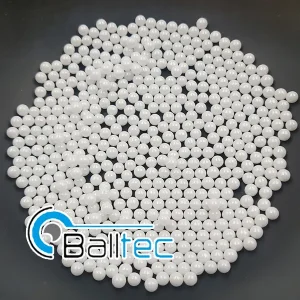
Procurement teams must ensure strict control over particle diameter. Beads smaller than 0.8mm risk entering the standard tire valve stem during deflation, while beads larger than 3.0mm lack the fluidity required for high-speed dynamic response. Our automated laser-sorting machinery ensures 99.8% roundness tolerance and uniform size distribution (typically 1.15mm to 2.00mm).
Inferior beads disintegrate into fine powder under high rotational impact, generating internal dust that destroys tire inner liners and ruins TPMS (Tire Pressure Monitoring System) sensors. Our microcrystalline ceramic beads undergo hydrostatic pressure testing exceeding 1,200 MPa crush strength, maintaining structural integrity over millions of revolutions.
Integrating advanced ceramic powder synthesis, automated sintering, and direct maritime export to Rotterdam.
Located in the heart of China’s premier advanced ceramics industrial zone in Pingxiang, Jiangxi, our facility leverages access to high-purity raw kaolin, alumina, and zirconia ores, ensuring unmatched cost efficiency and material purity.
Our Industry 4.0 smart factory operates computer-controlled high-temperature tunnel kilns with precise thermal profiling. This guarantees uniform microstructural density and zero internal porosity across every production batch.
We provide OEM/ODM packaging options, including pre-measured throw-in applicator bags (TPU drop-in bags), bulk 25kg woven bags, and export-grade wooden pallets. Direct maritime routes ensure delivery to Port of Rotterdam within 28-35 days.
Tailored balancing solutions for specific commercial, agricultural, and public transit fleets.
Heavy articulated 40-tonne truck-trailers transporting freight between Rotterdam Maasvlakte and European hinterlands demand zero vibration at sustained highway speeds of 80-90 km/h. Ceramic balancing beads stabilize drive axles and multi-axle trailers, eliminating irregular tread scalloping and protecting air suspension airbags.
Municipal electric transit buses feature high curb weights due to heavy lithium battery packs. Ceramic balancing beads absorb micro-vibrations continuously, improving passenger ride comfort while mitigating premature tire wear on heavy rear drive axles caused by frequent start-stop regenerative braking cycles.
High-flotation agricultural tires on tractors and harvesters operating on mixed road-field surfaces accumulate mud imbalance. Internal ceramic beads continuously adjust internal mass distribution during paved road transport, preventing violent cab shake and operator fatigue.
Temperature-sensitive logistics fleets (e.g., pharmaceutical and food express delivery) rely on 3.5t to 7.5t light commercial vehicles. Pre-measured throw-in bag application allows fleet mechanics to balance newly mounted tires in minutes during scheduled maintenance without specialized balancing machinery.
Detailed technical answers addressing installation, TPMS safety, dosage charts, and long-term durability.
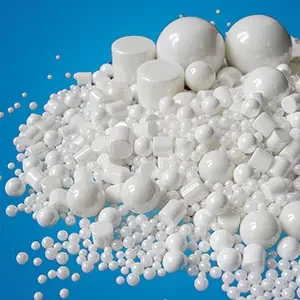
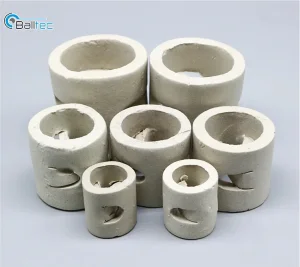
Explore our full range of ultra-wear-resistant zirconia grinding media, bearing spheres, and ceramic tower packing.
Optimize fleet operational efficiency, extend tire service life, and lower fuel consumption with factory-direct supply, custom OEM packaging, and comprehensive technical support.
Send Inquiry Now