Follow 


Factory-direct synthesis designed for dynamic adsorption cycles, high mechanical attrition resistance, and low hydrothermal degradation under coastal operational environments.
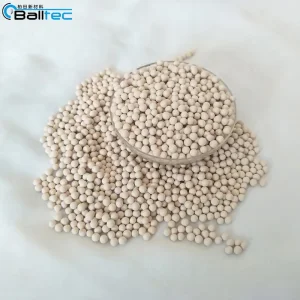
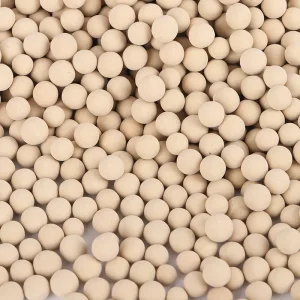
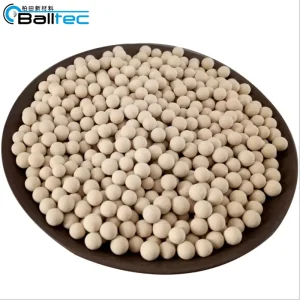
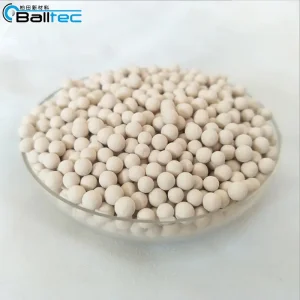
Analyzing molecular sieve kinetics, thermodynamic stability, and moisture mitigation across South Africa's critical processing corridors.
Cape Town Harbour and Saldanha Bay host vital fuel storage terminals and marine logistics. Deep drying of hydrocarbon fuels and liquefied petroleum gas (LPG) requires robust 4A and 13X molecular sieves to reach cryogenic dew points (< -70°C), preventing hydrate plug formation and pipe corrosion.
The Western Cape is South Africa's prime agricultural and viticultural hub. Production of pharmaceutical alcohol, potable spirits, and bioethanol demands type 3A crystalline zeolite adsorbents that selectively filter water molecules (2.8Å) while completely excluding ethanol (4.4Å).
With major healthcare complexes and metal fabrication facilities across Paarden Eiland and Bellville, Pressure Swing Adsorption (PSA) units rely on specialized 5A and 13X sieves for separation of atmospheric oxygen and nitrogen, ensuring on-demand supply without bulk cryogenic transport.
Advancements in crystalline structure, binderless formulation, and global market shifts driving competitive purchasing in Southern Africa.
The global synthetic zeolite market is undergoing significant restructuring. Traditional European and North American manufacturing models face escalating thermal-energy overheads and mineral precursors supply constraints. Operating our direct synthesis complex in Jiangxi, China, allows full vertical integration: from hydro-thermal crystallization of aluminosilicate gel to binder incorporation and calcination. For importers in Cape Town and Durban, sourcing direct from an ISO 9001/14001/18001 certified Chinese facility cuts out multi-tiered distribution margins, guarantees steady volume shipments through Port of Cape Town, and provides lot-by-lot consistency with comprehensive batch analysis certs (COA).
Conventional synthetic molecular sieves require 15–20% inert clay binders (attapulgite or kaolin) to form stable spherical beads or extrudates, which lowers pure volumetric adsorption capacity. Our technical roadmap focuses on binderless zeolite crystallization, converting inert matrices directly into active crystalline phases. This achieves a 15–22% gain in dynamic equilibrium water capacity, maximizing cycle run-times in Western Cape air separation and green hydrogen compression projects where compact vessel footprints are imperative.
International procurement into South Africa requires stringent adherence to international export standards. We implement high-barrier hermetic packaging including nitrogen-purged steel drums, aluminum-composite foil heat-sealed inner liners, and desiccated container stowage, completely eliminating ambient moisture uptake during transit across maritime equatorial lanes. Full compliance with REACH, RoHS, and South African SABS industrial frameworks ensures frictionless port clearance and immediate operational deployment.
Browse our integrated product lines: mass transfer structured packings, ultra-hard zirconia grinding media, and specialized molecular sieves.
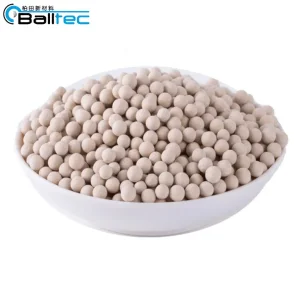
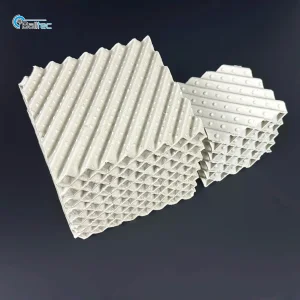
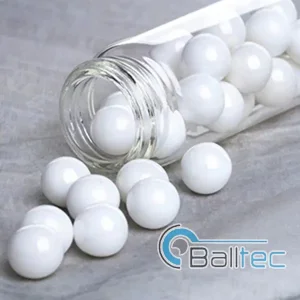
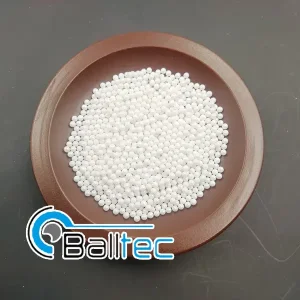
Direct guidance from our chemical engineering specialists addressing compatibility, lead times, and thermal regeneration.
The choice is governed by the critical pore diameter of the zeolite crystal. Type 3A (3Å) is designated for unsaturated hydrocarbon gas streams, cracked gas, and ethanol dehydration where molecule exclusion prevents polymerization. Type 4A (4Å) is standard for natural gas drying, closed-loop instrument air desiccation, and refrigerant circuits. Type 5A (5Å) is optimized for normal/iso-paraffin separation and PSA oxygen plants. Type 13X (10Å) handles broad-spectrum adsorption including H2O, CO2, and mercaptans in pre-cryogenic air separation units (ASUs).
Production cycles at our Jiangxi manufacturing hub range between 7 to 14 business days depending on tonnage. Direct ocean transport from Ningbo or Shanghai Port to the Port of Cape Town typically takes 22 to 28 days transit time. We provide complete sea-freight documentation including Bill of Lading, Certificate of Analysis (COA), Fumigation Certificates, and customs HS code documentation for fast import processing.
For thermal regeneration (TSA), an inert purge gas (such as dry N2) heated to 200°C–315°C should pass counter-currently through the molecular sieve bed. The bed temperature should ramp up gradually to avoid thermal shock and steam degradation. Cooling should proceed with bone-dry gas to prevent early moisture saturation before the bed is cycled back online.
We combine high-purity inorganic binders with high-pressure rotary granulating techniques followed by high-temperature multi-zone rotary calcination. This yields a dense, spherical morphology boasting compressive crush strengths exceeding 30–50 N/particle (depending on diameter) with an attrition rate < 0.1 wt%, preventing downstream filter fouling in high-flow gas pipelines.