Follow 


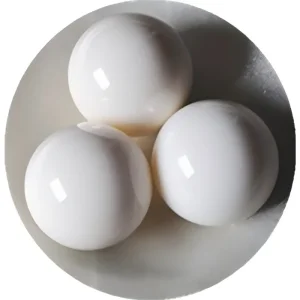
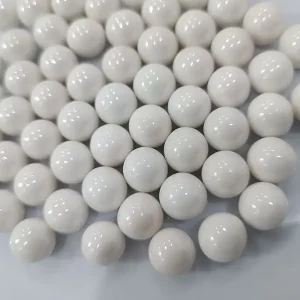
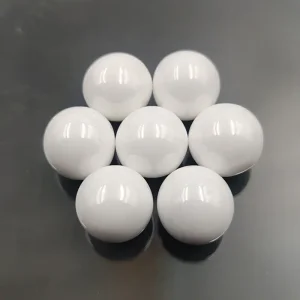
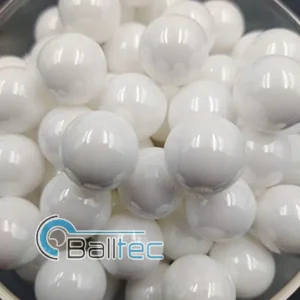
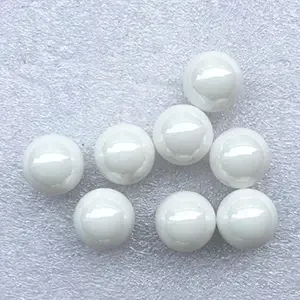
Ultra-precision G3 and G5 grade ceramic balls engineered for extreme rotational velocity, non-conductive electrical isolation, and corrosive fluid contact.
Germany stands as the undisputed heartland of European mechanical engineering (Maschinenbau), high-end automotive manufacturing, precision machine tool fabrication, and renewable energy technology. From the machine tool hubs in Baden-Württemberg and Bavaria to the automotive innovation clusters in Lower Saxony and Saxony, German engineers demand components that operate under extreme mechanical stress, ultra-high velocities, and severe operating environments.
Traditionally, high-carbon chromium steel (100Cr6 / DIN 1.3505) served as the standard rolling material for industrial bearings. However, modern technological transitions are pushing steel components beyond their physical limits:
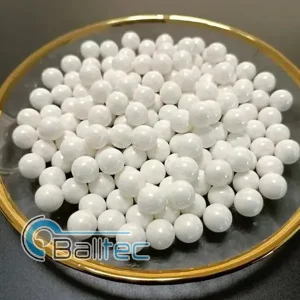
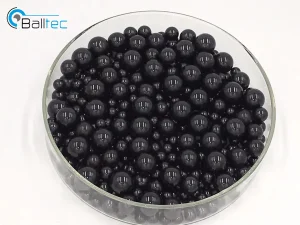
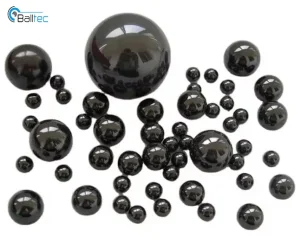
To solve these friction, wear, and insulation challenges, German engineers are increasingly substituting standard steel balls with Advanced Ceramic Bearing Balls—specifically Silicon Nitride ($\text{Si}_3\text{N}_4$), Yttria-Stabilized Zirconia ($\text{ZrO}_2$), and High-Purity Alumina ($\text{Al}_2\text{O}_3$). As a specialized wholesale manufacturer and direct exporter, Pingxiang Baitian (Ball-tec) New Materials Co., Ltd. provides German enterprises with ISO 3290-2 precision grade ceramic balls engineered to meet strict DIN/EN standards.
Understanding the microstructural differences between Silicon Nitride ($\text{Si}_3\text{N}_4$), Zirconia ($\text{ZrO}_2$), Alumina ($\text{Al}_2\text{O}_3$), and conventional 100Cr6 bearing steel is critical for optimal engineering specification.
| Physical / Mechanical Property | Silicon Nitride ($\text{Si}_3\text{N}_4$) | Zirconia ($\text{ZrO}_2 / \text{Y-TZP}$) | Alumina ($\text{Al}_2\text{O}_3\text{ 99.99\%}$) | Bearing Steel (100Cr6) |
|---|---|---|---|---|
| Density ($\text{g/cm}^3$) | 3.25 (Ultralight) | 6.05 | 3.95 | 7.85 (Heavy) |
| Hardness (HV / HRC) | 1600 - 1800 HV | 1200 - 1350 HV | 1500 - 1700 HV | 700 - 800 HV (60-64 HRC) |
| Elastic Modulus (GPa) | 320 | 210 | 380 | 208 |
| Thermal Expansion ($10^{-6}/\text{K}$) | 3.2 (Ultra-stable) | 10.5 | 8.0 | 12.5 |
| Thermal Conductivity ($\text{W/m}\cdot\text{K}$) | 30 | 2.5 (Thermal Insulator) | 30 | 45 |
| Electrical Resistivity ($\Omega\cdot\text{cm}$) | >1014 (Non-conductive) | >1012 (Non-conductive) | >1014 (Non-conductive) | 10-5 (Conductor) |
| Coefficient of Friction (Dry) | 0.15 | 0.20 | 0.25 | 0.80 |
| Maximum Temp Limit (°C) | 1000°C - 1200°C | 500°C | 1400°C | 150°C - 200°C |
For high-speed hybrid bearings and full ceramic assemblies destined for German equipment manufacturers, sphericity and surface finish parameters dictate acoustic noise, vibration levels (VDI 2056 standard), and service life:
Customized material configurations designed for the specific technical requirements of key German industrial sectors.
Silicon Nitride ($\text{Si}_3\text{N}_4$) G5 balls eliminate electrical discharge pitting (fluting) caused by high-voltage 800V inverters in German EV traction motors, reducing rotational inertia by 60% and cutting noise, vibration, and harshness (NVH).
German CNC milling and grinding head builders select G3 grade $\text{Si}_3\text{N}_4$ balls for hybrid angular contact bearings. Low thermal expansion guarantees micro-meter machining accuracy even under continuous 30,000+ RPM spindle speeds.
Offshore wind turbines operating in the North and Baltic Seas face salt spray corrosion and micro-smearing fatigue during dynamic wind shifts. Hybrid ceramic bearings with $\text{Si}_3\text{N}_4$ balls prevent white-etching cracks (WEC) and extend maintenance cycles.
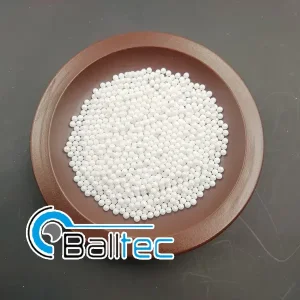
High-purity Zirconia ($\text{ZrO}_2$) and Alumina ($\text{Al}_2\text{O}_3$) balls act as chemical inert valve check balls in dosing pumps, homogenizers, and flow meters handling nitric acid, strong alkalis, and pharmaceutical slurries.
G3/G5 precision ground ceramic balls provide low-friction rotational control for robotic joint reducers, harmonic drive gears, and automated guided vehicles (AGVs) operating in German Industry 4.0 smart factories.
Operating under extreme ambient temperatures, $\text{Si}_3\text{N}_4$ ceramic balls are utilized in auxiliary power units (APU), fuel metering valves, and guidance systems where liquid lubrication fails or evaporates.
Headquartered in the national Ceramic Industrial Park in Pingxiang, Jiangxi Province, Pingxiang Baitian (Ball-tec) New Materials Co., Ltd. operates a 100,000 m² state-of-the-art production campus. Founded by technical experts with decades of international powder metallurgy experience, Baitian integrates the entire ceramic production value chain under one roof.
Unlike regional distributors or trading companies, Baitian exercises total quality control over every stage of synthesis and machining:
By leveraging China's robust industrial ceramic cluster, integrated raw material supply, and high-volume automated kilns, Baitian delivers G3 and G5 grade ceramic bearing balls at highly competitive direct-factory pricing. German procurement teams achieve significant cost optimization while receiving products fully compliant with DIN EN 10204 3.1 inspection certificates, REACH, and RoHS standards.
Clear, direct answers regarding technical specifications, German import logistics, and quality assurance.
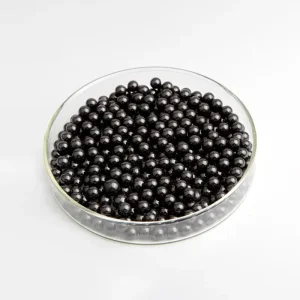
Direct factory supply of ceramic bearing balls, solid steel balls, and high-density zirconia grinding media for industrial applications.
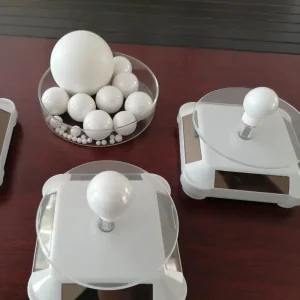
Partner with a certified Chinese manufacturer delivering G3/G5 precision ceramic balls engineered for German industrial standards. Our application engineers provide material recommendations, sample testing, and direct factory pricing.
Send Inquiry Now