ISO 9001:2015 · ISO 14001 · CE Industrial Materials Certification

China Electrical And Electronic Components Supplier & Suppliers

Global engineering whitepaper on advanced precision ceramic components, high-purity dielectric milling media, semiconductor precursors, and mission-critical electrical insulating materials manufactured in Pingxiang, Jiangxi.

Primary Lineups · Batch 01

Precision Milling Media & High-Purity Dielectric Precursors

Core component-grade ceramic spheres, sub-micron wear-resistant media, and thermal-dielectric materials engineered to support semiconductor, MLCC, and lithium-ion electronic device fabrication.
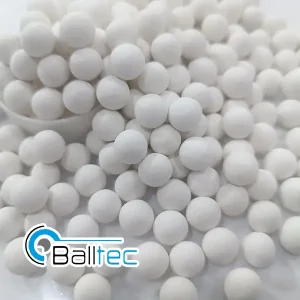
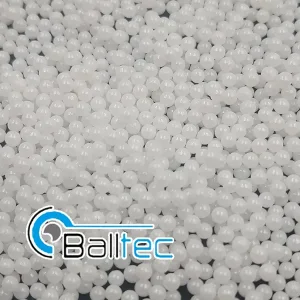
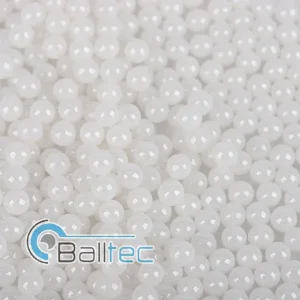
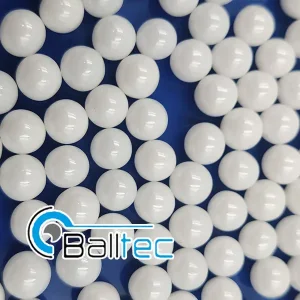
Alumina Series High-Quality Wear-Resistant High Purity Alumina Grinding Bead

High-Quality Wear-Resistant High Purity Alumina Grinding Bead for Ink Production

View Product Specifications
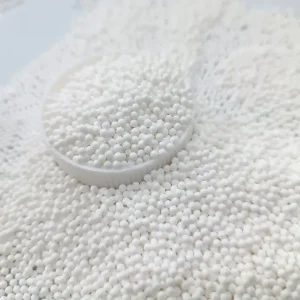
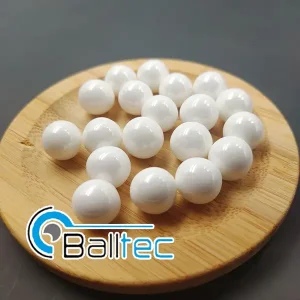
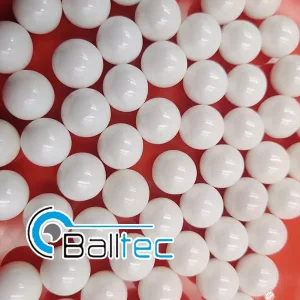
Electronic Ceramic China Low-Impurity Zirconia Grinding Media for Electronic Ceramic Production

China Low-Impurity Zirconia Grinding Media for Electronic Ceramic Production

View Product Specifications
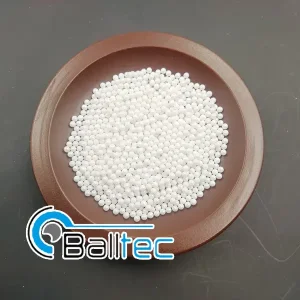
Energy Storage China Yttria Stabilized Zirconia Beads for Lithium Battery Slurry Grinding

China Yttria Stabilized Zirconia Beads for Lithium Battery Slurry Grinding 95% YSZ Media

View Product Specifications
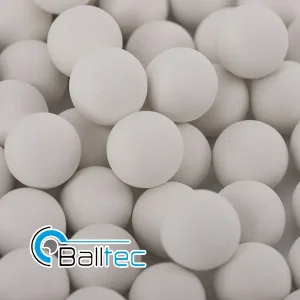
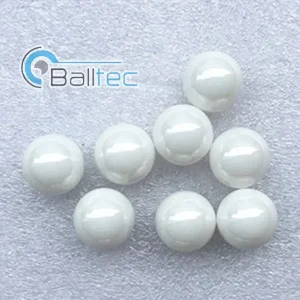
99% Al2O3 Grade High-Quality 99% High Purity Alumina Al2O3 Grinding Ball Bead

High-Quality 99% High Purity Alumina Al2O3 Grinding Ball Bead Factories

View Product Specifications
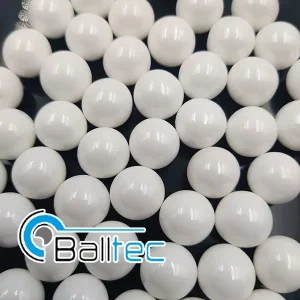
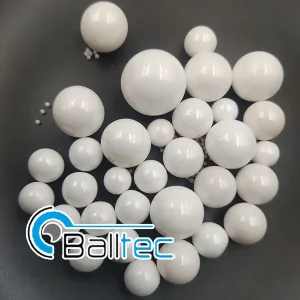
High Hardness Wholesale ZrO2 Grinding Bead High Hardness Wear Resistant Grinding Media

Wholesale ZrO2 Grinding Bead High Hardness Wear Resistant Grinding Media

View Product Specifications
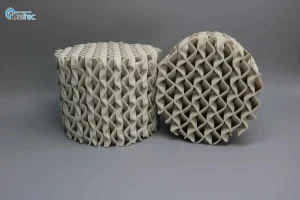
Chemical Packing Wholesale High Performance and Low Pressure Drop Ceramic Corrugated Plate Packing

Wholesale High Performance and Low Pressure Drop Ceramic Corrugated Plate Packing

View Product Specifications
Precision Ball High-Quality Characteristics of Zirconia Ceramic Balls

High-Quality Characteristics of Zirconia Ceramic Balls Manufacturers

View Product Specifications
Refractory Density High-Quality Zirconium Oxide Grinding Ball High Strength

High-Quality Zirconium Oxide Grinding Ball High Strength Professional Media

View Product Specifications
Industry Intelligence · E-E-A-T Framework

China's Modern Role in Global Electrical & Electronic Component Supply

An exhaustive technical whitepaper detailing high-performance ceramic integration, sub-micron powder metallurgy, and industrial electrical supply architectures.

100,000 m²
Integrated Production Facility
99.99%
Ultra-High Alumina Purity (4N)
G3 / G5
Ceramic Precision Bearing Rating
800+
Tier-1 OEM Clients Globally

1. Global Industrial & Commercial Landscape of Electronic Components

In the contemporary global manufacturing hierarchy, the definition of an electrical and electronic components supplier in China has fundamentally evolved. Historically categorized as primary assemblers of low-complexity passive elements, modern Chinese manufacturers have transitioned upstream into high-barrier materials engineering, sub-micron powder preparation, advanced piezoelectric ceramics, semiconductor carrier media, and high-dielectric substrates. As global electrification accelerates across automotive powertrains, high-voltage direct current (HVDC) power grids, telecommunications satellites, and Artificial Intelligence (AI) hyperscale computing clusters, the demand for raw component reliability has shifted focus directly onto structural and functional ceramics.

Pingxiang Baitian (Ball-tec) New Materials Co., Ltd. sits at the technical epicenter of this transition. Situated in Pingxiang, Jiangxi Province—China’s foremost industrial ceramics manufacturing hub—the facility integrates chemical synthesis, precision sintering, and micro-mechanical finishing across a 100,000 square meter production campus. With technical lineage tracing back to collaborative engineering leadership in Japan and the United States, our manufacturing ecosystem provides global OEMs with critical foundational materials: ranging from 99.99% ultra-pure alumina (Al₂O₃) spheres and Yttria-Stabilized Tetragonal Zirconia Polycrystal (Y-TZP) grinding beads to silicon nitride (Si₃N₄) bearing balls, ceramic tower internals, and synthesized zeolite adsorbents.

2. The Material Science Paradigm: Technical Ceramics in High-Frequency & Power Electronics

Passive components—including Multi-Layer Ceramic Capacitors (MLCCs), inductors, LTCC (Low-Temperature Co-fired Ceramic) substrate modules, and power semiconductor gate drivers—rely entirely on the crystal morphology and chemical purity of their inorganic starting materials. Contamination at the level of several parts per million (ppm) of iron, sodium, or silicon can completely distort the dielectric constant ($\kappa$), elevate dielectric loss ($\tan \delta$), or cause micro-fracturing under high dV/dt electrical stress.

To attain the ultra-fine particle size distribution ($D_{50} < 100\text{ nm}$) essential for cutting-edge MLCC thin-layer printing (now achieving active layer thicknesses below $1\ \mu\text{m}$), advanced wet bead mills require grinding media with ultra-high density and zero chemical spallation. Baitian’s 95% YSZ (Yttria-Stabilized Zirconia) beads, exhibiting a bulk density of $\ge 6.0\text{ g/cm}^3$ and Mohs hardness approaching 9, transfer massive kinetic impact energy without introducing foreign elemental impurities. Similarly, our 4N (99.99%) alumina components serve as inert structural supports in semiconductor vacuum chambers, RF sputtering targets, and laser diode mounts where dielectric breakdown strength must exceed $25\text{ kV/mm}$.

Material System Density (g/cm³) Flexural Strength (MPa) Thermal Conductivity (W/m·K) Dielectric Breakdown (kV/mm) Core Electronic / Electrical Application
95% YSZ Zirconia (Y-TZP) > 6.05 1,200 – 1,400 2.8 – 3.2 15 – 20 MLCC Slurry Nano-Grinding, Battery Cathodes, Valve Seals
99.99% Alumina (4N Al₂O₃) 3.92 – 3.96 380 – 450 32 – 35 > 25 Semiconductor Wafer Chucks, RF Substrates, Insulating Spacers
Silicon Nitride (Si₃N₄) 3.20 – 3.25 850 – 1,000 80 – 90 > 30 EV Traction Motor Bearings (G3/G5), Power Inverter Heat Sinks
High-Purity Zirconia Powder 6.00 (sintered) 1,100 – 1,300 2.5 – 3.0 18 SOFC Electrolyte Membranes, Oxygen Sensors, Dental Electronics

3. Localized Applications Across Strategic Commercial Verticals

Modern electronics operate in environments with extreme operational envelopes. Below are four key deployment scenarios where Baitian’s precision-engineered ceramic elements solve critical hardware bottlenecks:

EV & Traction Motors

High switching frequencies (SiC/GaN inverters) induce parasitical capacitive currents that trigger electrical erosion (fluting) in standard steel motor bearings.

  • Si₃N₄ G3-G5 balls prevent galvanic arching
  • 60% lighter than bearing-grade steel
  • Extends powertrain MTBF by > 350%

5G/6G & Millimeter-Wave RF

Phase-locked loops and power amplification circuits demand substrates with minimal dielectric loss ($\tan \delta < 0.0005$) across the 28–80 GHz spectrum.

  • Sub-micron 99.99% Al₂O₃ packaging
  • Near-zero moisture absorption kinetics
  • Tight tolerance laser cutting compliance

Lithium & Solid-State Batteries

High-nickel cathode slurries (NCM 811) and solid-state sulfide/oxide electrolytes require absolute de-agglomeration down to narrow sub-100nm bands.

  • Zero iron contamination (anti-short circuit)
  • 95% YSZ beads withstand aggressive flow rates
  • Consistent tap density in active coatings

4. Industry Trends: Miniaturization, Thermal Dissipation, and Ultra-Pure Milling

Three macro trends are currently reshaping component procurement from Chinese manufacturing partners:

Trend A: Radical Dimensional Miniaturization. The expansion of wearable bio-electronics, autonomous drone avionics, and high-density computing requires surface-mount passives to scale from 0402 (imperial) sizes down to 0201 and 01005 footprints. To print defect-free internal nickel electrodes on dielectric ceramics at this scale, the primary raw powders must be ground using micro-beads as small as $0.03\text{ mm}$ to $0.1\text{ mm}$ without fracturing under hydraulic pressure.

Trend B: Managing Thermal Bottlenecks. As wide-bandgap semiconductors (Silicon Carbide and Gallium Nitride) push switching power densities upwards of $100\text{ W/cm}^2$, classical FR4 and low-grade alumina substrates undergo catastrophic dielectric breakdown. Sintered silicon nitride and advanced metal-matrix ceramic composites are replacing conventional packages, demanding ultra-pure precursor powders and high-strength sintering kiln furniture.

Trend C: Supply Chain Consolidation & ESG Traceability. Global Tier-1 procurement teams are shifting away from fragmented sub-tier brokers. By collaborating directly with primary manufacturers certified in ISO 9001 (Quality), ISO 14001 (Environmental), and ISO 18001 (Occupational Health), OEMs verify verifiable origin, RoHS / REACH compliance, and closed-loop material recycling.

Strategic Horizon

Technology Roadmap: 2026 to 2035 Outlook

How Baitian’s metallurgical and ceramic R&D is engineered to solve future generations of electrical device challenges.

Phase 1 · 2026–2027

Sub-30nm Media Sintering

Commercialization of Y-TZP nano-spheres engineered for continuous horizontal centrifugal mills operating at 25 m/s tip speeds for 01005 MLCC slurries.

Phase 2 · 2028–2029

Solid-State Ceramic Electrolytes

Mass production of high lithium-ion conductivity garnet-type LLZO and NASICON powders for industrial solid-state EV battery platforms.

Phase 3 · 2030–2032

Direct-Bonded Si₃N₄ Substrates

Thermal management carriers boasting 120 W/m·K thermal conductivity combined with fracture toughness exceeding 7.0 MPa·m½ for 1500V SiC modules.

Phase 4 · 2033–2035

Zero-Loss Quantum Enclosures

Ultra-dense, isotropic dielectric housings eliminating high-frequency phase drift in cryogenically cooled quantum computing sub-assemblies.

Engineering Integration

Macro Solutions for Electronic & Electrical Manufacturers

From powder dispersion kinetics to chemical environmental scrubbing, we provide end-to-end industrial process stability.

Zero-Contamination Grinding

Formulated for electronic component pastes, capacitor slurries, and battery precursors. Eliminates conductive metal traces that cause internal electrical shorts.

Thermal Shock Insulators

Alumina and zirconia ceramic balls serve as catalyst bed supports and high-temperature thermal barriers in synthesis reactors operating beyond 1,400°C.

Gas & Solvent Purification

High-capacity 4A, 5A, and 13X zeolite molecular sieves remove moisture, hydrocarbons, and ammonia down to sub-ppm levels for ultra-dry dry-rooms in cell assembly.

High-Throughput Column Internals

Acid-resistant ceramic corrugated packing and Raschig rings deliver high mass transfer with minimum pressure drop in electronic chemical refinement.

Secondary Lineups · Batch 02

Specialized Ceramic Balls, Zeolites & High-Density Media

Explore our full line of abrasive-resistant alumina micro-beads, oxygen-concentrator molecular sieves, and homogenization spheres.
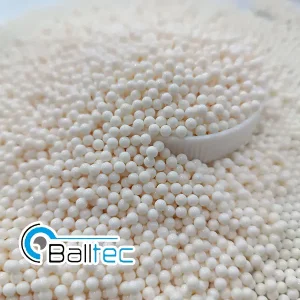
Alumina Beads High-Quality High Alumina Al2o3 Alumina Micro Beads

High-Quality High Alumina Al2O3 Alumina Micro Beads / Ceramic Grinding Balls

View Product Specifications
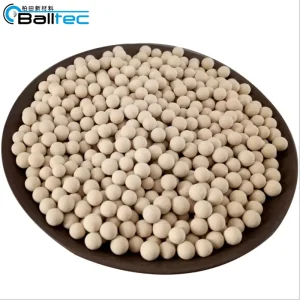
Zeolite 5A Wholesale 5A Molecular Sieve China Factory Oxygen Concentrator

Wholesale 5A Molecular Sieve China Factory Oxygen Concentrator Zeolite for PSA

View Product Specifications
4N Purity China Abrasion-Proof 99.99% High Purity Alumina Balls

China Abrasion‑Proof 99.99% High Purity Alumina Balls Manufacturers

View Product Specifications
ZrO2 Sphere Wholesale ZrO2 Ball for Grinding Efficient Industrial Ball Milling Solutions

Wholesale ZrO2 Ball for Grinding Efficient Industrial Ball Milling Solutions

View Product Specifications
Fine Milling China Zirconia Bead for Grinding High Performance Fine Grinding Tasks

China Zirconia Bead for Grinding High Performance Fine Grinding Tasks

View Product Specifications
Homogenization China ZrO2 Ball for Grinding Fine Particle Production

China ZrO2 Ball for Grinding Fine Particle Production and Homogenization

View Product Specifications
Fine Chemical China High-Purity Zirconia Grinding Media for Fine Chemicals

China High-Purity Zirconia Grinding Media for Fine Chemicals Processing

View Product Specifications
High Density High-Quality High-Density Zirconia Grinding Media for Ceramic Glaze Milling

High-Quality High-Density Zirconia Grinding Media for Ceramic Glaze Milling

View Product Specifications
Technical Clarifications

Frequently Asked Questions (Procurement & Engineering)

Authoritative, engineering-backed answers addressing material selection, purity certifications, and factory qualification procedures.
What makes Pingxiang Baitian an authoritative supplier of electrical and electronic components & precursors?
Baitian integrates over 30 years of advanced ceramic manufacturing lineage. Founded collaboratively by senior ceramic scientists with career foundations in premier Japanese and American ceramic manufacturers alongside Chinese metallurgical experts, our 100,000 m² base features fully closed-loop powder synthesis, hot isostatic pressing (HIP), and cleanroom sintering. We operate under stringent ISO 9001, ISO 14001, and ISO 18001 standards, providing complete chemical trace analysis (ICP-MS) and mechanical test batches to world-leading electronics OEMs.
How does grinding media purity directly influence the yield of Multi-Layer Ceramic Capacitors (MLCCs)?
In modern sub-micron MLCC formulation, barium titanate ($BaTiO_3$) slurries must achieve uniform nano-scale dispersion. Inferior grinding media with high wear rates introduce trace Fe, Si, or Na contaminants. Even a 5 ppm inclusion can drastically lower the Curie temperature, initiate local dielectric breakdown under high voltage biases, or provoke micro-cracking during co-firing. Baitian’s 95% Yttria-Stabilized Zirconia (YSZ) beads have an exceptionally low wear rate (< 0.01 g/kg·h), ensuring zero conductive contamination and predictable dielectric properties.
Why are silicon nitride (Si₃N₄) balls preferred over steel in EV traction motor bearings?
Electric vehicle traction inverters employ fast-switching Silicon Carbide (SiC) MOSFETs, generating high dV/dt transient pulses that induce common-mode shaft voltages. Standard metallic bearing balls bridge these voltages, resulting in severe electrical fluting, micro-welding, and bearing seizure. Baitian’s G3 and G5 grade Silicon Nitride (Si₃N₄) balls act as complete electrical insulators (> 10¹⁴ Ω·cm resistivity), are 60% lighter than chrome steel, cut centrifugal raceway stress, and run cooler at rotational speeds exceeding 25,000 RPM.
What are the exact selection criteria between 4A, 5A, and 13X zeolite molecular sieves in electronics manufacturing?
Pore size and polar affinity define the selection: 4A Molecular Sieve (effective pore opening ~4Å) is the optimal desiccant for deep dehydration of non-polar solvents, pneumatic air loops, and electronic component moisture barrier packaging. 5A Molecular Sieve (~5Å pore) adsorbs normal paraffins and is critical for Pressure Swing Adsorption (PSA) oxygen generators supplying high-purity O₂ for semiconductor furnace oxidation. 13X Molecular Sieve (type NaX, ~10Å pore) handles air pre-purification systems by simultaneously eliminating trace moisture and CO₂ prior to cryogenic nitrogen liquification.
What documentation and batch testing are provided with export shipments to Europe, the Americas, and APAC?
Every export shipment is accompanied by a comprehensive Certificate of Analysis (CoA) containing lot-traceable ICP elemental assay, laser diffraction particle size distribution (PSD curves via Malvern Mastersizer), true density measurements via helium pycnometry, and crushing strength metrics. Factory inspection certificates, CE conformity declarations, RoHS/REACH compliance files, and full MSDS documentation are systematically archived and accessible to international engineering and customs clearance personnel.