Follow 


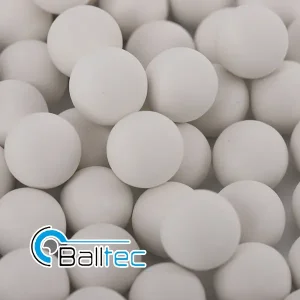
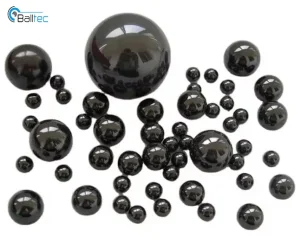
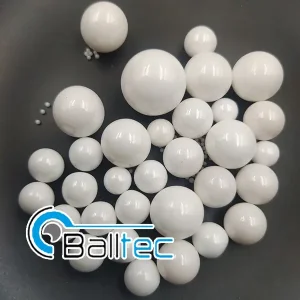
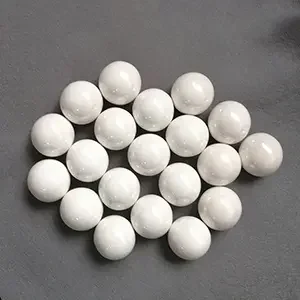
High-purity substrate platforms, zirconia grinding spheres, and silicon nitride elements providing microstructural stability for passive resistor film deposition and ultra-fine chemical milling.
The nominal 33kΩ (33,000 Ohm) resistor stands as one of the fundamental E24/E96 standard resistance values deployed across global electronic manufacturing service (EMS) hubs. From automotive ECUs to industrial high-voltage power supplies, 33k resistors fulfill vital signal biasing, voltage division, and current limiting roles.
Driven by electrification, automotive OEMs mandate AEC-Q200 qualified 33k resistors for CAN-bus termination, battery management system (BMS) cell balancing networks, and inverter gate-driver pull-down circuits requiring zero failure under extreme thermal shock.
Industrial PLC controllers and servo drives utilize high-precision 33k thin-film surface mount resistors (SMD 0603, 0805, 1206) in high-common-mode-rejection ratio op-amp feedback loops to achieve stable sensor signal conditioning in noisy factory environments.
High-density data centers powering AI workloads utilize low-TCR (±5ppm/°C to ±25ppm/°C) 33k resistors in point-of-load voltage regulator modules (VRMs), maintaining tight reference voltage accuracy under massive thermal gradients up to 125°C.
A 33k resistor's electrical performance is inextricably tied to its physical substrate. High-end thick-film and thin-film 33k resistor manufacturers rely on 96% to 99.99% high-purity Alumina (Al2O3) and Yttria-stabilized Zirconia (YSZ) ceramic cores. These substrates offer dielectric breakdown voltages exceeding 15 kV/mm and high thermal conductivity (25–35 W/m·K), ensuring that heat generated during surge pulses is dissipated rapidly to prevent resistive element drift or thermal rupture.
From microstructural ruthenium oxide (RuO2) thick-film pastes to sputter-deposited nichrome (NiCr) thin films, selecting the optimal 33k resistor architecture requires evaluating power rating, voltage coefficient, low noise, and environmental stability.
| Resistor Technology Type | Tolerance Range | TCR (ppm/°C) | Power Rating (W) | Substrate Material | Primary Technical Advantage |
|---|---|---|---|---|---|
| Thin Film Precision SMD (33kΩ) | ±0.01% to ±0.1% | ±5 to ±25 | 0.063W – 0.25W | 99.6% High-Purity Alumina | Ultra-low current noise (-35 dB), exceptional long-term stability (<0.05% drift). |
| Thick Film General Purpose SMD | ±1.0% to ±5.0% | ±100 to ±200 | 0.05W – 1.0W | 96% Alumina Ceramic | Cost-efficient mass production, robust pulse handling capability. |
| Metal Oxide Film Axial (33kΩ) | ±2.0% to ±5.0% | ±300 | 1.0W – 5.0W | Extruded Rod Alumina / Zirconia | Non-flammable coating, high operating temperatures up to 235°C. |
| Precision Wirewound Axial | ±0.05% to ±0.5% | ±10 to ±50 | 0.5W – 10W | Steatite / Zirconia Ceramic Cores | Extremely high pulse energy absorption, superior overload capability. |
| High Voltage Metal Glaze SMD | ±1.0% to ±5.0% | ±100 | 0.25W – 2.0W | Doped Alumina Substrate | Maximum continuous operating voltage up to 3000V DC. |
For through-hole 33k resistors, standardized color bands quickly indicate resistance value and tolerance:
Surface Mount Device (SMD) 33k resistors utilize abbreviated numerical codes based on EIA standards:
Combining Japanese ceramic tape-casting technology, automated laser trimming, and zero-defect quality management across 100,000 square meters of high-tech production infrastructure.
Detailed electrical engineering analysis of how leading electronics OEMs integrate 33k resistors into critical hardware topologies to balance power consumption, signal integrity, and transient protection.
In digital circuit design, 33k resistors serve as an ideal high-impedance pull-up or pull-down resistor for CMOS logic inputs, I2C bus lines, and reset pins. Selecting 33k instead of standard 10k reduces static power consumption by 70% while providing sufficient current sink capability to prevent floating node noise interference.
In analog instrumentation amplifiers, 33k thin-film resistors form precise feedback ratios paired with low-value input resistors (e.g., 3.3k or 1k) to establish exact closed-loop voltage gains (Gain = 1 + R_feedback / R_in). Thin-film 33k resistors ensure low thermal noise (Johnson noise) across audio and RF spectrums.
In switched-mode power supplies (SMPS) and industrial inverter DC-bus capacitor banks, high-power flameproof 33k resistors (2W to 5W) act as bleeder resistors. They safely discharge stored capacitive voltage upon system power-down, adhering to UL 60950 and IEC 62368 safety standards.
Automotive headlamp and ambient lighting controllers employ 33k thick-film resistors in diagnostic sensing networks to detect open-circuit LED strings. The resistor provides a micro-ampere bias path that alerts the ECU without generating false thermal triggers.
Our engineering facility synthesizes Japanese microcrystalline powder processing with fully automated laser-trimming and multi-tier quality assurance to deliver industry-leading reliability.
By controlling grain boundary growth during high-temperature sintering (>1600°C), our 99.6% Alumina and Zirconia ceramic substrates eliminate micro-voids, guaranteeing uniform thin-film vacuum sputtering and superior mechanical shear strength during automated pick-and-place assembly.
Utilizing closed-loop high-speed Nd:YAG laser trimming systems, every single 33k resistor element is calibrated in real-time to achieve nominal resistance tolerances down to ±0.01% (E96/E192 series) with zero micro-cracking along the cut kerf.
Our 33k resistor product lines undergo rigorous qualification including 1,000 thermal shock cycles (-55°C to +155°C), 85°C/85% RH biased humidity testing for 1,000 hours, and high-frequency vibration testing to guarantee zero field failures in automotive and aerospace missions.
Detailed answers regarding 33k resistor specifications, substitution rules, power derating curves, and OEM purchasing customization options.
High crush strength inert alumina balls, zirconia grinding media, and specialized tower packings tailored for chemical processing, catalyst bed protection, and precision fine grinding.