Follow 


Explore our core engineering products manufactured under strict ISO quality standards for global OEM and industrial operations.

An exhaustive analysis of variable resistance technologies, electro-thermal dynamics, and critical manufacturing requirements for mission-critical electronic assemblies.
An adjustable resistor (commonly configured as a potentiometer, rheostat, or trimming potentiometer) is an electromechanical component designed to provide variable resistance within electrical circuits. By adjusting the physical position of a conductive wiper along a resistive track, engineers can dynamically alter voltage division ratios, trim offset currents, or calibrate signal processing feedback loops.
The structural integrity of an adjustable resistor depends fundamentally on its substrate and resistive element formulation. Advanced industrial manufacturers utilize high-grade alumina ceramic ($Al_2O_3$) substrates, screen-printed with specialized metal-glass frit pastes (Cermet) or conductive polymers. The underlying thermal expansion coefficient matching between the ceramic base and resistive film prevents mechanical stress micro-cracking during extreme temperature cycling from $-55^\circ\text{C}$ to $+125^\circ\text{C}$.
Selecting the precise adjustable resistor topology requires an understanding of functional circuit demands:
In high-precision applications, standard carbon film variable resistors often fail due to severe thermal drift ($\text{TCR} > \pm 500 \text{ ppm}/^\circ\text{C}$) and wiper contact bounce causing dynamic noise (CRV $> 3\%$). Premium industrial-grade Cermet adjustable resistors maintain a tight TCR within $\pm 100 \text{ ppm}/^\circ\text{C}$ and restrict CRV below $1\%$, ensuring long-term signal stability in precision instrumentation.
A comprehensive technical matrix evaluating the electrical, mechanical, and thermal characteristics of various adjustable resistor technologies.
| Resistive Material Technology | Resistance Range | TCR ($\text{ppm}/^\circ\text{C}$) | Rotational Life (Cycles) | Thermal Stability | Primary Industrial Use Case |
|---|---|---|---|---|---|
| Cermet (Thick Film) | $10 \, \Omega \text{ to } 5 \, \text{M}\Omega$ | $\pm 100 \text{ ppm}/^\circ\text{C}$ | 200 to 10,000 | Excellent (Up to $+125^\circ\text{C}$) | Precision SMD Trimmers, Industrial Control PCBA Calibration |
| Conductive Plastic | $1 \, \text{k}\Omega \text{ to } 100 \, \text{k}\Omega$ | $\pm 300 \text{ ppm}/^\circ\text{C}$ | $2,000,000+$ | Good (Up to $+105^\circ\text{C}$) | High-Cycle Servo Feedback, Medical Joysticks, Robotic Joints |
| Wirewound | $0.1 \, \Omega \text{ to } 50 \, \text{k}\Omega$ | $\pm 20 \text{ ppm}/^\circ\text{C}$ | 25,000 to 50,000 | Superior (Up to $+200^\circ\text{C}$) | High-Power Load Calibration, Industrial Rheostats, Test Equipment |
| Carbon Film | $100 \, \Omega \text{ to } 10 \, \text{M}\Omega$ | $\pm 1000 \text{ ppm}/^\circ\text{C}$ | 10,000 to 50,000 | Moderate (Up to $+70^\circ\text{C}$) | Cost-Sensitive Consumer Electronics, Basic Audio Controls |
| Smart Digital Potentiometers (DPOT) | $1 \, \text{k}\Omega \text{ to } 100 \, \text{k}\Omega$ | $\pm 35 \text{ ppm}/^\circ\text{C}$ | Unlimited (Solid State) | High (Silicon IC junction base) | Automotive ECU Automated Tuning, Automated Calibration Circuits |
Modern high-reliability manufacturers deploy active laser trimming processes during substrate production. By utilizing pulsed YAG lasers to burn micro-grooves into the sintered Cermet paste, the initial resistance tolerance is tightened from $\pm 20\%$ down to $\pm 1\%$ or $\pm 0.5\%$, satisfying tight analog circuit tolerances.
For deployment in harsh chemical or high-humidity environments, sealed trimming potentiometers incorporate O-ring rotor shafts and ultrasonic epoxy potting. Standard compliance testing includes immersion in $85^\circ\text{C}$ fluorinert bath liquids to verify zero bubble formation, validating complete moisture ingress isolation.
The roadmap for variable passive components merges physical resistive tracks with silicon-based non-volatile IC memory (EEPROM). This hybrid setup allows physical manual override while permitting over-the-air digital recalibration for autonomous robotic equipment and smart grid power nodes.
How specialized variable resistance components are specified across aerospace, automotive, energy, and medical equipment systems worldwide.
In high-voltage Electric Vehicle (EV) Battery Management Systems (BMS), multi-turn Cermet trimmers adjust signal sensing bridge circuits for isolation monitoring modules. Automotive-grade units (AEC-Q200 qualified) withstand severe engine-bay vibration, thermal shock, and exposure to automotive fluids without resistance drift.
Renewable power conditioning systems utilize heavy-duty wirewound adjustable resistors and high-voltage potentiometers for maximum power point tracking (MPPT) voltage divider calibration and brake circuit current limits under harsh grid fault events.
In MRI signal amplification channels, patient monitoring systems, and surgical laser intensity controls, low-noise conductive plastic potentiometers guarantee smooth voltage scaling with zero contact chatter, preserving delicate microvolt sensor data.
Commercial and defense avionics demand military-specification (MIL-PRF-22097) sealed trimming potentiometers. These components undergo 100% burn-in testing to eliminate infant mortality and operate reliably in high-altitude, low-pressure flight decks.
Joint position sensing in 6-axis industrial robots relies on high-rotational-life conductive plastic rotary potentiometers. Delivering up to 10 million smooth mechanical rotations, these components provide absolute position memory upon system power-up.
RF power amplifiers require high-frequency ceramic trimmers to set gate bias currents for GaN (Gallium Nitride) transistors, maintaining ultra-low parasitic capacitance and stable thermal gain characteristics across 5G cell tower bands.
How integrated industrial clusters, advanced ceramic material synthesis, and automated assembly deliver unprecedented quality and lead-time advantages for global buyers.
From raw alumina ceramic powder sintering ($99.5\%$ purity) and conductive silver-palladium paste formulation to automated terminal stamping and automated wiper assembly, Chinese industrial hubs control 100% of the upstream raw material lifecycle, insulating clients from external supply shocks.
State-of-the-art factories employ vision-guided robotic pick-and-place lines integrated with online high-speed electrical parameters sorting machines. Components undergo $100\%$ automated verification for total resistance, linear taper slope, and dielectric withstand voltage prior to reel packaging.
Direct factory access allows engineering teams to rapidly prototype custom shaft geometries, specialized resistance tapers (Logarithmic, Reverse-Log, Linear), and custom pin-out spacings within 10 to 14 business days, reducing time-to-market compared to legacy western suppliers.
Rigorous environmental, safety, and performance verifications guaranteeing seamless international trade compliance for multi-national original equipment manufacturers.
Our manufacturing and quality assurance frameworks align strictly with global engineering directives:
Procuring passive components requires responsive technical partnership. Our direct supply channel offers:
In-depth engineering answers addressing technical procurement criteria, circuit integration parameters, and failure mode mitigation.
Adjustable resistors are rated for maximum power dissipation at a baseline ambient temperature (typically $+70^\circ\text{C}$ for industrial Cermet or $+40^\circ\text{C}$ for carbon film). Above this baseline, power dissipation capability decreases linearly down to zero power at maximum operating temperature ($+125^\circ\text{C}$ or $+150^\circ\text{C}$). The allowable power dissipation $P_T$ at ambient temperature $T$ is calculated via:
$P_T = P_{\text{rated}} \times \left( \frac{T_{\text{max}} - T}{T_{\text{max}} - T_{\text{baseline}}} \right)$
Operating a component beyond its derated power limit accelerates wiper contact oxidation and thermal degradation of the resistive track paste.
Contact Resistance Variation (CRV) refers to the dynamic apparent change in resistance between the wiper contact brush and the resistive element during adjustment. CRV is caused by microscopic surface roughness of the resistive track, minute insulating particulate debris, or contact spring bounce. Designers minimize CRV effects by placing a high-impedance buffer amplifier (op-amp input stage) on the wiper output terminal, drawing minimal current ($\le 1 \, \mu\text{A}$) through the wiper contact point, thereby eliminating dynamic voltage spikes.
Single-turn trimmers provide approximately $210^\circ \text{ to } 300^\circ$ of effective mechanical rotation. They are ideal for coarse calibration where PCB space is restricted. Multi-turn trimmers feature a planetary gear or worm-screw mechanical drive allowing 4, 12, or 25 full $360^\circ$ turns to traverse the entire resistive track length. This multi-turn gear reduction permits ultra-fine resolution adjustment (down to $0.01\%$ per degree of rotation), essential for high-precision scientific and instrumentation circuits.
Cermet elements consist of a screen-printed, high-temperature fired mixture of precious metal oxides (RuO2, Ag-Pd) and glass frit micro-particles fused onto an alumina substrate. Compared to carbon film, Cermet provides significantly lower Temperature Coefficient of Resistance ($\pm 100 \text{ ppm}/^\circ\text{C}$ vs $\pm 1000 \text{ ppm}/^\circ\text{C}$), superior moisture resistance, vastly lower electrical noise, and high thermal stability during wave soldering or SMT reflow profiles up to $+260^\circ\text{C}$.
Equivalent Noise Resistance (ENR) is the momentary resistance spike generated when the wiper moves over a wirewound resistive element. Specified in Ohms, high ENR can introduce undesirable transient steps into analog control loops. In audio pre-amplifiers or high-resolution ADC input stages, conductive plastic variable resistors are specified instead of wirewound units due to their smooth, continuous surface topography yielding near-zero ENR and negligible phase distortion.
For automotive and high-reliability aerospace procurement, we provide full PPAP (Production Part Approval Process) Level 3 documentation suites. This includes Design Failure Mode and Effects Analysis (DFMEA), Process Flow Diagrams, Process Failure Mode and Effects Analysis (PFMEA), Control Plans, Measurement System Analysis (MSA) studies, dimensional inspection results, and full AEC-Q200 test compliance data sheets.
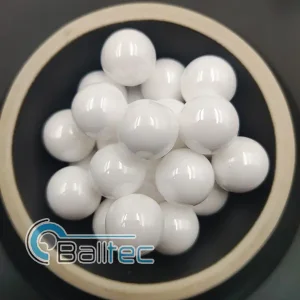
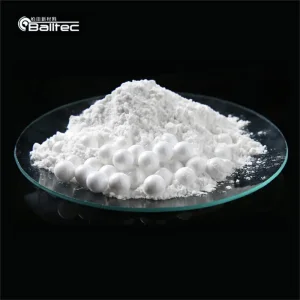
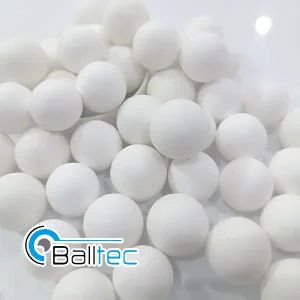
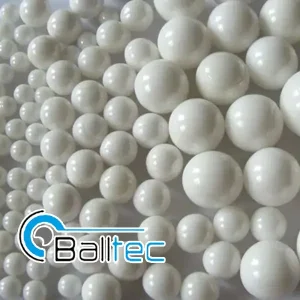
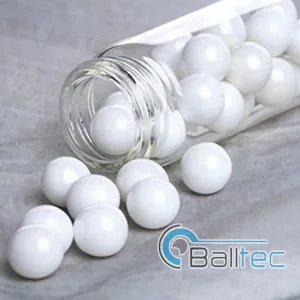
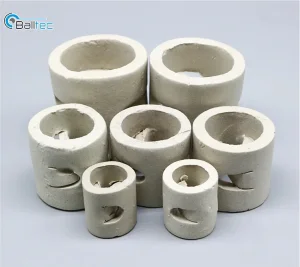
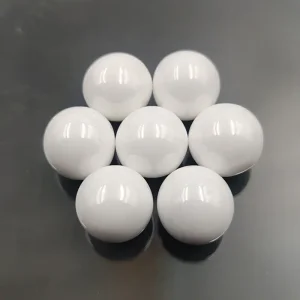
Explore our secondary line of high-purity ceramic grinding media, adsorbents, structural powders, and packing media.
Partner directly with experienced passive component and advanced ceramic engineering teams. Receive comprehensive technical data sheets, custom pin-out CAD drawings, and volume pricing within 24 hours.