Follow 


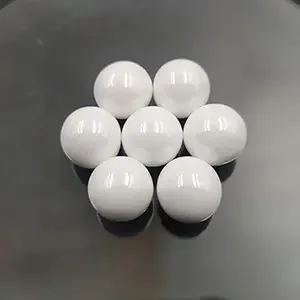
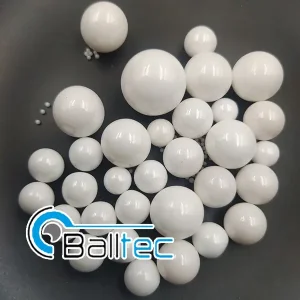
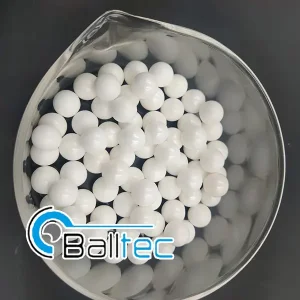
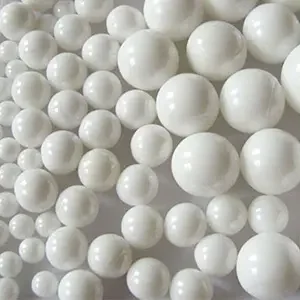
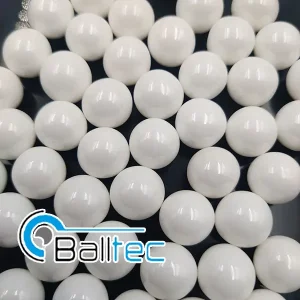
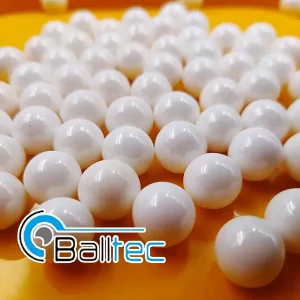
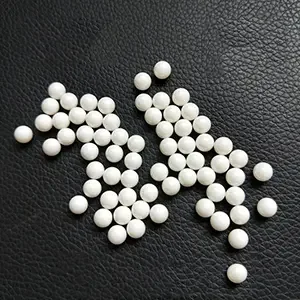
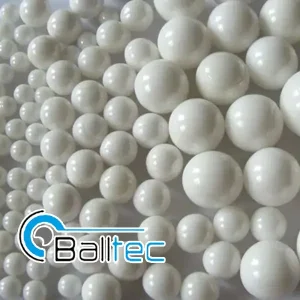
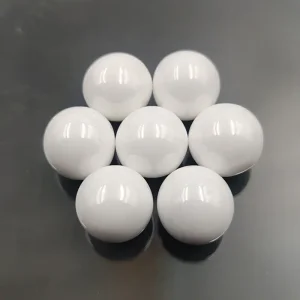
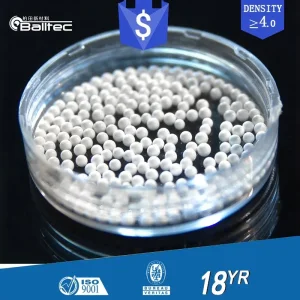
Precision-engineered zirconia and high-purity ceramic spheres designed for sub-micron dispersion in capacitor slurries, resistor formulations, and advanced electronic materials.
Understanding the interplay between ultra-pure ceramic dielectrics, grain boundary physics, and thin-film substrate metallurgy for modern electronics.
Capacitor performance in modern power electronics relies heavily on the dielectric formulation. As multi-layer ceramic capacitors (MLCCs) shrink to 0201 and 01005 footprints, achieving high volumetric efficiency requires sub-100nm dielectric layers of ultra-pure Barium Titanate (BaTiO₃) modified with rare-earth dopants such as Yttrium, Dysprosium, and Neodymium.
Our engineered nano-dispersion media play a critical role in homogenizing dielectric slurries without metallic contamination. By maintaining strict stoichiometry and ultra-fine grain size distributions (<0.15 μm), manufacturers eliminate dielectric breakdown micro-voids, elevating breakdown voltage thresholds above 100 kV/mm and minimizing Equivalent Series Resistance (ESR).
Modern resistor technology demands exceptional thermal management and mechanical rigidity. High-purity Alumina (96% to 99.9% Al₂O₃) and Aluminum Nitride (AlN) substrates form the foundation of thick-film chip resistors, precision thin-film networks, and high-power current sense resistors.
By controlling surface roughness (Ra < 0.05 μm for thin-film applications) and thermal expansion coefficients (CTE matched to silicon at 4.5–7.0 × 10⁻⁶/K), our ceramic substrate solutions reduce thermal stress under high pulse loads. Furthermore, advanced ruthenium oxide (RuO₂) and nickel-chromium (NiCr) resistive pastes processed with ultra-spherical ceramic media guarantee tight tolerance (down to ±0.01%) and low Temperature Coefficient of Resistance (TCR ±5 ppm/°C).
| Material / Specification Parameter | High-K Ceramic Dielectric (MLCC) | High-Voltage Snubber Ceramic | Alumina Resistor Substrate (96%) | AlN High-Power Substrate |
|---|---|---|---|---|
| Primary Composition | BaTiO₃ + Y/Dy Dopants | SrTiO₃ / Zr-doped Ceramic | 96% Al₂O₃ + Glass Phase | Aluminum Nitride (AlN) |
| Dielectric Constant (K) | 3,000 – 15,000 | 1,500 – 4,500 | 9.6 (@ 1 MHz) | 8.8 (@ 1 MHz) |
| Thermal Conductivity (W/m·K) | 2.5 – 4.0 | 3.0 – 5.5 | 24 – 28 | 170 – 200 |
| Breakdown Voltage (kV/mm) | > 80 | > 120 | > 18 | > 22 |
| Operating Temp Range (°C) | -55 to +175 °C | -55 to +200 °C | -65 to +450 °C | -65 to +500 °C |
How our specialized capacitor dielectrics, resistor components, and micro-ceramic media empower extreme operating environments worldwide.
Electric vehicle powertrains require automotive-grade capacitors (AEC-Q200 compliant) and high-power shunt resistors capable of withstanding 800V+ battery architecture surge voltages. Our high-density zirconia grinding media produce ultra-homogeneous ceramic slurries, preventing internal micro-cracks in DC-link capacitors and current-sensing resistor substrates exposed to extreme thermal cycling (-40°C to +150°C).
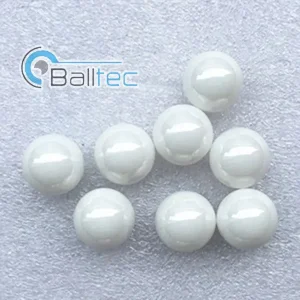
In mmWave wireless base stations, low loss factor (tan δ) capacitors and high-frequency thin-film resistor arrays are non-negotiable. Substrates milled using our sub-micron Y-TZP beads provide smooth surface morphology, minimizing signal attenuation at frequencies up to 40 GHz and facilitating ultra-low ESR filter designs.
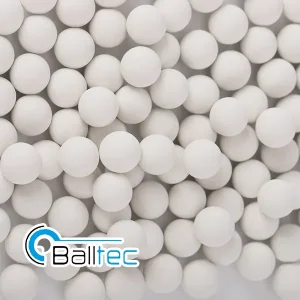
Renewable power plants demand snubber capacitors and bleeder resistors operating continuously under high ambient temperatures. Our high-purity alumina catalyst and ceramic media enable reliable manufacture of high-energy absorption surge resistors and film capacitor aluminum cases with superior heat dissipation.
Navigating next-generation trends: Nanotechnology dielectrics, lead-free ceramics, and AI-optimized micro-sintering.
The electronic components industry is undergoing a structural shift driven by higher switching speeds (SiC and GaN semiconductors) and ultra-miniaturization. To keep pace, capacitor and resistor manufacturers are advancing towards:
Our commitment to continuous innovation is reflected in our process optimization milestones for ceramic processing and component manufacturing:
| Generation | Target Dielectric Thickness | Grinding Media Diameter | Tolerance Standard |
|---|---|---|---|
| Gen-4 (Legacy) | 1.0 – 2.0 μm | 0.3 mm – 0.5 mm | ± 5.0% |
| Gen-5 (Current) | 0.4 – 0.8 μm | 0.1 mm – 0.2 mm | ± 1.0% |
| Gen-6 (Next-Gen) | < 0.2 μm (Sub-micron) | 0.03 mm – 0.05 mm | ± 0.1% / Precision |
Unlocking unparalleled cost-to-performance ratios through vertical integration, raw material security, and automated high-temperature sintering infrastructure.
Located in the heart of China’s premier industrial ceramic hub in Pingxiang, Jiangxi Province, our manufacturing facilities benefit from complete upstream mineral refining, precision powder synthesis, and high-efficiency logistics networks. This geographic concentration reduces raw material lead times by up to 60% compared to fragmented global supply chains.
From initial hydro-thermal zirconia powder synthesis to high-pressure isostatic pressing (CIP) and computer-controlled continuous tunnel kilns operating at 1,550°C, every step is managed in-house. This strict vertical control eliminates cross-contamination and ensures structural homogeneity across thousands of metric tons of annual production.
Equipped with fully automated micro-bead forming lines and laser diffraction particle size analyzers, we offer custom-tailored grain sizes, specific densities (from 3.6 g/cm³ for alumina to 6.0g/cm³ for yttria-stabilized zirconia), and custom resistor/capacitor ceramic geometry options with short sample turnaround cycles.
Fulfilling the most rigorous international standards for automotive, industrial electronics, and aerospace applications.
Our operations strictly adhere to international management systems, ensuring total traceability from raw powder batching to export shipping:
We provide localized technical assistance, logistics coordination, and OEM engineering support for Tier-1 electronic component buyers, distributor networks, and processing factories globally. Our engineering team assists clients with mill loading calculations, particle size optimization, and thermal stress modeling to maximize manufacturing efficiency.
Detailed technical answers to common questions regarding ceramic dielectrics, resistor substrates, and grinding media selection.
Explore our full range of wear-resistant zirconia spheres, composite ceramic beads, and anti-corrosion components built for demanding manufacturing ecosystems.