Follow 


Factory-direct technical ceramic components engineered for extreme chemical inertness, high thermal stability, and low wear rates across global industrial applications.
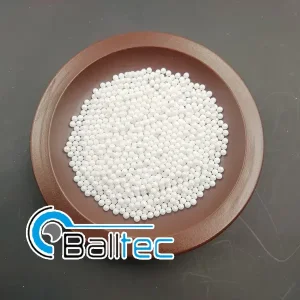
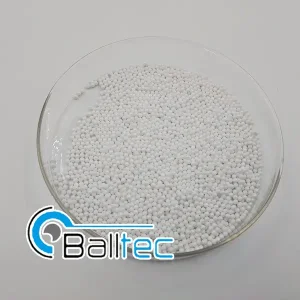
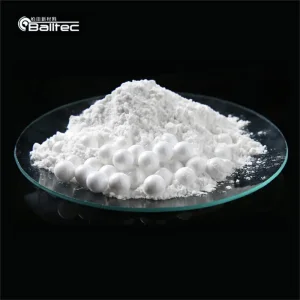
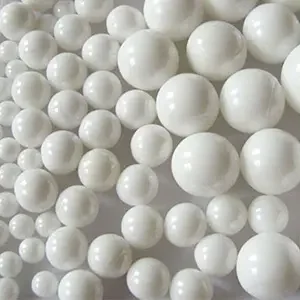
In modern mass transfer and separation operations, mass transfer columns serve as the core heart of chemical refineries, petrochemical facilities, natural gas processing plants, and environmental scrubbing installations. Within these columns, Ceramic Packing operates as the critical interface where gas-liquid contact occurs. Choosing a tier-one ceramic packing factory is not merely a material procurement decision—it is a fundamental engineering optimization strategy that dictates column throughput, pressure drop ($\Delta P$), separation efficiency (HETP), operating energy consumption, and overall plant profitability.
High-quality industrial ceramic tower packing materials—ranging from traditional random packings such as Raschig Rings, Intalox Saddle Packings, and Pall Rings to advanced ceramic corrugated structured packings—are synthetically derived mineral compounds engineered to withstand ultra-corrosive media, extreme thermal shocks (temperatures exceeding 1000°C), and immense compressive mechanical loads. Pingxiang Baitian (Ball-tec) New Materials Co., Ltd. leads this sector by combining state-of-the-art ceramic powder metallurgy with digital calcination technology, producing chemical-grade porcelain, high-alumina, and specialized zirconia-toughened packing products that exceed global standards including ASTM C515 and ISO 9001:2015.
As the global energy transition accelerates and stricter environmental emission regulations take hold across Europe, North America, the Middle East, and Asia-Pacific, global procurement directors face shifting requirements when sourcing tower packings:
How our integrated factory ecosystem solves complex thermal, chemical, and physical challenges across major global process industries.
Engineered ceramic packings designed for atmospheric and vacuum distillation units, acid gas treating columns, and stripper towers. Offers superior mass transfer coefficient ($K_L a$) under harsh hydrocarbon cracking regimes.
Optimized structured ceramic geometries for Regenerative Thermal Oxidizers (RTO), VOC recovery towers, NOx reduction systems, and industrial wastewater treatment strippers.
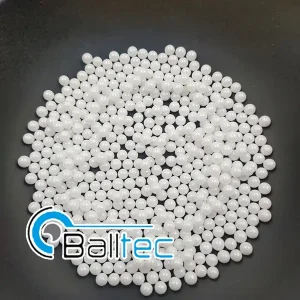
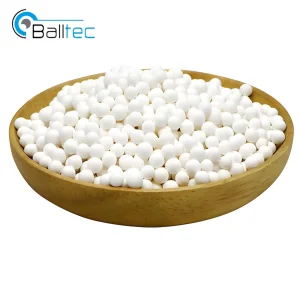
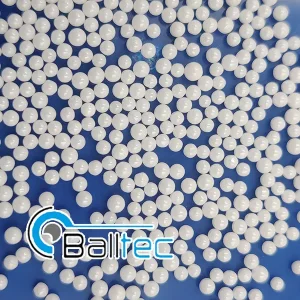
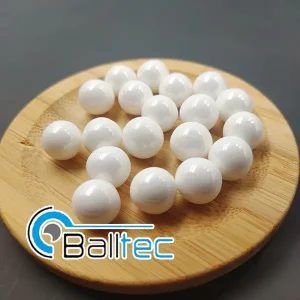
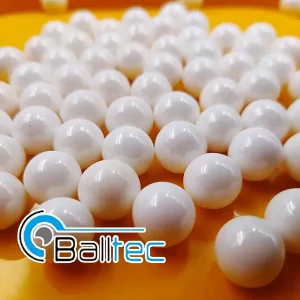
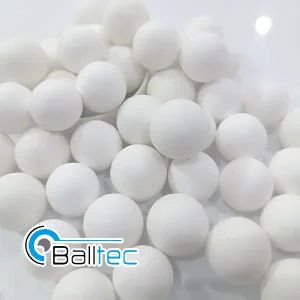
High crush-strength inert alumina balls serving as top/bottom support beds in hydrocrackers, desulfurizers, and ammonia synthesis reactors, preventing catalyst bed movement and fouling.
A leading ceramic packing factory must maintain absolute control over raw material purity, particle sizing, extruding pressures, and thermal sintering kinetics. Our proprietary formulations rely on high-purity kaolin, feldspar, quartz, and synthetic calcined alumina/zirconia powders to achieve maximum structural integrity and mechanical crush strength.
| Ceramic Material Grade | Chemical Composition | Acid Resistance Index (%) | Water Absorption (%) | Bulk Density (g/cm³) | Max Operating Temp (°C) |
|---|---|---|---|---|---|
| Chemical Porcelain (Standard) | $SiO_2 \ge 70\%$, $Al_2O_3 \ge 23\%$ | > 99.8% | < 0.5% | 2.3 - 2.4 | 1100°C |
| High Alumina (68%-75%) | $Al_2O_3: 68 - 75\%$ | > 99.9% | < 0.1% | 2.7 - 3.1 | 1450°C |
| Ultra-Pure Alumina (99.5%) | $Al_2O_3 \ge 99.5\%$ | 100% (Halogen Free) | < 0.02% | 3.6 - 3.8 | 1700°C |
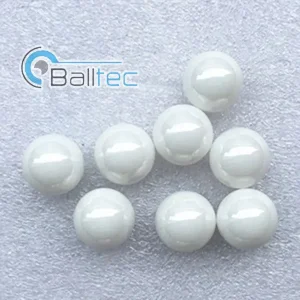
| Zirconia-Toughened (Y-TZP) | $ZrO_2 + Y_2O_3 \ge 95\%$ | 100% Acid/Alkali | 0.00% | 6.0 - 6.05 | 1550°C |
Our 100,000 m² state-of-the-art facility in Pingxiang, Jiangxi utilizes an automated multi-stage quality control process to guarantee zero batch-to-batch variation:
The global industrial landscape demands constant innovation. As a forward-thinking ceramic packing factory & exporter, Baitian (Ball-tec) New Materials is pioneering several next-generation research initiatives aimed at pushing the boundaries of mass transfer and material science:
By leveraging Computational Fluid Dynamics (CFD) and generative AI structural modeling, our R&D team is developing non-uniform surface textures and macro-porous channels on ceramic packing surfaces. These micro-engineered geometries double the mass transfer surface area while reducing liquid phase resistance by up to 18%, significantly lowering column height requirement for new plant constructions.
As green hydrogen production and power-to-X technologies scale globally, chemical towers operating under intense synthetic gas pressures require packings capable of resisting rapid hydrogen embrittlement and high-temperature gas corrosion. Our high-alumina and zirconia ceramic packing lines offer complete physical and chemical immunity to hydrogen atmosphere degradation.
Navigating international trade and strict engineering audits requires complete transparent documentation. We supply full technical dossiers with every shipment, including:
Detailed answers regarding technical selection, plant installation, lifetime estimation, and factory custom manufacturing capabilities.
The choice depends on your operating column pressure drop budget, liquid loading, and initial capital expenditure. Ceramic Random Packing (Raschig rings, Intalox saddles, Pall rings) offers lower initial material costs, easy installation by dumping, and excellent versatility for retrofitting older columns or handling dirty fluids with potential fouling. Ceramic Structured Packing (corrugated sheets) provides significantly lower pressure drop per theoretical stage, higher hydraulic flooding limits, and superior mass transfer efficiency (lower HETP), making it ideal for vacuum distillation, high-capacity gas scrubbers, and energy-sensitive columns.
In concentrated acid services (such as 98% $H_2SO_4$, $HCl$, or $HNO_3$ below 300°C), premium chemical porcelain or high-alumina ceramic packings manufactured by Pingxiang Baitian feature an acid resistance index exceeding 99.8% (ASTM C515). Under normal steady-state hydraulic conditions, their service life routinely exceeds 15 to 20 years with minimal mass loss, structural breakdown, or pressure drop increase.
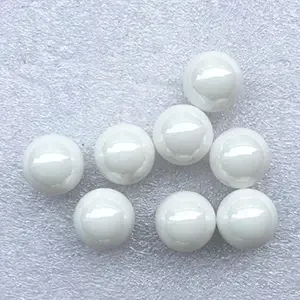
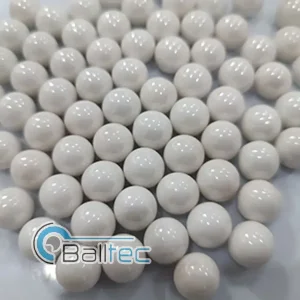
Water absorption below 0.5% (or below 0.1% for high alumina) ensures that liquids and reaction chemicals cannot penetrate the ceramic interior matrix. High internal porosity leads to chemical swelling, thermal shock fracturing during plant startup/shutdown thermal cycling, and subsequent spalling. Intact, dense ceramic spheres prevent catalyst bed migration, pressure drop spikes, and downstream valve fouling.
Yes. Pingxiang Baitian operates an in-house tooling, mold design, and powder blending center. We produce custom wall thicknesses, specialized hole distributions, tailored specific surface areas ($a_v$), and proprietary chemical compositions (such as Yttria-stabilized zirconia or Titania-modified ceramic matrices) tailored to your exact process specification and chemical stream requirements.
We employ heavy-duty export packaging protocols. Random packings are packaged in reinforced moisture-proof woven bags (25kg or 1000kg super-sacks) secured on fumigated ISPM-15 wood or plastic pallets with shrink-wrap and steel banding. Structured packing blocks are individually crated in custom timber boxes to ensure zero edge damage during handling and ocean transport.
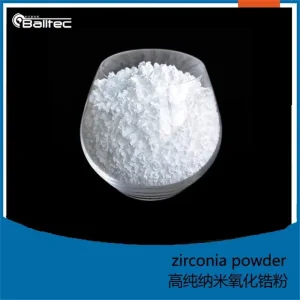
Explore our global range of ultra-wear-resistant zirconia grinding beads, inert alumina ceramic balls, and specialized technical powders.