Follow 


Explore our core high-grade ceramic media, structural components, and high-purity dielectric materials designed for extreme operational reliability.
In modern electrical engineering, industrial condenser capacitors have transitioned from basic passive energy-storage elements into highly specialized, mission-critical components responsible for power factor correction (PFC), DC-link stabilization, harmonic filtering, and high-frequency energy pulse buffering. As global industrial infrastructure pivots toward electrification, renewable energy integration, and smart grids, the benchmark requirements for capacitor performance have escalated exponentially. Modern industrial buyers no longer evaluate capacitor suppliers purely on unit cost; instead, procurement decisions are governed by metrics such as Equivalent Series Resistance (ESR), Dissipation Factor ($\tan \delta$), dielectric voltage withstand endurance, self-healing capability, and mean time between failures (MTBF).
A condenser capacitor fundamentally operates by storing electro-static energy within a dielectric medium positioned between two conductive plates. However, when deployed in demanding industrial environments—such as high-voltage HVAC compressors, megawatt-scale solar inverters, electric vehicle (EV) traction drives, and heavy ceramic ball-milling machinery—the internal dielectric stress, thermal dissipation requirements, and high-frequency ripple currents demand advanced material science. Modern manufacturers must leverage high-purity dielectric materials, precise metallization thickness control, and automated vacuum impregnation to prevent electrical breakdown and dielectric degradation over decades of continuous operation.
The global demand for high-grade condenser capacitors is experiencing unprecedented expansion, driven by five interconnected technology super-cycles:
Centralized solar inverters and offshore wind turbines require high-capacitance DC-link film capacitors capable of handling extreme ripple currents without thermal runaway or capacitance drift.
EV traction inverters utilizing Wide Bandgap (WBG) Silicon Carbide (SiC) switches demand low-inductance (<15 nH) capacitors that can withstand rapid $dV/dt$ voltage transients and high ambient temperatures.
Commercial refrigeration, industrial air handling, and pump systems rely on motor-run metallized polypropylene film capacitors (Class P2 safety level) featuring fault-initiating internal pressure disconnectors.
Power utility substations employ automated capacitor banks to inject reactive power, stabilizing grid voltage, reducing transmission line losses, and filtering high-order harmonics generated by non-linear loads.
The self-healing mechanism is the cornerstone of high-reliability film capacitors. When a dielectric breakdown occurs due to an overvoltage spike, the microscopic arc vaporizes the ultra-thin aluminum-zinc metallization coating around the fault site within microseconds. This process isolates the short circuit with virtually zero loss of total capacitance, ensuring continuous uninterrupted system operation and preventing catastrophic thermal failure.
In recent years, leading Chinese capacitor manufacturers have evolved from high-volume OEM foundries into advanced Industry 4.0 smart manufacturing enterprises. By combining full vertical supply chain integration with automated quality control, Chinese factories deliver uncompromised quality, short lead times, and significant cost advantages to global enterprise buyers.
At the center of this industrial transformation is end-to-end process control. The manufacturing lifecycle of a premium condenser capacitor involves severe material control standards:
| Capacitor Architecture | Dielectric Material | Voltage Range | ESR & Loss Factor | Self-Healing | Primary Application |
|---|---|---|---|---|---|
| Metallized Polypropylene Film | BOPP Film (2.0–12 µm) | 250V AC – 4,000V DC | Ultra-Low ($\tan \delta < 0.0005$) | Yes (Instantaneous) | Motor Run, HVAC, Solar Inverters, Snubbers |
| High-Purity Advanced Ceramic | Zirconia / Alumina Matrix | 100V – 50,000V DC | Very Low ($\tan \delta < 0.0015$) | No (Brittle Dielectric) | High-Frequency RF, Pulsed Power, Ball Mills |
| Aluminum Electrolytic | $\text{Al}_2\text{O}_3$ Anodic Layer | 6.3V – 600V DC | Medium-High ($\tan \delta > 0.05$) | Limited (Electrolyte Re-anodization) | Low-Cost DC Filtering, Power Supply Input |
| Solid Polymer Aluminum | Conductive Polymer | 2.5V – 100V DC | Extremely Low (High Freq) | No | Motherboards, Telecom Base Stations |
In high-stress industrial applications, the dielectric performance of a capacitor is closely tied to advanced ceramic chemistry. Industrial ceramic clusters—such as those centered in Pingxiang, Jiangxi—have created unprecedented cross-industry breakthroughs by applying microcrystalline ceramic technology directly to dielectric substrate engineering and high-shear ceramic ball milling equipment.
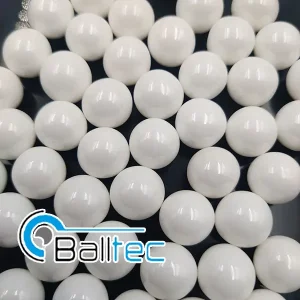
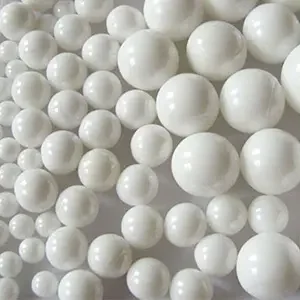
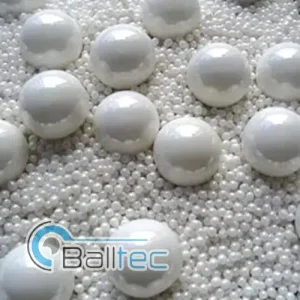
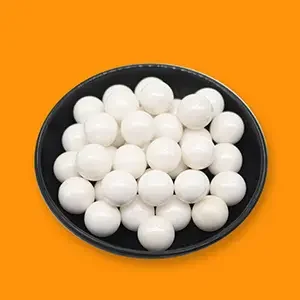
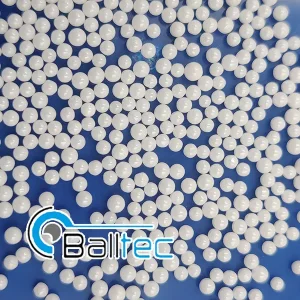
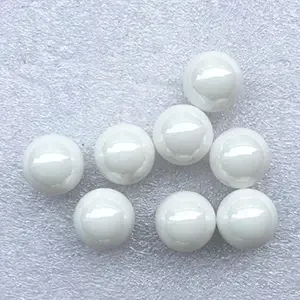
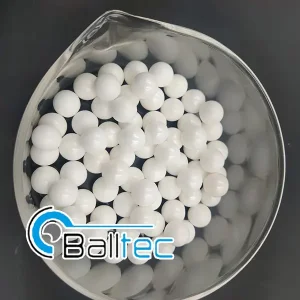
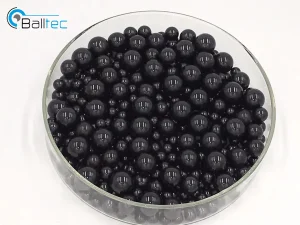
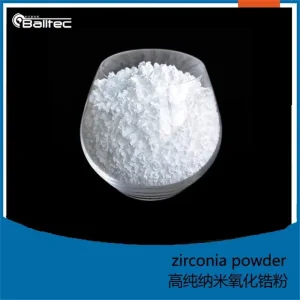
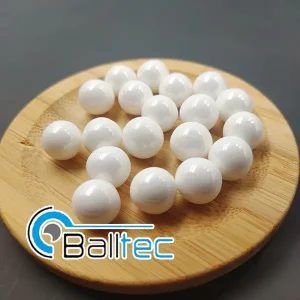
For instance, the ultra-fine dispersion of ceramic powders used in high-voltage dielectric disks requires wet-grinding media of extraordinary density, hardness, and wear resistance. Utilizing Yttria-Stabilized Zirconia (Y-TZP) beads and 99% High-Purity Alumina ($\text{Al}_2\text{O}_3$) grinding balls guarantees sub-micron particle size distribution during dielectric slurry preparation. This eliminates structural voids, impurities, and lattice defects in the ceramic dielectric matrix, yielding capacitors with significantly elevated breakdown voltages and exceptional thermal dissipation capability.
Engineered ceramic substrates enriched with high-purity zirconia deliver stable dielectric constants across extreme temperature variations from -55°C to +175°C.
Using 99.99% purity alumina media during raw material processing eliminates metallic trace contamination, reducing leakage current in ultra-high voltage capacitors.
Advanced ceramic encasements provide superior structural protection, shielding capacitive elements against vibrational fatigue in heavy industrial machinery.
Choosing the correct condenser capacitor specification requires matching environmental, electrical, and mechanical parameters to specific operational field conditions:
Condenser run capacitors installed in coastal or tropical outdoor HVAC compressors face severe moisture ingress risks. Enterprise buyers should mandate aluminum-cased capacitors sealed with polyurethane resin and equipped with Class P2 safety pressure disconnector systems rated for 10,000 AFC (Available Fault Current).
Solar farm inverters experience rapid voltage fluctuations and high ambient operational temperatures. Procuring low-inductance (<12 nH), metallized polypropylene DC-link capacitors with flat-winding construction maximizes current handling while extending inverter operating lifetimes past 20 years.
In mining and ceramic powder processing plants, power factor correction banks are exposed to severe structural vibration. Capacitors must be potted in vibration-damping gel compounds and integrated into heavy-duty steel enclosures certified under IEC 60831 standards.
When auditing a Chinese capacitor OEM factory, enterprise procurement managers should verify: (1) ISO 9001, ISO 14001, and IATF 16949 quality system certifications; (2) Compliance with UL 810, IEC 60384, and RoHS/REACH; (3) In-house reliability test labs capable of Accelerated Life Testing (ALT), Damp Heat Steady State (THB test: 85°C / 85% RH), and 100% surge voltage testing.
In-depth engineering answers addressing common questions regarding capacitor specification, material selection, and factory auditing.
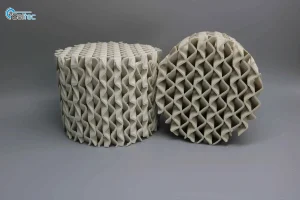
Additional advanced ceramic media, structured packings, and wear-resistant industrial solutions engineered for high performance.