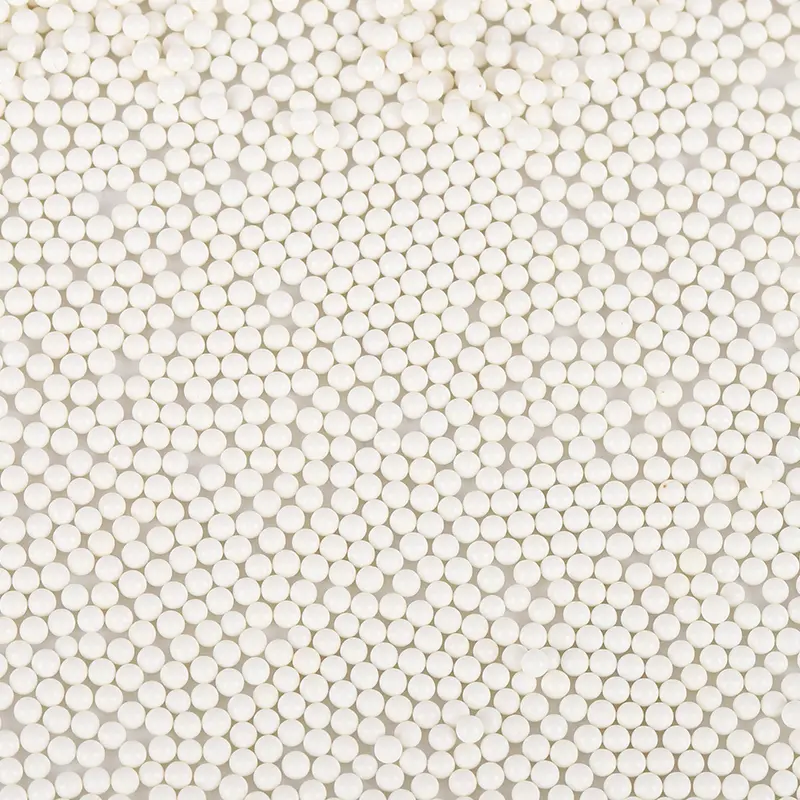
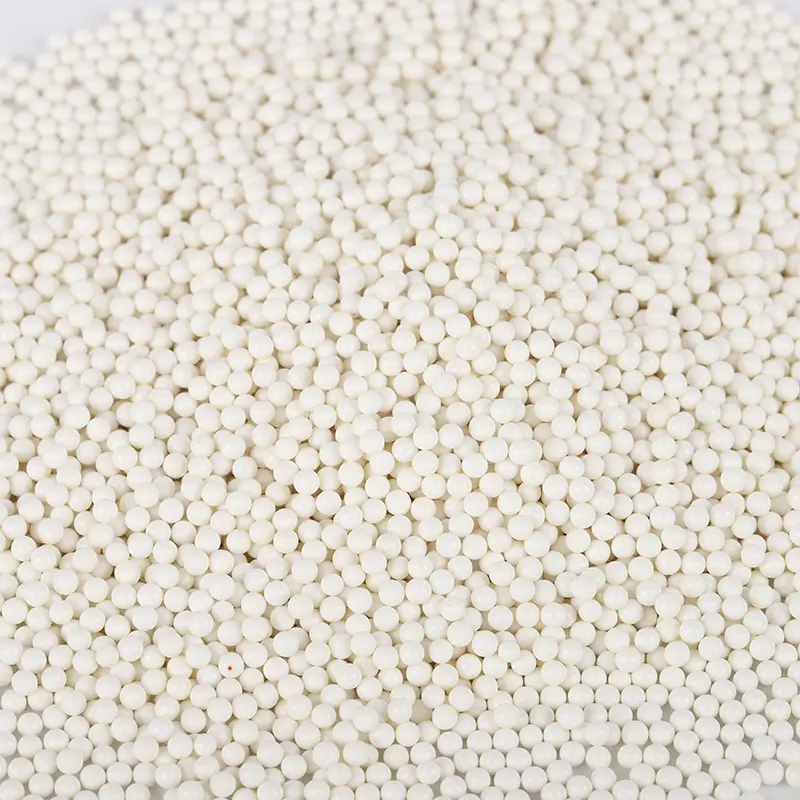
High-Quality Zirconium Silicate Bead for Sand Mill Use Factory, Exporters

BZS
General Character

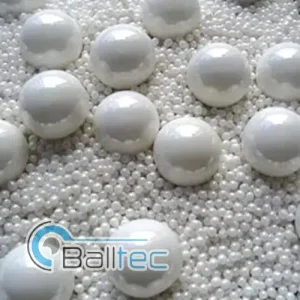
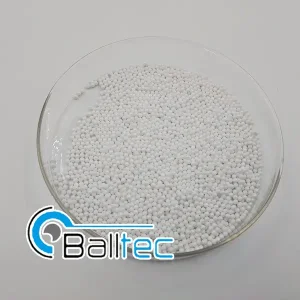
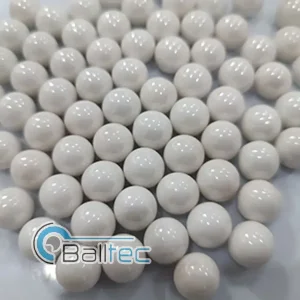
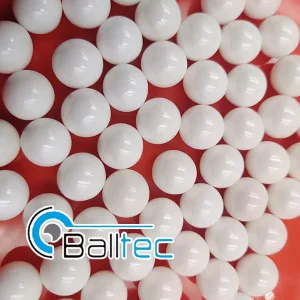
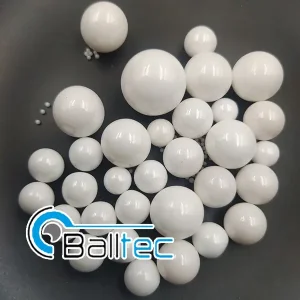
Ball-tec® BZS is produced by two different melting and sintering method, is a grinding media of the high performance and low cost.

Product Description

Features & Applications

Uniform and compact internal structure achieved through advanced specialized processing.
Outstanding chemical stability with strong acid and alkali resistance.
High density profile, significantly enhancing efficiency in grinding operations.

Chemical Composition

Chemical Composition ZrO2 SiO2 Al2O3 Fe2O3 CaO TiO2 MgO Na2O
% ≥ 65 35 0.1 ≤ 0.01 ≤ 0.01 ≤ 0.01 ≤ 0.01 ≤ 0.01

Physical Properties & Specifications

Density
4.0 g/cm³
Bulk Density
2.5 g/cm³
Hardness (HV)
800 - 900
Sphericity
98%
Standard Sizes
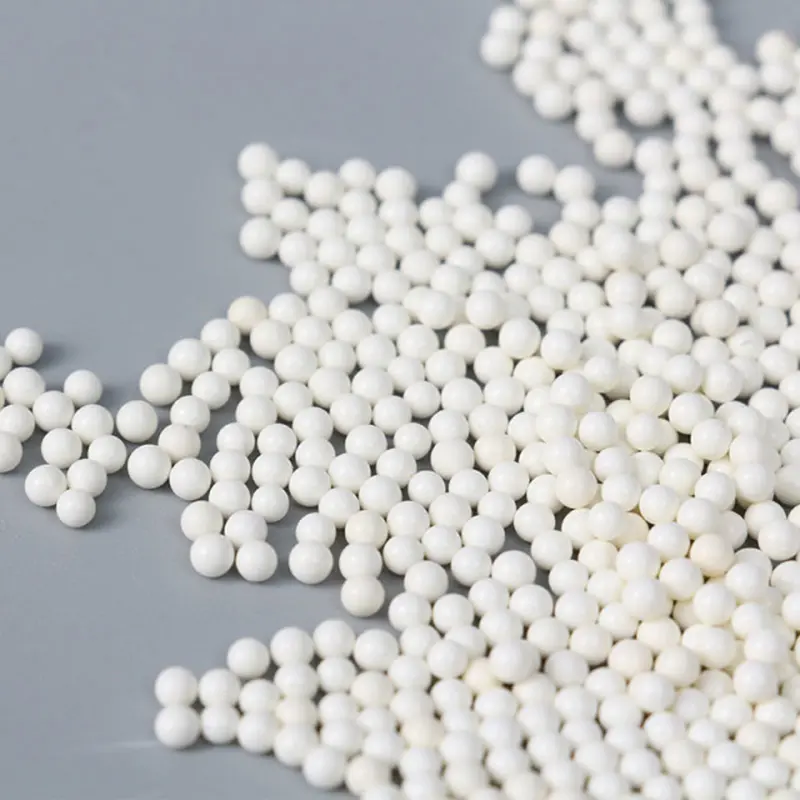
0.50mm – 10mm
Packaging
25kg Plastic Drum

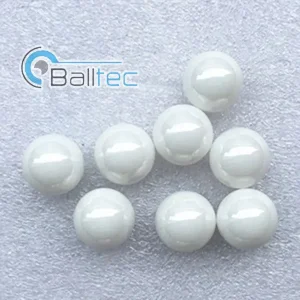
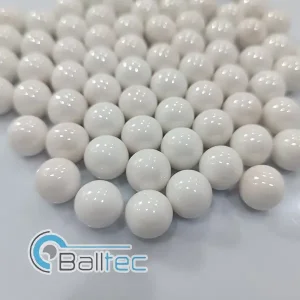
Material Overview: Zirconium silicate beads (65 Zirconia Beads) are engineered from zirconium silicate (ZrSiO4), alumina, and silicon dioxide. Containing approximately 65% zirconia content, they feature a specific gravity of around 4.0, a bulk density of 2.4-2.5 g/cm³, and Vickers hardness up to 900 HV.

Primary Application: Ideally suited for grinding medium to low viscosity slurries. They perform exceptionally well during the basic grinding phase of coatings, paints, pigments, calcium carbonate, kaolin, ink, and pesticide suspensions.

Usage Guidelines: Thanks to moderate hardness and density, operational grinding processes can be adjusted according to slurry viscosity to achieve uniform particle dispersion while reducing equipment wear.

Key Characteristics of Zirconium Silicate Beads:

  • Uniform & Dense Structure: Manufactured using specialized techniques to ensure a highly consistent internal structure, delivering reliable and uniform grinding quality.
  • High Toughness & Wear Resistance: Built to withstand strong impacts with an exceptionally low friction coefficient, resulting in minimal abrasion on equipment.
  • Enhanced Efficiency: High density significantly optimizes grinding performance. Their low wear rate and long service life make them cost-effective for ultrafine grinding.
  • Broad Compatibility: Compared to standard alumina balls, zirconium silicate beads offer superior toughness and lower wear, making them compatible with high-speed stirring mills, vibration mills, sand mills, centrifugal barrel machines, and tissue grinders.

Frequently Asked Questions (FAQ)

1. What are Zirconium Silicate Beads (65 Zirconia Beads)?

Zirconium silicate beads are high-performance grinding media made from zirconium silicate (ZrSiO4), alumina, and silicon dioxide. With a ZrO2 content of approximately 65%, they offer a dense structure and high grinding efficiency.

2. What are the key physical properties of these beads?

They feature a density of 4.0 g/cm³, a bulk density of 2.5 g/cm³, a Vickers hardness of 800 to 900 HV, and a high sphericity rating of 98%. Standard sizes range from 0.50mm to 10mm.

3. What applications are zirconium silicate beads best suited for?

They are ideal for grinding medium and low viscosity slurries, such as coatings, paints, pigments, calcium carbonate, kaolin, printing inks, and pesticide suspensions during ultrafine grinding stages.

4. Which grinding equipment can use zirconium silicate beads?

These beads are suitable for a wide range of industrial equipment, including high-speed stirring mills, vibration mills, sand mills, centrifugal barrel rolling machines, and tissue grinding devices.

5. How do zirconium silicate beads compare to alumina grinding media?

Compared to alumina balls, zirconium silicate beads exhibit higher toughness, lower wear rates, and higher density, leading to greater operational efficiency and less equipment abrasion over time.

6. What packaging sizes are standard for these grinding beads?

The standard packaging for zirconium silicate beads is 25kg plastic drums, ensuring convenient storage and transportation safety.

Related Products