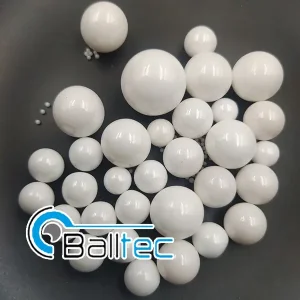
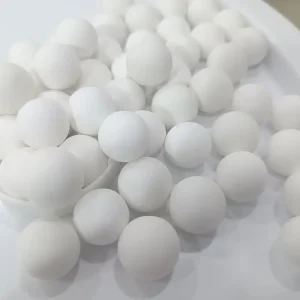
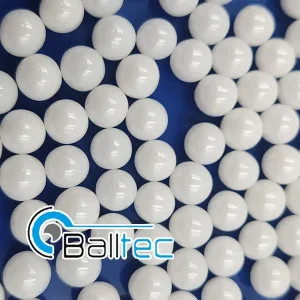
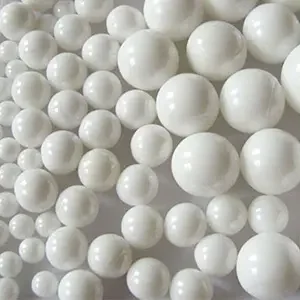
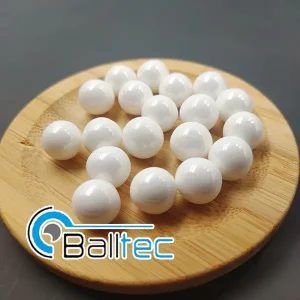
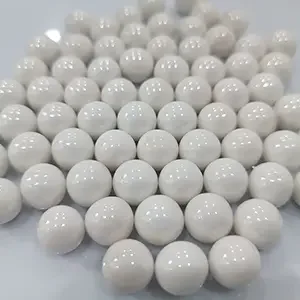
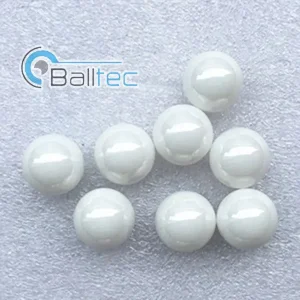
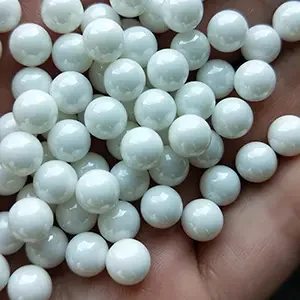
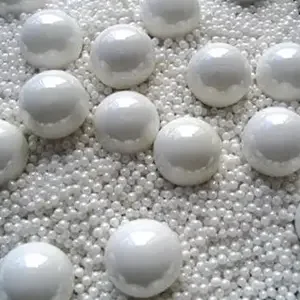
High-Quality Inert Alumina Balls Factory & Global Manufacturing Hub

Engineering-Grade Chemical Support Spheres, Alpha Alumina Catalyst Bed Supports, & Ultra-Low Porosity Tower Internals for Petrochemical, Refinery, & Synthesis Processing

Featured Product Catalog

High-Performance Industrial Media & Catalyst Support Solutions

Explore our primary manufacturing output engineered for extreme chemical inertness, high mechanical strength, and superior thermal shock endurance across refinery beds and grinding mills.
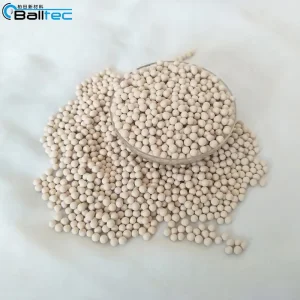
China 3A Molecular Sieve High Quality Desiccant
China 3A Molecular Sieve High Quality Desiccant 3A Zeolite Price Molecular Sieve Adsorbents for Gas Drying Supplier, Exporter
View Product Details
High-Quality Zirconium Oxide Grinding Bead
High-Quality Zirconium Oxide Grinding Bead Excellent Wear Resistance Grinding Media Manufacturer, Suppliers
View Product Details
High-Quality Zirconia Beads for Matcha Milling
High-Quality Zirconia Beads – Grinding Media for Continuous Ball Milling of Matcha Manufacturers, Suppliers
View Product Details
Wholesale Inert Ceramic Alumina Ball
Wholesale Inert Ceramic Alumina Ball For Chemical Industry Manufacturers, Supplier
View Product Details
China Zirconia Bead for Grinding Tasks
China Zirconia Bead for Grinding High Performance Fine Grinding Tasks Supplier, Factory
View Product Details
Wholesale 99.9% Al2O3 Grinding Bead
Wholesale 99.9% Al2O3 Grinding Bead Ceramic Grinding Media Supplier, Factory
View Product Details
Wholesale Zirconia Ball for Ball Milling
Wholesale Zirconia Ball for Grinding Reliable Industrial Ball Milling Applications Supplier, Factories
View Product Details
China High Density High Purity Alumina Milling Balls
China High Density High Purity Alumina Milling Balls Manufacturer, Exporter
View Product Details
Technical Whitepaper: Section 1

Chemical Architecture & Phase Stability of Inert Alumina Media

In modern chemical process engineering, heterogeneous fixed-bed reactors require packing materials that act as structural bedding while displaying total chemical non-reactivity. High-quality inert alumina balls (chemically formulated as microcrystalline $\alpha$-$\text{Al}_2\text{O}_3$ combined with high-purity silica-aluminate matrices) serve as the vital baseline support and top cover media for active catalyst beds, molecular sieves, and desiccant units.

The primary operational imperative of inert ceramic spheres is to resist catalytic poisoning, withstand severe mechanical crushing forces, prevent thermal shock spalling during rapid unit startup/shutdown cycles, and maintain absolute structural integrity under extreme operating pressures up to 35 MPa and temperatures surpassing $1400^\circ\text{C}$.

Phase Transformation Control
Formulated through precision calcination, converting reactive gamma-alumina phase into thermodynamically stable alpha-corundum ($\alpha$-$\text{Al}_2\text{O}_3$). This eliminates lattice expansion, phase instability, and degradation under hydrothermal refinery conditions.
Leachable Silica Limitation
Ultra-low silica formulations (containing less than 0.2% $\text{SiO}_2$ for 99% $\text{Al}_2\text{O}_3$ grades) prevent silica volatilization and downstream piping fouling in high-temperature steam synthesis and secondary reformer units.
Microstructural Density
Isostatically molded or roll-formed under extreme compression, achieving bulk densities from 2.0 g/cm³ up to 3.6 g/cm³ with zero open porosity, eliminating gas absorption traps and fluid channeling.

Standard Grade Chemical & Physical Specifications

Property / Parameter 23-26% Inert Grade 90% High-Alumina Grade 92% Industrial Grade 99% Ultra-Purity Grade
$\text{Al}_2\text{O}_3$ Content (%) 23.0 - 26.0% $\ge 90.0\%$ $\ge 92.0\%$ $\ge 99.2\%$
$\text{SiO}_2$ Content (%) 68.0 - 72.0% $\le 7.5\%$ $\le 5.5\%$ $\le 0.15\%$
Leachable $\text{Fe}_2\text{O}_3$ (%) $\le 1.0\%$ $\le 0.25\%$ $\le 0.20\%$ $\le 0.05\%$
Water Absorption (%) $\le 1.0\%$ $\le 0.5\%$ $\le 0.3\%$ $\le 0.1\%$
Bulk Density (g/cm³) 1.35 - 1.45 1.95 - 2.05 2.05 - 2.15 2.30 - 2.45
Specific Gravity (g/cm³) 2.40 - 2.60 3.40 - 3.55 3.60 - 3.70 3.85 - 3.95
Cold Crushing Strength (1/2" Sphere) $\ge 1.5$ kN/ball $\ge 4.5$ kN/ball $\ge 5.8$ kN/ball $\ge 8.5$ kN/ball
Max Operating Temperature $1100^\circ\text{C}$ ($2012^\circ\text{F}$) $1450^\circ\text{C}$ ($2642^\circ\text{F}$) $1550^\circ\text{C}$ ($2822^\circ\text{F}$) $1750^\circ\text{C}$ ($3182^\circ\text{F}$)
Technical Whitepaper: Section 2

Strategic Ecosystem Edge of China Inert Alumina Ball Factories

The global energy and petrochemical supply chains rely heavily on advanced ceramic bed supports manufactured in specialized Chinese industrial clusters. Pingxiang City in Jiangxi Province stands as the world's largest high-density chemical packing and industrial ceramics hub, housing state-of-the-art facilities equipped with ultra-large capacity tunnel kilns, automated cold isostatic presses (CIP), and computer-controlled slurry atomization towers.

Partnering directly with a premier Chinese factory delivers profound structural and commercial advantages over traditional Western or secondary regional vendors:

100,000+
Metric Tons Annual Output
< 0.05%
Strict Batch Wear Tolerance
100%
Raw Material Upstream Traceability
ISO 9001
Managed Quality Systems
Supply Chain Integration & Cost Efficiency Factor

China-based advanced ceramic factories integrate the entire value chain—from local high-purity bauxite beneficiation and synthetic $\alpha$-alumina powder calcination to high-speed automatic rolling and continuous firing. This cluster effect yields up to a 35% cost reduction compared to European counterparts, while meeting or exceeding strict HG/T 3683, ASTM C279, and UOP engineering specifications for refinery turnarounds.

Technical Whitepaper: Section 3

Localized Application Scenarios Across Process Industries

Engineered support spheres perform specialized mechanical and gas-distribution roles depending on the reactor environment.

1. Hydrotreating & Hydrocracking Units
Positioned in high-pressure hydroprocessing reactors, 99% high-purity inert alumina balls endure severe hydrogen partial pressure and acidic $\text{H}_2\text{S}$ gas streams. They act as top guard beds to trap corrosion products, mill scale, and coke fines before reaching expensive precious-metal catalyst beds.
2. Ammonia Synthesis & Steam Reformers
In secondary reformers and shift converters, temperatures spike above $1200^\circ\text{C}$. Low-silica ceramic spheres prevent silica migration, which otherwise deposits on heat exchanger tubes, maintaining continuous thermal efficiency and avoiding emergency plant shutdowns.
3. Molecular Sieve & LNG Dehydration
Under rapid pressure swing adsorption (PSA) cycles, 23-26% standard inert balls absorb fluid dynamic impacts at bed inlets, holding high-density molecular sieve beads intact and preventing particle attrition, dusting, and channel formation.
4. Ethylene & Petrochemical Crackers
Demethanizer columns, acetylene hydrogenation reactors, and green-oil guard beds require chemically pure, non-porous ceramic packing spheres to resist fouling and polymer buildup, ensuring consistent fractionation efficiency.
Technical Whitepaper: Section 4

Macro Industry Trends & Technical Innovations

Driven by global decarbonization, energy efficiency mandates, and refinery-to-chemical integration, the industrial ceramics market is undergoing key technical shifts:

  • Geometrically Modified Inert Media: Transitioning from simple solid spheres to perforated, fluted, or multi-hole convex shapes. These engineered geometries provide up to 40% higher void fraction, drastically cutting pressure drop across high-velocity gas beds while retaining mechanical crush rating.
  • Nanostructure-Controlled Sintering: Advanced Chinese factories employ sub-micron $\alpha$-alumina powders combined with precise dopants (such as $\text{MgO}$ or $\text{TiO}_2$) to lock crystal grain growth during firing. This microstructural refinement doubles thermal shock endurance ($>30$ cycles from $800^\circ\text{C}$ to ice water quenching).
  • Smart Automated Quality Verification: Implementation of inline optical sorting, automated acoustic crush testing, and X-ray fluorescence (XRF) raw material screening to ensure zero batch variance in large-scale refinery deliveries.
Technical Whitepaper: Section 5

Bed Loading Optimization & Fluid Dynamic Engineering

Achieving maximum catalyst life requires a meticulously calculated, multi-layered graded bed support configuration. Improper sizing causes bed fluidization, high differential pressure ($\Delta P$), and premature catalyst dumping.

Recommended Graded Bed Configuration (Top to Bottom)
  1. Top Guard Layer (Hold-down Bed): 1-1/2" to 2" Inert Alumina Balls (absorbs inlet fluid impact and retains fine active bed).
  2. Secondary Distribution Layer: 3/4" to 1" Spheres (transitions flow profile and prevents localized channeling).
  3. Upper Guard Transition: 1/4" to 1/2" Spheres (directly interfaces with active catalyst particles).
  4. Active Reaction Bed: Extruded active catalyst or zeolite molecular sieves.
  5. Lower Support Transition: 1/8" to 1/4" Spheres (prevents active catalyst migration through lower screen).
  6. Bottom Base Support: 1-1/2" to 2" Spheres (sits directly on grid tray, supporting full bed mass under hydro-dynamic load).
Technical Whitepaper: Section 6

Global Procurement Standards & Compliance Audit Framework

When sourcing inert alumina balls for international refinery revamps or EPC lump-sum turnkey projects, procurement managers must evaluate potential suppliers against rigorous engineering benchmarks:

  • Chemical Composition Compliance: Verification via XRF/ICP-OES for alumina purity and low alkali content ($\text{Na}_2\text{O} + \text{K}_2\text{O} < 0.3\%$).
  • Acid & Alkali Resistance Testing: Testing according to ASTM C279 standards ($>99.5\%$ weight retention after 48-hour boiling in concentrated $\text{H}_2\text{SO}_4$).
  • Compressive Strength Assurance: Statistically valid sampling (typically 20 individual spheres per batch) testing for minimum point-load crushing capacity.
  • Packaging & Moisture Protection: Heavy-duty UN-certified steel drums, reinforced jumbo bags with inner polyethylene liners, and heat-treated export wooden pallets to ensure zero moisture ingress during ocean transit.
Extended Product Lineup

Advanced Chemical Tower Packing & Specialized Milling Media

Complementary high-durability tower packings, specialized zirconia micro-beads, and random ceramic rings engineered for severe service duties.
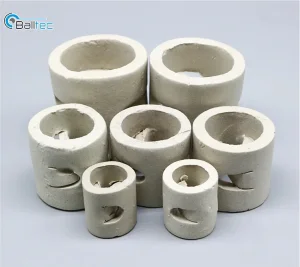
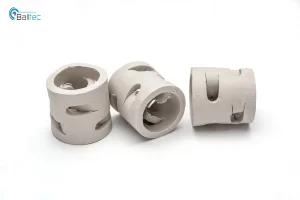
High-Quality Ceramic Pall Rings Tower Packing
High-Quality Ceramic Pall Rings Tower Packing for Distillation Column Packing Manufacturer, Exporters
View Product Details
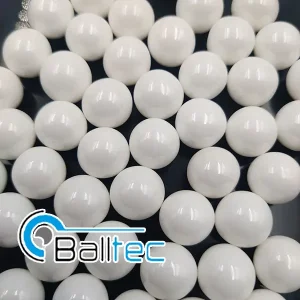
China Zirconia Grinding Bead
China Zirconia Grinding Bead for Ultra Fine Powder Grinding and Refinement Suppliers, Exporters
View Product Details
High-Quality Zirconia Grinding Ball
High-Quality Zirconia Grinding Ball for Fine Particle Grinding and Uniform Dispersion Manufacturers, Exporters
View Product Details
China Zirconium Oxide Bead
China Zirconium Oxide Bead for Grinding Durable Stable Grinding Media Manufacturers, Factories
View Product Details
High-Quality Zirconia Ball High Speed
High-Quality Zirconia Ball for Grinding High Speed Grinding and Surface Polishing Factories, Exporters
View Product Details
China ZrO2 Ball for Grinding
China ZrO2 Ball for Grinding Fine Particle Production and Homogenization Manufacturer, Factories
View Product Details
Scrubber Random Tower Packing Ceramic Pall Ring
High-Quality Factory Price Scrubber Random Tower Packing Ceramic Pall Ring for Drying and Dehydration in Chemical Industry Factory, Factories
View Product Details
High-Quality Zirconium Oxide Ball Industrial Milling
High-Quality Zirconium Oxide Ball for Grinding Industrial Ball Milling and Processing Manufacturers, Suppliers
View Product Details
Expert Engineering Q&A

Frequently Asked Questions & Technical Insights

Detailed answers to critical engineering inquiries regarding material selection, testing standards, and reactor bed performance.

Q1 What is the fundamental difference between standard 23-26% inert alumina balls and 99% high-purity alumina media?
The difference lies in their chemical composition, phase structure, and environmental compatibility. Standard 23-26% inert ceramic balls contain a silica-aluminate composite matrix ($\text{SiO}_2 + \text{Al}_2\text{O}_3$), making them economical, ultra-durable, and perfect for general gas dehydration, molecular sieve support, and organic liquid beds up to $1100^\circ\text{C}$. In contrast, 99% high-purity alumina balls consist almost entirely of pure alpha-corundum ($\alpha$-$\text{Al}_2\text{O}_3$) with silica content below 0.15%. These high-purity spheres are strictly required in high-temperature steam reformers, ammonia synthesis units, and hydroprocessing reactors operating above $1400^\circ\text{C}$ to prevent silica leaching and catalytic poison reactions.
Q2 How does silica leaching occur in refinery beds, and why is low-silica ceramic media required?
At high temperatures ($>1000^\circ\text{C}$) and under high partial pressure of hydrogen or steam, silica ($\text{SiO}_2$) within low-grade ceramics reacts to form volatile gaseous silicon monoxide ($\text{SiO}$). As this gas travels downstream to cooler regions of the plant (such as waste heat boilers or heat exchangers), it condenses back into solid amorphous silica scale. This scale causes heavy fouling, pressure spikes, and reduced heat transfer. Using 90%, 92%, or 99% low-silica inert alumina balls eliminates this volatility risk entirely.
Q3 Why is Cold Crushing Strength (CCS) a vital metric for inert catalyst bed supports?
In fixed-bed reactors, support balls at the bottom of the vessel carry the total static weight of many tons of active catalyst plus the dynamic hydraulic forces generated by high-velocity fluid flow and pressure fluctuations. If the support balls collapse, shattered fragments will plug lower screen grids, causing catastrophic bed channeling and pressure buildup. High CCS values (e.g., $>8.5$ kN/ball for 1/2" 99% alumina spheres) ensure that the bed support matrix remains intact across years of continuous operation.
Q4 How do Chinese industrial ceramic factories maintain quality consistency across high-volume shipments?
Leading Chinese manufacturing hubs like Pingxiang utilize integrated quality assurance systems certified under ISO 9001. Raw material slurries undergo wet magnetic iron removal and precise spray drying to yield uniform atomized granules. Forming is executed using automated cold isostatic presses or dual-axis rolling machines to ensure consistent inner density without air pockets. Continuous tunnel kilns controlled by microprocessors regulate heating curves, ensuring uniform crystalline sintering and zero dimension distortion across bulk tonnage shipments.
Q5 Can inert alumina balls be reused after a catalyst turnaround?
Generally, during a major catalyst turnaround, support balls are screened, washed, and inspected. If the spheres show zero mechanical fracturing, surface abrasion, or heavy chemical fouling, the larger sizes (e.g., 1-1/2" and 2") can often be reloaded. However, smaller transition spheres (1/8" and 1/4") are usually replaced with fresh factory stock to guarantee zero fines contamination or residual catalyst dust carried over into the new cycle.
Q6 What international testing standards apply to inert ceramic bed support media?
Key global specifications include ASTM C279 (Standard Specification for Chemical-Resistant Masonry Units/Ceramics), HG/T 3683 (Chinese Chemical Industry Standard for Inert Alumina Balls), and major licensor guidelines such as UOP, Axens, and Shell specifications. These standards govern chemical solubility in acid/alkali, bulk density, water absorption percentage, thermal shock resistance, and minimum crushing strength.