Follow 


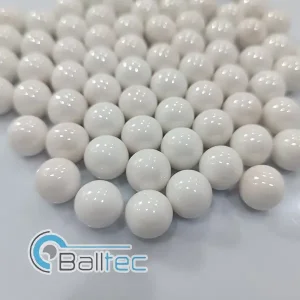
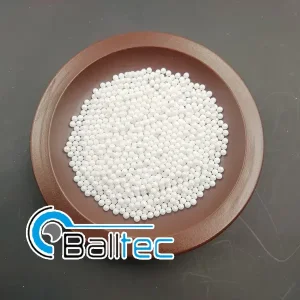
Explore our top-tier electronic substrates, high-density grinding media, and wear-resistant micro-bearings designed for advanced potentiometer assembly lines and precision processing.
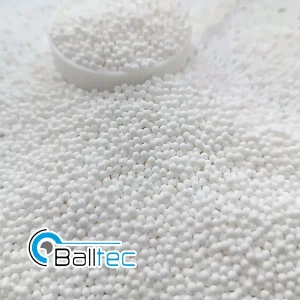
An in-depth analysis of high-reliability variable resistors, position-sensing potentiometers, and advanced ceramic substrate technologies shaping modern industrial automation.
Modern precision potentiometers require strict Independent Linearity tolerance (down to ±0.25%) combined with ultra-low Temperature Coefficients of Resistance (TCR) to minimize thermal drift in industrial feedback loops.
Designed to IP67/IP68 standards, heavy-duty rotary potentiometers feature hermetic ceramic enclosures and wiper-contact stability resistant to high mechanical vibration, moisture, and chemical corrosion.
Utilizing high-purity conductive plastics and micro-polished alumina ceramic bases, our industrial potentiometers deliver operational lifespans exceeding 10 to 50 million shaft revolutions without contact degradation.
The global potentiometer market is experiencing a profound technological migration driven by Industry 4.0 automation, automotive electrification, and medical device miniaturization. While digital potentiometers (DigiPots) serve low-power signal processing, passive continuous-turn electromechanical potentiometers remain irreplaceable in high-noise, safety-critical analog feedback applications where zero-latency hardware signal integrity is required.
From precision cermet trimming potentiometers used in telemetry calibration to multi-turn wirewound units in flight control systems, selecting the appropriate resistive track technology (Conductive Plastic, Cermet, Wirewound, or Hybrid Ceramic) directly dictates system durability, output smoothness, and equivalent noise resistance (ENR).
Comprehensive engineering evaluation comparing resistive element substrates, electrical characteristics, and suited application profiles for precision system design.
| Resistive Element Type | Substrate Material | Linearity Range | Rotational Life (Cycles) | TCR (ppm/°C) | Primary Industrial Application |
|---|---|---|---|---|---|
| Conductive Plastic | High-Purity Al2O3 / Polymer Base | ±0.15% - ±0.5% | > 20,000,000 | ±300 | Servo Feedback, Robotics, Throttle Position Sensors |
| Cermet (Ceramic-Metal) | 96% Alumina (Al2O3) Substrate | ±0.5% - ±1.0% | > 2,000,000 | ±100 | Trimming Potentiometers, Power Supplies, Calibration |
| Precision Wirewound | Glazed Ceramic Core | ±0.05% - ±0.25% | > 5,000,000 | ±20 | Heavy Machinery Controls, High-Power Voltage Dividers |
| Hybrid Ceramic Matrix | ZrO2 / High-Density Alumina | ±0.10% - ±0.20% | > 50,000,000 | ±50 | Aerospace Avionics, Ultra-Reliable Medical Instrumentation |
Engineered potentiometric position feedback solutions tailored to solve specific environmental and mechanical challenges across global industries.
In drive-by-wire system architectures, dual-redundant rotary potentiometers mounted directly to electronic throttle bodies provide high-speed continuous absolute position sensing. Utilizing micro-smooth ceramic substrate elements ensures thermal immunity under engine-compartment temperatures exceeding 125°C, preventing signal output noise (CRV) and operational drift.
Multi-axis industrial articulated arms require absolute zero-backlash position tracking at articulate joints. Custom conductive plastic linear potentiometers integrated inside hydraulic actuators offer real-time stroke feedback, allowing controllers to regulate fluid displacement with micron-level repeatability regardless of ambient electromagnetic interference (EMI).
Avionics systems utilize multi-turn precision wirewound potentiometers sealed within anodized aluminum housings to translate pilot manual column inputs into digital guidance signals. Built with gold-plated multi-finger wipers and stress-relieved ceramic bases, these units deliver fail-safe reliability during extreme G-force accelerations and sub-zero atmospheric temperatures.
Medical linear motion potentiometers enforce strict fluid delivery rates in automated syringe pumps. High-purity alumina-backed resistor tracks deliver absolute linear output ratio consistency, eliminating flow-rate calibration errors and ensuring high patient safety standards in critical care units.
Our engineering R&D targets for advancing physical contact reliability, material science integration, and hybrid electromechanical position feedback.
Incorporating graphene and carbon nanotubes into conductive plastic matrices to reduce wiper friction coefficient below 0.05, raising wear-life past 100M cycles.
Deploying ultra-fine zirconia ceramics (ZrO2) featuring sub-nanometer surface roughness to eradicate micro-vibrational noise (Smoothness < 0.02%).
Developing integrated dual-channel rotary sensors featuring contactless Hall-Effect sensing alongside physical potentiometers for aerospace fail-safe redundancy.
Combining cermet trimming elements directly onto smart sensor substrates capable of autonomous temperature offset self-compensation in harsh industrial environments.
As a specialized industrial manufacturer and global supplier, our manufacturing ecosystem combines cleanroom screen-printing facilities, laser-trimming linear adjustment systems, and automated 100% continuous linearity testing rigs.
Every potentiometric substrate is fabricated using high-purity alumina ceramics and specialized cermet formulations, ensuring stable electrical resistance across radical thermal cycles. Our rigorous batch testing protocols guarantee zero micro-cracks, tight TCR alignment, and compliance with RoHS, REACH, and MIL-STD-202 vibration standards.
Detailed technical answers to common engineering questions regarding potentiometer selection, substrate materials, and customization options.
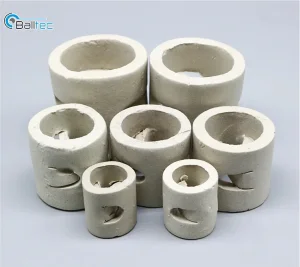
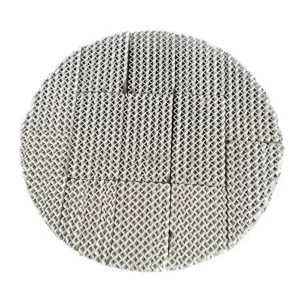
Complete catalog of wear-resistant ceramic packing rings, structured column packings, and specialized grinding beads supporting electronic material refinement.