Follow 


Discover engineered components powering thermal, mechanical, and power transmission stability across global manufacturing ecosystems.
In an era characterized by global electrification, transition to renewable energy grids, high-speed rail transportation, and the rapid proliferation of Electric Vehicle (EV) powertrains, wire wound resistors remain the foundational bedrock of passive electronic components. Unlike thin-film or thick-film planar resistors, wire wound architectures offer unmatched overload capabilities, high power-to-volume dissipation metrics, supreme pulse handling resilience, and ultra-low temperature coefficients.
As system voltages elevate from traditional 400V topologies to 800V and multi-kilovolt industrial converters, global procurement executives and senior electrical design engineers face new challenges. The modern demand dictates not merely resistance values, but comprehensive physical stability under transient thermal shocks, surge currents, and harsh environmental stressors. Factory-direct manufacturing of high-quality wire wound resistors requires complete control over wire alloy metallurgy, high-purity ceramic core substrates, non-inductive winding topologies (such as Ayrton-Perry style), and protective encapsulation materials (vitreous enamel, silicone resins, and aluminum housing enclosures).
High-grade Steatite (C410/C511) and Alumina (Al₂O₃ up to 96-99%) cores provide maximum mechanical strength, exceptional dielectric insulation, and ultra-high thermal conductivity to prevent localized hotspots during continuous overload.
Utilization of Nickel-Chromium (NiCr 80/20), Iron-Chromium-Aluminum (FeCrAl), and Manganin wire guarantees precise ohmic control, high melting thresholds, and minimal thermal emf generation against copper terminals.
By counter-winding two parallel resistance wires in opposite directions, internal magnetic fields cancel each other out, reducing parasitic inductance down to nano-Henry levels for high-frequency switching circuits.
| Resistor Architecture Type | Typical Power Rating | Max Operating Temp | Key Characteristic | Primary Industrial Application |
|---|---|---|---|---|
| Vitreous Enamel Coated | 5W – 1000W | +350°C | Impervious to moisture & severe chemicals | Heavy Machinery, Traction Motors |
| Aluminum Housed (Chassis Mount) | 5W – 500W | +250°C | High heat-sink transfer capability | EV Inverters, Motor Braking, Power Supplies |
| Silicone Resin Encapsulated | 1W – 50W | +275°C | Flameproof coating, cost-effective | Industrial Automation, Power Meters |
| Tubular Power Ceramic Cores | 10W – 2000W+ | +400°C | Massive surge kinetic energy absorption | High-Voltage Grid Sub-stations, Wind Power |
When global original equipment manufacturers (OEMs), Tier-1 automotive suppliers, and grid operators evaluate Wire Wound Resistor Manufacturers & Factories, procurement audit protocols extend far beyond simple unit pricing. Supply chain resilience, material traceability, statistical process controls (Six Sigma), and long-term durability metrics form the pillars of supplier qualification.
Leading manufacturers must maintain full compliance with ISO 9001:2015, ISO 14001:2015 (Environmental Management), ISO 45001 (Occupational Safety), and specifically IATF 16949 for automotive-grade power resistor assembly lines. All products must conform to RoHS and REACH environmental mandates.
Every production batch undergoes 100% automated optical inspection (AOI), 100% resistance value verification, room-temperature insulation resistance tests (1000V DC), and periodic destructive surge tests (MIL-STD-202 Method 108/213) to establish Mean Time Between Failures (MTBF).
Tier-1 buyers require factories capable of rapid OEM customization: special lead forming, customized aluminum enclosure profiles, integrated thermal cutoffs, specialized terminal tabs (Faston, threaded studs), and custom resistance values down to milliohms.
To safeguard against global supply shocks, premier manufacturers maintain dual-sourcing strategies for critical raw materials—especially high-purity ceramic rods, specialized resistance alloy wires, and high-performance potting silicones.
Electric Vehicles require robust pre-charge resistors to limit the initial inrush current into DC-link capacitors when connecting the high-voltage battery. Aluminum housed wire wound resistors withstand massive repetitive energy pulses, preventing relay contact welding and protecting inverter IGBT modules.
In wind turbines and large-scale solar power stations, grid instability or rapid deceleration creates excess kinetic and electrical energy. High-power tubular vitreous enamel and aluminum dynamic braking wire wound resistors safely dissipate megawatts of regenerated energy into heat energy.
Variable Frequency Drives (VFDs), CNC machinery, and robotic arms rely on non-inductive wire wound resistors for precise deceleration control, voltage balancing across series-connected electrolytic capacitors, and motor snubbing functions.
Modular multi-level converter (MMC) sub-stations and high-voltage testing equipment deploy massive banks of customized ceramic core power wire wound resistors for harmonic filtering, surge suppression, and neutral grounding applications.
Executing smooth international trade for electronic components demands robust localized technical support networks paired with rigorous regulatory compliance documentation. Leading Chinese and international wire wound resistor factories provide comprehensive end-to-end integration:
Dedicated FAE teams offer remote and on-site circuit design reviews, thermal dissipation modeling (FEA simulations), and parasitic inductance analysis to ensure optimal resistor integration into client systems.
Provision of full material disclosure via the International Material Data System (IMDS) for automotive applications, along with UL94 V-0 flame-retardant certificates and CE/UL safety compliance records.
Vendor-Managed Inventory (VMI), safety stock buffering in regional warehouses (Europe, North America, Southeast Asia), and flexible Incoterms (DDP, FOB, CIF) to guarantee zero downtime for client assembly lines.
Through advanced nanocomposite ceramic coatings and high-efficiency heat pipe integration, next-generation wire wound resistors will double power density while shrinking volumetric footprints by 35%.
Integration of micro-thin thermistors and strain gauge nodes within the resistor ceramic core enables real-time IoT monitoring of operating temperature, power load, and degradation status to facilitate predictive maintenance.
Emerging metallurgical research into nanocrystalline and specialized nickel-based thin-wire alloys will drop Temperature Coefficient of Resistance (TCR) values under ±2 ppm/°C across wide temperature ranges (-55°C to +200°C).
Transition towards lead-free, cadmium-free vitreous enamels, electric ceramic kilns powered by renewable energy, and fully recyclable aluminum chassis materials to meet global zero-carbon industrial goals.
Complementary high-purity ceramic solutions engineered for continuous grinding mills, chemical columns, and gas drying installations.
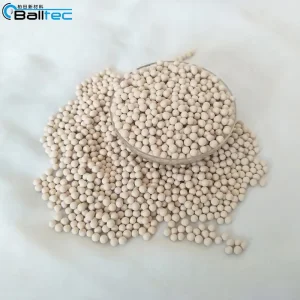
China 3A Molecular Sieve High Quality Desiccant Zeolite Adsorbents for Gas Drying
View Product Details