Follow 


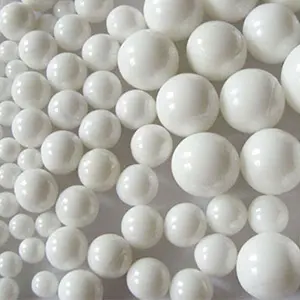
| Item | Specification |
|---|---|
| Material | 95% Yttrium-stabilized Zirconia |
| Bulk Density | 6.0–6.15 g/cm³ |
| Vickers Hardness | 1250–1350 HV |
| Sphericity | ≥98% |
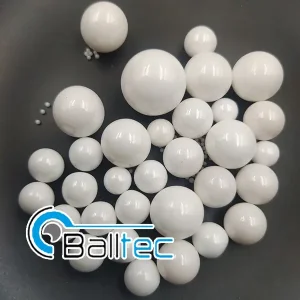
| Available Sizes | 0.2mm–10mm |
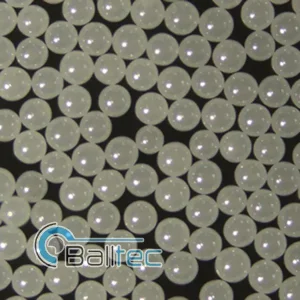
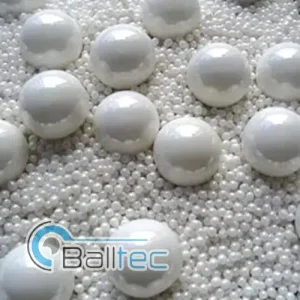
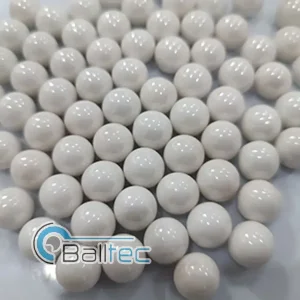
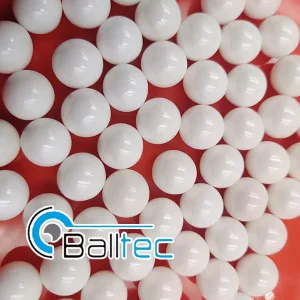
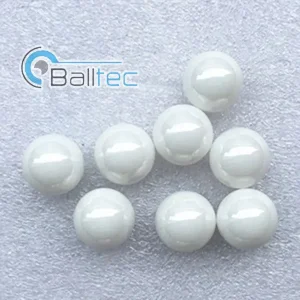
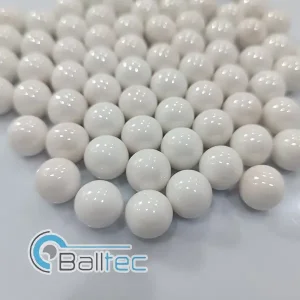
These zirconia beads show exclusive advantages in uniform material dispersion and precision refinement. High-precision spherical shape ensures uniform force contact with materials, preventing local over-grinding and uneven particle size. High density and mechanical toughness provide stable grinding power, efficiently dispersing viscous slurries and fine powder agglomerations. Ultra-low wear rate keeps the grinding media stable in long-cycle operation, no debris shedding to pollute materials, greatly improving the consistency and fineness of finished products while reducing production loss.
Focused on material dispersion and ultra-fine refinement, the beads are widely used in high-end industrial manufacturing. They are ideal for dispersing and refining nano coatings, water-based and oil-based inks, high-purity pigment slurries, lithium battery electrode materials and electronic ceramic powders. Compatible with horizontal sand mills, vertical grinding mills and planetary ball mills, they meet both laboratory precision dispersion tests and large-scale industrial continuous production requirements.
High sphericity and balanced grinding force avoid over-grinding and dead grinding areas, fully dispersing agglomerated particles to form uniform and stable material texture.
Yes. Featuring high toughness and ultra-low wear, they maintain stable grinding performance during repeated cycles, perfectly adapting to continuous industrial dispersion and refinement tasks.
They consist of 95% Yttrium-stabilized Zirconia with a bulk density of 6.0–6.15 g/cm³, Vickers hardness of 1250–1350 HV, sphericity ≥98%, and available sizes ranging from 0.2mm to 10mm.
With high-density internal structure, stable chemical inertness, ultra-low self-wear, and crack resistance, they prevent debris shedding and avoid impurity contamination.
They are compatible with horizontal sand mills, vertical grinding mills, and planetary ball mills, suitable for both laboratory testing and industrial production.
They are widely applied in nano coatings, water-based and oil-based inks, high-purity pigment slurries, lithium battery electrode materials, and electronic ceramic powders.