Follow 


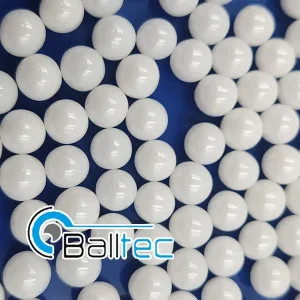
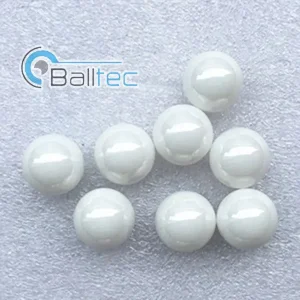
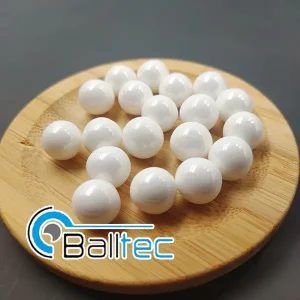
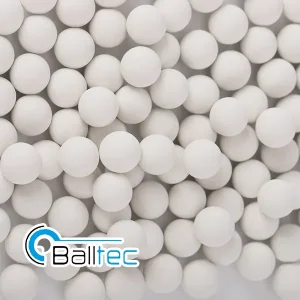
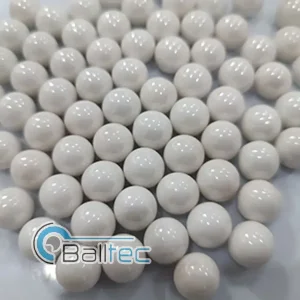
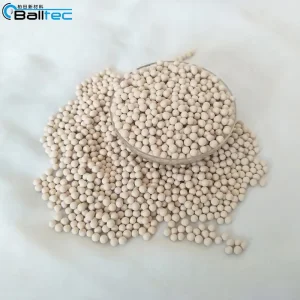
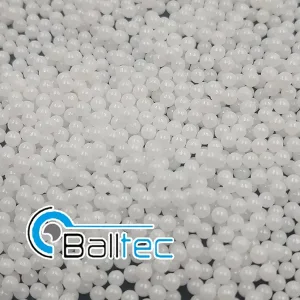
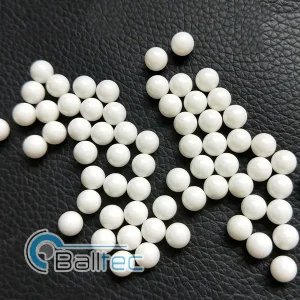
Direct factory export of high-purity ZrO2 grinding media, engineered for minimal wear rates, zero slurry contamination, and maximum kinetic impact energy.
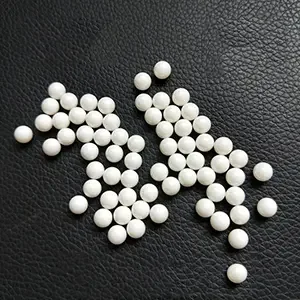
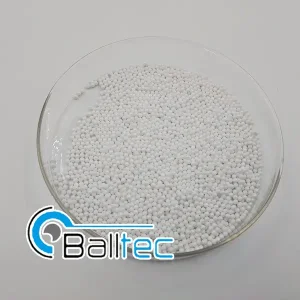
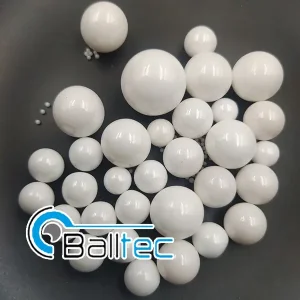
An authoritative whitepaper on phase transformation dynamics, material selection, and process optimization for modern high-energy wet milling environments.
In modern industrial process engineering, particle size reduction has migrated decisively from macro-milling to sub-micron and sub-100-nanometer regimes. High-purity ZrO2 grinding balls (Zirconium Oxide media) have become the benchmark standard for high-energy bead mills, horizontal pin mills, and agitated media mills. Unlike traditional glass beads, forged steel balls, or standard alumina media, Yttria-Stabilized Tetragonal Zirconia Polycrystals (Y-TZP) exhibit a unique phase-transformation toughening mechanism that effectively prevents mechanical catastrophic failure under high shear forces.
The global demand for ZrO2 grinding media is driven by four primary high-tech manufacturing pillars:
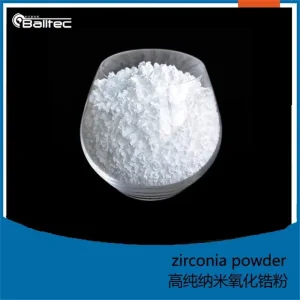
Pure zirconium oxide undergoes phase transitions during thermal processing: Monoclinic (room temp to 1170°C) → Tetragonal (1170°C to 2370°C) → Cubic (above 2370°C). Unstabilized ZrO2 cracks upon cooling due to a 3-5% volume expansion during the tetragonal-to-monoclinic transformation.
To capture the superior mechanical properties of the tetragonal phase at room temperature, chemical stabilizers are introduced during wet synthesis:
| Property Parameter | Y-TZP (Yttria 95% ZrO2) | Ce-TZP (Ceria Zirconia) | High Purity Alumina (99%) | Zirconium Silicate |
|---|---|---|---|---|
| Specific Density (g/cm³) | ≥ 6.00 | ≥ 6.20 | 3.68 - 3.80 | 4.00 - 4.15 |
| Equivalent Bulk Density (g/cm³) | 3.6 - 3.7 | 3.7 - 3.8 | 2.2 - 2.4 | 2.5 - 2.6 |
| Vickers Hardness (HV10) | ≥ 1250 GPa | ≥ 1150 GPa | ≥ 1400 GPa | ≥ 900 GPa |
| Fracture Toughness (MPa·m1/2) | 9.0 - 10.0 | 12.0 - 13.0 | 4.0 - 4.5 | 4.5 - 5.0 |
| Self-Wear Rate (ppm/hr) | < 5 ppm | < 8 ppm | < 35 ppm | < 50 ppm |
| Primary Sintering Route | Titrating Wet Dropping / HIP | Pressing & Rolling / Sinter | Isostatic Pressing | Agglomeration Sintering |
China has established an integrated supply chain cluster for advanced ceramics, centered in industrial hubs like Pingxiang, Jiangxi. Buying directly from top-tier Chinese manufacturers yields clear strategic advantages for international procurement managers:
Sub-micron wet milling of LFP cathode materials requiring high power density and absolute purity. 0.1mm - 0.3mm YSZ beads enable rapid reduction to D50 < 200nm with negligible wear contamination.
High-shear dispersion of automotive pigments, inkjet formulation, and titanium dioxide. Prevents color hue shifts and ensures narrow particle size distribution for peak optical clarity.
Sanitary nano-milling of active compounds, sunscreens (TiO2/ZnO), and biological suspensions. Certified heavy-metal free production under strict ISO quality management protocols.
Engineered to meet rigorous international procurement criteria, ISO audit standards, and customized packing requirements for high-volume corporate buyers.
Every production batch undergoes laser diffraction particle size analysis, ICP-OES chemical composition testing, dynamic drop-test fracture checks, and 24-hour accelerated wear-rate tests prior to export dispatch.
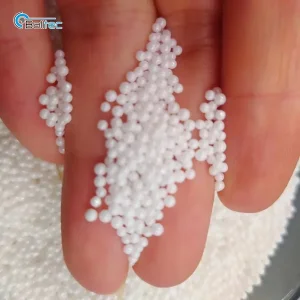
Available in precise diameter ranges from 0.05 mm nano-beads to 50 mm grinding spheres. Standard export packaging includes 25 kg sealed steel drums, reinforced poly-bags, and fumigation-free ISPM-15 wooden pallets.
Clear, direct technical advice from expert process engineers to aid media sizing and mill loading calculation.
A proven rule of thumb in micro-milling is that the grinding media diameter ($D_{media}$) should be approximately 20 to 30 times larger than the maximum feed particle size ($D_{99}$ of incoming raw material):
$$D_{media} \approx (20 \text{ to } 30) \times D_{99\text{ feed}}$$
For achieving target nanometer product sizes ($D_{50} < 100 \text{ nm}$), a multi-stage grinding approach is recommended: start with 0.6–0.8 mm beads for primary breakdown, followed by 0.1–0.3 mm or 0.05 mm beads for fine nano-refinement.
95% Y-TZP contains ~95% ZrO2 stabilized by ~5% Y2O3, yielding a high bulk density of 6.0 g/cm³ and high fracture toughness ($9.0 \text{ MPa}\cdot\text{m}^{1/2}$). Zirconium Silicate (ZrO2·SiO2) contains roughly 65% ZrO2 and 35% SiO2, yielding a density of ~4.0 g/cm³.
Y-TZP is designed for high-speed agitator mills, high energy density, and zero-contamination requirements. Zirconium Silicate is better suited for low-to-medium energy vertical mills where cost-per-kilogram is the primary metric.
Media fracture typically stems from three operational issues: (1) Incorrect Charge Volume: Underloading the mill (< 70% bead charge) causes excessive bead-to-bead impact against mill liners; (2) Excessive Tip Speed: Operating agitator discs above recommended peripheral velocities (> 14 m/s) without adequate slurry viscosity; (3) Low Slurry Viscosity: Insufficient hydraulic damping between beads leads to direct high-energy brittle collisions.
Yes. As a direct manufacturer, we provide tailored sizing distributions (e.g., narrow tolerances like 0.40mm - 0.45mm), customized stabilizer ratios, private labeling, vacuum-sealed inner packaging, and heavy-duty steel drum packing suited to long sea transit conditions.
Every shipment comes with a comprehensive Certificate of Analysis (COA) specifying real bulk density, Vickers hardness, chemical purity (ICP-OES breakdown), laser diffraction sizing curves, and batch traceability numbers matching ISO 9001 quality compliance standards.
Browse our extended range of wear-resistant Zirconia beads, Cerium-stabilized media, structural ceramic components, and specialized catalysts.