Follow 


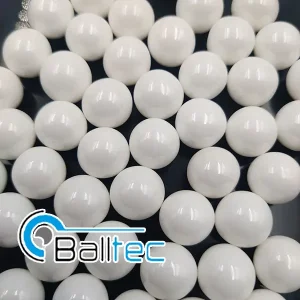
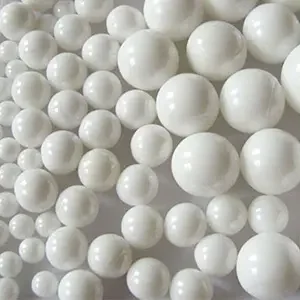
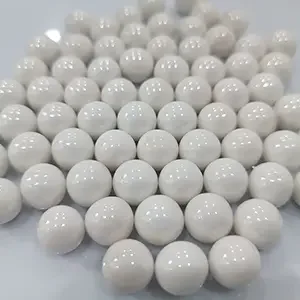
High-density ceramic formulations, ultra-wear resistant ZrO2 beads, and high-purity alumina media engineered for sub-micron powder refinement.
Capacitor dielectrics form the core baseline of modern electro-technical architecture. As global industries accelerate toward high-frequency telecommunications, automotive electrification, and high-density computing, sourcing high-performance dielectric materials directly from certified wholesale manufacturing hubs is a mission-critical objective for Tier-1 OEMs and component fabricators.
A dielectric material is an electrical insulator that can be polarized by an applied electric field. In passive electronic component manufacturing—specifically Multi-Layer Ceramic Capacitors (MLCCs), high-voltage film capacitors, power distribution capacitors, and RF microwave resonators—the dielectric material dictates fundamental operational parameters: capacitance density ($C$), breakdown voltage ($V_{BD}$), temperature coefficient of capacitance (TCC), Equivalent Series Resistance (ESR), and long-term reliability under thermal stress.
Technical Insight: The capacitance value of any dielectric structural component is governed by the dielectric constant ($K$ or $\varepsilon_r$), active surface area ($A$), dielectric layer thickness ($d$), and the vacuum permittivity ($\varepsilon_0$):
Minimizing $d$ while maximizing $K$ without triggering dielectric breakdown requires ultra-fine, defect-free ceramic powder refinement—a specialized competency of specialized Chinese chemical-ceramic processing centers.
Composed primarily of Titanium Dioxide ($TiO_2$) or Calcium Zirconate ($CaZrO_3$). Characterized by ultra-low dissipation factors ($\tan \delta < 0.0015$), linear temperature coefficients (e.g., C0G / NP0), zero DC bias aging, and extreme thermal stability across -55°C to +125°C. Critical for RF matching, resonant circuits, and timing units.
Based on Barium Titanate ($BaTiO_3$) doped with rare-earth oxides (Nb, Sm, Dy, Y). Delivers ultra-high dielectric constants ($K = 2,000 \text{ to } 15,000$). Ideal for X7R, X5R, and X8R energy storage and power supply decoupling applications, balancing maximum volumetric efficiency with controlled temperature variance.
Engineered for macro-scale power transmission, induction heating, and pulsed-power systems. Utilizes high-density Strontium Titanate ($SrTiO_3$) blends or modified polypropylene polymer films, delivering breakdown strengths exceeding 20 kV/mm to withstand heavy pulse discharge and surge currents.
China has established an unassailable global position in advanced industrial ceramics, chemical synthesis, and electronic dielectric powder processing. Specifically centered around industrial clusters such as Jiangxi Province (e.g., Pingxiang Ceramic Industrial Zone), Chinese manufacturers provide global supply chain resilience, competitive volume pricing, and exceptional quality compliance.
Chinese dielectric production hubs benefit from immediate proximity to world-class rare-earth refining and chemical processing infrastructure. Hydrothermal synthesis and wet chemical co-precipitation plants produce sub-micron Barium Titanate ($BaTiO_3$) powders with tightly controlled particle distributions (D50 down to 100nm). Vertical integration eliminates intermediary transport costs and guarantees raw material traceability.
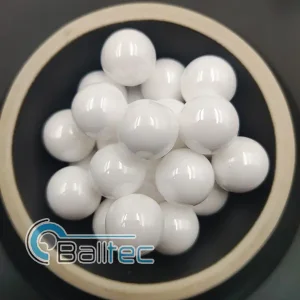
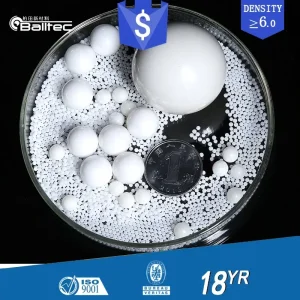
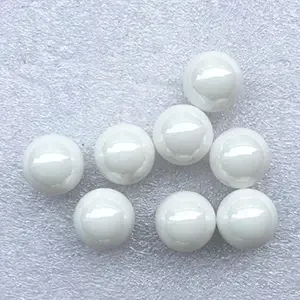
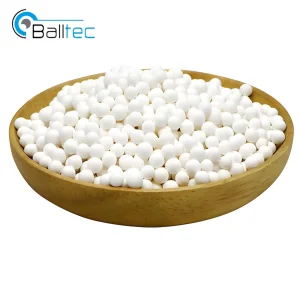
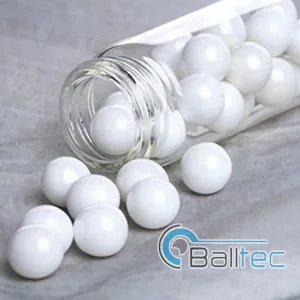
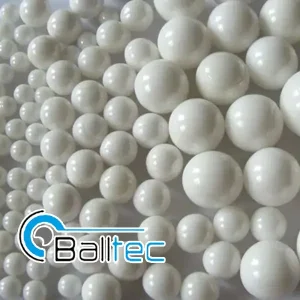
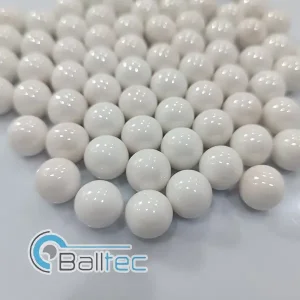
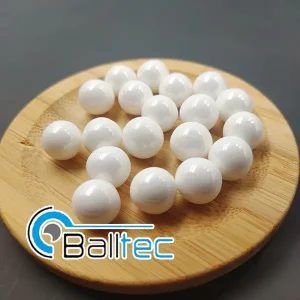
By leveraging high-density Yttria-Stabilized Zirconia ($Y-TZP$) grinding media and high-purity alumina mill linings, Chinese factories achieve nano-dispersion during liquid-phase sintering batch prep. Combined with continuous atmosphere-controlled tunnel kilns, factories maintain batch-to-batch chemical homogeneity, eliminating structural voids and micro-cracks in mass production.
The global market for wholesale capacitor dielectrics is experiencing unprecedented growth driven by four mega-trends in modern technology. Electronic design engineers are pushing components toward higher power densities, higher operational frequencies, and harsher operating environments.
The transition from 400V to 800V EV battery architectures requires high-voltage DC-link capacitors and Snubber capacitors capable of enduring 105°C–150°C continuous ambient temperatures. High-temperature X8R/X9D ceramic dielectrics and bi-axially oriented polypropylene (BOPP) films are seeing exponential demand increases.
Millimeter-wave (mmWave) wireless infrastructure operates at frequencies reaching 28GHz to 39GHz. Traditional Class 2 ceramics exhibit unacceptably high signal loss at these frequencies. Wholesale demand has shifted toward Ultra-Low ESR Class 1 dielectric powders (C0G/NP0) with dielectric loss tangents ($\tan \delta$) approaching zero.
Artificial Intelligence GPU accelerators consume hundreds of amps per socket at sub-1V operating levels. Transient current step requirements necessitate massive arrays of low-inductance micro-MLCCs placed directly beneath the silicon package, driving demand for ultra-thin sub-micron ceramic dielectric tape casting.
Solar photovoltaics and industrial wind turbines require grid-tie power factor correction and energy storage units capable of decades of uninterrupted continuous operation under severe outdoor environmental conditions, necessitating moisture-impermeable, hermetically sealed ceramic dielectrics.
Choosing the precise chemical composition of a capacitor dielectric depends entirely on localized thermal, mechanical, and electrical operating conditions. Below are standard industrial deployment matrix scenarios.
Scenario: Engine control units, onboard chargers (OBC), and inverter gate drives.
Required Dielectric Properties: High dielectric strength (>100 V/μm), anti-flexure flex-cracking resistance, and stability under thermal shock cycles (-55°C to +150°C).
Material Selection: Modified X7R / X8R Rare-Earth Doped Barium Titanate with polymer termination barriers.
Scenario: Medical X-ray pulse generators, industrial plasma cutters, and defense radar modulators.
Required Dielectric Properties: Low hysteresis loss, high field-induced polarization, and extreme dV/dt pulse endurance.
Material Selection: Strontium Bismuth Titanate ($SrBi_4Ti_4O_{15}$) or High-Density Inert Alumina / Zirconia Ceramic Housings.
Scenario: Base station remote radio heads (RRH), radar transceiver modules, and aerospace communications.
Required Dielectric Properties: Zero aging rate, zero voltage coefficient of capacitance, ultra-low ESR, and $Q$-factor > 10,000 at 1 GHz.
Material Selection: Class 1 C0G (NP0) Titanium Dioxide & Neodymium Complex Titanate formulations.
To streamline bulk purchasing decisions for component design teams, our network of factory labs maintains rigorous standardized baseline grades for dielectric powders and ceramic preforms.
| Dielectric Material Grade | Dielectric Constant (K) | Dissipation Factor (tan δ) | Temperature Coefficient (TCC) | Breakdown Voltage (kV/mm) | Primary Industrial Use-Case |
|---|---|---|---|---|---|
| Type A: High-Purity C0G/NP0 | 30 – 100 | < 0.0005 (at 1 MHz) | 0 ± 30 ppm/°C (-55 to +125°C) | > 35 kV/mm | RF Filtering, Resonant Circuits, Telecom |
| Type B: General Purpose X7R | 2,000 – 4,500 | < 0.025 (at 1 kHz) | ±15% (-55 to +125°C) | > 25 kV/mm | Decoupling, Bypass, Smoothing Inverters |
| Type C: Ultra-High K Y5V | 8,000 – 18,000 | < 0.050 (at 1 kHz) | +22% / -82% (-30 to +85°C) | > 15 kV/mm | High-Density Volumetric Consumer Electronics |
| Type D: High-Temp Automotive X8R | 1,800 – 3,200 | < 0.020 (at 1 kHz) | ±15% (-55 to +150°C) | > 28 kV/mm | Under-hood Automotive ECUs, EV Inverters |
| Type E: Strontium Titanate Pulse | 1,200 – 2,500 | < 0.005 (at 1 kHz) | Controlled Non-Linear Shift | > 45 kV/mm | High Voltage Pulse Discharge, Snubbers |
Navigating global supply contracts requires a rigorous procurement audit structure. Enterprise buyers must evaluate potential factory partners beyond basic unit price, scrutinizing raw material purity, thermal processing controls, and compliance certifications.
Insist on certified Certificate of Analysis (COA) documentation for every batch. Trace impurities like Sodium ($Na_2O$), Iron ($Fe_2O_3$), or Silica ($SiO_2$) exceeding 50 ppm severely degrade insulation resistance ($IR$) and drastically increase high-temperature leakage currents.
For wet-milled ceramic dielectric slurries, sub-micron particle uniformity is mandatory. Request laser diffraction PSD reports proving narrow span ratios ($(D90-D10)/D50 < 1.2$) to ensure uniform tape-casting density without pinholes.
Un-sintered titanate powders and preform dielectric sheets are highly hygroscopic. Wholesale shipments must feature vacuum-sealed aluminum moisture-barrier bags containing desiccants and humidity indicator cards to prevent powder agglomeration during ocean transit.
In-depth technical answers addressing material selection, manufacturing tolerances, and electrical parameter shifts.
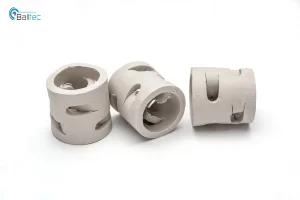
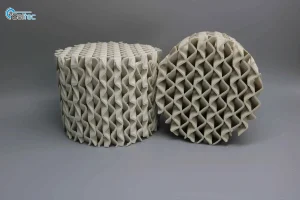
Explore additional factory-direct technical products engineered for high-density ceramic grinding, particle processing, and tower chemical packing.