Follow 


Explore our high-performance zirconia, ceramic, and high-purity alumina solutions engineered for sub-micron particle reduction, ultra-fine dispersion, and electrochemical applications.
The global demand for high-grade electrolytics, solid-state electrolyte precursors, and ceramic ion-conductive substrates has experienced exponential growth. Driven by the rapid transformation of the energy grid, automotive electrification, and precision electrochemical processing, selecting a verified wholesale supplier and exporter is a foundational strategic requirement for modern industrial enterprises.
Modern electrolytics encompass a wide spectrum of functional materials: from liquid battery electrolyte formulations utilizing ultrapure lithium salts (LiPF6, LiFSI) to advanced solid ceramic electrolytes based on Yttria-Stabilized Zirconia (YSZ), Zirconia-Toughened Alumina (ZTA), and NASICON-type crystalline structures. Achieving optimal ion transport, extreme dielectric strength, and mechanical durability requires precise chemical stoichiometry, sub-micron particle control, and rigorous thermal processing.
Next-generation lithium-ion and solid-state batteries rely heavily on ultrapure raw materials and high-density grinding media to refine cathode/anode slurries without introducing metallic impurity traces. Minor metal contaminants can lead to catastrophic micro-dendrite formation and cell failure.
Industrial electrolysis plants for chlor-alkali, green hydrogen production, and electroplating require highly resilient ceramic substrates, structured packing, and inert ceramic media capable of enduring severe acidic and basic environments under intense electrical bias.
Yttria-stabilized zirconia (3Y-TZP, 8YSZ) serves as the benchmark oxygen-ion conducting electrolyte layer in SOFCs, providing stable conductivity at high operating temperatures alongside structural integrity.
As the electrochemical industry shifts towards higher energy densities, faster charging rates, and solid-state architectures, the requirements placed on electrolytic materials are undergoing a generational shift. Our engineering roadmap focuses on three crucial technical pillars:
Transitioning from volatile liquid organic solvents to sulfide, oxide (LLZO, LATP), and polymer-ceramic hybrid electrolytes. Our R&D targets zero-porosity ceramic ionic conductors with lattice structures optimized for rapid lithium/sodium ion diffusion across grain boundaries.
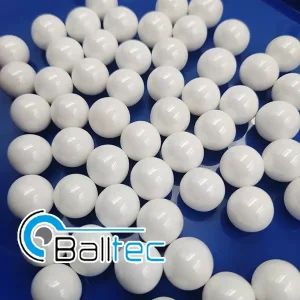
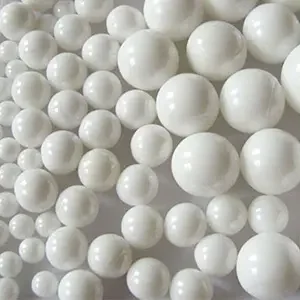
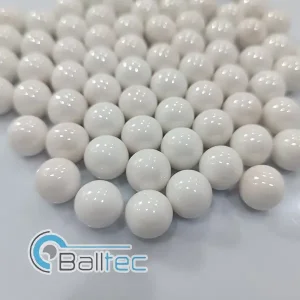
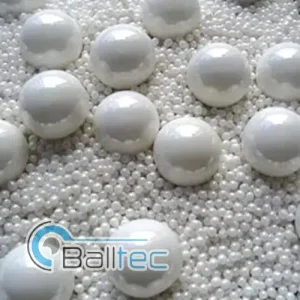
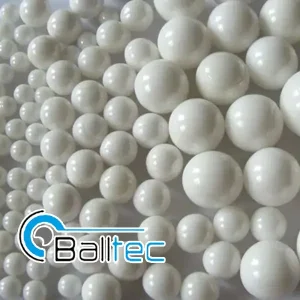
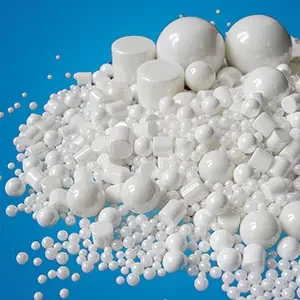
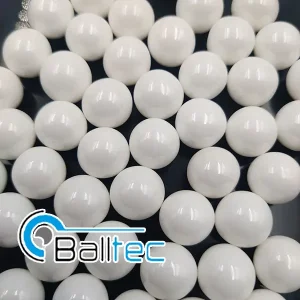
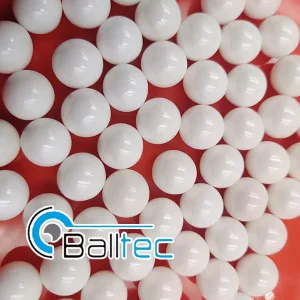
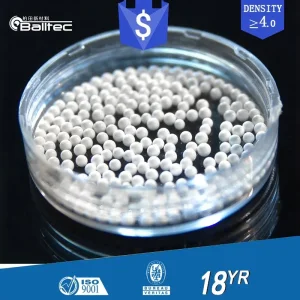
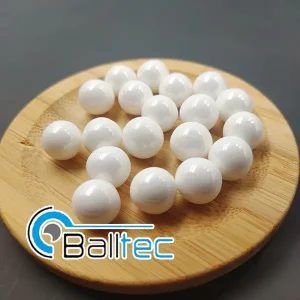
To produce solid-state electrolytes with nanoscale grain structures, battery precursors must be ground to sub-micron particle sizes ($D_{50} < 100\text{ nm}$). Utilizing 0.05mm–0.1mm ultra-fine Yttria-Stabilized Zirconia (YSZ) beads ensures narrow particle size distributions without contamination.
Supplying specialized high-purity alumina (4N/5N Al2O3) powders to create ultrathin protective atomic layer deposition (ALD) coatings on cathode particles. This minimizes parasitic side reactions with electrolyte solutions, extending cell cycle life by over 300%.
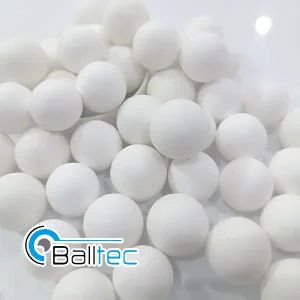
In high-voltage battery production ($>4.5\text{V}$), trace iron, copper, or chromium contamination down to parts-per-billion (ppb) levels accelerates gas generation and capacity fade. Utilizing high-density ZrO2 and 99.99% Al2O3 milling media guarantees an inert grinding environment, preserving the electrochemical stability window of the electrolyte.
Electrolytic materials and specialized ceramic substrates are deployed across diverse global manufacturing sectors. Below are localized operational case applications demonstrating how material specifications directly impact performance:
Application: Wet milling of LFP/NMC active materials and solid-state electrolyte powders.
Impact: Utilizing high-strength YSZ beads reduces mill bead degradation, maintaining batch slurry viscosity stability and high ionic yield.
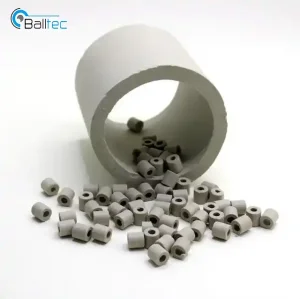
Application: Acidic electrolyte recovery towers using ceramic Raschig and Pall rings.
Impact: Acid-resistant ceramic packing prevents corrosion in hot gas/liquid contact zones, maintaining continuous operational uptime.
Application: Silicon Nitride (Si3N4) and ZrO2 ceramic bearing balls in electrolyte pumps.
Impact: Provides complete electrical insulation and chemical immunity against aggressive electrolytic reagents, eliminating galvanic corrosion.
Application: Precision ceramic dynamic balancing beads.
Impact: Internal dynamic weight distribution reduces tire wear and vibration without using lead weights, complying with global environmental mandates.
Operating from the industrial ceramic heartland of Pingxiang, Jiangxi, China, our manufacturing facilities provide global B2B procurement partners with unparalleled supply security, structural cost efficiency, and world-class quality control.
Our direct access to high-grade rare-earth oxides (yttrium, zirconium) and industrial alumina deposits allows us to maintain strict raw material control. By sintering directly from purified precursor powders under one roof, we eliminate batch-to-batch chemical variance.
Equipped with continuous computer-controlled tunnel kilns and automated spray-drying towers spanning over 100,000 m², our production lines run 24/7. This scale provides high volume capacity, guaranteeing short lead times for multi-ton wholesale orders.
Every shipment undergoes rigorous testing using Inductively Coupled Plasma Mass Spectrometry (ICP-MS), Scanning Electron Microscopy (SEM), and Laser Diffraction Particle Size Analysis, ensuring every batch meets international buyer specs.
Navigating international regulatory frameworks requires a wholesale supplier committed to compliance, transparent technical documentation, and seamless global logistics.
All products strictly conform to EU REACH, RoHS, and ISO 9001:2015, ISO 14001:2015, and ISO 45001 standards. Material Safety Data Sheets (MSDS) and Certificates of Analysis (COA) accompany every export container.
We work directly with chemical engineers to adjust bulk density, sphericity, chemical doping (e.g., CeO2, Y2O3, MgO stabilization), and particle size distributions ($D_{10}, D_{50}, D_{90}$) tailored to custom reactors.
Custom heavy-duty export packaging options include vacuum-sealed drums, heavy-duty wooden cases, and UN-certified moisture-proof bulk bags with moisture indicators to prevent contamination during sea transit.
Get immediate, technical answers to common queries regarding material selection, purity grades, bulk ordering, and application compatibility.
Explore the remainder of our specialized export product lines engineered for chemical packing, ultra-fine milling, and heavy industrial applications.
Our team of materials engineers and global export logistics specialists are ready to assist you with custom formulations, mill sizing calculations, and volume pricing.