Follow 


Factory-direct high-density zirconia media and structural ceramic solutions engineered for high-reliability electronic circuit processing and ultra-fine chemical milling.
Analysis of the multi-trillion dollar electronics hardware supply chain, advanced micro-circuit packaging, ceramic substrate synthesis, and high-purity material processing.
The global electronic devices and circuit manufacturing industry forms the backbone of the modern digital economy. From consumer electronics, automotive telematics, and 5G/6G wireless infrastructure to industrial automation and aerospace avionics, the demand for advanced electronic sub-assemblies, Printed Circuit Boards (PCBs), Micro-Electromechanical Systems (MEMS), and specialized ceramic substrates has reached unprecedented high-density integration levels.
As micro-circuit geometries shrink toward sub-micron thresholds and operating frequencies push into the millimeter-wave spectrum, traditional FR-4 circuit boards encounter critical thermal and dielectric limitations. Leading enterprise buyers and OEM procurement directors are increasingly pivoting toward Advanced Structural Ceramics (Alumina $\text{Al}_2\text{O}_3$ and Yttria-Stabilized Zirconia $\text{ZrO}_2$) to serve as thermal management substrates, high-voltage isolators, micro-vibration dampeners, and ultra-fine raw material processing media.
Modern power electronics require extreme dissipation properties. Ceramic substrates engineered via ultra-pure $\text{Al}_2\text{O}_3$ provide thermal conductivity up to 30 W/m·K, eliminating localized micro-circuit burnouts.
In RF and 5G base station circuits, ceramic carrier plates ensure low dielectric loss ($\tan \delta < 0.0005$) and stable permittivity across extreme environmental temperature swings.
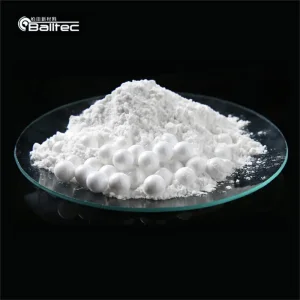
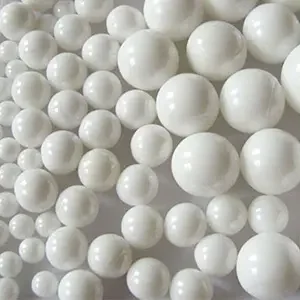
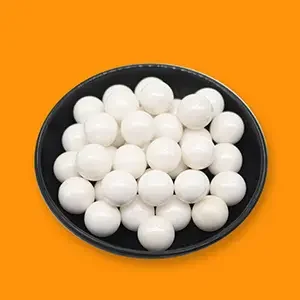
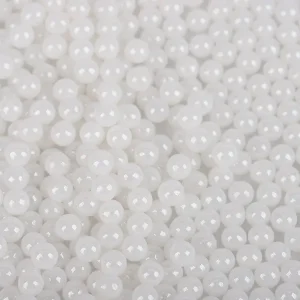
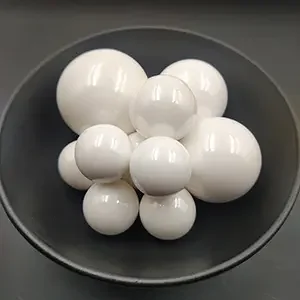
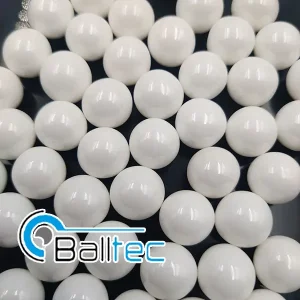
Fabricating Multi-Layer Ceramic Capacitors (MLCCs) and semiconductor pastes demands zero-contamination grinding media, making Y-TZP zirconia beads an indispensable industrial prerequisite.
Technical comparison of advanced inorganic dielectrics versus organic polymers in high-reliability electronic devices and integrated circuit substrates.
In electronic circuit packaging, structural integrity under high electrical stress is paramount. Modern micro-circuit fabrication relies heavily on precise material synthesis where mechanical toughness, chemical inertness, and precise Coefficient of Thermal Expansion (CTE) matching with silicon dies are non-negotiable.
| Material Class | Density (g/cm³) | Thermal Conductivity (W/m·K) | Dielectric Strength (kV/mm) | Primary Application in Electronics & Circuits |
|---|---|---|---|---|
| Y-TZP Zirconia ($\text{ZrO}_2$) | > 6.00 | 2.5 - 3.0 | 15.0 - 20.0 | Ultra-fine slurry grinding for MLCCs, structural insulating pins, precision micro-bearings. |
| High-Purity Alumina ($\text{Al}_2\text{O}_3$ 99.9%) | 3.80 - 3.95 | 30.0 - 35.0 | 18.0 - 25.0 | Thick/thin film ceramic circuit substrates, high-voltage power MOSFET backplanes, catalyst beds. |
| Silicon Nitride ($\text{Si}_3\text{N}_4$) | 3.25 | 60.0 - 80.0 | 20.0 | EV Inverter module substrates, high-speed robotic joint bearings, extreme-thermal shock circuits. |
| Standard FR-4 Epoxy | 1.85 | 0.25 - 0.35 | 10.0 | Low-cost consumer electronics, low-frequency digital signaling boards, toy electronics. |
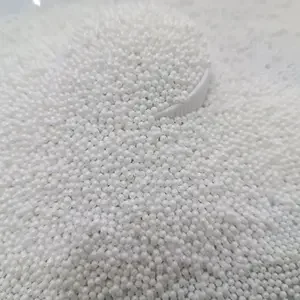
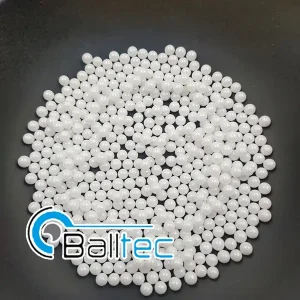
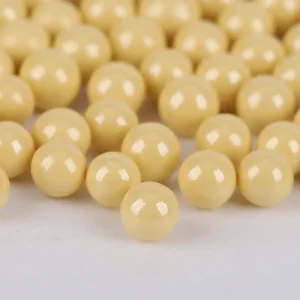
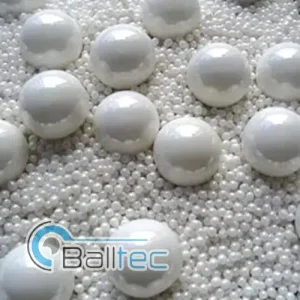
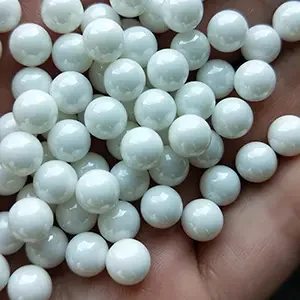
For electronic paste manufacturers who formulate silver, copper, and dielectric conductive inks, the milling media used to disperse nanoparticles must exhibit exceptionally low wear rates. Contamination by metallic trimmings can lead to electrical short circuits within integrated multi-layer devices. By utilizing microcrystalline Yttria-Stabilized Zirconia Beads, processors achieve sub-micron particle distributions down to $d_{50} < 100 \text{ nm}$ without introducing lattice-disrupting foreign ions.
Why leading global tech brands and tier-1 component distributors source electronic materials, ceramic cores, and circuit media directly from Chinese industrial clusters.
China's industrial landscape for electronic devices, advanced structural ceramics, and circuit board components offers unprecedented structural advantages. Key manufacturing hubs in Jiangxi (Pingxiang Ceramic Cluster) and Guangdong integrate complete upstream raw material refining, continuous automated sintering kilns, and real-time laser-inspection quality assurance line items.
From chemical precursor processing to high-temperature spray drying tower synthesis, raw material procurement lead-times are reduced by up to 60% compared to Western counterparts. This guarantees stable wholesale pricing even during global mineral volatility.
Modern Chinese mega-factories deploy 100-meter automated tunnel kilns with micro-processor temperature control ($\pm 1^\circ\text{C}$ variance at $1650^\circ\text{C}$), yielding consistent phase purity (pure tetragonal phase $\text{ZrO}_2$) across multi-ton factory output batches.
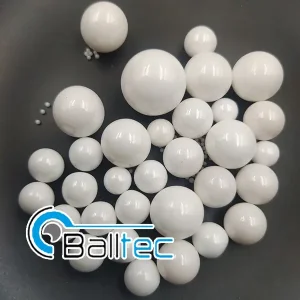
Whether custom-dimensioned ceramic substrate plates, micro-bead sizes ranging from 0.05mm to 30mm, or specialized packaging protocols, factory engineering teams deliver pilot samples within 5 to 7 working days.
Strict compliance with ISO 9001 (Quality Management), ISO 14001 (Environmental Protection), and ISO 45001 (Occupational Health) ensures that every batch shipped to North America, Europe, or Southeast Asia passes rigorous X-ray diffraction (XRD) crystal analysis.
From automotive EV power units to semiconductor CMP polishing, examine how precision materials empower diverse high-tech end-user industries.
Silicon Carbide (SiC) inverters in modern electric vehicles operate under high temperatures and vibration. Ceramic structural components and high-purity insulating spheres ensure transient thermal shocks do not degrade power circuit reliability.
Base station phased-array antennas require substrates with minimal dielectric absorption. High-purity alumina ceramics provide superior planar stability, low loss tangents, and high mechanical rigidity for high-frequency micro-strip circuit layouts.
Chemical Mechanical Planarization (CMP) slurries require ultra-uniform silica, ceria, or alumina abrasive nano-particles. Yttria-stabilized zirconia media facilitate agglomerate-free milling without introducing ionic iron or nickel impurities.
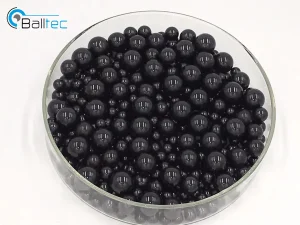
Miniature ceramic bearing balls made of $\text{Si}_3\text{N}_4$ or $\text{ZrO}_2$ are non-magnetic and electrically insulating, preventing stray electric currents in robotic joint servomotors from causing fluting wear on internal races.
In electronic-grade acid gas purification towers, ceramic packing structures (Raschig rings, Pall rings) offer total corrosion resistance against volatile fluorine, chlorine, and trace organic solvent vapors.
Under extreme atmospheric variations, structural ceramic device housings safeguard micro-circuit telemetry units from electromagnetic interference (EMI) and harsh thermal expansion stress.
Essential evaluation protocols for procurement directors, strategic buyers, and manufacturing operations officers when auditing wholesale suppliers.
When selecting a B2B partner for wholesale electronic devices, micro-circuits, and grinding media, looking purely at the initial unit purchase price ($/kg or $/unit) often leads to high long-term operational costs. Total Cost of Ownership (TCO) must incorporate media wear rates, mill downtime, energy consumption during wet milling, and product yield consistency.
Emerging technologies shaping the future of advanced structural ceramics and ultra-dense micro-circuit packaging.
As planar scaling reaches physical silicon limits, 3D stacked chips utilizing ceramic interposers with Through-Silicon Vias (TSVs) will enable hyper-broadband optical interconnects for AI training clusters.
Next-generation quantum dot displays and solid-state battery electrolytes require sub-10nm slurry milling. Ultra-tiny zirconia beads ($0.03\text{mm} - 0.05\text{mm}$) manufactured via continuous micro-fluidic dropping will dominate high-end production lines.
Integration of computer vision and real-time infrared thermal mapping in tunnel kilns will dynamically adjust firing curves, eliminating internal micro-cracks and raising target yield rates above 99.8%.
Direct electric-heated plasma sintering powered by renewable grid energy will significantly lower the embedded carbon footprint of ceramic circuit substrates, aligning with corporate ESG carbon-neutral mandates.
Expert technical answers regarding structural ceramic properties, grinding efficiency, customization options, and factory wholesale logistics.
High-performance ceramic powder, precision bearing balls, and wear-resistant grinding media optimized for global enterprise buyers.