Follow 


Essential ultra-fine ceramic grinding and powder processing media driving high-density MLCC dielectric formulations.
Analyzing the macro-economic forces, electrification shifts, and volumetric efficiency demands reshaping multi-layer ceramic capacitor procurement worldwide.
Multi-Layer Ceramic Capacitors (MLCCs) serve as the fundamental building blocks of modern electronic circuitry. Frequently designated as the "rice of the electronics industry," MLCCs represent over 80% of global ceramic capacitor production by volume. As microprocessors push boundaries toward 2nm node architectures and electric power distribution networks (PDN) demand lower Equivalent Series Inductance (ESL) and Equivalent Series Resistance (ESR), the operational requirements for MLCC manufacturing have undergone a structural paradigm shift.
The global MLCC market, currently valued at over $14.5 Billion USD, is projected to expand at a compound annual growth rate (CAGR) of 7.8% through 2030. This exponential expansion is driven by three primary technological catalysts: the rapid adoption of Automotive Electrification (EVs and ADAS Level 3+), the proliferation of 5G Standalone (SA) infrastructure coupled with satellite telecommunications, and the hyper-scale deployment of Artificial Intelligence (AI) GPU server nodes.
Modern Electric Vehicles require up to 18,000 MLCCs per chassis. High-temperature X7R, X8R, and Class I C0G dielectrics are mandatory to withstand extreme engine compartment thermal shock and battery management system (BMS) voltage surges.
AI accelerators (TPUs/GPUs) consuming upwards of 1000W per socket generate transient currents requiring sub-0402 micro MLCCs placed directly on-package (Land Side Capacitors - LSC) to eliminate ripple voltage.
Millimeter-wave (mmWave) frequencies demand ultra-high Q factor, low-loss dielectric ceramic formulations. Sub-miniature 0201 and 01005 package sizes dominate smartphone RF front-end module layouts.
Inside the microscopic physics of multi-layer co-firing, base metal electrodes (BME), and sub-micron ceramic powder refining.
The performance of an MLCC is governed by the classic parallel-plate capacitance formula: C = (ε₀ · εr · A · n) / d, where εr represents the relative permittivity of the dielectric ceramic material, A is the active overlapping electrode area, n is the number of stacked ceramic layers, and d is the dielectric layer thickness. To maximize capacitance within standardized EIA footprint dimensions (from 1210 down to 008004), leading manufacturers must simultaneously reduce layer thickness d below 500 nanometers while increasing layer count n to over 1,000 layers.
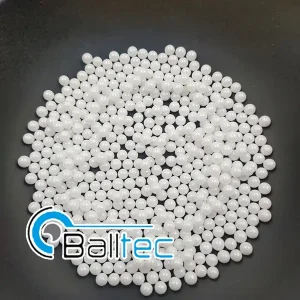
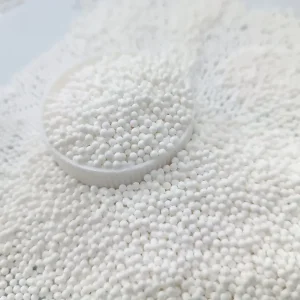
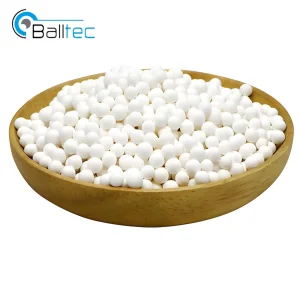
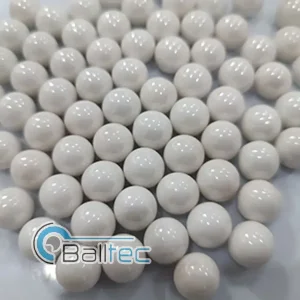
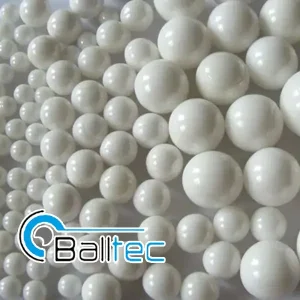
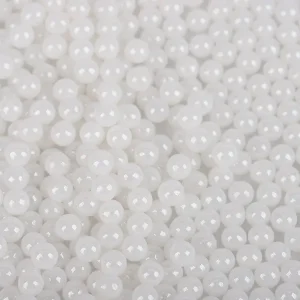
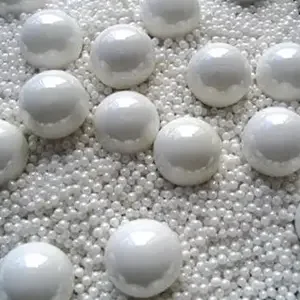
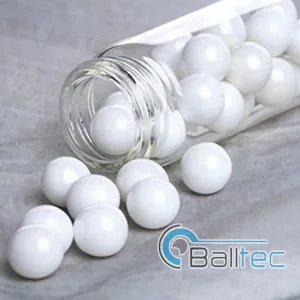
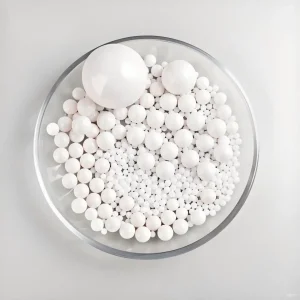
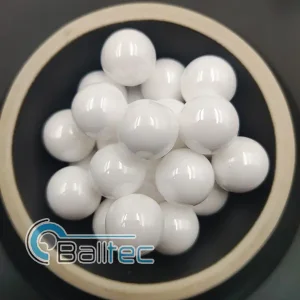
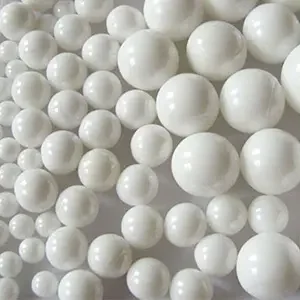
Engineering Core Insight: Achieving sub-micron dielectric layers without dielectric breakdown requires pristine raw ceramic powder synthesis. Ultra-high purity Yttria-Stabilized Zirconia (YSZ) and Barium Titanate (BaTiO₃) processed via wet bead milling with high-density ZrO₂ media are critical to eliminating grain boundaries, agglomeration, and micro-cracks during high-temperature co-firing (1200°C–1350°C).
Global procurement teams must evaluate dielectric temperature stability parameters based on EIA classification standards. Below is a comparative breakdown of key industrial dielectric classifications:
| EIA Class | Dielectric Code | Temperature Range | Capacitance Drift (ΔC) | Primary Industrial Applications |
|---|---|---|---|---|
| Class I | C0G / NP0 | -55°C to +125°C | 0 ± 30 ppm/°C | Resonant Circuits, High-Q RF Filters, High-Voltage Inverters |
| Class II | X7R | -55°C to +125°C | ± 15% | Automotive ECU, Industrial Automation, Power Decoupling |
| Class II | X8R / X8L | -55°C to +150°C | ± 15% / +15%/-40% | Under-the-hood Automotive, Downhole Drilling, Aerospace |
| Class II | X5R | -55°C to +85°C | ± 15% | Consumer Smart Devices, Enterprise SSD, Memory Modules |
| Class III | Y5V / Z5U | -30°C to +85°C | +22% / -82% | General Purpose By-pass, Non-Critical Commercial Consumer Electronics |
Historically, MLCCs utilized Precious Metal Electrodes (PME) composed of Palladium (Pd) or Silver-Palladium (Ag-Pd) alloys. Modern wholesale manufacturing has almost universally transitioned to Nickel (Ni) and Copper (Cu) Base Metal Electrodes (BME). BME technology significantly reduces bill-of-materials (BOM) cost while enabling hyper-dense layering. However, co-firing Nickel electrodes with Barium Titanate ceramics requires precise atmosphere control (reducing oxygen partial pressure) to prevent electrode oxidation while preserving ceramic insulation resistance.
Optimizing Total Cost of Ownership (TCO), multi-vendor lead times, and regulatory compliance protocols for high-volume passive component procurement.
For Tier-1 EMS (Electronic Manufacturing Services) providers and OEM procurement executives, securing a resilient MLCC supply chain requires moving beyond unit price negotiation. Given historical market volatility, lead-time spikes, and geopolitical shifts, enterprise buyers must implement a multi-faceted vendor qualification matrix.
Automotive passive components must undergo rigorous stress testing including temperature cycling (-55°C to +150°C), humidity bias (85°C/85% RH), terminal strength, and flexural bending tests to prevent micro-fractures during PCBA assembly.
High-capacitance Class II MLCCs experience significant capacitance loss under applied DC voltage. Sourcing engineers must review DC Bias curves to guarantee circuit stability under actual operating loads.
Full environmental compliance guarantees seamless cross-border customs clearance across European, North American, and Asia-Pacific markets, eliminating toxic heavy metal risks in consumer products.
Wholesale exporters offering buffer stock agreements (VMI - Vendor Managed Inventory), real-time EDI order integration, and lot-traceable test reports (COA) enable global procurement managers to maintain Just-In-Time (JIT) production schedules without risking assembly line stoppage.
How state-of-the-art Chinese MLCC manufacturing clusters leverage automated smart factories and upstream material control to deliver unprecedented cost-efficiency and quality.
China's industrial electronics ecosystem has evolved into a global powerhouse for passive component manufacturing. By integrating upstream high-purity ceramic powder synthesis (Barium Titanate, Zirconia, Alumina media refining) directly with high-speed automated tape casting lines, modern Chinese factories offer unmatched supply chain agility.
Utilizing high-precision green sheet casting down to 0.8µm thickness with automated optical alignment for multi-layer electrode printing, achieving sub-micron layer registration accuracy.
100% inline machine-vision screening checks every single chip component for micro-cracks, edge delamination, and termination defects at speeds exceeding 10,000 units per minute.
Direct integration with domestic high-purity zirconia and alumina grinding media suppliers ensures raw dielectric powders reach ultra-fine particle distribution with zero external metallic contamination.
How high-reliability MLCCs are deployed across challenging commercial and industrial operating environments.
In 800V SiC-based EV powertrain architectures, high-voltage MLCCs rated at 630V to 1000V are deployed in snubber circuits and DC-link filtering. Soft-termination (flexible epoxy termination) MLCCs are required to absorb extreme mechanical stress caused by thermal expansion differences between PCB substrates and ceramic bodies.
Sub-0201 high-capacitance X5R/X7S MLCCs are placed directly underneath GPU/ASIC silicon substrates. Ultra-low ESL design minimizes ground bounce and voltage sagging during high-frequency microsecond power spikes, protecting multi-billion-transistor chips from logic resets.
Outdoor utility meters and edge industrial gateways require 20+ year operational lifespans under continuous thermal cycling. Medium-voltage X7R MLCCs with low moisture permeability prevent insulation breakdown under ambient tropical humidity.
Direct answers from passive component application engineers to guide your specification and vendor selection process.
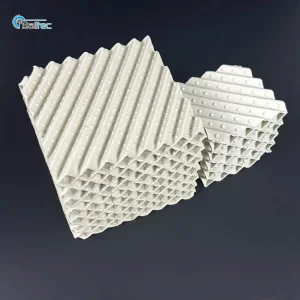
Explore our complete export line of industrial ceramic packing, high-crush strength catalyst media, and ultra-wear zirconia beads.