Follow 


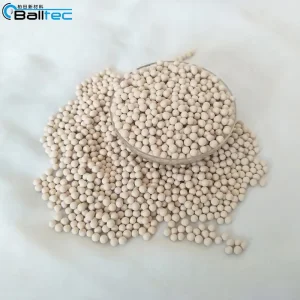
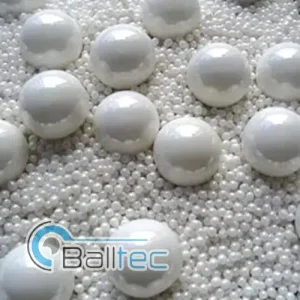
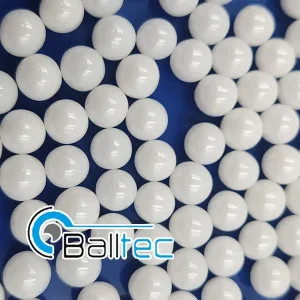
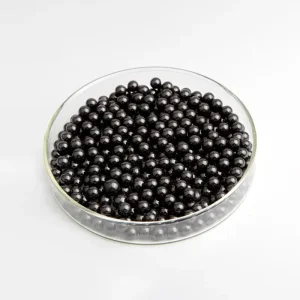
Direct factory supply featuring high-reliability ceramic media, precision bearing balls, and high-purity microcrystalline structures designed for high-stress industrial processes.

As global energy architectures pivot toward rapid electrification, high-voltage battery systems, smart grid infrastructure, and AI-driven megawatt data centers, the demand for high-precision, low-TCR current sensing shunt resistors has reached an unprecedented zenith.
Next-generation 800V Electric Vehicle architectures require shunt resistors capable of measuring continuous currents up to 1,500A with sub-0.1% accuracy. Low thermal EMF and extreme power dissipation under dynamic thermal shock are mandatory for safety-critical state-of-charge (SoC) and state-of-health (SoH) calculations.
Utility-scale Solar Inverters and Battery Energy Storage Systems (BESS) depend on zero-drift current sensing to regulate bidirectional DC-AC conversion, mitigate harmonic distortion, and prevent catastrophic thermal runaway events in lithium-iron-phosphate (LFP) matrix banks.
Variable Frequency Drives (VFDs), servo controllers, and heavy robotics demand sub-milliohm shunts with negligible parasitic inductance (< 1nH) to maintain seamless current loop feedback under kilohertz pulse-width modulation (PWM) switching regimes.
At the microscopic level, a precision shunt resistor is not merely a passive element—it is an engineered thermodynamic machine. The selection of resistive alloys and joining technologies defines long-term stability and immunity to noise.
| Resistive Alloy Grade | Composition Ratio | TCR (ppm/K) | Thermal EMF vs Cu ($\mu\text{V/}^\circ\text{C}$) | Max Operating Temp (°C) | Key Application Profile |
|---|---|---|---|---|---|
| Manganin (CuMnNi) | 84% Cu, 12% Mn, 4% Ni | < ±20 (20°C to 60°C) | < 1.0 | +140°C | High-current automotive busbars, smart meters, general power electronics. |
| Evanohm (NiCrAlFe) | 75% Ni, 20% Cr, Al, Fe | < ±5 (-40°C to +125°C) | < 0.5 | +250°C | Ultra-precision lab instrumentation, aerospace current sensing, reference shunts. |
| Zeranin (CuMnSn) | Copper-Manganese-Tin | < ±10 (15°C to 45°C) | < 0.3 | +105°C | Calibration standards and medical amplifiers requiring zero baseline drift. |
| Constantan (CuNi) | 55% Cu, 45% Ni | ±40 | -45.0 (High EMF) | +400°C | Low-cost current sensing where extreme power dissipation outweighs precision. |
Our automated production lines utilize continuous high-vacuum electron-beam welding to fuse massive electrolytic copper strips with solid Manganin or Zeranin alloy plates. This creates an atomic-level metallurgical bond without inclusions or voids, ensuring flawless current density distribution and ultra-low resistance across the interface (< 50 micro-ohms).
To eliminate parasitic lead and contact resistance ($R_{lead}$), our wholesale shunt portfolio features optimized 4-wire Kelvin geometries. Current flows through massive outer power terminals, while voltage sense traces connect directly inside the uniform current density zone of the resistive element, guaranteeing sub-milliohm measurements immune to solder joint degradation.
As wide-bandgap semiconductors (SiC & GaN) push power conversion frequencies above 1 MHz, current sensing technology must evolve to eliminate inductance, reduce physical footprint, and survive extreme environmental stresses.
Traditional flat shunts exhibit self-inductance ($L \approx 1\text{--}5\,\text{nH}$), causing significant voltage spikes during high $di/dt$ transitions in GaN circuits. Next-generation coaxial and multi-layered planar folded shunts achieve parasitical inductances below $100\,\text{pH}$, enabling true real-time phase current tracking.
Transitioning from purely passive components to active smart current modules. Integrating calibrated low-drift shunts directly with automotive-grade ASICs, high-resolution ADCs, and digital bus interfaces (CAN-FD, LIN, SENT) inside a single overmolded module housing.
Incorporating direct bonded copper (DBC) and aluminum nitride (AlN) ceramic carriers into surface-mount current sense resistors. This allows continuous power rating dissipation up to 15W in a standard 3920 footprint without thermal degradation or PCB solder fatigue.
Operating from China's primary high-tech electronic component manufacturing clusters, our direct wholesale model bridges the gap between massive scale, metallurgical precision, and competitive unit economics for global OEMs.
Our long-standing integration with premium metal refiners across Jiangxi and Zhejiang enables guaranteed access to high-purity electrolytic copper and specialized Manganin alloys. This insulates our global partners from raw material market volatility and secures uninterrupted production even during global supply shortages.
Equipped with high-speed progressive stamping presses and 100% Automated Optical Inspection (AOI) alongside vision-guided laser trim tuning. Every single shunt unit undergoes real-time resistance measurement during laser trimming, driving defect rates down to sub-PPM levels (< 1 PPM).
Custom engineered shunts deployed in mission-critical environments around the globe.
Challenge: Excessive power dissipation and thermal drift in a high-power EV contactor unit under 800A continuous load.
Solution: Implementation of a custom 50-micro-ohm Manganin Busbar Shunt with integrated copper terminals and direct surface temperature sensor mounting, achieving < 0.1% SoC tracking error from -40°C to +125°C.
Challenge: Traditional Hall-effect current sensors suffered from magnetic saturation and thermal drift in harsh outdoor desert installations.
Solution: Replacement with high-power open-frame 4-terminal shunt resistors featuring non-inductive serpentine geometries, expanding long-term operational lifespan beyond 25 years without recalibration.
Challenge: Extreme space constraints in 48V-to-1V point-of-load (PoL) buck converters operating at ultra-high ambient temperatures.
Solution: SMD 2512 metal-plate current sense resistors with wide terminal architecture, enabling superior heat dissipating contact with PCB copper layers and maximum power handling up to 5W.
Ensuring total compliance with worldwide automotive, industrial, and safety standards through rigorous batch verification and full material traceability.
Automotive stress resistance testing compliant: thermal shock, moisture resistance, vibration, and ESD testing.
Certified quality management system governing automotive OEM and Tier-1 component manufacturing.
Full compliance with EU environmental regulations; 100% hazardous substance-free raw materials.
In-house calibration laboratory delivering traceable resistance certificates for high-precision lots.
Direct answers from our senior application engineers to help hardware designers specify the correct shunt resistor architecture.
Browse our complete factory catalog including high-density mill media, molecular sieve adsorbents, and high-purity alumina solutions.