Follow 


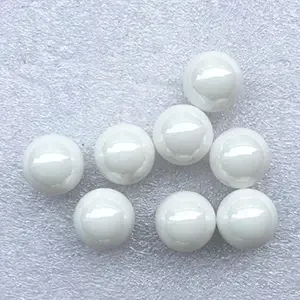
Direct factory sourcing of certified G3 and G5 grade ceramic balls for micro-electronics, high-speed textile spindles, robotic actuators, and extreme-environment process equipment operating across Sri Lankan economic zones.
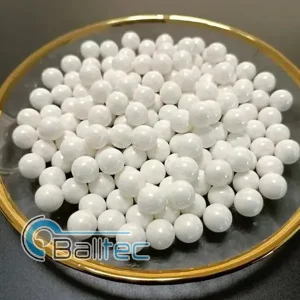
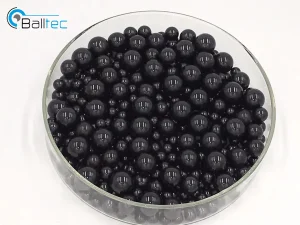
Industrial hubs such as the Katunayake Export Processing Zone (EPZ), Biyagama EPZ, and the Hambantota Port Industrial Park are rapidly adopting automated machinery. Equipment operated in these economic corridors demands components with immunity to galvanic corrosion, zero magnetic interference, and extended operational lifespans without frequent lubrication maintenance.
Furthermore, the agricultural processing infrastructure—specifically Ceylon Tea CTC (Crush, Tear, Curl) rollers, desiccated coconut fluid beds, and natural rubber centrifugation plants—requires tribological components that resist organic acid degradation and micro-abrasive wear.
In modern Sri Lankan manufacturing facilities, unplanned downtime accounts for up to 18% of total production cost overruns. Conventional chrome steel (AISI 52100) bearing balls fail prematurely due to micro-spalling, thermal expansion misalignment, and moisture-induced pitting.
By integrating Silicon Nitride ($\text{Si}_3\text{N}_4$) and Yttria-Stabilized Zirconia ($\text{Y-TZP}$) bearing balls into hybrid and full ceramic bearing assemblies, plant operators achieve up to 300% longer maintenance cycles, reduced power consumption due to a 60% lower coefficient of friction, and zero risk of electrical fluting in inverter-driven motors.
To select the correct bearing ball for specialized machinery in Sri Lanka, design engineers must evaluate mechanical, thermal, and electrical properties. Below is an authoritative tribological comparison between high-grade ceramics and traditional bearing steel.
| Physical / Mechanical Property | Silicon Nitride ($\text{Si}_3\text{N}_4$) | Zirconia ($\text{ZrO}_2$) [3Y-TZP] | Alumina ($\text{Al}_2\text{O}_3$) [99.5%] | Bearing Steel (AISI 52100) |
|---|---|---|---|---|
| Density (g/cm³) | 3.21 | 6.05 | 3.92 | 7.85 |
| Hardness (HV 0.5) | 1600 - 1800 | 1200 - 1350 | 1500 - 1650 | 700 - 800 |
| Elastic Modulus (GPa) | 320 | 210 | 380 | 208 |
| Thermal Expansion (10⁻⁶/K) | 3.2 | 10.3 | 8.1 | 11.5 |
| Electrical Resistivity (Ω·cm) | > 10¹⁴ (Insulator) | > 10¹2 (Insulator) | > 10¹4 (Insulator) | 10⁻⁵ (Conductor) |
| Corrosion Resistance | Extreme (Acid & Alkali) | Excellent (Except HF) | High Chemical Inertness | Poor (Prone to Rust) |
| Maximum Temp (°C) | 1000 °C | 500 °C | 1400 °C | 150 °C |
For high-speed electric motor drives and textile spinning spindles operating in Sri Lanka’s humid environment, Silicon Nitride ($\text{Si}_3\text{N}_4$) provides the ultimate combination of low centrifugal force and zero electrical fluting. Where high impact load and expansion matching with steel housings are required, Zirconia ($\text{ZrO}_2$) is the optimal selection.
Every industrial sector in Sri Lanka presents distinct environmental and mechanical operational challenges. Custom engineering of ceramic ball grades addresses specific stress factors found across key Sri Lankan commercial domains:
Operating Challenges: High humidity in Central Province processing plants, exposure to natural organic plant acids, and continuous abrasive particulates during leaf crushing and drying.
Ceramic Solution: High-purity Alumina ($\text{Al}_2\text{O}_3$) and Zirconia ($\text{ZrO}_2$) balls integrated into rotary sifters, sorting rollers, and drying fan blower assemblies. Completely eliminates rust contamination in finished tea products while extending bearing wear life by 4x.
Operating Challenges: Extreme rotational speeds (up to 40,000 RPM) in automated yarn spinning and sewing plants in Western Province EPZs, causing extreme frictional heat in standard steel bearings.
Ceramic Solution: Precision G3-grade Silicon Nitride ($\text{Si}_3\text{N}_4$) balls. Their low mass reduces centrifugal loading on outer races, lowering thermal output by up to 25°C and enabling energy savings across large-scale textile machinery floors.
Operating Challenges: Marine splash zones at Colombo Port and Hambantota Deep Sea Port cause rapid salt-spray oxidation, pit corrosion, and grease wash-out in heavy crane drive swivels and radar actuators.
Ceramic Solution: Full ZrO2 Zirconia and 316 Stainless Steel Hybrid assemblies. Provides total immunity to chloride attack, operating reliably in salt spray without micro-seizure risks.
Our manufacturing facility integrates end-to-end processing—from nanoscale powder preparation to Hot Isostatic Pressing (HIP) and sub-micron lapping. We serve Sri Lankan industrial buyers with traceable compliance under ISO 9001, ISO 14001, and ISO 3290-2 international bearing ball standards.
To achieve zero internal porosity and maximum fracture toughness, all Silicon Nitride and Zirconia bearing balls undergo high-pressure nitrogen gas sintering at 1,750°C and 200 MPa. This eliminates micro-voids, ensuring uniform structural integrity that prevents catastrophic fracture under extreme cyclic loads.
We support Sri Lankan equipment operators and industrial machinery importers with flexible custom specifications ranging from micro 0.5mm precision balls up to 50mm heavy-duty structural spheres.
Our engineering team assists with bearing clearance calculations, shaft thermal expansion modeling, and lubricant compatibility assessments tailored to Sri Lanka’s tropical ambient operating temperatures.
Beyond raw component supply, our engineering center provides integrated retrofit packages designed to optimize mechanical efficiency and reduce maintenance overhauls in local manufacturing environments.
Retrofitting Variable Frequency Drive (VFD) motors in Sri Lankan industrial plants with hybrid ceramic bearings featuring $\text{Si}_3\text{N}_4$ balls. Prevents electrical pitting and fluting degradation caused by stray shaft currents.
Full ZrO2 bearing assemblies paired with PTFE cages for chemical metering pumps, fertilizer transfer lines, and latex processing units operating under aggressive pH levels.
Alumina ($\text{Al}_2\text{O}_3$) and Sintered Silicon Nitride rolling elements for heat-treatment furnaces, ceramic tile manufacturing kilns, and high-temperature curing lines operating above 400°C.
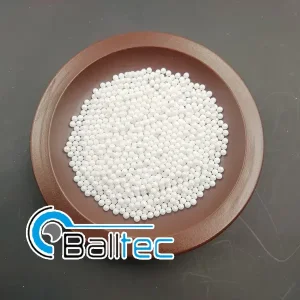
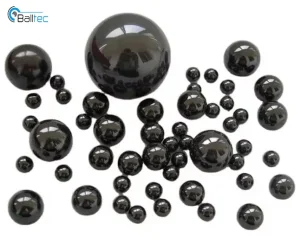
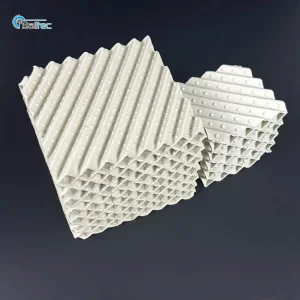
Explore our complete export selection available for immediate shipment to Sri Lankan ports (Colombo, Hambantota). All products are delivered with certified inspection reports and full material traceability.
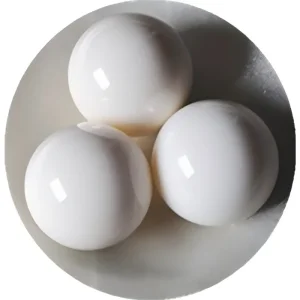
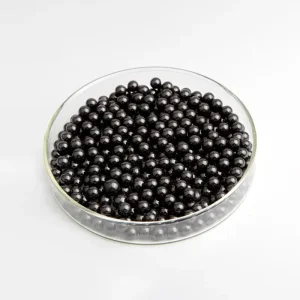
Detailed answers addressing import logistics, customs tariffs, material selection, and operational parameters for businesses operating in Sri Lanka.
Partner directly with a leading ceramic bearing ball manufacturer. Our technical sales engineers provide precise material recommendations, CAD modeling support, and direct factory pricing.