Follow 


Engineered for high durability under harsh tropical road conditions, high heat, and heavy payloads across Luzon expressways and Manila port corridors.

Analyzing the operational impact of dynamic tire balancing in the Greater Manila Area, North/South Harbor freight logistics, and Luzon regional haulage networks.
Metro Manila stands as the economic heartbeat of the Philippines, hosting over 13 million residents and serving as the primary clearing house for international cargo passing through the Port of Manila (Manila South Harbor and Manila International Container Terminal). The logistics backbone connecting Manila to key economic zones in Laguna, Cavite, Pampanga, and Batangas relies almost entirely on heavy-duty commercial fleets—ranging from 6-wheel rigid trucks and 10-wheel prime movers to multi-axle container chassis and long-distance provincial buses.
However, fleet operators across Metro Manila face severe operational bottlenecks: extreme stop-and-go congestion along EDSA and C-5, severe road surface degradation (potholes, unpaved port staging zones), and high ambient temperatures coupled with tropical humidity. Under these brutal conditions, traditional wheel balancing methods—such as hammer-on lead or steel clip-on weights—fail rapidly. External weights frequently detach due to mechanical shock from poor pavement, oxidation, or improper rim mounting, leading to immediate dynamic tire imbalance.
Stop-and-go heavy traffic in Manila port districts generates severe heat cycles, accelerating tread degradation when tires run out-of-balance by even a few ounces.
Imbalanced commercial tires hop and scrub against Manila pavement, creating excessive rolling resistance that inflates diesel consumption on Luzon haulage corridors.
Constant wheel chatter damages kingpins, tie rods, wheel bearings, and cab mounts, forcing costly unscheduled downtime in fleet repair facilities.
Internal dynamic balancing operates on the fundamental law of physics regarding free-rotating bodies in motion. When a tire and wheel assembly rotates, any heavy spot creates a centrifugal force vector that pulls the axle center outward, causing vertical hopping (static imbalance) or side-to-side wobbling (dynamic wobble). Traditional static spinning balances the tire only at one specific speed and at one specific moment in time.
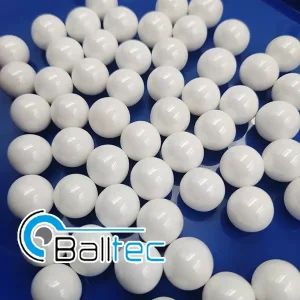
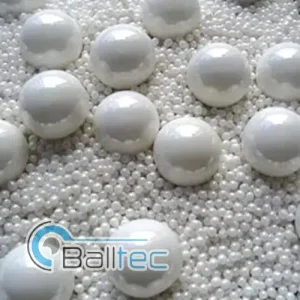
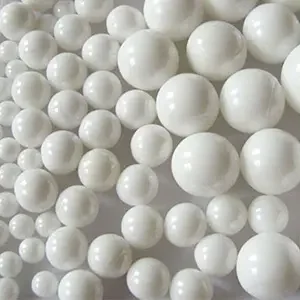
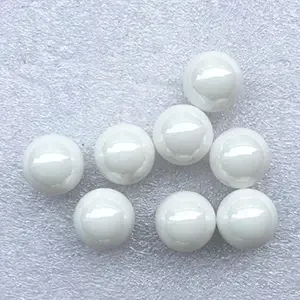
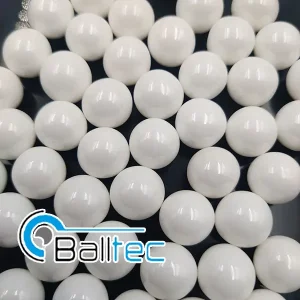
As soon as a truck tire rolls onto Manila roads and loses 1mm of rubber, or picks up gravel in the tread, the static balance is void. In contrast, Baitian Ceramic Tire Balancing Beads are installed directly into the inner cavity of the tire tube or tubeless lining. Through rotational kinetic energy and free-flowing inertia, the beads automatically migrate to the exact position opposite the heavy spot, continuously nullifying force vectors in real-time.
| Performance Indicator | Baitian Micro-Ceramic Beads | Standard Micro-Glass Beads | Traditional Lead / Steel Weights |
|---|---|---|---|
| Material Structure | Toughened Zirconia / High-Purity Alumina Matrix | Soda-Lime Silica Glass | Metallic Lead / Stamped Steel |
| Mohs Hardness Grade | 7.5 - 9.0 (Extremely High Abrasion Resistance) | 5.5 (Prone to pulverization) | N/A (External Surface Only) |
| Inner Liner Wear Impact | Zero (Perfectly polished smooth sphericity) | Moderate (Glass dust can scrub inner liner) | High risk of rim corrosion/lip damage |
| Moisture Resistance & Clumping | Hydrophobic Silicone-Coated Surface (No Clumping) | High Hydrophilic tendency (Clumps in high humidity) | Corrodes valve stems over time |
| Reusability Factor | 100% Reusable across multiple tire retread cycles | Single-use (Breaks down into fine dust) | Single-use / Frequently lost on rough roads |
| Environmental Compliance | Eco-Friendly, Non-Toxic, Zero Dust Generation | Generates Silica Dust during removal | Toxic Heavy Metal (Restricted in green fleets) |
Why Tier-1 Manila distributors and enterprise transport fleets partner directly with Pingxiang Baitian (Ball-tec) New Materials Co., Ltd.
Located in the heart of China’s premium industrial ceramic hub in Pingxiang, Jiangxi, our facility houses spray-drying towers, cold isostatic presses, automated high-temperature tunnel kilns, and optical laser sorting lines. We ensure batch-to-batch chemical purity and uniform density distribution.
Operating strictly under ISO 9001, ISO 14001, and ISO 18001 management systems, every batch of dynamic tire balancing beads undergoes crush-strength testing, sphericity verification via digital image analyzers, and artificial humidity chamber non-clumping trials.
Leveraging direct maritime routes from Ningbo, Shanghai, or Xiamen ports to Manila South/North Harbor, we provide streamlined container loading, palletized sea-worthy moisture-proof packaging, and fast customs clearance documentation support.
We provide custom drop-in throw-in bags (water-soluble bags that dissolve inside the spinning tire), pre-measured application pouches (4oz, 6oz, 8oz, 10oz, 12oz), or bulk 25kg drums and 1-ton super sacks for large fleet servicing centers.
Aligning internal dynamic balancing technology with DOTr Fleet Modernization, EV Commercial Heavy Transport, and ESG Directives in Southeast Asia.
The Philippines commercial transport sector is undergoing a massive transformation under the Public Utility Vehicle Modernization Program (PUVMP) and the Department of Transportation (DOTr) initiatives aimed at decarbonizing logistics. As commercial fleets transition to electric buses, high-torque EV delivery trucks, and Euro 5/6 diesel prime movers, tire longevity and energy efficiency have elevated to top C-level priorities for Manila logistics directors.
Electric commercial trucks deliver immediate peak torque to the drive wheels. This instant mechanical energy increases tire shear stress and accelerates tread wear rates by up to 30% compared to traditional internal combustion engine (ICE) vehicles. Furthermore, EV battery packs increase total vehicle kerb weight. Baitian's micro-ceramic balancing beads maintain dynamic mass equilibrium across heavy EV drive axles, preventing premature center tread wipeout and maximizing battery range through minimized rolling resistance.
Environmental regulations across Southeast Asia are increasingly targeting lead wheel balancing weights. Lead weights frequently strip off rims and contaminate urban waterways and roadside soils across Metro Manila. Ceramic balancing beads represent a 100% lead-free, non-hazardous, chemically inert alternative that aligns perfectly with global corporate Sustainability & Environmental, Social, and Governance (ESG) compliance framework.
Modern commercial fleets in Manila are rapidly equipping trucks with IoT-enabled TPMS sensors. Unlike coarse micro-glass powders that create fine abrasive dust capable of clogging TPMS valve stems and internal sensor ports, Baitian’s high-density ceramic beads feature an engineered minimum diameter threshold (typically >0.8mm) and polished spherical surface that guarantees zero interference with internal TPMS hardware.
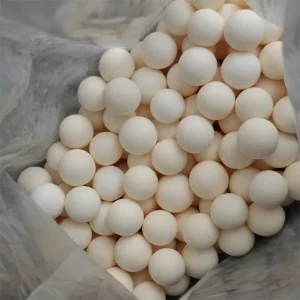
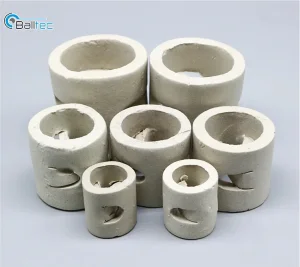
Complementing our tire balancing bead product line with factory-direct engineered ceramics for paint, chemical, petroleum, and manufacturing buyers serving Manila and international markets.

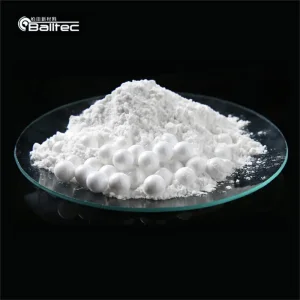
Expert answers from Pingxiang Baitian's engineering team regarding internal balancing bead application, sizing, and shipping to the Philippines.