Follow 


Direct-factory supply tailored for high-speed dispersion and contamination-free sub-micron wet milling systems operating in Chubu industrial parks.
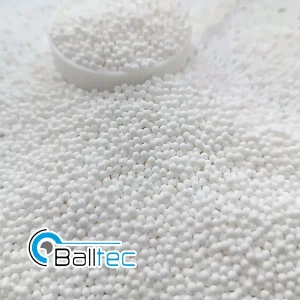
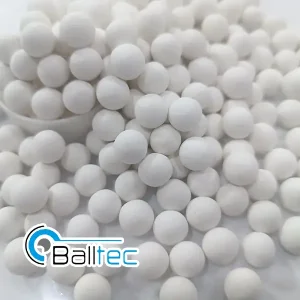
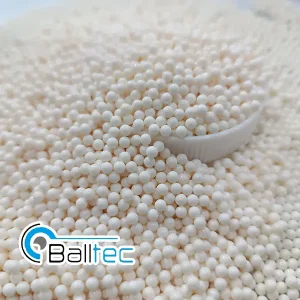
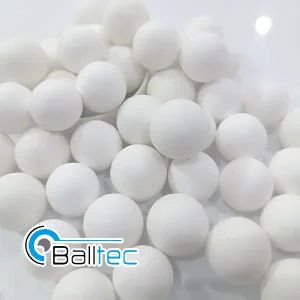
The Chubu region, centered around Nagoya (Aichi Prefecture), represents Japan’s apex industrial manufacturing cluster. Accounting for a massive share of Japan's total industrial output, Greater Nagoya hosts the global headquarters and advanced manufacturing hubs of automotive giants (such as Toyota Motor Corporation and its Tier-1 supply network including Denso and Aisin), world-leading fine ceramics manufacturers (NGK Insulators, Niterra/NGK Spark Plug, Noritake), electronic packaging specialists, and high-performance chemical formulators. As these sectors undergo rapid transformations—driven by electric vehicle (EV) battery electrification, next-generation semiconductor packaging, and ultra-fine automotive coatings—the operational demands placed on wet grinding and dispersion technologies have surged dramatically.
In modern industrial ultra-fine wet grinding (utilizing high-energy pin mills, horizontal ring-type bead mills, and basket mills), the grinding media acts as the critical energy transfer vector. Standard grinding beads—such as low-alumina silicate spheres or poorly sintered zirconia beads—fail to meet the rigorous quality control regimes enforced by Nagoya engineers. The challenges faced by local technical teams include:
In EV battery cathode slurries (LFP, NMC) and thermal interface materials (TIM), trace silica, iron, or sodium shedding from inferior media leads to micro-short-circuiting, capacity degradation, or dielectric breakdown.
High power-density agitator mills operated at tip speeds exceeding 14 m/s induce severe kinetic impact forces. Low-density or porous beads suffer internal fracture, clogging internal separator screens and shutting down continuous production lines.
Non-uniform wear rates cause grinding beads to lose roundness rapidly. As sphericity degrades, shear stress distribution becomes erratic, rendering it impossible to achieve narrow sub-micron or nano-scale target particle size distributions ($D_{90} < 100\text{ nm}$).
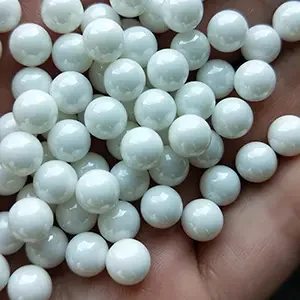
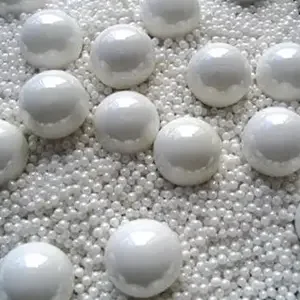
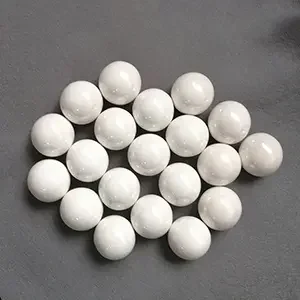
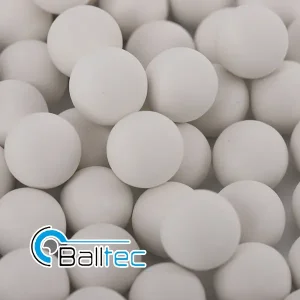
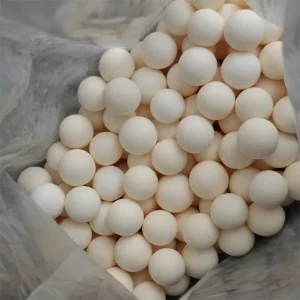
To address these operational bottlenecks, Pingxiang Baitian (Ball-tec) New Materials Co., Ltd. supplies the Nagoya market with engineered High Purity Alumina (HPA) Grinding Beads featuring purity levels ranging from 99% (2N) to 99.99% (4N). By synthesizing high-purity alpha-alumina ($\alpha-\text{Al}_2\text{O}_3$) precursor powders with advanced cold isostatic pressing (CIP) and ultra-high-temperature sintering technologies, our milling media delivers zero-contamination performance, ultra-low wear rates, and exceptional thermal-shock resistance tailored to Chubu’s most demanding industrial standards.
Achieving superior wear resistance and mechanical integrity in ceramic grinding spheres requires absolute control over powder particle morphometry, green-body forming mechanics, and phase-transformation kinetics during sintering. Baitian's technical R&D facility—led by senior ceramic powder engineers with decades of experience at top international ceramic institutes—combines state-of-the-art manufacturing science to produce industrial-grade high purity alumina beads.
High Purity Alumina exists in several metastable phases ($\gamma, \eta, \theta, \delta$), but only the hexagonal close-packed (HCP) $\alpha$-phase (Corundum) structure offers optimal mechanical hardness and chemical inertness. Baitian utilizes high-temperature calcination calcining pure aluminum hydroxide at temperatures exceeding $1550^\circ\text{C}$ in gas-fired tunnel kilns. This process guarantees a complete $\alpha$-phase conversion (>99.8%), eliminating volume expansion stresses during thermal cycling and imparting an extraordinary Mohs hardness of 9.0 (Vickers Hardness $\ge 1600 \text{ HV}_{10}$).
| Technical Parameter | Standard Grade (99% Al₂O₃) | High Purity Grade (99.9% Al₂O₃) | Ultra-Pure Grade (99.99% 4N HPA) |
|---|---|---|---|
| Al₂O₃ Purity (%) | ≥ 99.0% | ≥ 99.9% | ≥ 99.99% (ICP-OES Verified) |
| Bulk Density (g/cm³) | ≥ 3.68 g/cm³ | ≥ 3.85 g/cm³ | ≥ 3.95 - 3.98 g/cm³ |
| Vickers Hardness (HV₁₀) | ≥ 1400 HV₁₀ | ≥ 1550 HV₁₀ | ≥ 1680 HV₁₀ |
| Equivalent Grain Size (μm) | 1.5 - 2.5 μm | 0.8 - 1.2 μm | 0.2 - 0.5 μm (Nanocrystalline) |
| Self-Wear Rate (ppm/hr) | < 50 ppm/hr | < 15 ppm/hr | < 2.5 ppm/hr (Ultra-Low) |
| Sphericity / Roundness | ≥ 95% | ≥ 98% | ≥ 99.2% |
| Available Diameters (mm) | 0.5mm - 20mm | 0.1mm - 10mm | 0.05mm - 3.0mm Micro-Beads |
A frequent failure mode in alumina media is intergranular fatigue failure caused by abnormally large grain growth. During sintering at elevated temperatures ($1600^\circ\text{C} - 1680^\circ\text{C}$), un-inhibited alumina grains coalesce into oversized crystals ($>5 \mu\text{m}$), creating micro-voids along triple junctions. Baitian solves this via nanometer micro-doping (e.g., trace MgO grain boundary pinning agents) combined with computer-controlled firing profiles. This pins the crystal grain boundaries at sub-micron dimensions ($0.2 - 0.5 \mu\text{m}$), yielding a pore-free, dense microstructure with theoretical density reaching up to 99.5%.
While domestic Japanese ceramic media producers have historically maintained strong market presence, global supply chain shifts and rising energy tariffs inside Japan have escalated local manufacturing overheads. Nagoya-based procurement teams and plant directors face intensifying cost pressures when sourcing raw consumables. Partnering directly with Pingxiang Baitian (Ball-tec) offers a strategic economic advantage without compromising on engineering quality.
Located in Pingxiang, Jiangxi—the world-renowned industrial ceramic cluster—Baitian operates a fully integrated 100,000 m² campus. From high-purity chemical precipitation to spray drying, automated forming, and high-temperature kiln firing, our single-roof manufacturing eliminates middleman markups, saving Nagoya buyers between 25% to 40% on procurement budgets.
Procurement cost is only a fraction of milling economics. The true cost lies in wear rates, energy consumption, and mill downtime. Baitian’s high-density (3.95+ g/cm³) HPA beads deliver higher kinetic kinetic impact per revolution ($E_k = \frac{1}{2} m v^2$), shortening batch residence times by up to 18% while dramatically reducing bead replacement frequency.
Baitian maintains robust international freight channels dedicated to Japan’s principal industrial maritime hub: The Port of Nagoya (Aichi Prefecture). With daily container shipping sailings from Shanghai and Ningbo ports, shipping transit times to Nagoya Port take as little as 3 to 5 days. We offer flexible Incoterms including FOB, CIF Nagoya, and DDP (Delivered Duty Paid directly to factory warehouses in Toyota City, Yokkaichi, Kariya, or Komaki), supported by complete export documentation including Certificate of Origin (RCEP preferential tariffs), MSDS, ISO 9001 quality certificates, and batch-specific ICP-OES chemical analysis reports.
Baitian’s High Purity Alumina Grinding Beads are specifically engineered for critical application niches within the Greater Nagoya economy. Our technical team works directly with process engineers to optimize mill bead fill ratios, rotational speed calculations, and slurry viscosity pairings.
Used in high-energy wet milling of Lithium Iron Phosphate (LFP), NMC precursors, and solid-state electrolyte powders. Our 99.99% 4N HPA beads eliminate metallic iron (Fe) and silica (Si) contamination, preventing internal cell short-circuiting and extending battery life cycles.
Ideal for ultra-fine micronization of alumina substrates, silicon nitride ($Si_3N_4$) structural components, and ceramic package insulating powders. Ensures absolute chemical compatibility when milling raw alumina feedstocks.
Demanded by Nagoya paint and chemical formulators for nano-dispersion of clear coats, metallic automotive pigments, and thermal interface materials (TIM). Produces exceptionally high gloss values and narrow PSD without color distortion.
As industrial milling trends move toward quantum-dot displays, next-generation semiconductor Chemical Mechanical Planarization (CMP) slurries, and solid-state EV batteries, the demand for ultra-fine micro-beads ($0.03\text{mm} - 0.1\text{mm}$) has accelerated. Baitian is at the forefront of advanced ceramic innovation, executing a clear technical roadmap tailored to futuristic industrial needs:
We are expanding our specialized drip-forming and liquid-phase spheroidization lines to mass-produce 0.03mm (30 micron) ultra-pure 4N HPA micro-spheres. These micro-beads enable pin-type agitator mills to grind target particles down to sub-50 nanometer thresholds without crushing bead bodies.
In response to global ESG mandates and Japan’s Green Growth Strategy, Baitian has introduced clean-energy electric kilns powered by solar micro-grids. Additionally, we offer Nagoya clients a closed-loop spent bead recycling and re-sintering support program to minimize industrial waste.
Technical guidance covering material selection, wear calculations, loading ratios, and export logistics.
While YSZ beads offer higher density (~6.0 g/cm³), trace Zirconium (Zr) or Yttrium (Y) cross-contamination can alter electrochemistry in certain sensitive battery cathodes and electronic ceramic formulations. High Purity Alumina beads (3.85 - 3.98 g/cm³) provide complete chemical compatibility when milling alumina-rich or cathode materials. Furthermore, HPA beads offer significant cost savings per kilogram, reducing operational expenditures for large-volume industrial plants in Chubu.
We perform Inductively Coupled Plasma Optical Emission Spectrometry (ICP-OES) and X-ray Fluorescence (XRF) testing on every production batch. For 4N grade HPA beads, total metallic impurities (Fe, Na, SiO₂, Ca, Mg, Ti) are strictly controlled below 100 ppm (0.01%). Certificate of Analysis (COA) documents accompany every export shipment delivered to Nagoya Port.
As a general engineering rule of thumb, the chosen grinding bead diameter ($d$) should be approximately 20 to 30 times larger than the feed particle size ($D_{50}$), and 3 to 5 times larger than the required mill discharge screen separator gap. For example, to achieve a target size of $D_{90} < 0.5 \mu\text{m}$ from a $10 \mu\text{m}$ feed, a multi-stage milling process using 0.8-1.0mm beads for coarse milling followed by 0.2-0.3mm micro-beads for fine finishing is recommended.
For standard stock sizes (0.5mm to 10mm), order dispatch occurs within 3 to 5 business days. Sea freight shipping from Shanghai/Ningbo to Nagoya Port takes approximately 3 to 5 days, followed by 1 to 2 days for customs clearance and inland trucking. Total door-to-door lead time typically ranges between 10 to 14 days. Express air freight options are also available for urgent samples or trial testing.
Yes. We offer customized bead sizing with tight tolerance control ($\pm 0.05\text{mm}$). For high-purity semiconductor and battery customers, we provide double-vacuum sealed cleanroom packaging in 5kg, 10kg, or 25kg heavy-duty polyethylene bags packaged inside steel drums or plastic pails on heat-treated ISPM-15 compliant export pallets.
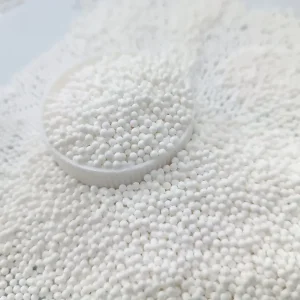
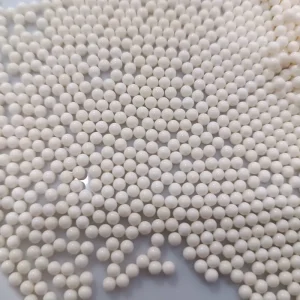
Explore our complete catalog of industrial-grade ceramic spheres engineered for extreme wear resistance, high density, and precision micronization.
Request technical data sheets, free sample media for laboratory trials, or custom pricing directly from our materials engineering team.
Send Inquiry Now