Follow 


As Greater Sydney rapidly evolves into a premier Southern Hemisphere center for advanced manufacturing, battery material synthesis, clean technology, and specialized mineral processing, the operational demand for ultra-pure, zero-contamination milling media has escalated. Modern wet and dry micronization processes require media capable of handling heavy shear stress while maintaining chemical inertness and extreme mechanical durability.
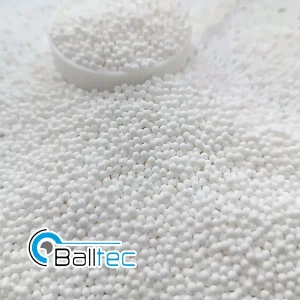
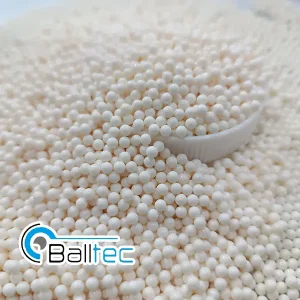
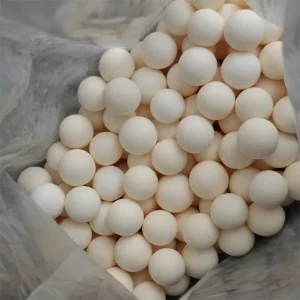
As an authoritative global manufacturer and exporter supplying the Sydney market, Pingxiang Baitian (Ball-tec) New Materials Co., Ltd. delivers next-generation High Purity Alumina (HPA) Grinding Beads engineered specifically for high-energy bead mills, horizontal agitator ball mills, and attritors. Whether operating in the industrial corridors of Western Sydney, the Hunter manufacturing zone, or local R&D laboratories, enterprise operations require consistent particle size reduction down to sub-micron and nanoscale levels without introducing silica, iron, or heavy metal impurities into sensitive slurries.
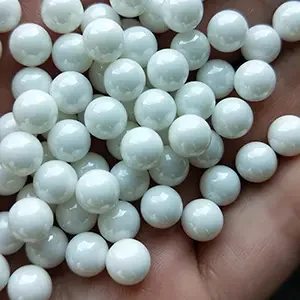
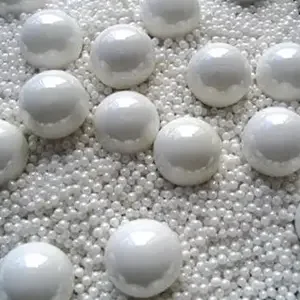
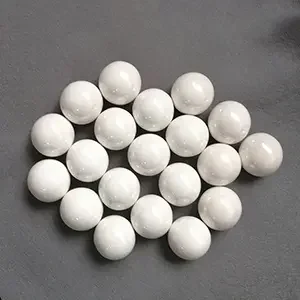
Explore our core product tier deployed across Australian ceramic, ink, and advanced materials operations:
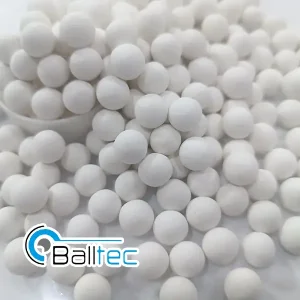
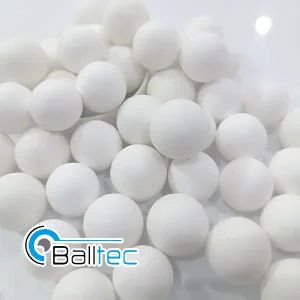
To achieve optimum performance in high-speed agitation mills (disc, pin, or basket types), grinding media must balance density, hardness, fracture toughness, and surface sphericity. The engineering of high-purity alumina ($99.9\%$ to $99.99\%\ \text{Al}_2\text{O}_3$) requires precise control over raw material grain refinement and thermal sintering profiles.
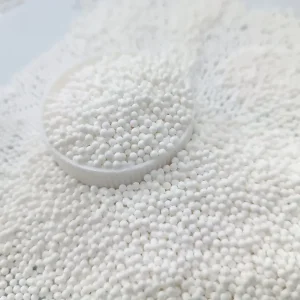
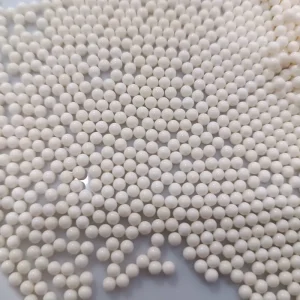
For larger diameter media ($10\text{mm} - 50\text{mm}$), we utilize advanced Cold Isostatic Pressing under extreme pressure ($>200\text{ MPa}$). This yields isotropic green density, preventing internal voids and micro-cracks during high-temperature firing. For micro-beads ($0.1\text{mm} - 3.0\text{mm}$), our liquid-phase automated drip-forming process ensures perfect sphericity ($\ge 98\%$), tight particle size distribution, and a glossy, defect-free outer skin that reduces hydraulic resistance inside bead mills.
Sintering high-purity alumina without grain growth inhibitors leads to abnormally large grains that fail under impact energy. By doping sub-micron $\text{Al}_2\text{O}_3$ powders with controlled micro-additives ($\text{MgO}$, $\text{Y}_2\text{O}_3$) and firing at $1600^\circ\text{C}-1680^\circ\text{C}$ in gas-fired roller hearth kilns, we engineer a microcrystalline structure with grain sizes under $3\ \mu\text{m}$. This fine-grained matrix maximizes intergranular bonding strength, drastically lowering wear rates in continuous wet grinding circuits.
| Technical Parameter | 95% Al2O3 Grade | 99% Al2O3 Grade | 99.9% High Purity Grade | 99.99% Ultra-Pure Grade |
|---|---|---|---|---|
| Al2O3 Content (%) | ≥ 95.0 | ≥ 99.0 | ≥ 99.9 | ≥ 99.99 |
| Bulk Density (g/cm³) | ≥ 3.60 | ≥ 3.68 | ≥ 3.80 | ≥ 3.92 |
| Vickers Hardness (HV10) | ≥ 1350 | ≥ 1500 | ≥ 1650 | ≥ 1750 |
| Water Absorption (%) | ≤ 0.01 | ≤ 0.005 | 0.000 | 0.000 |
| Equivalent Wear Rate (%/h) | ≤ 0.015 | ≤ 0.008 | ≤ 0.003 | ≤ 0.001 |
| Primary Applications | Mining, Ceramics, Heavy Glaze | Paints, Pigments, Minerals | MLCC, Electronic Materials | Battery Cathodes, Optical Glass |
Industrial operations throughout New South Wales require customized grinding configurations tailored to specific rheological properties, slurry viscosities, and end-product specifications.
With Australia leading the global critical minerals transition, Sydney-based chemical processors focusing on Lithium Iron Phosphate (LFP) and Lithium Nickel Manganese Cobalt Oxide (NMC) cathode synthesis require contamination-free nanometer grinding. Our 99.99% high-purity micro-beads ($0.1\text{mm} - 0.5\text{mm}$) eliminate heavy metal cross-contamination, ensuring maximum electrochemical capacity and stability.
For manufacturing plants in Sydney's Western Industrial Zone producing high-gloss automotive finishes and jet-digital printing inks, particle size distribution must be tight ($D_{90} < 200\text{ nm}$). Our low-wear alumina beads prevent color hue drift and nozzle-clogging agglomerates by delivering ultra-consistent kinetic impact force.
R&D facilities and high-tech component manufacturers in NSW producing Multi-Layer Ceramic Capacitors (MLCC), piezoelectrics, and semiconductor substrate powders rely on our ultra-dense $\text{Al}_2\text{O}_3$ media to achieve sub-micron dispersion without compromising dielectric strength.
Operating out of Pingxiang, Jiangxi Province—China's legendary industrial ceramics cluster—Pingxiang Baitian (Ball-tec) New Materials Co., Ltd. spans over 100,000 m² of modern manufacturing infrastructure. Founded by international ceramic experts from Japan and the U.S. alongside senior domestic engineers, our facility bridges breakthrough material science with mass-scale production efficiency.
From raw chemical precipitation and spray drying to computer-controlled tunnel kilns equipped with multi-zone temperature sensors, every stage of production is fully automated. Real-time SCADA monitoring eliminates batch-to-batch variance in density, sphericity, and wear resistance.
Global supply chain volatility highlights the need for reliable manufacturing partners. Our annual capacity exceeding 20,000 metric tons guarantees Australian enterprises rapid lead times, direct factory pricing, and continuous inventory safety buffers stored for fast dispatch to Port Botany, Sydney.
As particle size reduction requirements shift from micrometer to single-digit nanometer regimes, traditional grinding media encounter fundamental physical limits. Baitian's R&D team is pioneering next-generation micro-bead structures to keep pace with global technological evolution:
Developing ultra-fine $50\ \mu\text{m}$ alumina media engineered for pharmaceutical nanomedicine dispersions and advanced CMP (Chemical Mechanical Planarization) slurries used in next-gen semiconductor chip fabrication.
Combining high-purity alumina with nano-yttria stabilized zirconia ($\text{Y-TZP}$) to form Zirconia-Toughened Alumina (ZTA) beads. This hybrid delivers maximum impact resistance in high-stress vertical mills without sacrificing cost-efficiency.
Integrating clean solar power energy microgrids across our Pingxiang production base to lower embodied carbon, assisting Australian corporate buyers in fulfilling scope 3 ESG sustainability targets.
Procuring industrial ceramic supplies internationally requires clear compliance with Australian standards, transparent documentation, and reliable customs clearing:
Every shipment exported to Sydney compliance hubs includes certified batch test reports (COA), ICP-OES elemental impurity analysis, and X-ray diffraction (XRD) phase purity validation. All materials align with ISO 9001, ISO 14001, and ISO 45001 operational standards.
We partner with premier freight forwarders serving Port Botany, offering CIF, DDP, and FOB terms tailored to procurement workflows. Bulk packaging choices include heavy-duty 25kg double-sealed moisture-proof bags, fiber drums, or 1000kg reinforced export pallets.
When assessing industrial grinding media, purchasing departments often focus solely on the upfront cost per kilogram. However, an accurate enterprise evaluation hinges on **Total Cost of Ownership (TCO)**, defined by wear rates, energy efficiency, and slurry filtration maintenance:
By opting for Baitian's microcrystalline high-purity alumina beads over standard commercial grade media, Sydney plants experience:
Explore our full line of ceramic spheres, ultra-fine beads, and corrosion-resistant media available for bulk dispatch to Sydney:
Find immediate answers to common technical queries from Sydney engineers and buyers: