Follow 


Specially calibrated for bead mills, attritors, and vibrating ball mills deployed in Free Economic Zone (FEZ) Vitebsk industrial installations requiring uniform kinetic energy and ultra-low wear.
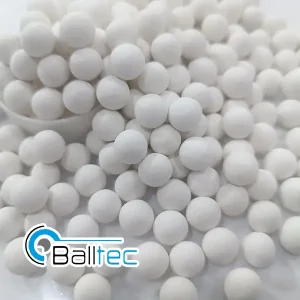
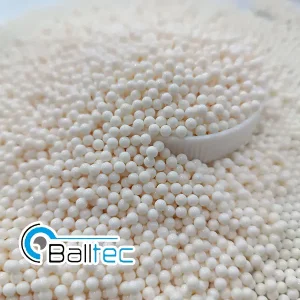
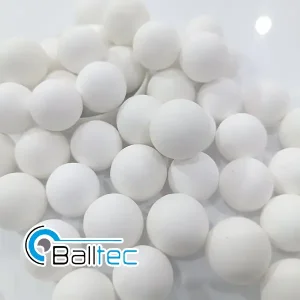
Vitebsk, situated at an essential industrial and logistical crossroad in northern Belarus, represents a vital hub for heavy machinery, precision instruments, polymer chemicals, architectural coatings, and technical ceramics. Operating under the modern framework of FEZ Vitebsk (Free Economic Zone Vitebsk), domestic manufacturers and international joint ventures consistently modernize their comminution technologies from legacy steel or low-grade silicate media to engineered microcrystalline alumina.
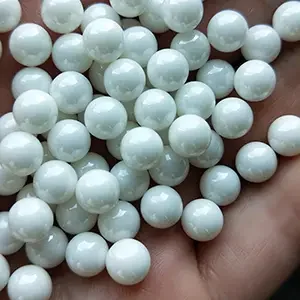
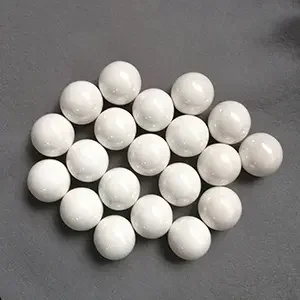
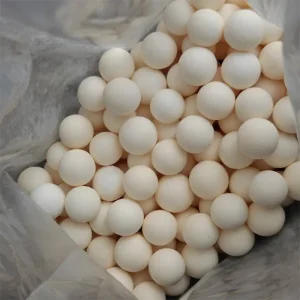
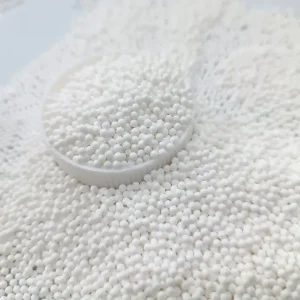
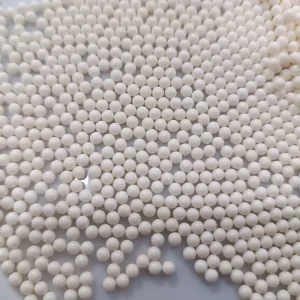
In modern industrial bead milling, contamination from grinding media wear is the primary cause of batch rejection in high-specification coatings, dielectric glass frits, and agrochemical active suspensions. High purity alumina grinding beads—formulated from synthetic calcined $\alpha\text{-Al}_2\text{O}_3$ powders up to 99.99% purity—deliver extreme hardness (Mohs 9.0), zero heavy metal leaching, and balanced bulk density ($3.65 - 3.95 \text{ g/cm}^3$) perfectly suited to horizontal agitation mills.
Traditional milling media like natural flint pebbles, forged chrome steel balls, or basic 75% alumina spheres exhibit substantial porosity and coarse grain boundaries. Under the severe shear velocities of modern 12–16 m/s tip-speed mills, these conventional materials spall and shed macro-particulates, contaminating product batches.
By deploying Baitian’s Cold Isostatically Pressed (CIP) 92% to 99.99% alumina beads, processing plants in Vitebsk experience up to a 68% reduction in media consumption, clean particle size distribution curves ($D_{50} < 0.8\,\mu\text{m}$), and substantial reductions in total power expenditure per metric ton of processed formulation.
Our alumina grinding beads are produced using ultrafine spray-dried sub-micron alumina powders, shaped under 200 MPa isostatic pressure, and sintered in high-temperature computer-controlled tunnel kilns at 1650°C - 1700°C to achieve near-theoretical density.
| Property / Grade Parameter | Standard 92% Alumina | High-Density 95% Alumina | Ultra-Pure 99% Alumina | High-Tech 99.99% (4N) Alumina |
|---|---|---|---|---|
| $\text{Al}_2\text{O}_3$ Content (%) | $\ge 92.0$ | $\ge 95.0$ | $\ge 99.0$ | $\ge 99.99$ |
| Bulk Density ($\text{g/cm}^3$) | $\ge 3.60$ | $\ge 3.68$ | $\ge 3.85$ | $\ge 3.92$ |
| Vickers Hardness (HV10 / GPa) | $11.5 \text{ GPa}$ | $12.5 \text{ GPa}$ | $14.2 \text{ GPa}$ | $15.5 \text{ GPa}$ |
| Mohs Hardness | $9.0$ | $9.0$ | $9.0$ | $9.0+$ |
| Self-Wear Loss Rate ($\text{g/kg}\cdot\text{h}$) | $\le 0.015$ | $\le 0.010$ | $\le 0.005$ | $\le 0.002$ |
| Water Absorption (%) | $\le 0.01$ | $\le 0.01$ | $\le 0.005$ | $\le 0.001$ |
| Crush Load (Ø 5.0 mm, kN) | $\ge 5.2$ | $\ge 6.8$ | $\ge 8.5$ | $\ge 11.0$ |
| Available Diameters ($\text{mm}$) | 0.5 – 60 mm | 0.4 – 50 mm | 0.2 – 30 mm | 0.1 – 20 mm |
| Primary Target Application in Vitebsk | Ceramic Tiles, Frits & Minerals | Inks, Automotive Coatings, Paints | Lithium Battery & Electronics | Optical Crystals & Pharma Synthetics |
Importing critical mineral components into Vitebsk requires rigorous documentation alignment with the Eurasian Economic Union (EAEU) Technical Regulations. Baitian New Materials provides full documentation suites including EAC declarations of conformity, batch-specific chemical chromatography certificates, and standardized GOST-aligned technical datasheets.
Leveraging direct multimodal freight links through the China-Europe Railway Express (Chongqing/Xi'an to Minsk/Vitebsk hub), our supply chain ensures cargo transit times of 12 to 16 calendar days, drastically outperforming maritime shipping routes while safeguarding procurement schedules from geopolitical maritime congestion.
Headquartered in Pingxiang, Jiangxi—widely acknowledged as China’s advanced industrial ceramics industrial capital—Baitian New Materials integrates every production phase under one roof: raw alumina powder calcination, micro-nano grain preparation, 200MPa cold isostatic shaping, continuous tunnel kiln firing, and optical machine sorting.
Unlike European repackagers or trade intermediaries servicing Belarus, our direct factory-to-enterprise channel eliminates intermediate surcharges, guaranteeing lot-to-lot consistency, predictable annual contract pricing, and reserve buffer inventories dedicated to key Vitebsk manufacturing contracts.
Tailored comminution and dispersion solutions engineered for the specific shear, thermal, and purity parameters demanded by the region’s core production sectors.
Enables steady dispersion of titanium dioxide ($\text{TiO}_2$), anticorrosive zinc pigments, and epoxy pastes in high-speed agitator bead mills, yielding tight particle distributions without grey shade pollution.
Provides critical wear resistance in continuous wet ball milling of specialized frit formulations and high-voltage ceramic insulators, avoiding heavy silica contamination and stabilizing firing cycles.
Delivers clean, bio-inert shearing for flowable agricultural suspensions, guaranteeing that insoluble active herbicide and fungicide compounds achieve stable $D_{90} < 2\,\mu\text{m}$ target dispersion.
Engineered for Vitebsk’s electrical apparatus manufacturing, preventing iron or foreign alkali metal ingress into barium titanate dielectric layers and soft ferrite matrices during micronization.
High-energy impact milling of synthetic corundum, tabular alumina, and silica fume for high-temperature metallurgical linings, extending service intervals in molten metal casting environments.
Ultra-fine dispersion of synthetic organic and phthalocyanine pigments, optimizing color intensity, gloss, and trans-illumination clarity for flexible packaging converters in northern Belarus.
How Vitebsk process engineers can balance media charge ratio, motor electrical load, and slurry viscosity for maximum output per kilowatt-hour.
For horizontal pin mills, maintain bead volumetric filling between 70% and 85%. For vertical ball mills, maintaining 50% to 55% chamber volume ensures ideal bead-to-bead contact without excessive hydraulic drag, preventing motor overload trips.
While Yttria-stabilized zirconia offers higher density ($6.0 \text{ g/cm}^3$), high purity alumina ($3.68 - 3.92 \text{ g/cm}^3$) offers a 300% to 400% initial capital cost advantage, making it the most economical choice when processing mineral suspensions, ceramics, and standard industrial coatings.
Select bead diameter approximately 20x to 30x the initial particle size ($D_{95}$) of the feed slurry. To maintain dynamic laminar flow through the chamber separator screen, slurry dynamic viscosity should be controlled between 300 and 1,500 mPa·s.
Direct answers from our ceramic materials engineering division regarding procurement, mechanical specifications, and operation in Vitebsk.
High Purity Alumina beads ($92\% - 99.99\% \text{ Al}_2\text{O}_3$) undergo ultra-fine grain sintering at 1680°C, producing dense $\alpha$-corundum crystal lattices without internal micro-pores. This eliminates structural shattering, reduces self-wear rates down to <0.005% per 24 hours, and ensures zero chemical contamination in white glazes, functional coatings, and electronic pastes.
For standard ceramic frit, glaze, and feldspar processing, 92% or 95% alumina provides the optimal cost-performance balance. For specialized architectural paint tint bases, automotive finishes, and agrochemicals, 95% or 99% alumina is mandatory. For electronic dielectrics, optical glasses, and phosphor slurries, 99.9% to 99.99% (4N) purity is essential to prevent ionic contamination.
We deliver using the China-Europe Railway Express (direct container rail from China to Belarus), offering rapid terminal transit times of 12-16 days. Shipments are supplied with complete EAEU customs clearance dossiers, including EAC Declaration of Conformity, certified Certificate of Origin (Form A), mill test certificates, and full chemical analysis chromatographs.
For horizontal stirred media mills, the separator gap or screen wedge size dictates media choice: bead diameter must be at least 2.5 to 3.0 times the screen slot opening width to prevent jamming. Common sizes for sub-micron milling range from 0.4–0.6 mm up to 1.2–1.6 mm.
Yes. Our Pingxiang facility features dedicated sieving towers capable of delivering precision size fractions (e.g., custom 0.8–1.0 mm or 1.2–1.4 mm). Packaging options include 25kg hermetically sealed moisture-barrier bags, steel drum protection, or 1-metric-ton bulk bags on ISPM-15 compliant fumigated pallets.
While yttria-stabilized zirconia has higher specific gravity ($6.0 \text{ g/cm}^3$ vs $3.68 - 3.92 \text{ g/cm}^3$), high purity alumina is roughly one-third the price. When processing mineral slurries, coatings, and glazes where ultra-high energy density is not required, alumina offers a substantially lower total operating cost per ton of milled product.
Explore all technical grades and precision sphericity formulations engineered by Baitian New Materials for global procurement and Eurasian industrial applications.