
Follow 


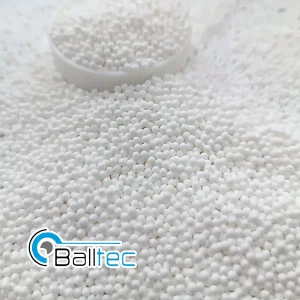
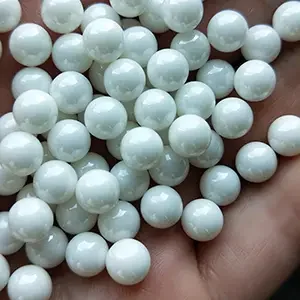
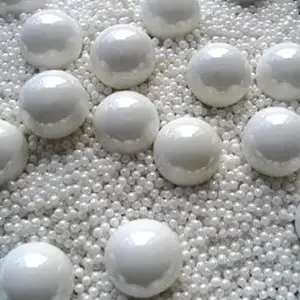
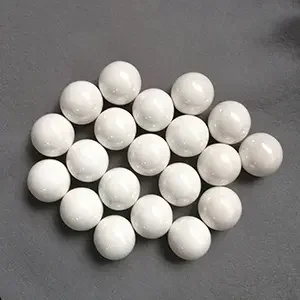
Continuous microcrystalline sintered media, manufactured to deliver maximum kinetic impact and zero cross-batch particulate contamination for Georgetown's technical processing plants.
Analyzing the intersection between heavy-duty port logistics, resource processing, specialty coatings, and advanced minerals across the Georgetown commercial ecosystem.
As Georgetown expands its role as an industrial supply gateway, value-added mineral beneficiation—specifically silica refinement, bauxite derivative conversion, and inert filler processing—demands ultra-hard, non-reactive grinding media. Our 99% to 99.9% Al₂O₃ beads eliminate silica cross-contamination, ensuring mineral grade purity matches export standards.
Servicing regional maritime traffic, marine infrastructures, and commercial buildings demands protective coatings with dense pigment dispersion. Conventional metallic media introduce discoloration and ionic impurities. Our microcrystalline α-alumina beads ensure narrow particle size distribution (PSD) without introducing iron contamination.
Milling operations represent up to 60% of total plant energy draw in comminution circuits. Transitioning to high-density alumina media (≥3.60 to 3.95 g/cm³) maximizes kinetic energy transfer in stirred vertical and horizontal attritor mills, reducing processing duration and localized thermal buildup.
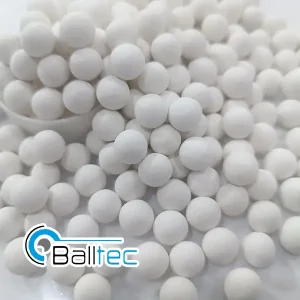
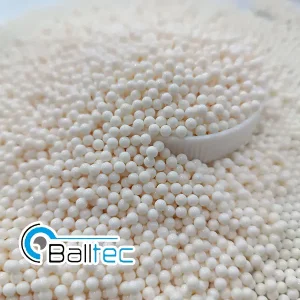
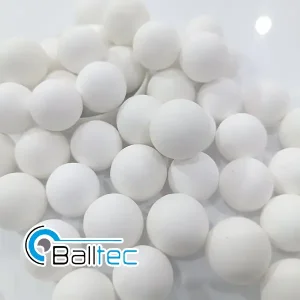
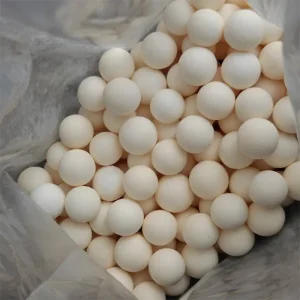
Our isostatically pressed and precision-sintered high-purity alumina grinding spheres are designed to outperform common silicate and low-purity ceramic balls.
Manufactured using high-temperature tunnel kilns operating at controlled heating curves up to 1650°C, our α-alumina crystals form an interlocked corundum structure. This structure yields superior fracture toughness (KIC ≥ 4.0 MPa·m½) and mitigates internal micro-spalling during high-RPM agitator milling compared to conventional roll-formed beads.
Addressing the structural procurement risks faced by production engineers and supply chain directors supplying Georgetown facilities.
Initial purchase price represents only a fraction of milling media expenditure. Media degradation leads to mill screen clogging, frequent line shutdowns, batch purges, and finished product rejection. Our controlled-phase sintering lowers media degradation rates by 35% compared to commercial-grade 92% alumina balls.
In high-performance battery cathodes, electronic pastes, and optical glass polishing, trace elements like Fe₂O₃, SiO₂, and TiO₂ cannot exceed parts-per-million (ppm) thresholds. We supply comprehensive XRF/ICP-MS analysis sheets with every export shipment to Georgetown, certifying batch uniformity.
Sphericity tolerances within ±0.05 mm prevent dead zones and localized hydraulic resistance inside closed horizontal bead mills (Netzsch, Bühler, Hosokawa). This consistency maintains laminar flow, extends mill pin/disk life, and protects separator screens from premature blockage.
Bridging the gap between our high-volume production facilities in Pingxiang and the industrial delivery hubs of Georgetown.
Full multimodal routing support direct to Georgetown ports. We manage all export documentation, Certificates of Origin, Bill of Lading consignments, and pre-shipment inspections (SGS/BV verified on request) to eliminate customs delays.
Ceramic media requires protection from atmospheric moisture and abrasion during ocean transit. Our packaging includes 25 kg reinforced PP bags, heavy-duty drums, and palletized 1-ton bulk bags with UV-resistant stretch film wrap designed for humid coastal warehouse conditions.
Our materials engineers provide detailed consultation on mill charge ratios, bead-to-solids volume calculations, slurry viscosity matching, and peripheral speed configurations to prevent mechanical shock fracture and maximize throughput.
Select from our complete range of certified ceramic balls, alumina microspheres, and high-density milling spheres exported to the Georgetown industrial sector.
Exploring next-generation comminution physics: How modern ceramic synthesis optimizes downstream energy demands and materials processing.
By doping ultra-pure alumina with controlled sub-percent grain-growth inhibitors, we achieve grain structures below 2 microns. Finer crystal sizing prevents transgranular fracture, delivering up to a 40% increase in impact resistance for extreme tip-speed agitator mills.
Modern slurry systems in electronic capacitors (MLCC) and lithium salts demand media that exhibits zero ionic leaching under severe acidic or alkaline conditions. Our 99.99% (4N) alpha-alumina beads maintain zero reactivity across pH 1 to pH 14 operating ranges.
Aligning with multinational ESG targets, our Pingxiang manufacturing base continues transitioning to clean energy recovery systems and low-emission gas sintering kilns, reducing embodied carbon per metric ton of exported media.
Common questions addressed by our application engineering and international trade support teams.
Specify 99.9% Al₂O₃ beads when high chemical inertness and zero metallic/silica contamination are required at an optimized cost-to-density ratio. While Yttria-stabilized Zirconia (YSZ) provides higher density (~6.0 g/cm³), 99.9% Alumina beads (~3.90 g/cm³) provide superior cost-efficiency in large-volume wet milling, glaze preparation, and applications where zirconia trace introduction is prohibited.
Standard container orders (FCL 20–25 MT) take approximately 10 to 14 working days for production, quality testing, and pallet preparation, followed by direct ocean booking. Standard export packing includes 25 kg multi-wall moisture-proof bags shrink-wrapped onto fumigated ISPM-15 compliant pallets or industrial drums.
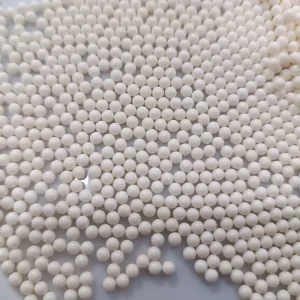
Irregular, non-spherical beads cause point-contact friction, wedging inside retention screens and eroding the screen geometry. Our high-precision sphericity (≥95% to 98% roundness across diameters 0.1 mm to 30 mm) minimizes screen blinding, reduces maintenance downtime, and stabilizes mill pressure.
Yes. Every batch dispatched to international clients includes a Certificate of Analysis (COA) specifying Al₂O₃ content, trace impurities (Fe₂O₃, Na₂O, SiO₂), bulk density, crush strength, and laser diffraction particle size metrics.
Connect with our ceramic engineering team to calculate optimum bead size distributions and load volumes for your mill models.
Send Inquiry Now