Follow 


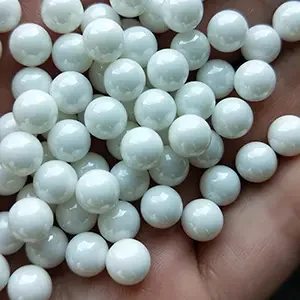
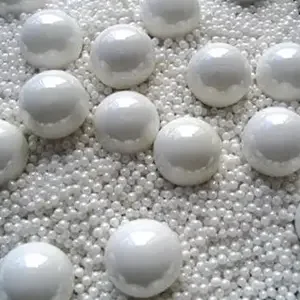
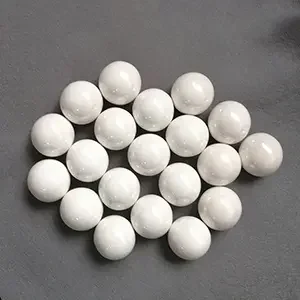
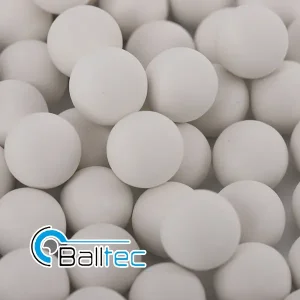
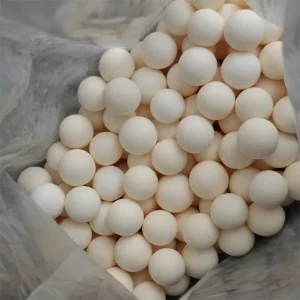
Engineered 92%–99.99% $\alpha$-$\text{Al}_2\text{O}_3$ Ceramic Grinding Spheres for Industrial Ultrafine Milling, Ceramic Glazes, and Contamination-Free Spanish Manufacturing
Direct factory-supplied advanced ceramic milling spheres optimized for wet and dry grinding systems across Castellón, Catalonia, and Basque industrial centers.
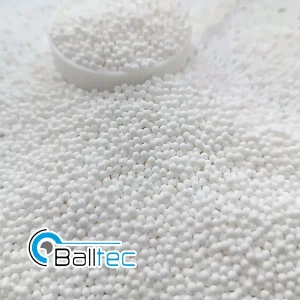
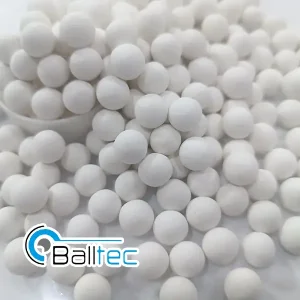
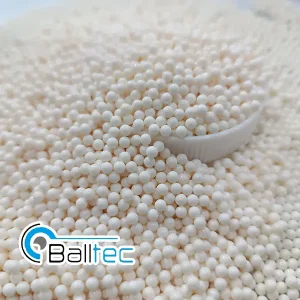
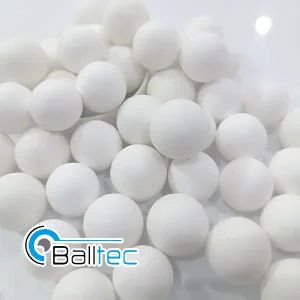
As Southern Europe’s foremost hub for ceramic manufacturing, specialty chemicals, and advanced surface coatings, Spain demands grinding media that combine extreme hardness, ultra-low wear rates, and absolute chemical inertness. The rapid technological shift toward sub-micron particle dispersion across Spanish industries requires a transition from traditional silica sand and low-density natural pebbles to engineered High Purity Alumina (HPA) grinding beads.
In the heart of Spain’s ceramic cluster—spanning Castellón de la Plana, Vila-real, Onda, and Almazora—the production of high-end porcelain tiles, atomized powders, and sophisticated ceramic frits requires continuous wet milling in large-capacity ball mills and vertical agitator bead mills. Standard grinding media often introduce unwanted iron or silica impurities, causing color degradation in light-colored glazes and reducing structural flexural strength. By deploying high-density $\alpha$-$\text{Al}_2\text{O}_3$ beads containing 92% to 99.99% pure aluminum oxide, Spanish manufacturers achieve faster micronization, reduced milling cycle times, and zero elemental contamination.
Beyond the ceramic sector, Spain’s burgeoning battery materials supply chain in Catalonia, the specialty chemical complexes near Tarragona, and the advanced automotive paint facilities in Valencia and Zaragoza demand uncompromising purity. In these ultra-fine grinding applications (where target particle sizes $D_{50}$ drop below 0.5 microns), high-purity alumina beads prevent heavy metal cross-contamination, ensuring that active battery materials (such as LFP cathode precursors) maintain high ionic conductivity and electrochemical stability.
The mechanical resilience of high purity alumina grinding beads stems directly from precise powder preparation, advanced forming processes, and high-temperature microcrystalline phase transformation.
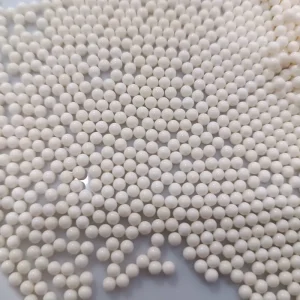
While low-cost commercial beads rely on basic rolling disc methods that trap internal air pockets and yield uneven sphericity, our factory utilizes automated Cold Isostatic Pressing (CIP) for media above 15mm and advanced spray-granulation drip-forming for micro-beads (<3mm). This ensures uniform omnidirectional compaction, eliminating internal voids and structural stress lines.
During computer-controlled sintering at temperatures exceeding 1680°C in high-efficiency natural gas tunnel kilns, raw calcined alumina transforms completely into dense $\alpha$-$\text{Al}_2\text{O}_3$ microcrystals. Tight grain boundary growth (<2.5 $\mu\text{m}$) resists intergranular fracture under heavy impact loads inside high-speed horizontal bead mills.
We formulate custom purity levels tailored to process dynamics. While 92% $\text{Al}_2\text{O}_3$ serves high-volume mineral slurry milling, our 99.5% and 99.99% (4N Purity) grades cater specifically to electronic components, CMP slurries, phosphor powders, and bio-ceramic applications across European research institutes.
| Parameter / Specification | 92% Alumina Grade | 95% High Density Grade | 99.5% High Purity (3N5) | 99.99% Ultra-Pure (4N) |
|---|---|---|---|---|
| $\text{Al}_2\text{O}_3$ Content (%) | ≥ 92.0% | ≥ 95.0% | ≥ 99.5% | ≥ 99.99% |
| Bulk Density ($\text{g/cm}^3$) | ≥ 3.60 | ≥ 3.68 | ≥ 3.80 | ≥ 3.92 |
| Specific Gravity ($\text{g/cm}^3$) | 3.65 | 3.72 | 3.85 | 3.98 |
| Mohs Hardness | 8.5 | 9.0 | 9.0 | 9.0+ |
| Self-Wear Rate ($\text{g/kg}\cdot\text{h}$) | ≤ 0.01% | ≤ 0.008% | ≤ 0.003% | ≤ 0.001% |
| Water Absorption (%) | ≤ 0.01% | ≤ 0.005% | 0.00% (Impermeable) | 0.00% (Impermeable) |
| Color | White | Bright White | Ivory White | Pure Translucent White |
| Available Diameters | 0.5mm – 60mm | 0.2mm – 50mm | 0.1mm – 30mm | 0.05mm – 20mm |
Procurement managers in Castellón, Valencia, and Bilbao face increasing margin pressures due to rising European energy costs. Sourcing directly from our integrated production base in Pingxiang, Jiangxi—China’s premier industrial ceramic capital—delivers unrivaled cost efficiency without compromising technical compliance.
Our facility houses 12 automated spray drying towers, 40 high-tonnage cold isostatic presses, and 6 continuous computer-monitored tunnel kilns. This massive vertical integration guarantees stable supply, rapid production turnarounds, and direct ex-factory pricing that bypassed costly European distributor markups.
We provide comprehensive export management tailored to Spanish customs requirements. From sea-freight container consolidation direct to the Port of Valencia (ideal for Castellón tile manufacturers) and Port of Barcelona, to DAP/DDP inland trucking straight to your factory warehouse, our logistics chain is optimized for zero supply disruptance.
Every shipment delivered to Spain includes a Certificate of Analysis (CoA) detailing X-ray fluorescence (XRF) elemental purity, micro-hardness verification, sphericity index measurements, and batch wear-loss testing. Full traceability ensures peace of mind for quality auditors.
By transitioning from regional European brokers to direct factory sourcing with Baitian New Materials, Spanish industrial enterprises typically achieve a 25% to 40% reduction in total grinding media procurement expenditure. Concurrently, our high-density beads reduce mill energy consumption by up to 30% per metric ton of ground material.
Choosing grinding media based solely on initial purchasing price per kilogram is a common procurement misstep. The true operational expense lies in media wear rates, mill energy draw, throughput rate, and downstream slurry filtration costs.
In continuous ceramic glaze production lines operating 24/7 in Vila-real, grinding media degrade via surface abrasion and mechanical chipping. Low-grade 75% or 85% alumina media exhibit high wear rates, adding up to 1.5 kg of worn ceramic residue into every ton of glaze slurry. This not only skews slurry viscosity but requires frequent media top-offs, increasing mill downtime. Our 95% and 99.5% high purity beads exhibit wear rates under 0.005%, extending media charge replacement cycles by 300%.
The kinetic energy ($E_k$) delivered by a grinding bead during collisions within an agitator bead mill is directly proportional to its mass and the square of its velocity:
Where $d$ is bead diameter and $\rho$ is density. By utilizing high-density alumina beads ($\rho \ge 3.68 \text{ g/cm}^3$) over lower-density glass or silicate media ($\rho \approx 2.5 \text{ g/cm}^3$), kinetic energy per impact increases by nearly 47%. This allows mill operators to increase slurry throughput rates or reduce mill rotational speeds, directly lowering electricity consumption on heavy 500kW drive motors.
We engineer distinct bead sizes, sphericity tolerances, and chemical purities tailored to specific regional industries across the Iberian Peninsula.
Application: Wet grinding of engobes, frits, zircon-based white glazes, and body slips in continuous ball mills.
Recommended Media: 92% to 95% Alumina Balls (20mm – 60mm).
Key Benefit: Superior impact resistance prevents ball cracking under severe tumbling forces, keeping glazes spotlessly white.
Application: Ultrafine milling of inorganic pigments (cobalt blue, praseodymium yellow) for inkjet printing heads.
Recommended Media: 99.5% Micro-Beads (0.1mm – 0.6mm).
Key Benefit: Tight particle size distribution ($D_{99} < 0.8\mu\text{m}$) prevents jet nozzle clogging in modern digital tile printers.
Application: Wet dispersion of lithium iron phosphate (LFP), silicon-carbon anodes, and solid-state electrolyte powders.
Recommended Media: 99.99% (4N) High Purity Micro-Spheres.
Key Benefit: Absolute zero metallic contamination; preserves battery cell safety, cycle life, and thermal resistance.
Application: High-energy dispersion of clear coats, metallic car paints, and anti-corrosion marine primers.
Recommended Media: 95% High Density Beads (0.8mm – 2.0mm).
Key Benefit: Rapid gloss development, elimination of paint haze, and excellent cleanability between batch color swaps.
Answers to critical questions asked by Spanish plant managers, process engineers, and purchasing officers.
Explore our full line of high-purity alumina ceramic balls, micro-beads, and wear-resistant grinding spheres engineered for high-volume Spanish industrial supply chains.
Looking to upgrade milling efficiency, lower self-wear contamination, and streamline grinding media costs for your Spanish factory? Contact our ceramic engineering team today for technical consultations, custom size quotes, and free sample requests.