Follow 


Ultra-low friction, non-conductive, and extreme-wear resistant bearing components calibrated to ISO 3290-2 G3/G5 precision limits.
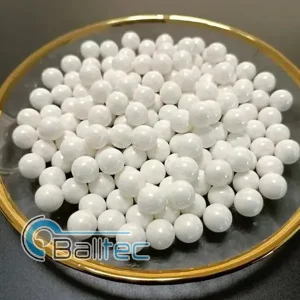
Micro-engineered $Si_3N_4$ and $ZrO_2$ balls for high-RPM electronic actuators and medical devices in Victoria.
Explore Tech Specs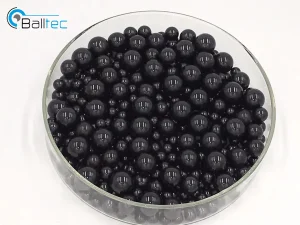
Super-finished ceramic spheres designed for smooth torque transmission in high-payload industrial robotics joints.
Explore Tech Specs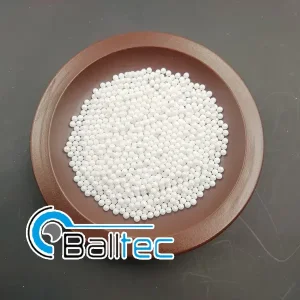
Inert, thermal-shock resistant white zirconia balls capable of continuous operation up to 800°C in harsh chemical media.
Explore Tech Specs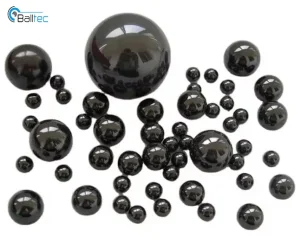
The ultimate anti-friction bearing ball for high-speed CNC machine tool spindles and aerospace rotables.
Explore Tech SpecsGreater Melbourne, anchored by manufacturing powerhouses in Dandenong South, Campbellfield, Fishermans Bend, and Monash Precision Innovation Precinct, is undergoing a deep technological metamorphosis. As Victorian industries move away from legacy steel components toward high-efficiency, automated, and green-energy manufacturing, mechanical friction and thermal breakdown represent major engineering bottlenecks.
Traditional chrome steel (AISI 52100) and stainless steel bearings frequently suffer from electrical fluting (stray currents from variable frequency drives), chemical corrosion in CIP washdown procedures, and catastrophic galling under unlubricated or elevated temperature conditions. High-performance industrial ceramic bearing balls—specifically Gas Pressure Sintered Silicon Nitride ($Si_3N_4$) and Yttria-Stabilized Tetragonal Zirconia Polycrystals (Y-TZP)—provide a definitive tribological solution.
Comprehensive material benchmark detailing physical, mechanical, and electrical parameters of advanced ceramic bearing balls versus conventional steel alloys.
| Material Property | Silicon Nitride ($Si_3N_4$) | Zirconia ($ZrO_2$ Y-TZP) | Alumina ($Al_2O_3$ 99.5%) | Bearing Steel (AISI 52100) |
|---|---|---|---|---|
| Density ($g/cm^3$) | 3.25 (Ultra Light) | 6.05 | 3.95 | 7.85 (Heavy) |
| Vickers Hardness (HV10) | 1600 - 1800 | 1200 - 1300 | 1500 - 1650 | 700 - 800 |
| Compressive Strength (MPa) | 3000 | 2100 | 2400 | 1200 |
| Thermal Expansion ($10^{-6}/K$) | 3.2 | 10.5 (Steel Matched) | 8.0 | 12.5 |
| Electrical Resistivity ($\Omega\cdot cm$) | $>10^{14}$ (Insulator) | $>10^{12}$ (Insulator) | $>10^{14}$ (Insulator) | $10^{-5}$ (Conductor) |
| Fracture Toughness ($MPa\cdot m^{1/2}$) | 6.0 - 7.5 | 9.0 - 12.0 (Extreme) | 4.0 - 5.0 | 20.0 |
| Max Operating Temp (°C) | 1000°C | 500°C | 1300°C | 150°C |
Allowable ball diameter variation ($V_{Lw}$): 0.08 µm. Sphericity deviation ($ΔR_w$): 0.08 µm. Surface roughness ($Ra$): 0.012 µm. Designed for high-frequency spindle bearings exceeding 40,000 RPM.
Allowable ball diameter variation ($V_{Lw}$): 0.13 µm. Sphericity deviation ($ΔR_w$): 0.13 µm. Surface roughness ($Ra$): 0.014 µm. Ideal for robotics joint reducers, medical centrifuges, and precision flow meters.
Standard industrial precision ceramic balls. Excellent cost-to-performance ratio for valve check balls, food processing pumps, and chemical agitator systems.
Providing specialized ceramic bearing solutions engineered specifically for Victoria's distinct industrial hubs and operational environmental conditions.
In Melbourne's food and dairy processing facilities, automated equipment undergoes intense daily CIP (Clean-in-Place) washdown using caustic soda and nitric acid solutions. Conventional steel bearings suffer rapid seal failure, grease wash-out, and localized pitting, risking food batch contamination.
The Solution: Inert Silicon Nitride ($Si_3N_4$) and Zirconia ($ZrO_2$) balls fitted in stainless steel or full-ceramic housings operate unlubricated or with food-grade H1 synthetic grease, eliminating fluid contamination risks and offering a 10x service life increase in aggressive acidic environments.
Victoria's precision tooling and aerospace components sector requires CNC machinery operating at rotational speeds exceeding 30,000 RPM. Under extreme centrifugal force, heavy steel balls flex, generate heat, and expand, leading to spindle thermal growth and loss of machining accuracy.
The Solution: Hybrid ceramic bearings utilizing G3 Grade Silicon Nitride balls reduce centrifugal loading by 60%, lower internal operating temperatures by 25°C, and prevent micro-fretting, maintaining sub-micron machining tolerances across extended production runs.
Advanced robotics manufacturers in Monash require joint reducers and harmonic drives that deliver zero backlash, extremely high stiffness, and lightweight agility for automated assembly lines.
The Solution: Precision-ground Zirconia ($ZrO_2$) and Silicon Nitride balls provide superior elastic modulus ($320\ GPa$) and crack resistance under abrupt directional changes, ensuring reliable, maintenance-free robotic actuator performance.
Naval defense, subsea monitoring arrays, and marine propulsion equipment operating in Port Phillip Bay face continuous galvanic corrosion and abrasive salt-water splash conditions.
The Solution: Full-ceramic bearings constructed with Yttria-Stabilized Zirconia balls and PEEK cages require zero petroleum lubrication, preventing marine toxic leaks while maintaining smooth rotational torque under full saltwater immersion.
Insight into global material science innovations transforming ceramic sphere manufacturing and industrial adoption worldwide.
With global EV adoption accelerating, modern electric vehicle drive motors feature inverter frequencies exceeding 20 kHz. These high frequencies induce parasitic shaft voltages that cause electro-discharge machining (EDM) fluting in conventional steel ball bearings. Silicon nitride ceramic balls act as an absolute dielectric barrier, permanently solving electrical erosion in electric mobility drivetrains.
Legacy pressureless sintering often leaves micro-porosity within ceramic matrices, creating crack propagation starting points. Modern high-temperature Gas Pressure Sintering (GPS) under 10–100 MPa of pure Nitrogen atmosphere eliminates micro-voids, elevating fracture toughness ($K_{IC}$) to $>7.5\ MPa\cdot m^{1/2}$ and extending L10 bearing fatigue life by up to 300%.
Next-generation R&D focuses on Silicon Nitride-Graphene nanocomposites and Y-TZP/Alumina toughened matrix structures ($ATZ/ZTA$). These engineered formulations provide self-lubricating micro-interfaces and real-time acoustic emission feedback capabilities for predictive maintenance in critical aerospace and semiconductor manufacturing tools.
As a global precision ceramic manufacturer operating an integrated 100,000 m² campus, we streamline procurement for Australian OEM engineers, industrial bearing distributors, and maintenance engineering teams in Melbourne.
Every batch of powder undergoes X-ray fluorescence (XRF) and laser diffraction particle size analysis. Complete material certificates (EN 10204 3.1) provided with every shipment.
All G3 and G5 precision balls undergo automated optical sorting, laser micrometer sizing, and eddy-current surface defect screening to ensure zero internal micro-cracks.
From non-standard micro-diameters (0.5mm) to oversized industrial spheres (50mm+), our engineering team supports custom tolerances, lap finishing, and tailored ceramic chemistries.
Browse our complete production line of structural, grinding, and precision bearing ceramic balls available for export to Melbourne industrial hubs.
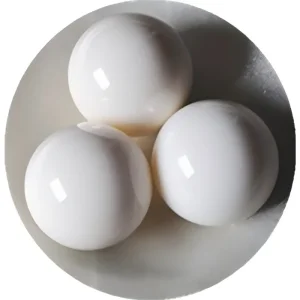
High-purity aluminum oxide ceramic spheres (6mm, 8mm, 9mm, 20mm) designed for wear-resistant valve checks and pumps.
Explore Tech Specs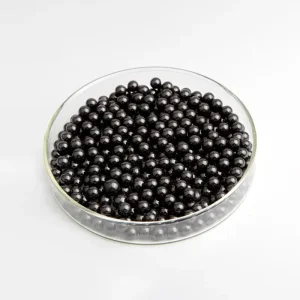
Black high-density silicon nitride spheres for severe tribological conditions, high temperature, and extreme velocity.
Explore Tech Specs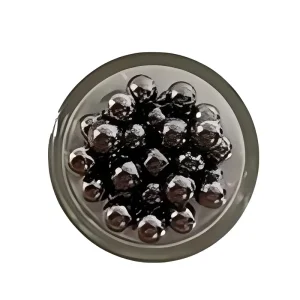
Precision metallic solid balls optimized for pairing with ceramic races in hybrid custom bearing configurations.
Explore Tech Specs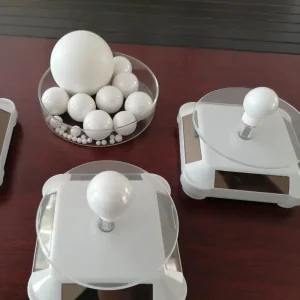
Yttria-stabilized zirconia spheres featuring extreme fracture toughness and mirror surface finishes down to Ra 0.005 µm.
Explore Tech Specs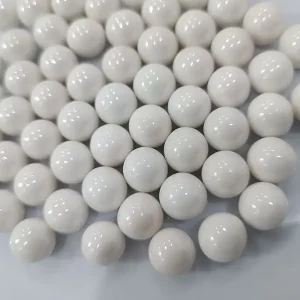
Specialized zirconium oxide bearing spheres engineered for non-magnetic medical instruments and chemical metering valves.
Explore Tech Specs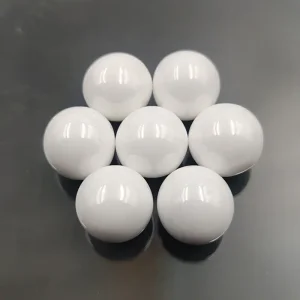
FDA-compliant non-reactive ceramic spheres designed specifically for food, beverage, and pharmaceutical fluid handling.
Explore Tech Specs
Ultra-dense micro balls engineered for miniature drive bearings, high-speed dental handpieces, and micro fluidics.
Explore Tech Specs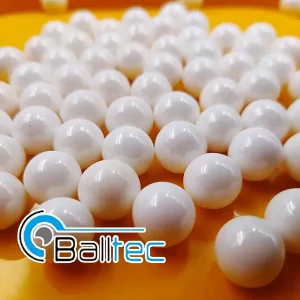
Ultra-fine ceramic micro-media engineered for nano-grinding, pharmaceutical dispersion, and high-purity laboratory milling.
Explore Tech SpecsDetailed technical answers compiled by our senior tribology experts for Victorian procurement teams and mechanical engineers.