Follow 


Factory-direct industrial ceramic media and materials engineered for ultra-fine semiconductor milling, electronic slurry dispersion, and high-reliability industrial applications.
Understanding the transition from basic manufacturing to high-precision hardware, advanced material processing, and Industry 4.0 integration.
The global industrial electronics ecosystem is undergoing a structural transformation. Modern industrial operations demand unyielding reliability, sub-micron precision, and seamless integration between physical electromechanical systems and digital intelligence. At the foundation of this technological revolution are China's industrial electronics manufacturers and advanced material factories, which have evolved from cost-driven assembly hubs into global powerhouses of automated production, advanced ceramics processing, microelectronics packaging, and high-frequency hardware integration.
Global original equipment manufacturers (OEMs), Tier-1 automotive suppliers, and industrial automation integrators increasingly rely on China's integrated supply chains. This reliance spans beyond traditional Surface Mount Technology (SMT) and Printed Circuit Board Assembly (PCBA) to include essential foundational sub-components—such as ultra-high purity zirconia ceramic substrates, yttria-stabilized zirconia (YSZ) grinding media for electronic passive component slurries, high-frequency molecular sieves for cleanroom gas purging, and silicon nitride ceramic bearing balls for high-speed industrial motor spindles.
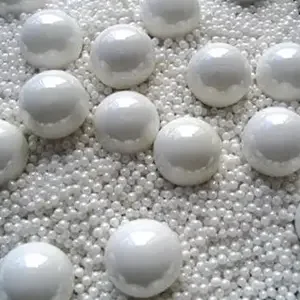
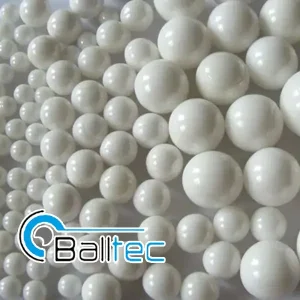
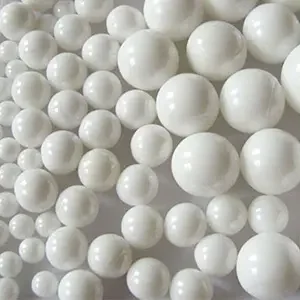
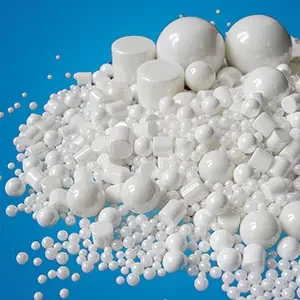
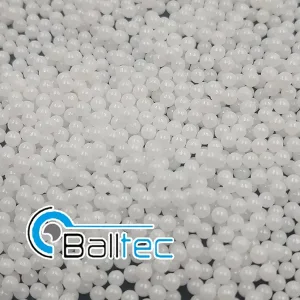
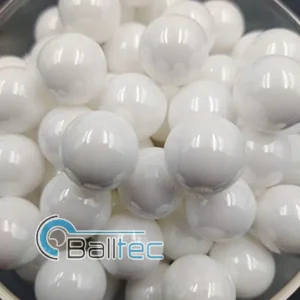
Modern electronics require advanced thermal management and mechanical toughness. Chinese factories lead in processing 99.99% alumina and 95% YSZ media essential for milling MLCC dielectric powders and lithium battery slurries.
Implementation of Manufacturing Execution Systems (MES), automated optical inspection (AOI), and AI-driven quality gates ensures zero-defect rates across high-volume industrial electronics production runs.
Leading facilities maintain full compliance with ISO 9001, ISO 14001, ISO 45001, and IATF 16949 automotive standards, guaranteeing full material traceability from raw powder to finished product.
Key technology vectors driving innovation, component miniaturization, and elevated procurement standards across international industrial sectors.
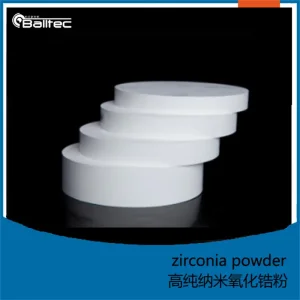
The transition toward Silicon Carbide (SiC) and Gallium Nitride (GaN) wide-bandgap semiconductors has revolutionized industrial motor drives, renewable energy inverters, and EV fast chargers. These power modules operate at higher temperatures and frequencies, necessitating advanced substrate ceramics (such as Direct Copper Bonded Alumina and Active Metal Brazed Zirconia-Toughened Alumina) that offer high thermal conductivity and thermal expansion matching.
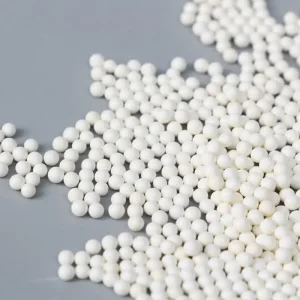
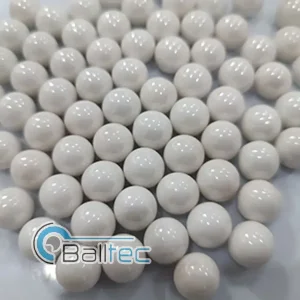
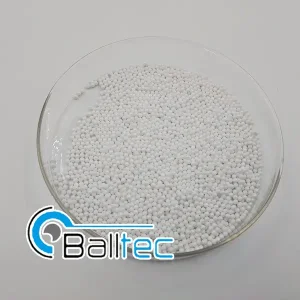
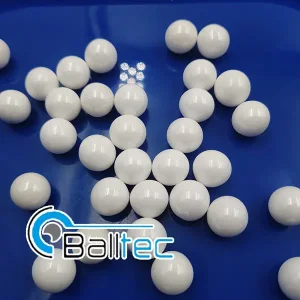
As microelectronics miniaturize down to 01005 and 008004 chip scale sizes, Multilayer Ceramic Capacitors (MLCCs) demand defect-free ultra-fine dielectric powders. Achieving uniform nanometer grain size requires grinding media made of 95% Yttria Stabilized Zirconia (YSZ) beads with near-zero wear rates to eliminate slurry contamination during high-energy bead milling.
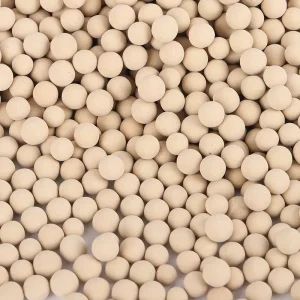
Factory automation relies heavily on decentralized Edge AI nodes, predictive maintenance vibration sensors, and real-time environmental monitors. These industrial IoT hardware components require ruggedized ceramic enclosures, chemical-resistant sealants, and moisture-absorbing 4A/13X molecular sieves to ensure long-term stability in harsh industrial atmospheres.
Global procurement teams prioritize vendors offering comprehensive lifecycle tracking, environmental management (ISO 14001), and resilient dual-sourcing capabilities. Chinese industrial ceramic and electronics clusters in Jiangxi and Guangdong provide fully integrated supply chains—from raw material mining to finished high-precision assembly.
Operational metrics driven by smart factory automation, computerized continuous sintering kilns, and integrated supply chain clusters.
In high-precision electronics manufacturing, small material inconsistencies can trigger batch failures in MLCC sintering, semiconductor chemical-mechanical planarization (CMP), or sensor encapsulation. Advanced Chinese industrial manufacturers leverage tight vertical integration. By handling raw zirconium/aluminum oxide synthesis, wet media bead milling, high-pressure iso-static pressing (CIP), and computer-controlled tunnel kiln sintering under one roof, factories achieve unparalleled lot-to-lot repeatability and cost optimization.
Technical comparison of primary industrial ceramic materials utilized in electronics production, component milling, and thermal management.
| Material Type | Specific Density (g/cm³) | Vickers Hardness (HV) | Primary Industrial Electronics Application | Key Performance Benefit |
|---|---|---|---|---|
| 95% YSZ (Yttria Stabilized Zirconia) | ≥ 6.00 | 1,250 - 1,350 | Nano-milling MLCC slurries, battery cathode pastes, electronic ink dispersion | Ultra-low wear rate, high impact energy, zero cross-contamination |
| 99.99% High Purity Alumina (4N Al₂O₃) | 3.85 - 3.95 | 1,600 - 1,750 | Semiconductor equipment substrates, high-voltage insulator components | Exceptional dielectric strength, high thermal conductivity, acid resistance |
| Zirconium Silicate (ZrSiO₄) | 4.00 - 4.10 | 1,000 - 1,100 | Medium-fine grinding of industrial pigments and electronic paints | Cost-effective alternative for medium-density bead milling |
| Zeolite 4A / 13X Molecular Sieves | 0.65 - 0.75 (Bulk) | N/A (Adsorbent) | Cleanroom gas purification, instrument air drying, semiconductor gas purge | High moisture & CO₂ adsorption capacity, precise pore size selectivity |
How industrial electronics components and advanced ceramic media resolve high-friction operational challenges across global industry segments.
In high-capacity multilayer ceramic capacitor production, ceramic powders must be ground to sub-micron particle distributions without introducing metallic impurities. Baitian YSZ micro-beads enable horizontal sand mills to achieve uniform D50 < 100nm slurry dispersion, maximizing capacitance density and yield rates.
High-purity 99.99% alumina components serve as critical plasma-resistant rings, wafer chuck supports, and high-voltage insulation barriers within chemical vapor deposition (CVD) and etching chambers, resisting extreme temperatures and aggressive chemical environments.
Industrial electronics manufacturing environments demand moisture-free compressed air and high-purity nitrogen purge streams. Engineered 4A and 13X molecular sieve beads remove trace water vapor, methanol, and volatile hydrocarbons down to dew points below -70°C.
In-depth technical guidance for procurement directors, supply chain managers, and process engineers.
Factory-direct high density ceramic balls, wear-resistant silicate media, and molecular sieves for industrial gas and electronics processing.