Follow 


Explore key raw materials, ceramic substrates, grinding media, and structural elements critical for precision semiconductor fabrication and power management component packaging.
The LM7805 integrated circuit remains an unmatched cornerstone in linear power conversion. Engineered as a 3-terminal monolithic fixed positive voltage regulator, it transforms unregulated high-DC input voltages into a stable, ripple-free +5V DC rail for digital logic, microcontrollers, embedded instrumentation, and industrial control systems.
Inside a standard LM7805 IC die, a precision Zener diode bandgap voltage reference serves as the benchmark against which the output voltage is continuously compared via an internal error amplifier. A Darlington NPN transistor pair acts as the primary pass element, modulating its effective internal resistance to maintain output stability despite fluctuations in input voltage ($V_{IN}$) or load current ($I_L$).
Thermal overload protection operates via a substrate-mounted temperature sensing transistor. When the junction temperature ($T_J$) exceeds safe working limits (typically around $150^\circ C$), the circuit automatically shuts down the drive signal to the output transistor, preventing thermal runaway and catastrophic semiconductor burnout.
| Electrical Parameter | Symbol | Typical Value / Condition | Absolute Maximum Rating | Engineering Impact |
|---|---|---|---|---|
| Output Voltage | $V_{OUT}$ | 5.0 V DC ($\pm 2\%$ to $\pm 4\%$) | 4.8 V min – 5.2 V max | Provides tight power rail for 5V TTL, CMOS, and microcontrollers. |
| Input Voltage Range | $V_{IN}$ | 7.0 V – 20 V DC | 35.0 V DC | Requires $V_{IN} \ge V_{OUT} + V_{DROPOUT}$ for proper voltage regulation. |
| Dropout Voltage | $V_{DROPOUT}$ | 2.0 V ($I_{OUT} = 1.0A, T_J = 25^\circ C$) | 2.5 V max | Defines minimum differential voltage across input and output terminals. |
| Output Current Capability | $I_{OUT}$ | 1.0 A (TO-220 package with heatsink) | 1.5 A peak | Depends heavily on package thermal impedance ($\theta_{JC}$) and heatsinking. |
| Ripple Rejection Rate | $RR$ | 68 dB – 78 dB ($f = 120Hz$) | — | Suppresses input AC ripple voltage significantly superior to buck regulators. |
| Quiescent Current | $I_Q$ | 4.2 mA – 6.0 mA | 8.0 mA max | Internal operational power loss independent of external load current. |
| Operating Junction Temp. | $T_J$ | 0°C to +125°C (Commercial / Industrial) | -40°C to +150°C | Determines heat dissipation design requirements and package thermal rating. |
China has established an unassailable global advantage in linear voltage regulator manufacturing by integrating silicon wafer fabrication, precision lead-frame stamping, automated semiconductor packaging (TO-220, TO-263, SOT-89, TO-92), and advanced thermal substrate production into highly synchronized industrial ecosystems.
Chinese semiconductor foundries utilize state-of-the-art 6-inch and 8-inch bipolar technology lines tailored for linear power management ICs. Continuous photolithography advancements yield exceptionally low die-to-die parameter dispersion, ensuring tighter output voltage tolerances ($\pm 2\%$) across massive production runs exceeding millions of units per month.
Effective heat removal is the defining operational constraint for linear regulators. Chinese manufacturers integrate high-conductivity oxygen-free copper lead-frames with ultra-fine refined alumina ($Al_2O_3$) and zirconia ($ZrO_2$) ceramic dielectric substrates. This lowers the thermal resistance from junction-to-case ($\theta_{JC}$), allowing devices to maintain steady 1.5A outputs without premature thermal shutdown.
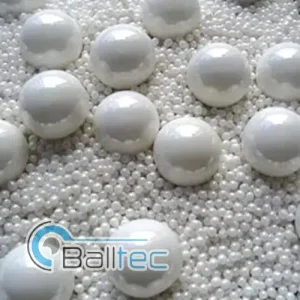
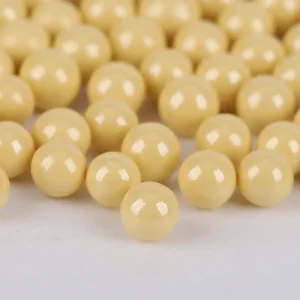
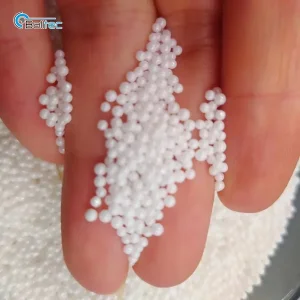
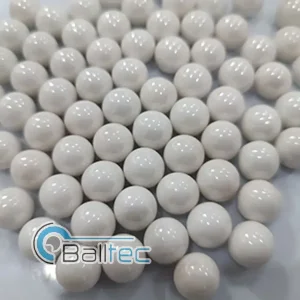
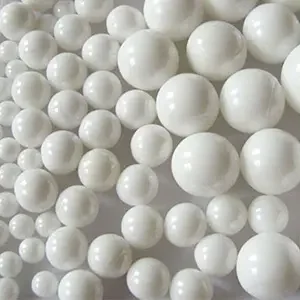
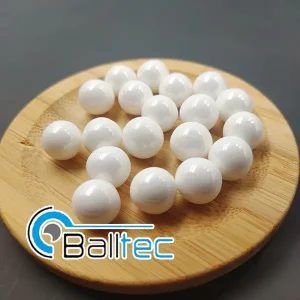
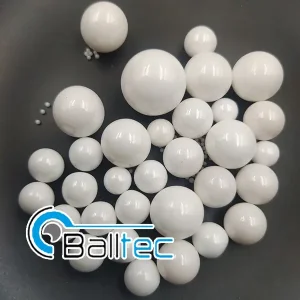
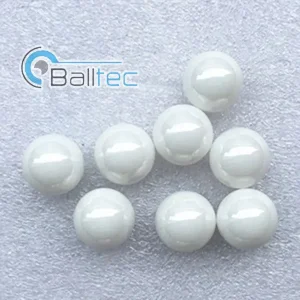
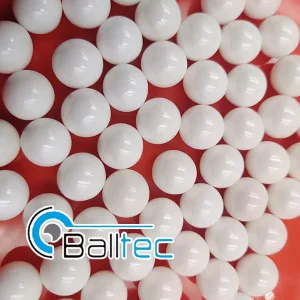
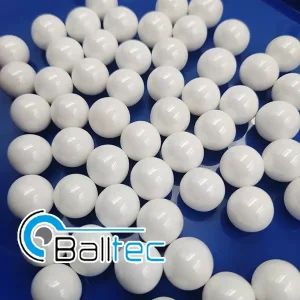
By coupling raw ceramic powder refining (using high-density zirconia grinding beads for nano-level particle dispersion) with high-speed automated wire bonding and epoxy encapsulation, Chinese exporters offer unmatched Bill-of-Materials (BOM) cost efficiency without compromising IPC-A-610 class 2 or class 3 electronics reliability.
When sourcing LM7805 linear regulators from Chinese manufacturers, enterprise procurement directors and hardware design engineers must evaluate supplier capabilities against rigorous international quality matrices to ensure long-term field stability and eliminate supply-chain risk.
The LM7805 is supplied across diverse package formats tailored to specific thermal and mechanical constraints:
Calculating the maximum allowable ambient operating temperature ($T_{A,max}$) is critical for component longevity:
Top-tier Chinese manufacturers supply complete thermal impedance curves ($\theta_{JC}$ as low as $3-5^\circ C/W$ for TO-220) and furnish high-purity alumina ceramic insulators to guarantee low thermal resistance ($\theta_{CS}$) while maintaining 2.5kV AC isolation voltage.
The high immunity to electromagnetic interference (EMI) and exceptional ripple rejection ratio (up to 78dB) make the LM7805 indispensable across multiple high-reliability industrial and commercial sectors.
In Programmable Logic Controllers (PLCs) and factory bus systems, 24V DC bus voltage is stepped down to 12V and then fed into an LM7805 TO-220 regulator. The result is a ultra-stable 5.0V power rail isolated from high-frequency switching noise generated by surrounding AC drives and solenoids.
Unlike switching DC-DC buck regulators that introduce residual ripple voltage and EMI spikes at $100kHz - 2MHz$, the linear LM7805 outputs a pure DC signal with near-zero harmonic noise—critical for 24-bit Analog-to-Digital Converters (ADCs), audio preamplifiers, and medical sensors.
Automotive 12V battery networks experience transient load dump voltage spikes. Chinese manufacturers offer AEC-Q100 qualified LM7805 variants with robust input voltage withstand capabilities up to 35V DC, safeguarding instrument clusters, GPS trackers, and diagnostic OBD-II readers.
Despite the widespread adoption of high-efficiency switching regulators, global demand for the LM7805 continues to expand steadily at a CAGR of 4.2%. The driver behind this enduring popularity lies in system architecture simplicity, total zero EMI generation, and revolutionary thermal substrate materials originating from Chinese technical centers.
Modern power electronics require continuous operation at higher ambient temperatures. Advanced Chinese ceramic manufacturing now produces ultra-dense Yttria-Stabilized Zirconia ($YSZ$) and Alumina ($Al_2O_3$) substrates utilizing micro-milling media refined down to sub-micron particle sizes. Integrating these ceramic heat spreaders into LM7805 modules increases power density by up to 35% without increasing mechanical package dimensions.
Modern high-tier electronics increasingly favor a hybrid architecture: a high-efficiency switching buck regulator steps down high voltage ($24V - 48V$) down to $7.5V$ with $92\%$ efficiency, followed by an LM7805 linear regulator that drops $7.5V \rightarrow 5.0V$. This hybrid configuration eliminates switching noise while keeping the linear regulator's thermal power dissipation ($P_D = (7.5 - 5.0) \times I_L$) extremely low.
Top-tier Chinese LM7805 manufacturers and electronic material exporters provide end-to-end supply chain integration, ensuring compliance with strict environmental regulations and offering direct engineering assistance to global OEM clients.
All manufactured LM7805 components and accompanying ceramic substrate accessories strictly adhere to EU RoHS Directive 2011/65/EU and REACH SVHC standards. Pure matte tin lead-frame plating ensures 100% lead-free, halogen-free reflow and wave soldering compatibility up to $260^\circ C$ peak profile.
Every export lot undergoes 100% automated parametric testing (ATE) for output voltage tolerance, line regulation ($V_{IN} = 7V \rightarrow 25V$), load regulation ($I_L = 5mA \rightarrow 1.5A$), and thermal shutdown threshold verification. Full Certificate of Analysis (COA) reports accompany every shipping container.
Suppliers offer versatile packaging options including standard Tape & Reel (EIA-481 compliant for automated SMT placement), Anti-Static Tube packaging, and custom vacuum sealed moisture-barrier bags (MBB) certified for J-STD-033 moisture sensitivity levels (MSL 1 / MSL 3).
In-depth technical responses engineered to solve critical component integration challenges and procurement queries regarding LM7805 voltage regulators and thermal substrates.
The LM7805 requires a minimum input voltage equal to $V_{OUT} + V_{DROPOUT}$. Under light loads ($I_{OUT} < 100mA$), dropout voltage is approximately $1.7V$, meaning an input voltage of $6.7V$ is sufficient. However, at full $1.0A - 1.5A$ load current, the worst-case dropout voltage increases to $2.0V - 2.5V$. Therefore, an input voltage of at least 7.5V DC is strictly recommended to guarantee nominal 5.0V regulation across all temperature ranges and load transients.
While the LM7805 is internally compensated, external capacitors are vital for preventing oscillation and enhancing transient response. A 0.33µF ceramic or tantalum capacitor must be placed as close as possible to the $V_{IN}$ and $GND$ pins if the regulator is located more than 2 inches from the main power supply filter. An output capacitor of 0.1µF ceramic is required to ensure high-frequency stability and suppress output voltage dips during sudden load current steps.
Power dissipation is calculated as: $P_D = (V_{IN} - V_{OUT}) \times I_{OUT} = (12V - 5V) \times 0.8A = 5.6W$. Assuming a maximum junction temperature $T_J = 125^\circ C$, ambient temperature $T_A = 40^\circ C$, package thermal resistance $\theta_{JC} = 4^\circ C/W$, and thermal grease/insulator resistance $\theta_{CS} = 0.5^\circ C/W$:
$\theta_{JA,max} = (T_J - T_A) / P_D = (125 - 40) / 5.6 = 15.18^\circ C/W$.
$\theta_{SA} = \theta_{JA,max} - \theta_{JC} - \theta_{CS} = 15.18 - 4.0 - 0.5 = \mathbf{10.68^\circ C/W}$. You must specify a heatsink with a thermal rating of $10.68^\circ C/W$ or lower.
High-purity alumina ($Al_2O_3$) and zirconia ($ZrO_2$) ceramics offer significantly higher thermal conductivity ($24-30 W/m\cdot K$ for alumina vs. $0.5 W/m\cdot K$ for mica/silicone pads) while maintaining extreme dielectric strength ($>15 kV/mm$). This dramatically lowers interface thermal resistance ($\theta_{CS}$), preventing local hot-spots and enabling higher continuous current output without mechanical deformation over time.
Standard documentation packages include ISO 9001 quality certificates, ISO 14001 environmental compliance, RoHS 2.0 (10 hazardous substances) test reports via SGS/Intertek, REACH SVHC declaration letters, material safety data sheets (MSDS), and batch-specific Certificate of Conformance (CoC) detailing parameter test results.
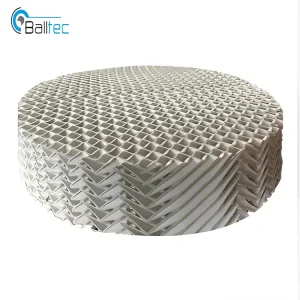
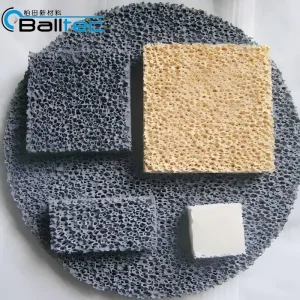
Discover additional precision ceramic media, high-density grinding spheres, and structured chemical packing elements manufactured to international quality standards.