Follow 


Explore our industrial-grade dielectric solutions, precision ceramic media, and advanced chemical materials supporting high-reliability capacitor manufacturing.
The global electronics sector is undergoing a profound structural shift. As automotive electrification, high-fidelity acoustic reproduction (Hi-Fi stereo), telecommunications power conditioning, and industrial energy storage accelerate, the demand for high-reliability, low Equivalent Series Resistance (ESR), and thermally resilient capacitors has surged. Modern stereo capacitors—ranging from high-end audio signal bypass film capacitors to ultra-dense ceramic dielectric power storage units—form the baseline architecture for signal purity, peak transient current supply, and voltage stabilization.
China has emerged as the global epicenter for stereo capacitor manufacturing and raw material processing. Driven by automated precision winding, sub-micron ceramic dielectric powder synthesis (utilizing Yttria-stabilized Zirconia and ultra-pure Alumina media for nano-milling), and rigorous automated optical inspection (AOI), Chinese suppliers supply over 62% of the global passive component market. This whitepaper analyzes the industrial landscape, technical innovations, material physics, and strategic sourcing paradigms defining China's stereo capacitor manufacturing output.
Stereo audio power amplifiers demand immediate power replenishment during dynamic bass peaks. Advanced stereo stiffening capacitors deliver instantaneous current with ultra-low ESL (Equivalent Series Inductance), eliminating amplifier clipping and distortion.
Audio-grade signal capacitors utilize metallized polypropylene (MKP) or high-k ceramic formulations with non-inductive winding techniques. This minimizes total harmonic distortion (THD+N) and preserves micro-detail resolution in stereo soundstages.
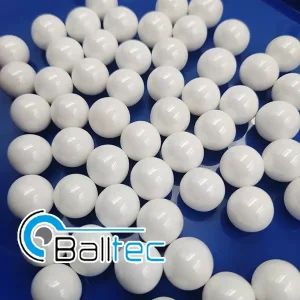
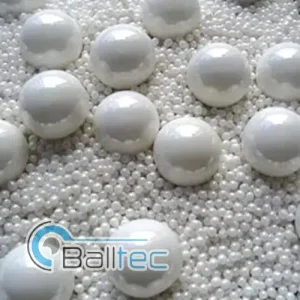
Utilizing high-purity zirconia ($ZrO_2$) and alumina ($Al_2O_3$) processed grinding media, Chinese factories achieve defect-free dielectric grain boundaries. This guarantees thermal stability across harsh automotive (-40°C to +125°C) environments.
The performance of a stereo capacitor is intrinsically linked to the chemical purity and physical uniformity of its dielectric matrix. Whether manufacturing Multi-Layer Ceramic Capacitors (MLCC), Aluminum Electrolytics, or Metallized Film units, key physical parameters dictate operational reliability:
| Capacitor Dielectric Class | Dielectric Constant ($\epsilon_r$) | Dissipation Factor ($\tan \delta$) | Thermal Drift (PPM/°C) | Primary Industrial / Stereo Application |
|---|---|---|---|---|
| C0G / NP0 (Class 1 Ceramic) | 15 – 100 | < 0.0005 | 0 ± 30 ppm/°C | Ultra-stable Audio Signal Paths, Precision Tuning, RF Matching |
| X7R / X8R (Class 2 Ceramic) | 2,000 – 4,500 | < 0.015 | ± 15% (-55 to +125°C) | Power Decoupling, Automotive Infotainment, Stereo Amplifiers |
| Metallized Polypropylene (MKP) | 2.2 | < 0.0003 | -200 ppm/°C | Crossover Networks, High-End Audio Bypass, Power Stiffening |
| Hybrid Conductive Polymer | High Capacitance Density | < 0.008 | Low Temperature Sensitivity | Vehicle Stereo Power Filtering, Ultra-Low ESR Decoupling |
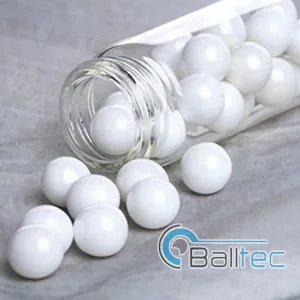
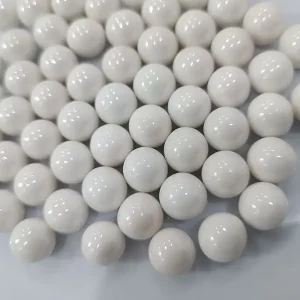
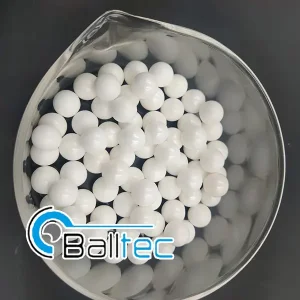
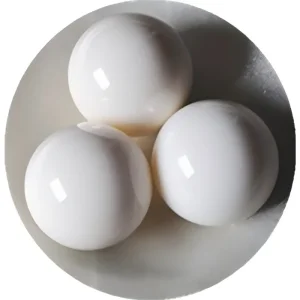
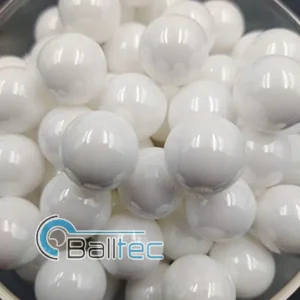
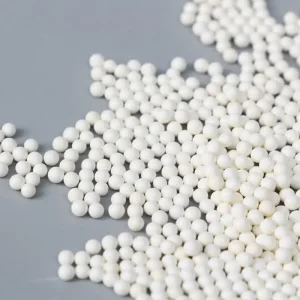
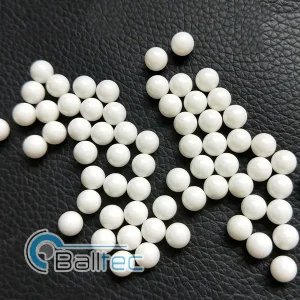
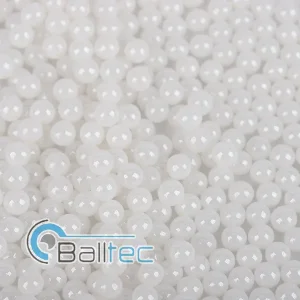
To eliminate dielectric breakdown under high voltage stress, raw materials such as Barium Titanate ($BaTiO_3$), Zirconia ($ZrO_2$), and Alumina ($Al_2O_3$) must undergo wet grinding to sub-micron particle sizes ($D_{50} < 100\text{ nm}$). Lead China factories utilize Yttria-Stabilized Zirconia (YSZ) grinding media to prevent metallic contamination during planetary ball milling. The exclusion of iron or silica impurities prevents localized electrical hot-spots, yielding a dielectric breakdown strength exceeding $150\text{ kV/mm}$.
Stereo capacitors and specialized dielectric ceramics serve distinct roles across modern automotive, consumer, and industrial ecosystems:
Electric vehicle (EV) cabin architectures demand silent power supply lines. High-capacity stereo power capacitors (1.0 Farad to 5.0 Farad stiffening units) buffer transient voltage drops caused by heavy subwoofers, protecting delicate ECU telemetry while delivering punchy, distortion-free audio dynamic response.
Audiophile-grade stereo preamplifiers and monoblock power amplifiers utilize custom Chinese-manufactured foil-and-film capacitors. Low-absorption dielectrics eliminate microphonic piezoelectric coloration, resulting in pristine spatial imaging, deep soundstage depth, and uncolored signal amplification.
The technology driving high-Q stereo capacitors is directly scaled into renewable energy power conditioning. High-voltage DC-link film capacitors stabilize 800V solar inverters and 5G base station power modules, operating continuously under intense ripple currents.
China's component manufacturers are moving beyond mass supply to high-precision engineering leadership. The technical roadmap focuses on material science integration, sustainability, and ultra-miniaturization:
Implementation of atomic-layer deposition (ALD) and nano-doped ceramic powders to create ultra-thin dielectric layers ($< 0.5 \mu\text{m}$). This raises volumetric capacitance density by 40% while maintaining high DC bias voltage retention.
Replacement of liquid electrolytes with high-conductivity solid polymers and advanced ceramic separators. Eliminates dry-out risks, extends service life to >20,000 hours at 125°C, and achieves near-zero ESR for audio power supplies.
Transitioning factories in ceramic clusters like Pingxiang, Jiangxi to 100% clean-energy electric kilns, closed-loop water recovery, and eco-friendly organic binders for zero-VOC dielectric film manufacturing.
Sourcing passive components from top-tier Chinese manufacturers provides strategic advantages beyond unit cost savings. Robust supply chain integration guarantees batch-to-batch repeatability and long-term security:
From chemical synthesis of raw $ZrO_2$ and $Al_2O_3$ ceramic media in Pingxiang to automated high-speed film winding and terminal welding, China's vertical integration minimizes supply lead times from months to days.
Leading factories comply with ISO 9001:2015, ISO 14001, and IATF 16949 automotive standards. Component lots undergo 100% helium leak detection, surge voltage testing, X-Ray fluorescence (XRF) material verification, and automated optical sorting.
Engineers provide customized terminal configurations (screw terminals, snap-in, radial leads, SMD), custom outer sleeve labeling, specialized capacitance tolerances (down to ±1%), and application-specific thermal packaging.
Answers to critical technical questions asked by hardware design engineers, audio developers, and industrial purchasing managers.
A stereo stiffening capacitor acts as a low-impedance energy reservoir placed in parallel with the power amplifier's DC supply lines. Car batteries have internal resistance and long wire runs that introduce voltage dips during heavy transient currents (such as low-frequency bass hits). The capacitor instantly discharges energy to maintain stable voltage, preventing amplifier clipping, reducing alternator noise, and restoring transient attack clarity.
ESR represents the combined electrical resistance of terminal leads, internal foils, and dielectric dissipation. High ESR causes internal heating, limits peak current delivery, and attenuates high-frequency transients. Ultra-low ESR stereo capacitors ensure clean signal transmission, minimal phase distortion, and cool operation under high continuous ripple current loads.
Ceramic capacitors rely on homogeneous dielectric powders (like Barium Titanate). During wet milling, low-grade grinding media wear down and introduce heavy metal or metallic oxide contamination into the slurry. High-density Yttria-stabilized Zirconia (YSZ) and 99.99% Alumina beads possess extreme wear resistance, preventing dielectric contamination and guaranteeing high insulation resistance ($IR$) and breakdown voltage consistency across millions of manufactured MLCC chips.
Class 1 dielectrics (C0G/NP0) exhibit linear temperature coefficients, zero microphonic piezoelectric response, and low capacitance change under DC bias, making them ideal for signal paths and active crossovers. Class 2 dielectrics (X7R, X5R) offer significantly higher volumetric capacitance density, making them suitable for power supply bypass, DC-DC filtering, and power decoupling where higher capacitance per volume is needed.
Reputable Chinese suppliers supply full compliance dossiers including RoHS, REACH, CE, and UL certifications. Furthermore, lot-specific Material Inspection Reports (MIR), Mill Test Certificates (MTC), XRF elemental analyses, and lifetime endurance test data (e.g., 2000-hour ripple voltage life tests at maximum temperature) are provided upon request.
Yes. Chinese OEMs support comprehensive customization including custom dielectric foil thickness, specialized internal series construction for high voltage ratings (>3000V DC), custom aluminum can dimensions, specialized potting resins (flame retardant UL94-V0), and custom laser-engraved branding for global distributors.
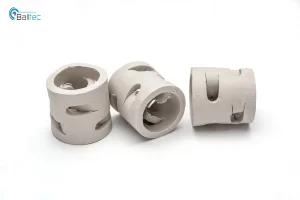
Complete product catalog including high-purity adsorbents, catalyst supports, tower packings, and ceramic bearing balls engineered for extreme industrial environments.