Follow 


Direct factory supply of high-purity zirconia, alumina, and silicon nitride elements tailored for high-frequency switch electronics and ultra-fine dispersion applications.
Strategic analysis of China's semiconductor & electromechanical switch manufacturing capability, technological convergence, and material innovations driving next-generation power control.
The global switch electronics sector is undergoing a profound paradigm shift driven by the rapid electrification of transportation, high-density smart grids, 5G/6G telecommunication architectures, and automated industrial processing environments. Modern electronic switches—ranging from solid-state relays (SSRs) and microswitches to high-voltage DC contactors and rotary selector switches—no longer rely solely on conventional polymers or metallic alloys. Instead, top-tier global Original Equipment Manufacturers (OEMs) are turning to China's specialized manufacturing ecosystem for integrated ceramic-to-metal switch housings, high-dielectric substrates, and anti-friction ceramic components.
China has firmly established itself as the global epicenter for electronic switch manufacturing and exporter operations. By integrating upstream ultra-pure material processing with downstream precision molding, Chinese manufacturers offer unparalleled scalability, strict compliance with international standards (such as IEC, UL, and ISO), and cost-competitive engineering innovations. Central to this competitive edge is the utilization of advanced industrial ceramics—specifically Yttria-Stabilized Zirconia (YSZ, ZrO₂), High-Purity Alumina (Al₂O₃), and Silicon Nitride (Si₃N₄)—which solve critical failure modes associated with thermal degradation, electrical arcing, micro-vibration wear, and aggressive chemical exposure.
Traditional switch assemblies utilizing organic polymers suffer from dielectric breakdown under high thermal stress (>200°C) and carbon tracking during electrical arcing. Advanced technical ceramics engineered in China provide dielectric strength exceeding 15–20 kV/mm, zero carbonization under continuous arc quenching, and near-zero coefficient of friction when utilized in mechanical rotary switch assemblies.
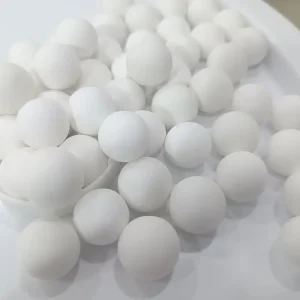
Precision Zirconia (ZrO₂) and Alumina (Al₂O₃) vacuum interrupter chambers designed for Electric Vehicle (EV) main battery disconnect switches, capable of suppressing intense plasma arcs up to 1,000V DC.
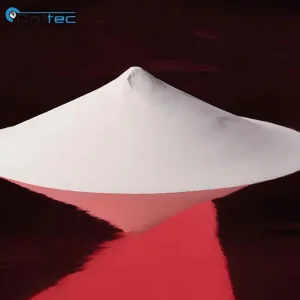
Ultra-thin alumina micro-plates engineered for high-frequency RF switches and power semiconductor switches, featuring exceptional thermal conductivity (up to 30 W/m·K) and low dielectric loss.
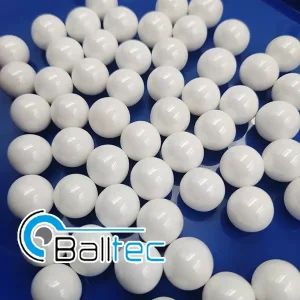
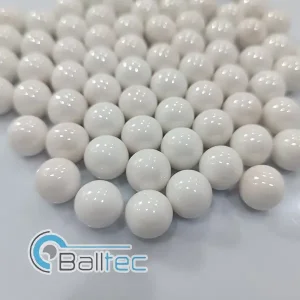
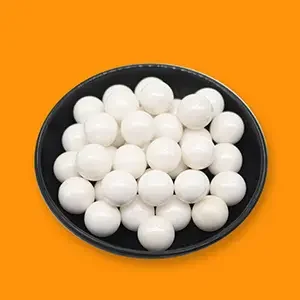
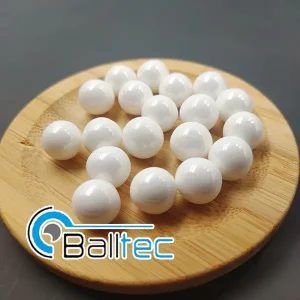
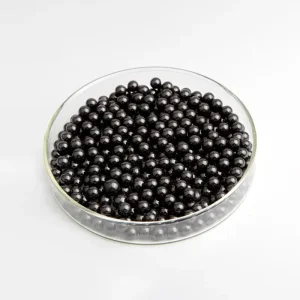
G3/G5 precision Silicon Nitride (Si₃N₄) and Zirconia bearing balls used in ultra-smooth rotary switch mechanisms, industrial potentiometers, and heavy-duty industrial switchgear actuators.
Pingxiang Baitian (Ball-tec) New Materials Co., Ltd. delivers world-class industrial ceramic solutions tailored for global electronic switch exporters and heavy industrial sectors.
An in-depth look at how advanced ceramic formulation, sintering microstructures, and nano-refinement enhance switch durability.
By stabilizing ZrO₂ with 3mol% Y₂O₃ (Yttria-Stabilized Zirconia), our material exhibits phase-transformation toughening. When micro-cracks attempt to propagate under physical switch actuation, the local crystal phase transforms from tetragonal to monoclinic, creating compressive stresses that actively stop crack progression. This extends switch mechanical mechanical lifecycle to over 10,000,000 operating cycles.
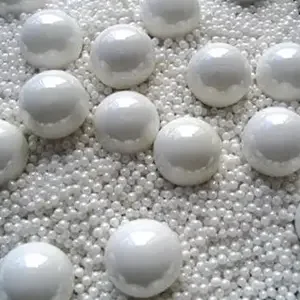
Utilizing high-purity micro-bead grinding media (down to sub-micron particle sizes), China's switch ceramic component manufacturers eliminate internal voids and grain boundary impurities. Isostatic pressing followed by high-temperature sintering yields a theoretical density exceeding 99.5%, ensuring ultra-smooth surface finishes (Ra < 0.01 µm) required for delicate microswitches.
| Material Property | Yttria-Stabilized Zirconia (95% YSZ) | High-Purity Alumina (99.99% Al₂O₃) | Silicon Nitride (Si₃N₄) | Standard Engineering Plastics (PBT/PA66) |
|---|---|---|---|---|
| Density (g/cm³) | 6.05 | 3.95 | 3.25 | 1.30 - 1.50 |
| Flexural Strength (MPa) | 1,000 - 1,200 | 400 - 500 | 850 - 1,000 | 80 - 150 |
| Dielectric Strength (kV/mm) | 15.0 | 20.0 | 18.0 | 12.0 - 14.0 (Degrades with Heat) |
| Thermal Conductivity (W/m·K) | 3.0 | 30.0 | 30.0 | 0.2 - 0.3 |
| Max Operating Temp (°C) | 1,000°C | 1,600°C | 1,200°C | 150°C - 220°C |
| Arc Resistance & Carbonization | Immune (Zero Carbon Tracking) | Immune (Zero Carbon Tracking) | Immune (Zero Carbon Tracking) | High Susceptibility to Burning |
Real-world integration of precision switch electronics across critical global infrastructure sectors.
In high-voltage battery disconnect units (BDUs) and DC fast-charging stations, high-current switching generates intense heat and electrical arcs during emergency shut-off. Zirconia insulating sleeves, high-purity ceramic arc suppressors, and custom ceramic housings prevent catastrophic short-circuits and thermal runaway in EV contactors.
Power transmission equipment requires medium- and high-voltage circuit breakers capable of interrupting fault currents of tens of kiloamperes. Metallized ceramic switch envelopes provide hermetic vacuum sealing, maintaining absolute vacuum integrity over decades of grid maintenance.
Industrial refineries and chemical processing factories operate under atmospheres laden with volatile organic compounds (VOCs). Hermetically sealed switches incorporating chemically inert alumina packing, gas-tight ceramic seals, and spark-proof housings ensure absolute explosion safety.
Military avionics and aerospace control panels utilize precision rotary selector switches. Silicon nitride (Si₃N₄) bearing balls inside switch detent mechanisms eliminate galling, maintain ultra-low friction at -55°C to +150°C, and provide high electrical insulation between metallic switch poles.
Comprehensive technical and commercial guidance for buyers evaluating China switch electronics manufacturers and ceramic suppliers.
Explore our complete industrial offering supporting fine powder processing for electronic ceramics, battery slurries, and chemical towers.