Follow 


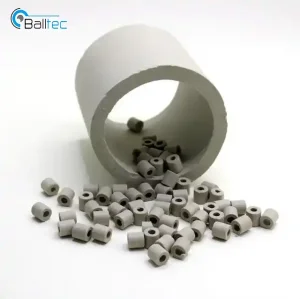
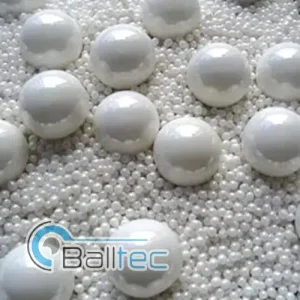
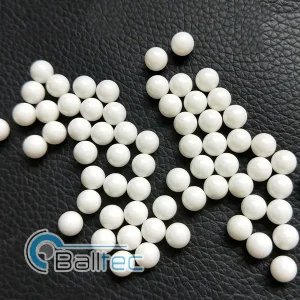
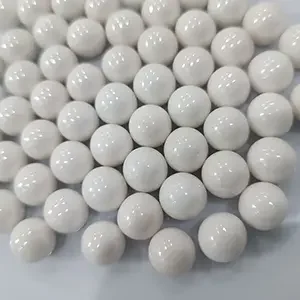
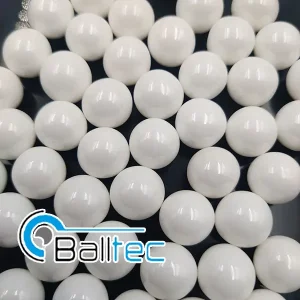
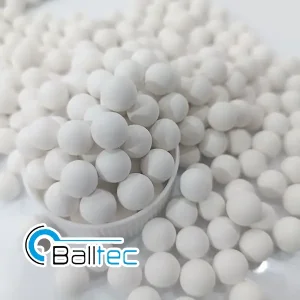
Below is our specialized selection of high-purity ceramic substrates, molecular media, and precision spheres critical for high-frequency signal attenuation, thermal dissipation, and industrial processing systems.

In the rapidly evolving telecommunications, defense, and high-frequency electronic manufacturing sectors, securing a tier-one High-Quality Attenuator Supplier has shifted from a standardized procurement task to a vital strategic imperative. As global telecommunication networks transition from 5G Advanced toward early-stage 6G sub-THz architectures, and as optical fiber transport systems adopt PAM4 and 1.6T dense wavelength division multiplexing (DWDM), signal power management requires uncompromised precision, thermal endurance, and physical ruggedization.
Attenuators—whether RF coaxial fixed attenuators, digital programmable step attenuators, or variable optical attenuators (VOAs)—serve as the critical guardians of signal integrity. They prevent detector saturation, protect sensitive low-noise amplifiers (LNAs) from power overloads, balance signal levels across disparate channels, and facilitate rigorous test and measurement routines. Global enterprises require suppliers capable of guaranteeing tight attenuation accuracy (down to ±0.1 dB tolerances), ultra-low Voltage Standing Wave Ratios (VSWR < 1.15:1), and exceptional power handling under extreme ambient fluctuations.
Modern enterprise supply chains face multi-dimensional procurement challenges. Beyond basic electrical specifications, chief procurement officers (CPOs) and lead system architects evaluate suppliers on material purity, thermal management integration, structural longevity, and global regulatory compliance (RoHS, REACH, ISO 9001:2015, and ITAR). The integration of high-density ceramic substrates—such as Yttria-Stabilized Zirconia (Y-TZP) and high-purity Al₂O₃ ceramics—plays a pivotal role in ensuring that physical attenuator bodies withstand severe thermal stress without experiencing resistance drift or mechanical degradation.
Understanding the physics of signal dissipation is key to selecting the correct attenuator configuration. Attenuators operate by absorbing electro-magnetic or optical energy and converting it safely into thermal energy without introducing unwanted phase shifts, signal distortion, or intermodulation products.
Designed for coaxial and microstrip environments ranging from DC up to 110 GHz. Utilizing advanced thin-film resistor technology deposited on high-thermal-conductivity Aluminum Nitride (AlN) or Alumina (Al₂O₃) substrates, RF attenuators dissipate power efficiently while keeping VSWR flat across ultra-wide spectrums.
Essential for fiber-optic communications, VOAs dynamically control light levels entering optical receivers. Utilizing MEMS (Micro-Electro-Mechanical Systems) shutters, liquid crystal arrays, or mechanical neutral-density filter wheels, they provide exact decibel attenuation with minimal Polarization Dependent Loss (PDL).
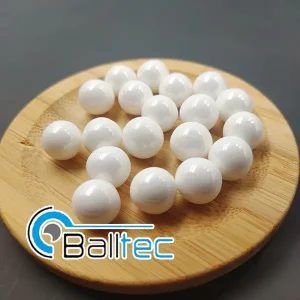
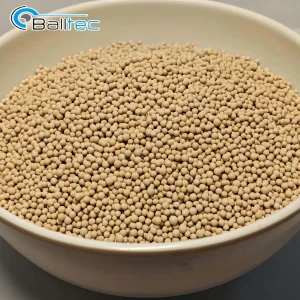
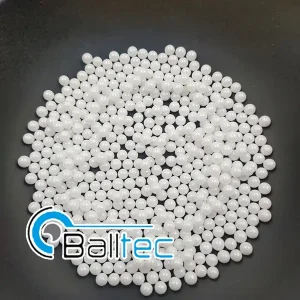
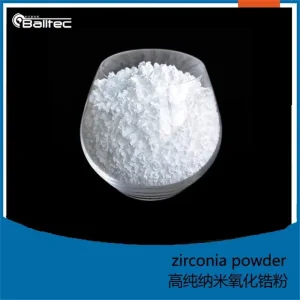
The thermal and mechanical core of any high-reliability attenuator. High-purity zirconia (ZrO₂) and alumina (Al₂O₃) ceramic structures provide high dielectric strength, zero out-gassing under vacuum, and low dielectric loss tangents required for millimeter-wave and high-vacuum applications.
| Substrate / Medium Type | Thermal Conductivity (W/m·K) | Frequency Range (Max) | Dielectric Constant (εr) | Primary Application Profile |
|---|---|---|---|---|
| Aluminum Nitride (AlN) | 170 - 200 | DC to 65 GHz | 8.6 @ 10 GHz | High-Power RF Attenuators & High-Heat Terminations |
| High-Purity Alumina (Al₂O₃) | 24 - 35 | DC to 110 GHz | 9.8 @ 10 GHz | Precision Thin-Film Resistors & Microwave Circuits |
| Y-TZP Zirconia (ZrO₂) | 2.5 - 3.0 | DC to 40 GHz | 28.0 @ 1 MHz | Structural Ferrules, High-Wear & Corrosive Assemblies |
| Beryllium Oxide (BeO) | 250 - 280 | DC to 18 GHz | 6.7 @ 10 GHz | Legacy High-Power Military RF Systems (Restricted Usage) |
Attenuators are not one-size-fits-all components. Each industrial domain presents distinct mechanical, electrical, and environmental demands. As a leading manufacturer and supplier network, we engineer target-specific solutions designed to operate seamlessly under rigorous field conditions.
Massive MIMO antenna arrays in 5G Sub-6GHz and mmWave base stations require precise signal level control across dozens of spatial streams. High-quality attenuators maintain cross-talk isolation, protect sensitive beamforming ICs, and manage calibration signal paths. Low Passive Intermodulation (PIM < -160 dBc) attenuators prevent spurious emission interference in dense cellular deployments.
In airborne radar systems, electronic warfare (EW) suites, and satellite transponders, attenuators must deliver flawless operation under severe vibration, thermal shocks (-55°C to +125°C), and radiation exposure. Hermetically sealed coaxial attenuators with solid ceramic substrates guarantee SWaP-C (Size, Weight, Power, and Cost) optimization.
Hyperscale data centers transitioning to 800G and 1.6T transceiver architectures rely on fixed and variable optical attenuators to balance optical power across multi-channel DWDM routes. Minimizing Insertion Loss Ripple and keeping Polarization Dependent Loss (PDL) beneath 0.05 dB is paramount to achieving zero bit error rates (BER).
Automated test equipment manufacturers require programmable digital attenuators with ultra-fast switching speeds (< 100 ns), long cycle durability (> 100 million operations), and flat frequency response over full operating ranges. Seamless integration via USB, Ethernet, or GPIB protocols ensures streamlined production line testing.
Attaining absolute attenuation accuracy demands rigorous process control at every stage of production—from raw powder synthesis to automated vector network analyzer (VNA) testing.
Using magnetron sputtering in high-vacuum cleanrooms, micro-thin resistive metal films (such as Nichrome or Tantalum Nitride) are precisely deposited onto ultra-smooth alumina substrates. This guarantees ultra-low temperature coefficients of resistance (TCR < 25 ppm/°C).
Each resistor network undergoes real-time active laser trimming. Automated closed-loop feedback systems adjust resistive geometries down to sub-micron tolerances, ensuring exact nominal decibel ratings (e.g., 1 dB, 3 dB, 6 dB, 10 dB, 20 dB, 30 dB) with minimal batch variance.
Every individual production batch undergoes comprehensive broadband testing using state-of-the-art Vector Network Analyzers. Full 4-port S-parameter measurements (S11, S21, S12, S22) verify VSWR, attenuation flatness, and insertion loss across the complete specified thermal envelope.
All manufacturing facilities operate under strict ISO 9001:2015 (Quality Management Systems), ISO 14001:2015 (Environmental Management Systems), and ISO 45001 (Occupational Health and Safety) certifications. Full batch traceability reports, material safety data sheets (MSDS), Certificate of Conformance (CoC), RoHS 3 (EU 2015/863), and REACH compliance documentation are systematically provided with every enterprise shipment.
As signal frequencies enter the terahertz regime and optical networks approach physical non-linear thresholds, attenuator technology is experiencing rapid structural innovation. Key technical vectors defining the near future include:
Developing waveguide-integrated fixed and variable attenuators operating continuously between 110 GHz and 300 GHz. Emerging sub-THz systems require specialized ceramic window materials and micro-machined metallic structures to minimize parasitic capacitance and resonance modes.
Integrating micro-embedded sensors directly into attenuator housings. Real-time telemetry monitoring of temperature variations, power load, and VSWR degradation allows AI-driven network management platforms to adjust variable attenuation dynamically, optimizing signal-to-noise ratios (SNR).
Co-packaging optical attenuators directly onto silicon photonics dies (CPO). Ultra-compact MEMS VOAs with sub-microsecond response times enable direct optical power leveling on multi-wavelength photonic integrated circuits (PICs).
Below are technical and commercial responses to common inquiries submitted by RF engineers, optical architects, and enterprise procurement specialists.
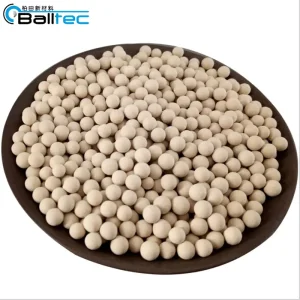
Explore our factory-direct industrial ceramic media, raschig packing rings, and wear-resistant zirconium oxide products designed for high-performance applications.